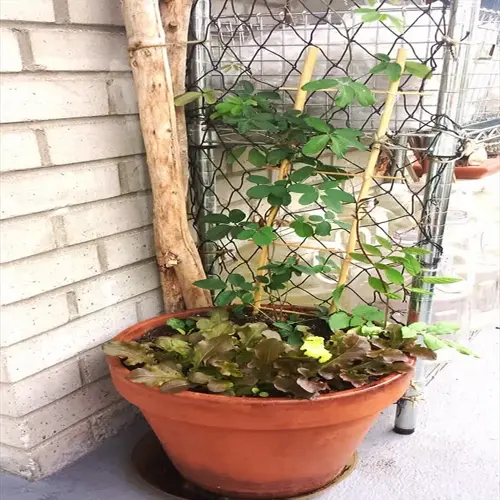
The lower leaves on one of my two red porch dipladenias went yellow and started dropping. I noticed it after a week of daily August watering. So I pulled back and let the top inch dry between drinks. I checked the soil each morning instead of soaking on autopilot. Within ten days the leaves firmed up and the dropping stopped. That scare is why watering dipladenia comes down to the soil, not the calendar. You water when the dirt tells you to, not on a fixed daily schedule.
The honest answer to how often to water dipladenia is simple. You water when the top 1 to 2 inches (2.5 to 5 cm) of soil feel dry. Push a finger in past the first knuckle. If it comes out with damp soil clinging to it, wait. If the top inch or two is dry, it is time to soak the pot. Some days that means you water every day or two in peak summer heat. Other weeks you skip a few days when the weather cools. The soil is your guide, and it changes its mind with the weather, so you check it each time instead of trusting a rigid routine.
Here is why dryness beats wetness for your plant. Roots need oxygen, and they pull it from the tiny air pockets in the soil. Soggy soil fills those pockets with water, so the roots sit starved and slowly begin to rot. A dipladenia fails much faster from being kept wet than from being a little dry. That is the heart of dipladenia overwatering. Those yellowing lower leaves are your first warning sign, and they show up well before the roots are past saving. When you see them, ease off the watering can and let the pot dry out before you give it another drink.
When you do water, soak the pot well and let it drain all the way through. Run water until it pours out the holes at the bottom, then stop. Never let your pot stand in a saucer of leftover water. That keeps the roots wet and undoes the whole point of letting the soil dry. A deep soak followed by a full drain copies how the plant drinks in the wild, where heavy rain is followed by dry spells. Your dipladenia stores water in its thick, tuberous roots, so it handles that boom-and-bust rhythm far better than it handles constant damp.
Your technique matters as much as your timing. Pour the water right at the soil line, not over the leaves and flowers. Wet foliage that sits overnight invites mildew and other trouble you do not want. Always use a pot with drainage holes so the extra water has somewhere to go. A pretty pot with no hole at the bottom traps water at the roots, and that is one of the quickest ways to lose this plant. If you love the look of a closed decorative pot, slip a plastic nursery pot inside it and lift that liner out to water and drain.
If you are ever stuck deciding, wait a day. Your dipladenia bounces back from a short dry spell with a single good drink. It does not bounce back nearly as well from rotted roots. A missed day will not hurt it, but a soggy week very well might. The whole job of watering dipladenia comes down to one habit. Lean toward dryness, watch the top inch of soil, and water deeply only when it dries. Do that and you sidestep the most common mistake people make with this flower. Your plant then rewards you with steady blooms all summer long.
Read the full article: Dipladenia Plant Care: A Complete Guide