
Introduction
The thread-fine leaves and tiny scarlet stars of cypress vine look almost too delicate to survive a stiff breeze. Then it climbs 10 to 20 feet in a single warm season and drops enough seed to come back wherever it pleases. That gap between fragile looks and pushy habit is the whole story, and it is what trips up most new growers.
Its proper name is Ipomoea quamoclit, and it sits in the morning glory family. NC State Extension and MSU Extension both call it a fast twiner that needs something to grab. It blooms from midsummer right through to fall frost. The flowers are small, but they pull in hummingbirds all day, which is why you will hear it called the hummingbird vine.
You also need the parts that matter once the plant takes hold. This guide does not go quiet on pet safety, and it does not soft-pedal how hard the vine reseeds. It also sorts out the difference between this vine and a cypress tree, which trips up a lot of shoppers. Every claim leans on the ASPCA and UF/IFAS, so you know where the facts come from.
The question people ask most is whether it comes back every year. The short answer is yes, but not the way you might think. It is an annual vine that dies each winter, then returns from its own dropped seed the next spring. Below you will get a clear, sourced answer on its return, its red star flowers, and how to keep this Mexican native in check.
How to Grow Cypress Vine
By August one summer, scarlet stars buried a bare split-rail fence in my warm zone 7 garden. You could not see a single board behind the green. I planted the seeds in late spring after soaking them overnight, and then I walked away. That is the whole trick to how to grow cypress vine. The plant climbs 10 to 20 feet (3 to 6 m) in one season, and it asks for almost nothing.
Good cypress vine care starts before your seeds ever touch the soil. The seed coat is hard, so nick it with a file and soak your seeds for 12 to 24 hours to help water reach the embryo. Sow once your last frost passes and the ground feels warm. Set the seeds about half an inch deep. Space them 9 to 12 inches (23 to 30 cm) apart at the foot of a support.
Give your plant full sun and moist, well-drained soil for the best show. It will take a little light shade, but your flowers thin out fast in the gloom. This is a twining vine, so the stems wrap and climb but never grab on their own. Set up a trellis, arbor, or a few strings early. Then train the soft new growth onto your support by hand every few days while the stems are young and easy to bend.
Nick or rub the hard seed coat to scarify it, then soak the seeds for 12 to 24 hours so water can reach the embryo and speed up sprouting.
Direct sow after the last frost once soil is warm, planting seeds about half an inch (1 cm) deep and spacing them 9 to 12 inches (23 to 30 cm) apart at the base of a support.
Choose a spot with full sun and moist, well-drained soil. The vine tolerates a little light shade but flowers far better in bright, open light.
Set up a trellis, arbor, fence, or strings before the vine takes off, since the twining stems are not self-supporting and break if left to sprawl.
Keep the soil evenly moist, especially in heat, and avoid heavy nitrogen feeding so the plant puts energy into scarlet flowers rather than only leaves.
Go easy once the vine is established, because too much nitrogen pushes lush green foliage at the expense of flowers. You get a wall of fern-like leaves and barely any scarlet stars. Feed lightly, water during dry heat, and let the plant do the rest.
Flowers, Foliage, and Identity
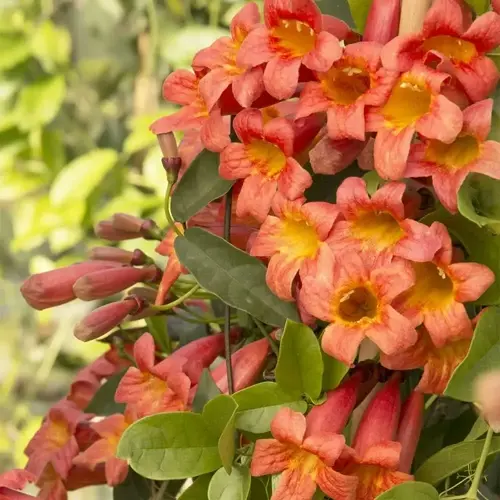
The cypress vine flowers are what stop people in their tracks. Each bloom is a tiny five-pointed star about 3/4 inch wide. The petals fuse into a slim tube, then flare open at the tip. Most are deep scarlet flowers. You can also find pink ones, and even a white one named Alba. The University of Illinois Extension lists that white form.
Those star-shaped flowers sit against foliage that looks nothing like the leaves on most climbers. The thread-fine, fern-like foliage runs 2 to 4 inches long and splits into dozens of needle-thin segments. Picture green lace draped over a trellis, or fine fern fronds catching the light. That airy texture is why gardeners fall for the plant even before it blooms.
Here is a detail most descriptions skip. The fine leaves of Ipomoea quamoclit fold and recoil away from harsh direct sun. After sundown they open and spread again. So the feathery, almost weightless look you notice in the evening is the plant moving through the day. The leaf does the work the airy appearance only hints at.
You will see this plant sold under a few names, and that trips up new growers. Hummingbird vine and cardinal plant both point to the same true cypress vine. Watch out for Cardinal Climber, though. That one is a hybrid with broader, less feathery leaves, and shops sell it side by side with the real thing. If the foliage looks like green lace rather than wide lobes, you have the genuine cypress vine.
Light, Soil, and Water Needs
Most of your cypress vine problems trace back to three things, and you can sort them out one at a time. The plant has clear cypress vine light requirements, a soil preference, and a watering rhythm that all work together. Get these right and your vine pays you back with a wall of scarlet stars.
Start with light, because it drives everything else for you. Cypress vine flowers best in full sun, and a bright open spot is your single biggest factor in heavy bloom. Your vine will take a little partial shade, but flowering thins out fast as the shade grows.
Soil and water come next, and here your vine sits between two extremes. It wants well-drained soil that stays moist, yet it suffers in long drought and drowns when the ground turns soggy. That middle ground is why good cypress vine watering beats heavy watering.
Light: full sun is best
- Best flowering: Full sun produces the most scarlet star flowers, which is why a bright, open spot is the single biggest factor in good bloom.
- Shade tolerance: The vine tolerates a little light shade, such as hot afternoon shade in southern gardens, but flowering thins out as shade increases.
- Bloom troubleshooting: A vine that grows lush but barely flowers is often getting too little sun, too much shade, or too much nitrogen fertilizer.
Soil: moist but well-drained
- Ideal soil: Moist, well-drained soil suits cypress vine best, giving roots steady moisture without leaving them sitting in water for long stretches.
- Dryness tolerance: The vine tolerates some dryness once established, so it is forgiving of an occasional missed watering, though prolonged drought stresses it.
- Avoid soggy ground: Soil that stays waterlogged can cause edema and a drowning response in the plant, so good drainage protects the roots.
Water: keep it evenly moist
- Even moisture: Aim for evenly damp soil rather than a swing between bone-dry and soaked, since both extremes show up as stress in the foliage.
- Summer heat: Give a deeper soak during hot, dry spells when the fast-growing vine is using the most water to fuel its climb.
- Container note: Pots dry out faster than beds, so containers need checking and watering more often than vines planted in the ground.
Feeding: go light on fertilizer
- Easy on nitrogen: Heavy nitrogen feeding pushes lush green growth at the expense of flowers, so a light hand keeps the vine blooming.
- Lean is fine: Cypress vine performs well in ordinary garden soil and does not need rich feeding to climb and flower freely.
- Bloom check: If a healthy vine grows leafy but barely flowers, scale back fertilizer and make sure it is getting enough direct sun.
Here is your simple rule for the garden. Keep the soil evenly damp but never waterlogged, and give it a deep soak during summer heat when the fast vine drinks the most. The extension folks put the soil part well.
Moist, well drained soils are best, but this vine will tolerate some dryness.
Growing From Seed and Sprouting
My first row of cypress vine seeds along the split-rail fence hardly came up. I had dropped dry, untreated seed straight into warm soil in my zone 7 garden and waited. Three weeks later I counted maybe four spindly sprouts out of a whole packet. A second batch sat in a cup of water on the windowsill. I sowed those soaked seeds in the same fence line, and they broke ground in about a week, in a thick green row.
The difference came down to the seed coat. Cypress vine seeds are small, black, and hard, and that shell keeps water out. Untreated seeds sprout slow and patchy because moisture takes a long time to soak through. So the single step that most improves your results is softening that coat before you plant. You do that two ways, and using both together works best.
First you scarify seeds by nicking the shell or rubbing it on fine sandpaper for a few seconds. That tiny scratch gives water a way in. Then you soak seeds overnight, about 12 to 24 hours, until they swell up a bit. Knowing how to plant cypress vine seeds starts here, before any soil is involved. Skip this prep and you still get some plants, just fewer and later.
Once the soil warms past the last frost, sow the seeds about half an inch deep and space them 9 to 12 inches apart along your trellis or fence. In cooler regions you can start them indoors a few weeks before your last frost date, then move the seedlings out once nights stay mild. The quick guide below lays out each step and the reason behind it.
After treated seed, expect sprouts within a couple of weeks, often in 5 to 15 days when the soil is warm. Cooler soil slows everything down, so patience pays off in early spring. Growing from seed is the only way most gardeners start this plant, and the good news is it pays you back. Save the black seeds from the dried pods that split open in fall, and they stay viable to replant next year.
Self-Seeding and Winter Return
So does cypress vine come back every year? It looks like it does, but the truth is a bit more interesting than that. This plant is an annual vine, and a frost will kill it dead every winter across most of the country. Yet the same patch fills back in each spring, which leaves a lot of gardeners confused.
Here is what really happens. The vine you planted does not survive the cold, and it never regrows from its old roots like a true perennial would. Before frost hits, it drops a heavy load of seed onto the soil. That seed waits out the winter and sprouts as fresh seedlings once the ground warms. So the patch returns, but the plant does not.
This trick is called self-seeding, and cypress vine is one of the best at it. The plant acts like a perennial only in the warmest USDA zones. That means zones 11 to 12, and sources vary on the exact cutoff. Everywhere else it leans on its seed to carry on. The table below lays out both sides of the story.
Cypress vine is an annual and is a tender perennial only in zones 11 to 12. In colder regions the plant is killed by frost each winter and does not regrow from its old roots.
Before frost it drops abundant seed. In roughly zones 6 to 9 that seed survives winter and sprouts as new volunteer seedlings the following spring, so the patch reappears year after year.
How well your patch comes back depends on a few things you control. Loose, healthy soil gives the dropped seed a better shot at sprouting in spring. If you rake the bed hard or pull every odd seedling you see, you can wipe out next year's show by accident. The new sprouts also tend to wander, so expect a few volunteers to reseed in spots well away from where you first planted.
Cypress vine is an enthusiastic reseeder. Once it blooms and sets seed, new vines sprout the following spring, sometimes in unexpected places.
Pollinators and Wildlife Value
Scarlet stars glowed along the split-rail fence outside my kitchen window through late summer in my zone 7 garden. A pair of ruby-throated hummingbirds fed there all day. They darted from one red bloom to the next while I washed dishes and watched. They came back at the same hour most days.
That show is the main reason gardeners plant this vine. The link between cypress vine and hummingbirds is real, and it comes down to the flower shape. Each bloom forms a long, narrow tube that fits a hummingbird's bill, and the nectar sits deep inside where short-tongued insects reach it less easily.
But hummingbirds are not the only ones who show up. The vine works as a true pollinator vine, and it pulls in a small crowd once your flowers open. The scarlet color and the long bloom window do most of the work to attract hummingbirds and butterflies. You also get a few native bees you might never notice.
Here is who you can expect to see feeding at the flowers from midsummer to fall frost.
Hummingbirds
- Top visitor: Hummingbirds are the headline pollinator, drawn to the scarlet color and the long tubular flowers that suit their bills.
- Ruby-throated: In the eastern United States the ruby-throated hummingbird is a frequent visitor, working the flowers through late summer.
- Why the shape matters: The narrow tube holds nectar deep, rewarding long-billed hummingbirds more than many short-tongued insects.
Butterflies
- Nectar source: Butterflies also feed at the flowers, adding to the vine's value as a pollinator planting through the warm months.
- Bright target: The clusters of red stars are easy for daytime flyers to spot against the fine green foliage.
- Long season: Blooming from midsummer to fall frost gives butterflies a dependable late-season stop.
Native bees
- Specialist bees: NC State Extension notes specialized native bees, including Melitoma taurea and Cemolobus ipomoeae, that associate with morning glory relatives.
- Pollination role: These bees help move pollen between flowers, supporting the abundant seed set the vine is known for.
- Quiet workers: They are less noticeable than hummingbirds but are part of why the plant reseeds so freely.
Garden role
- Vertical habitat: Trained up a fence or arbor, the vine adds nectar at heights that suit hummingbirds passing through the garden.
- Late-season value: Its bloom timing fills a gap when many spring and early-summer flowers have finished.
- Easy pairing: It mixes well with other sun-loving annuals to extend the pollinator buffet across the season.
The real draw is timing. By midsummer through fall frost, many of your spring and early-summer flowers have already faded out. Cypress vine keeps pumping out fresh blooms during that gap, so it hands pollinators a steady late-season meal when the rest of the garden runs dry.
Invasiveness and Containment
Here is the honest tension with this plant. The thin stems and lacy leaves look fragile, yet the vine behaves like an aggressive vine once it gets going. So is cypress vine invasive? The real answer depends a lot on where you live.
Two trusted sources land in different places. UF/IFAS rates it a high invasion risk in Florida and ties it to crop damage in peanut, cotton, and citrus fields. NC State Extension takes the opposite view. It says the plant is not a threat to native plants in North Carolina. Both can be right, because the risk shifts by region.
The same trait that makes gardeners love this vine is the trait that makes it risky. It reseeds fast and free, and that prolific seed drop is what lets it spread. So containment is not really about the plant you set out this year. It is about managing the seed that plant leaves behind.
Plan on heavy returns. Gardeners often report twenty volunteer vines next spring where they planted just one. Even in a mild-risk state, a little seed management keeps the patch in bounds. Here is the short playbook I use to control cypress vine before it gets ahead of me.
- Deadhead: Remove spent flowers and developing seed pods before they dry and split, which cuts down sharply on the seed that fuels next year's spread.
- Pull volunteers: Weed out unwanted seedlings early in spring while they are small and easy to remove from beds and paths.
- Contain in pots: Grow the vine in a large container so dropped seed stays in the pot rather than scattering across the garden.
- Check local lists: Look up your regional invasive-plant list or local extension office before planting, since risk is high in Florida but low in some other states.
- Avoid planting near natural areas, farm fields, or fence lines where escaped seed could spread.
Do this and the vine stays a treat, not a chore. Cypress vine is not the most invasive vine you can plant, and it is far easier to pull than kudzu or bindweed. The job is just to stay a step ahead of the seed each fall.
Because cypress vine reseeds so freely, removing seed pods before they burst is the most effective way to stop it taking over a bed or escaping into nearby land.
Toxicity and Pet Safety
If you have a dog, cat, or horse around the garden, you have probably wondered: is cypress vine toxic to dogs and other pets? The short answer is yes. Cypress vine sits in the morning glory family, and the ASPCA lists that whole group as toxic to dogs, cats, and horses.
The plant carries compounds called indole alkaloids, and those are what make cypress vine poisonous to animals that nibble on it. NC State and UF/IFAS both confirm that this exact species is toxic to cats, toxic to horses, and toxic to dogs. So this is not a fuzzy maybe. It is a clear listing from the people who track plant safety.
Here are the facts you actually need, laid out plain. Keep the seeds in mind as you read, because they matter more than the leaves or flowers.
The reason the seeds are the riskiest part comes down to concentration. Those small black seeds hold the highest level of the toxic compounds in the whole plant. The seeds toxic to pets sit inside dry pods that drop to the ground in late summer and fall. That makes the loose pods the real hazard for a curious dog or a horse grazing nearby.
Most cases stay mild. The ASPCA lists vomiting as the main sign you would see if a pet eats some of the plant. A pet that eats a lot of seeds may get agitated or even see things that are not there. None of this should scare you off growing the vine. It just means you plant it where pets cannot reach the dropped pods, and you rake up seed pods if you have grazing animals.
If you ever catch your pet chewing on the vine or its seeds, do not wait it out. Call your own vet first, or reach the ASPCA Animal Poison Control Center at the number below.
Cypress vine, a morning glory relative, is listed as toxic to pets. If your dog, cat, or horse eats the plant or seeds, call your vet or the ASPCA Animal Poison Control Center at (888) 426-4435.
5 Common Myths
Cypress vine is a true perennial that lives for many years and survives cold winters like a shrub does.
It is an annual in nearly all gardens and dies each winter. It only behaves as a tender perennial in zones 11 to 12, returning elsewhere by self-seeding.
Because it has fern-like leaves and a delicate look, cypress vine stays small and never spreads aggressively.
Its airy look is deceiving. It climbs 10 to 20 feet (3 to 6 m) in one season and reseeds so freely that UF/IFAS rates it a high invasion risk.
Cypress vine is completely safe around pets because the flowers are small and the foliage looks harmless.
It is listed as toxic to dogs, cats, and horses. The seeds are the riskiest part and contain indole alkaloids that can cause vomiting.
Cypress vine can hold itself up on its own once it gets tall enough and does not really need support.
The twining stems are not self-supporting and break easily. A trellis, arbor, fence, or strings is required for the vine to climb.
Cypress vine and cypress trees are basically the same plant, so care advice for one applies to the other.
They are unrelated. Cypress vine is an annual morning glory relative, while a cypress tree is a long-lived conifer with completely different needs.
Conclusion
Cypress vine is one of the easiest dramatic climbers you can grow, but the plant works best when you know its real habits. It is an annual vine that puts on 10 to 20 feet (3 to 6 m) of growth in a single season. Plant it for what it actually does, not for the half-told versions you find on most pages.
Give it full sun and a strong trellis, arbor, or fence, since it twines and cannot hold itself up. In return you get fern-like leaves and scarlet star flowers that pull in hummingbirds and butterflies all summer. That wildlife pull is the main reason gardeners call it a hummingbird vine in the first place.
The same vigor that builds a fast living screen is also the trait you have to manage. It comes back through self-seeding in roughly zones 6 to 9, so it returns from dropped seed rather than as a surviving plant. Those seeds are toxic to dogs, cats, and horses, with the seed being the most dangerous part, so plant it away from curious pets.
Invasiveness depends on where you live. UF/IFAS rates it a high invasion risk in Florida, while NC State does not flag it as a threat to native plants in its state. So before you plant, do three things. Give it solid support, clip spent pods to limit spread, and check your local extension or invasive species list. Do that, and a fast seasonal screen with real wildlife value is yours for the cost of a packet of seed.
Glossary
- Convolvulaceae
- The morning glory plant family, which includes cypress vine and its relatives.
- edema
- Plant damage from too much water, where cells swell and burst, often from soggy soil.
- indole alkaloids
- Natural compounds in cypress vine seeds that make the plant toxic to pets.
- Ipomoea quamoclit
- The botanical name for cypress vine, a flowering annual in the morning glory family.
- scarify
- To nick or scratch a hard seed coat so water can get in and the seed sprouts faster.
- self-seeding
- When a plant drops seed that sprouts on its own the next season, returning without replanting.
- tender perennial
- A plant that lives more than one year only in warm climates and dies in cold winters elsewhere.
- twining vine
- A climbing plant that wraps its stems around a support rather than gripping with tendrils.
External Sources
Frequently Asked Questions
Does cypress vine come back every year?
It dies each winter as an annual but reseeds prolifically, so new plants return from dropped seed the following spring in zones 6 to 9.
Do cypress vines like sun or shade?
Cypress vine flowers best in full sun. It tolerates a little light shade but blooms less in shadier spots.
Is cypress vine an annual or a perennial?
It is grown as an annual in nearly all gardens and is a tender perennial only in USDA zones 11 to 12.
Is cypress vine toxic to dogs?
Yes. Cypress vine is listed as toxic to dogs, cats, and horses; the seeds are the most toxic part and contain indole alkaloids.
Does cypress vine need a trellis?
Yes. Its twining stems are not self-supporting, so it needs a trellis, arbor, fence, or strings to climb.
How big do cypress vines get?
Cypress vine typically climbs 10 to 20 feet (3 to 6 m) tall and spreads 3 to 6 feet (0.9 to 1.8 m) wide in a single season.
Can cypress vines grow in pots?
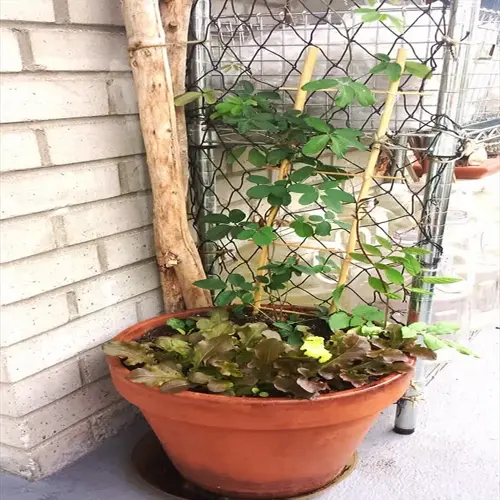
Yes. A large container with a built-in trellis and steady moisture grows cypress vine well and helps limit self-seeding.
How long does it take for a cypress vine to sprout?
Seeds usually sprout in about 5 to 15 days, faster after you scarify the seed coat and soak the seeds for 12 to 24 hours.
Is cypress vine invasive?
It is a prolific reseeder that UF/IFAS rates as a high invasion risk in Florida, though its impact varies by region.
What is the difference between cypress vine and a cypress tree?
They are unrelated. Cypress vine is an annual flowering vine in the morning glory family, while a cypress tree is a long-lived conifer.