
The cypress vine vs cypress tree question trips up a lot of people, but the answer is simple. These are two completely unrelated plants that happen to share part of a name. One is a soft red-flowered climber that lives a single season. The other is a tall woody conifer that can stand for centuries.
The mix-up makes sense. Search for cypress and the results mash two plants together. You see a feathery climbing vine. Right next to it sits a towering conifer used for lumber. Both say cypress, so the names blur together. But once you know the cypress vine identity, you will never confuse the two again. The trick is to look past the shared word and check what the plant actually does.
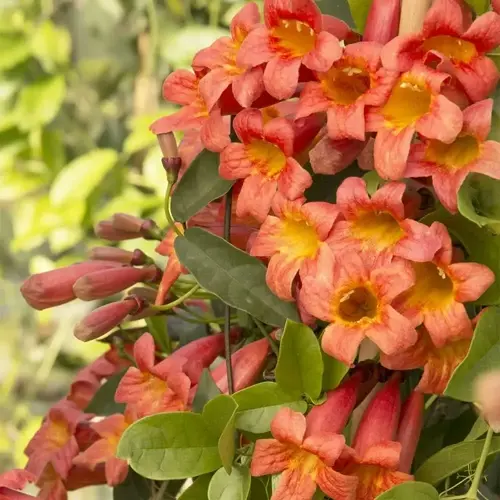
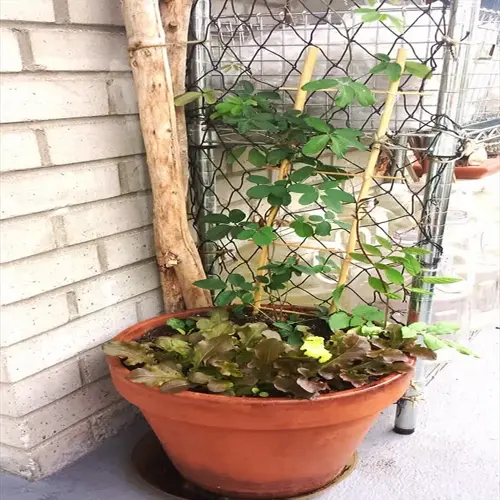
A cypress vine is a fast-growing annual flowering vine. It climbs string, fences, and trellises in one summer, throws out bright red star-shaped flowers, and then dies with the first hard frost. The fine, thread-like leaves look a bit like a cypress tree's foliage, and that resemblance is where the name came from. That look is the only real link between them.
A cypress tree is something else entirely. It is a long-lived woody conifer grown for timber, shade, and landscaping. Some bald cypress trees live well past 600 years and grow more than 100 feet tall. You harvest one for lumber. You let the other reseed itself in your flower bed each year. One builds a barn. The other dresses up a fence for a single summer.
- Annual that dies after one growing season.
- Soft climbing stem, no real wood.
- Red star-shaped flowers and lacy leaves.
- Grown for quick color on a trellis.
- Conifer that can live for centuries.
- Solid woody trunk used for lumber.
- Cones instead of true flowers.
- Grown for timber, shade, and structure.
If the plant climbs a trellis, blooms red, and dies in fall, it is the vine. If it is a tall woody tree with a trunk and cones, it is the conifer. They are not in the same plant family at all.
The botany backs this up. NC State Extension and UF/IFAS both name the cypress vine Ipomoea quamoclit. That is a plant in the morning glory family. So it sits right beside common morning glories and sweet potatoes. It is not anywhere near a conifer. Ipomoea quamoclit is a vine through and through. Its genus name is the same one you see on a packet of morning glory seeds, which tells you all you need to know about its real family.
Cypress trees sit in a different branch of the plant world. They are gymnosperms, the group that makes cones instead of true flowers. So any question you read about cypress lumber, board value, wood rot resistance, or how long a tree lives is about the conifer. None of that applies to the annual vine. The vine never makes wood, never grows a trunk, and never lives past one growing season. If a page lists prices per board foot, it is talking trees.
This matters when you go looking for care or value information. A page about cypress could mean either plant, and their needs are nothing alike. Check the photo and the scientific name before you trust the advice. The vine wants full sun and warm soil for one season, while a cypress tree wants room to grow for decades.
So read the source with one question in mind. Does it mean the flowering annual or the conifer? If it talks about red blooms, fast climbing, and reseeding, you are reading about Ipomoea quamoclit. If it talks about timber, height, and lifespan, you are reading about a tree. Sort that out first, and the rest of the care advice will actually fit the plant in front of you.
Read the full article: Cypress Vine: Care, Flowers, and Facts