
Introduction
Few plants reward a gardener as fast as the cup and saucer vine, known to botanists as Cobaea scandens. Plant it in spring and it can race up a trellis, fence, or bare wall in a single season. You may also see it sold as cathedral bells or monastery bells, but they all point to the same eager climber. As a fast growing climbing vine, it turns an empty support into a green wall faster than almost anything else you can sow from seed.
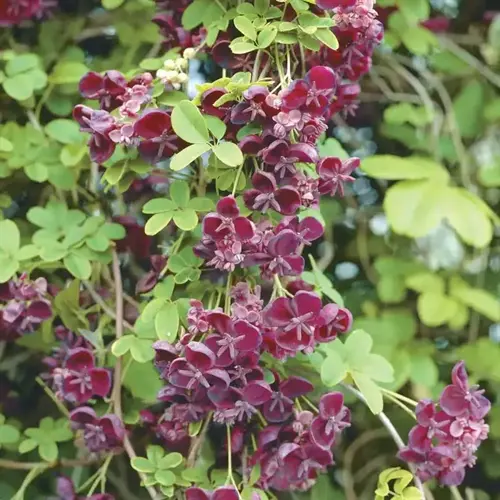
The numbers back up the hype. NC State Extension reports this vine climbs 10 to 20 feet (3 to 6 m) tall in one season. It spreads 3 to 6 feet (1 to 2 m) wide too. The bell-shaped flowers are the real prize. They open a soft greenish-white. Then they deepen into rich purple flowers over about four days. Each bloom sits in a flat green cup that gives the plant its name. It is no fad, either. The plant won the Royal Horticultural Society Award of Garden Merit. That award marks a proven, garden-worthy plant.
Most guides online stop at the same thin basics. They tell you to give it sun, water, and a trellis, then move on. This guide goes further. You will learn why a healthy vine grows leaves but no flowers. You will see the odd climbing science behind its grabbing tendrils. You will get an honest answer on growing it as an annual or a perennial. And you will learn how to cut the flowers for a vase.
From there you get the full picture in order. First you learn what this plant really is. Then how to grow it from seed to trellis, and the day-to-day care that keeps it happy. After that you fix a vine that will not flower, set up the support it needs, and find the best ways to use it in your garden. Let's start with what makes this vine tick.
What Is Cup and Saucer Vine
The cup and saucer vine earns its name from the shape of its bloom. A bell-shaped flower forms the cup, and it sits inside a flat, green saucer-like calyx that frames it from below. Look at one up close and you will see why the name just makes sense.
Botanists call it Cobaea scandens. It belongs to the phlox family, known to science as Polemoniaceae. The vine is a tender perennial from Mexico and tropical South America. The name honors Bernardo Cobo, a Spanish priest who studied plants there. And the word scandens just means climbing, which fits this vine well.
The flowers act like mood rings. Each one opens a pale greenish-white, then deepens to rich purple over about 4 days before it drops. When a bloom first opens you catch a musky scent, and that smell sweetens as the flower matures. Each one is roughly 2 inches (5 cm) long, so you can spot them from across your yard.
You will also see this climber sold under other names. Gardeners call it cathedral bells, monastery bells, or Mexican ivy. Each name is a nod to those nodding bell-shaped flowers. Want a different look? There is a white form too, Cobaea scandens f. alba, plus showy cultivars like Royal Plum and Variegata.
This fast-growing annual vine gets its common names from its flowers. The bell-like or cup-like blossoms rest on saucer-like calyxes.
Growing From Seed Step by Step
My first seed tray sat on the kitchen windowsill for two full weeks with nothing to show for it. I had sown the flat seeds the right way up, standing them on edge in moist mix, yet the surface stayed bare every morning I checked it. So I slid a cheap heat mat under the tray and walked away. Within days the first seedlings pushed through, and the rest followed fast.
That heat mat is the whole trick to how to grow cup and saucer vine from a packet. Your seeds need real warmth to wake up, not just a sunny sill that turns cold at night. Once you hold them at the right germination temperature, they break ground on schedule and grow at a pace that will surprise you.
You should start seeds indoors about 6 to 8 weeks before your last spring frost. I grow the purple species form on a south-facing back fence, and starting early gives the vines a head start before they go out. Cornell University backs this timing, so you are not guessing about when to begin.
Your seeds are big and flat, almost like coins, and how you plant them matters. Sow seeds on edge, standing each one with its longest edge pointing down into the mix. This keeps water from pooling on the flat face, where it can rot your seed before it ever sprouts.
Soaking the seeds overnight or nicking the hard coat with a file can speed things along, though neither step is required. You can also direct sow outdoors once the soil warms, but that delays your flowers by weeks. The five steps below take you from a tray on the sill all the way to a vine on the trellis.
Sow seeds 6 to 8 weeks before your last frost, standing each flat seed on its longest edge in moist seed-starting mix.
Hold the tray at 70 to 75 degrees Fahrenheit (21 to 24 Celsius), using a heat mat if needed; seedlings emerge in 10 to 24 days.
Move seedlings to larger pots once they have a few true leaves so the fast-growing roots do not become crowded.
Gradually expose plants to outdoor conditions over a week so tender growth adjusts before the move outside.
After all frost danger passes, plant in full sun beside a trellis, spacing plants 8 to 12 inches (20 to 30 cm) apart.
Wait to transplant after last frost has fully passed, since even a light freeze will kill these tender seedlings overnight. Space the young plants 8 to 12 inches apart at the base of a sunny trellis. From there they take off, and you will spend the rest of summer guiding new growth onto the support.
Sowing seeds flat on their face instead of standing on the longest edge can lead to rot and patchy germination; set them on edge and keep the mix warm and barely moist.
Sunlight Soil and Watering Care
Good cup and saucer vine care comes down to four things, and none of them are hard. Give the plant full sun, plant it in well-drained soil, keep that soil evenly moist, and hand it something tall to climb. NC State and Cornell both back this up. Get those four right and the vine almost grows itself.
The RHS gets more exact about the spot. Pick a sheltered, sunny wall or fence that faces south or west, where the plant catches warmth and dodges cold wind. Soil type barely matters here, since chalk, clay, loam, and sand all work as long as the drainage is good. Almost any pH is fine too.
Watering is where most people slip, so know the line between moist and soggy. Evenly moist means the soil feels damp like a wrung-out sponge, never dry, never swampy. Roots that sit in waterlogged ground rot, and that is the number one cause of a vine going downhill. Water deeply through summer heat and the fast top growth keeps coming.
Use low-nitrogen fertilizer like you would use salt. A light touch helps, but pour it on and you ruin the dish, because too much nitrogen pushes leaves and starves the flowers. Pinch the growing tip while the plant is young to force side branches and a fuller vine. The notes below cover light, soil, feeding, pruning, and the rare pest.
Light and Position
- Sun: Give the vine full sun for the strongest growth and the heaviest flowering, since shade reduces both vigor and bloom count.
- Shelter: A sheltered, south- or west-facing wall or fence protects the tender growth from cold wind and stores warmth that the plant loves.
- Placement: Set it where the fast climber has room to reach 10 to 20 feet (3 to 6 m) without overwhelming smaller neighboring plants.
Soil and Moisture
- Drainage: Use moist but well-drained soil of almost any type or pH, because roots left standing in soggy ground are the fastest route to decline.
- Watering: Keep the soil evenly moist through the heat of summer, watering deeply rather than lightly so moisture reaches the active roots.
- Amendment: Mixing compost into the planting area improves both moisture holding and drainage, supporting the plant's rapid seasonal growth.
Feeding and Pruning
- Fertilizer: Feed lightly with a low-nitrogen formula, since too much nitrogen pushes leafy growth at the expense of the bell-shaped flowers.
- Pinching: Pinch the growing tip when the plant is young to encourage side branching and a fuller, better-clothed vine.
- Tidying: Remove spent or frost-damaged growth as needed; RHS places it in pruning group 11, meaning any trimming is done after flowering.
Pests and Problems
- Pests: NC State reports no serious problems but notes it may attract some aphids and spider mites, which a strong water spray or insecticidal soap controls.
- Disease: Provide good air circulation to limit powdery mildew; RHS describes the plant as generally pest-free and disease-free overall.
- Overwatering: Watch for yellowing or wilting in waterlogged soil, the most common stress sign, and ease off watering to let the soil dry slightly.
Needs a sheltered, sunny wall or trellis and moist but well-drained soil for the best flowers
Why It Will Not Bloom
- Too much fertilizer, especially high nitrogen, drives leafy growth instead of flowers.
- Too little sun reduces the energy the vine needs to set buds.
- Soggy or drought-stressed roots stall flowering until conditions even out.
- A vine pushed with rich feed needs that feeding eased back before buds form.
- The species is naturally late blooming, flowering from late summer into fall.
- A young vine spends early summer climbing before it switches to flowering.
- A leafy but healthy plant in June is usually on schedule, not failing.
- Cooler nights and shorter days in late season trigger the main flush of blooms.
A cup and saucer vine not blooming is the most common worry gardeners have. The cause is almost always one you can fix, or one you simply wait out. The plant climbs hard and fast all summer, so a wall of green leaves with no flowers feels like failure. In most cases it is not.
The first thing to check is your feeding. Too much fertilizer, and high nitrogen, pushes the vine to grow leaves instead of buds. NC State Extension confirms heavy feeding cuts your flower count, and the RHS advises a low-nitrogen feed to fix it. If your vine is lush and green but bare, ease off the food and let it settle.
Light matters almost as much. This vine needs full sun to build the energy it takes to set buds, so a spot in shade gives you leaves and little else. Soggy roots or a dry spell will also stall flowering until the soil evens out. Each of these you can correct.
Then there is timing, which trips up the most people. The species is late blooming by nature, opening its first flowers from late summer into fall. A young vine spends its early months climbing before it switches over to flowers. So a healthy, leafy plant in June is usually right on schedule.
Run through the table below to sort a real problem from normal timing. Fix the feeding, give it sun, keep the soil evenly moist, and then be patient through late summer. Once shorter days and cooler nights arrive, the buds follow.
If the vine is lush and green but flowerless in midsummer, stop feeding and wait; heavy nitrogen and impatience, not disease, are the usual reasons a healthy cup and saucer vine has no flowers.
Tendrils Support and Climbing
A trellis alone is not the whole story. What matters most is how the plant actually grabs on. Once you see how it climbs, the right trellis for cup and saucer vine almost picks itself. You also stop wasting money on supports that fail.
This vine climbs with slender tendrils that end in tiny hooked tips. Charles Darwin studied this exact plant and measured one tendril at 11 inches (28 cm) long carrying 94 hooked branch tips. Each hook was hard, see-through, and as sharp as the finest needle. Touch a branchlet against a thin object and it bends toward it within minutes. If it finds nothing to hold, it straightens out again in 30 to 60 minutes.
Those self-clinging hooks explain everything about your climbing support. The hooks snag thin things, so your vine grabs strings, netting, or wire on its own. It cannot wrap a thick post or a fat timber rail. Hand it a chunky beam and it slides right off, so keep your support thin enough for the hooks to catch.
Darwin found one more thing that tells you how to handle this plant. He noted that its tendrils revolved faster and harder than almost any other climber he ever watched. Here is what he wrote about how the tendrils moved.
more rapidly and vigorously than those of any other tendril-bearer observed by me, with the exception of one kind of Passiflora
That speed is why you should train when small. Your vine can race 10 to 20 feet (3 to 6 m) in one season, so set up tall, secure netting or lattice before you plant. Guide the first few stems onto your strings by hand, and the hooks take over from there. Get your support up early and this fast climber covers a wall or fence on its own.
Cut Flowers and Pollinators
One bloom, cut at dawn from my south-facing back-fence trellis, sat in a small jar by the kitchen window for days. It opened a soft greenish-white and turned a deep purple as it aged. The musky scent of that first morning slid into something close to honey by the third day, and I kept walking over to check on it.
That color shift is what makes cup and saucer vine cut flowers worth the snip. A single stem gives you two looks, and the long season in my zone 7 garden keeps fresh blooms coming from late summer well into fall. The lists below cover how to cut them, what pollinators to expect, and how the vine earns its keep on a wall or fence.
Using the Blooms as Cut Flowers
- Harvest: Cut flowers as they open and enjoy the greenish-white to purple color shift, which adds movement to a late-season arrangement.
- Vase life: Individual blooms last about four days, and the long flowering season from late summer into fall keeps fresh material coming.
- Display: The bell-and-saucer shape suits both upright vases and shallow bowls where blooms can be floated to show off the saucer-like calyx.
Realistic Pollinator Expectations
- Native pollinator: In its native Mexican range the flowers are pollinated by bats, which is why they are bell-shaped and musky when first open.
- In your garden: Flower-visiting bats are absent in eastern North America, so expect bees, butterflies, and hummingbirds rather than bats as visitors.
- Wildlife value: The long bloom season and nectar-rich flowers still make it a genuine draw for common garden pollinators through late summer and fall.
Design and Screening Uses
- Coverage: Its rapid 10 to 20 foot (3 to 6 m) growth makes it ideal for cloaking a fence, wall, arbor, or unsightly structure in a single season.
- Texture: The dense foliage and hanging bell flowers create a soft draping effect over pergolas, railings, and trellises.
- Variety: The white form Cobaea scandens f. alba offers paler blooms for cooler color schemes alongside the classic purple species.
Choosing Colors and Cultivars
- Purple species: The classic form shifts from greenish-white to deep purple, giving an arrangement two looks from the same stem over four days.
- White Alba: Cobaea scandens f. alba opens white and fades to cream, suiting pale, soft-toned bouquets and brighter shaded corners.
- Named selections: Cultivars such as Royal Plum and Variegata add deeper plum tones or variegated foliage for a longer season of interest.
The pollinator story is worth getting right. In Mexico, the bell-shaped flowers evolved for bat pollination. That is why they smell musky when they first open. But flower-visiting bats do not live in eastern North America. So you will not see a bat at your trellis here, no matter how many blooms you grow.
What you get instead is still a good draw for your garden. The long, nectar-rich season means the vine attracts pollinators for weeks. Expect bees and hummingbirds at the flowers from late summer into fall. Butterflies stop by too. For a cooler color scheme you can grow Cobaea scandens f. alba, the white form, which fades to cream and suits pale arrangements next to the classic purple species.
Cut your blooms early when they are freshly open. A single flower holds for about 4 days in your jar. That short vase life per bloom is no real loss, because your plant keeps making new flowers for weeks. The same fast growth that fills your vase also cloaks a fence, wall, or arbor in one season, draping soft bells over your railing or pergola.
Cut stems early in the morning when the flowers are freshly open and place them straight into water; the musky scent of a newly opened bloom sweetens as it matures in the vase.
5 Common Myths
Cup and saucer vine is invasive and will take over the garden like an aggressive weed once it gets going.
Cornell University describes it as non-aggressive and non-invasive; in cold climates frost kills it each year, ending any spread.
If the vine has not flowered by midsummer something is wrong and the plant has failed for the whole season.
It is naturally late blooming, opening flowers from late summer into fall, so patience is normal and expected.
More fertilizer means more of those big purple flowers, so feeding the vine heavily will boost the blooms.
Too much fertilizer, especially high nitrogen, pushes leafy growth instead of flowers; light low-nitrogen feeding gives more blooms.
Planting the vine guarantees a yard full of bats since the flowers are famously pollinated by bats.
Bats pollinate it only in its native range; flower-visiting bats are absent in eastern North America, where bees and hummingbirds visit.
The vine needs heavy timber and strong wires to climb because it grips supports with tough woody stems.
It climbs with slender hooked tendrils that grab thin strings, netting, or wire, so light support is enough.
Conclusion
The cup and saucer vine rewards you fast once you get four things right. Give it full sun, feed it with a light hand, give it something sturdy to grab, and wait out its late bloom. I grew it for three seasons before I trusted how forgiving it really is. Do that and Cobaea scandens turns into one of the easiest big climbers you can grow.
Keep the anchor numbers in mind and you sidestep most of the trouble new growers hit. This fast growing climbing vine can put on 10 to 20 feet (3 to 6 m) in a single season. Start seeds indoors 6 to 8 weeks before your last frost at 70 to 75 degrees Fahrenheit (21 to 24 Celsius), and the vine has the runway it needs. If yours grows a wall of leaves and no buds, you are feeding it too much. Cut the nitrogen and the flowers follow.
Be honest with yourself about your climate, too. The vine is a tender perennial in USDA zones 9 to 11, and everywhere colder you grow it as an annual. So set your hopes by where you live. In a frost zone it gives you one spectacular summer, not a plant that comes back year after year. That trade is worth it for the show you get.
And there is real depth here beyond the chores. It won the Royal Horticultural Society Award of Garden Merit. It climbs on hooked tendrils. They bend toward a touch in minutes. In its native Mexico, bats pollinate the flowers. Picture the late blooming payoff by summer's end. The green buds open, ripen to deep purple, and cloak your trellis in saucer-backed bells. That moment is the whole reason you planted it.
Glossary
- Calyx
- The ring of green outer parts at the base of a flower; in this vine it forms the flat, saucer-like shape under the bell-shaped bloom.
- Cobaea scandens
- The botanical (scientific) name of the cup and saucer vine, a climbing plant in the phlox family.
- Harden off
- The process of gradually getting indoor-grown seedlings used to outdoor conditions before planting them out.
- Hardiness zone
- A numbered region based on average winter cold that tells gardeners which plants can survive outdoors there.
- Low-nitrogen fertilizer
- A plant feed with little nitrogen, used to encourage flowers rather than leafy growth.
- Polemoniaceae
- The phlox family of flowering plants, the botanical family that cup and saucer vine belongs to.
- Tender perennial
- A plant that can live for many years in warm climates but is killed by frost, so it is often grown as an annual where winters freeze.
- Tendril
- A slender, coiling or hooked plant part that a climbing vine uses to grab onto a support.
External Sources
Frequently Asked Questions
How do you care for a cup and saucer vine?
Give it full sun, moist well-drained soil, a sturdy trellis, light low-nitrogen feeding, and frost protection.
Why is my cup and saucer vine not blooming?
The most common cause is too much fertilizer, which pushes leafy growth instead of flowers; it also blooms late.
How fast does a cup and saucer vine grow?
Very fast. It can climb 10 to 20 feet (3 to 6 m) in a single growing season once warmth arrives.
How big do cup and saucer vines get?
As an annual it reaches 10 to 20 feet (3 to 6 m); in frost-free climates it can reach 30 to 40 feet (9 to 12 m).
Is cup and saucer vine an annual or a perennial?
It is a tender perennial native to warm regions but is grown as an annual wherever winters bring frost.
Where should you plant a cup and saucer vine?
Plant it in full sun against a sheltered, sunny wall or trellis with moist but well-drained soil.
Does a cup and saucer vine need fertilizer?
It needs very little. A light, low-nitrogen feed is safest because heavy feeding gives leaves instead of flowers.
Can you grow a cup and saucer vine in a pot?
Yes. Use a large container with rich, well-drained soil and a sturdy support, and water more often than in beds.
How do you overwinter a cup and saucer vine indoors?
Move a potted plant to a cool, bright, frost-free space before temperatures drop and water it only sparingly.
Is the cup and saucer vine toxic to pets?
Authoritative sources do not list it as toxic, but firm safety data is limited, so keep curious pets away.