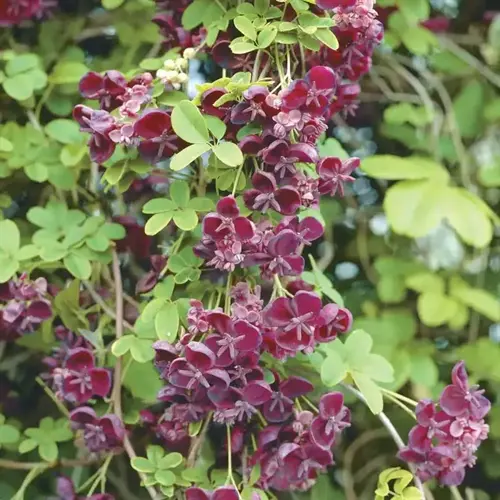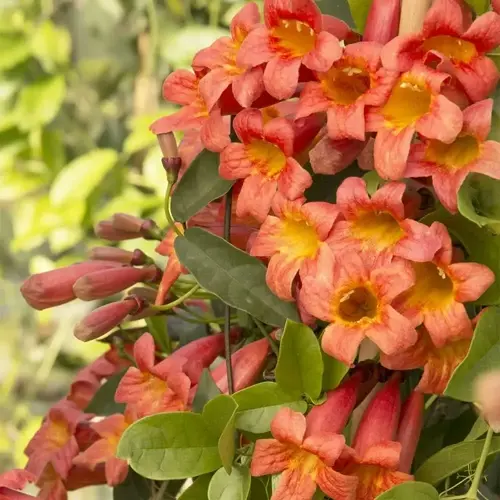

A tall green wall of leaves with almost no flowers is the classic look of an overfed plant. The vine climbs fast and looks healthy, but the purple bell blooms you wanted never show up. That sight is the first clue that less feeding, not more, is the right move here. Many growers see all that vigor and assume the plant just needs another dose to push it over the edge into bloom. The opposite is true.
A cup and saucer vine needs very little cup and saucer vine fertilizer to do well. Rich soil at planting time covers most of what it wants. So a light low-nitrogen feed is the safest choice if you feed at all. Heavy feeding works against you and gives you leaves instead of color. This vine evolved to scramble up trees in lean, fast-draining ground, so it is built to thrive on modest food rather than a steady stream of plant food.
Here is why this happens. NC State Extension says too much fertilizer promotes foliage instead of flowers. The plant reads all that extra food as a signal to grow. So it pours its energy into new stems and leaves. The Royal Horticultural Society points the other way. It recommends a low-nitrogen feed for this exact plant. Both groups land on the same simple idea, which is that this vine does its best on a thin diet, not a rich one.
Nitrogen is the part of plant food that drives leafy growth. Give the vine too much nitrogen and it spends its energy on green growth and skips the blooms. That trade is the whole problem. A plant has only so much energy to share. Lush leaves and heavy flowering pull in opposite ways. A feed heavy in nitrogen tips the balance toward leaves every time. The numbers on a fertilizer label tell you which way a product leans. The first of those numbers is the nitrogen.
Good soil does most of the work for you. Mix compost into the bed before you plant and that rich start often supplies enough food for the whole season. This vine cares more about sunlight and warmth than fertilizer. So a fertile, well-drained spot matters more than any bottle you pour on later. Spend your effort on the ground at the start. A few inches of compost worked into the planting hole pays off far better than a feeding schedule does.
If you do feed, keep it light and keep the nitrogen low. A feed marketed for tomatoes or flowers works well. Those blends lean toward bloom support, not leaf growth. Feed once a month at most during the active growing season, and water it in well. Skip the strong, frequent doses that push soft, hungry growth. Soft growth also draws aphids, so a restrained hand helps the plant in more ways than one.
Watch the plant and let it guide you. A vine that climbs hard but refuses to bloom is telling you to ease off the feeding right away. Stop the extra nitrogen and let the soil settle. Give it full sun and a little patience. The blooms tend to follow once the leafy push slows down. For the full set of reasons a cup and saucer vine fails to flower, see the dedicated bloom-failure article on this site.
So the short answer is no, you do not need to feed it much. Build good soil at the start, feed sparingly if at all, and reach for a low-nitrogen option when you do. That light touch gives you the steady run of purple bells this vine is grown for.
Read the full article: Cup and Saucer Vine: Complete Care Guide