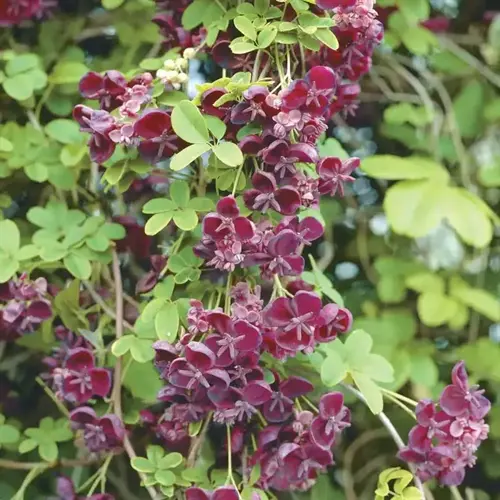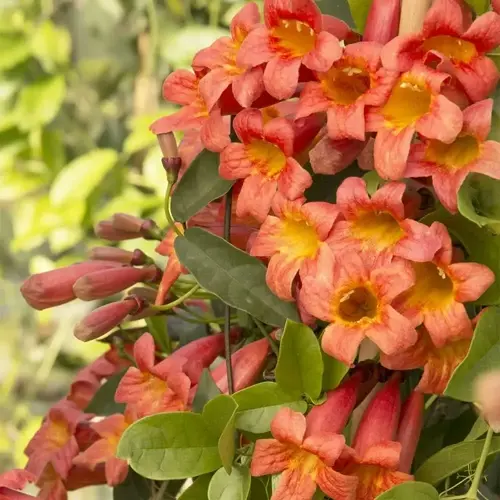

On a single sunny trellis, this vine can climb the height of a two-story wall in one season. That is the scale you are working with. The usual cup and saucer vine size as an annual is 10 to 20 feet (3 to 6 m) tall and 3 to 6 feet (1 to 2 m) wide. Most gardeners in cold regions see it land in that range by late summer.
The plant grows fast because it treats one warm season like a sprint. You set out a small seedling in late spring, and it puts out long shoots, grabs onto a support with curling tendrils, and keeps reaching for light. By the time frost hits, it has often covered your fence or arbor end to end. Knowing that pace up front helps you plan the right support before the vine outgrows it.
You will see different numbers in different places, and they are not in conflict. They just describe the same plant in different settings. As an annual in your cold-winter garden, it reaches that 10 to 20 foot mark before frost ends the season. In its frost-free native home, where it lives for years as a true perennial, it can hit 30 to 40 feet (9 to 12 m). That wild maximum is the same plant given far more time to grow. So when you read a tall figure, check whether the source means a tropical garden or a single summer in your beds.
The expert ranges line up once you sort them by setting. NC State lists 10 to 20 feet (3 to 6 m) per season and 3 to 6 feet (1 to 2 m) wide. Cornell puts it at up to 10 to 25 feet. The RHS gives an ultimate mature height of about 8 to 13 feet (2.5 to 4 m) over one to two years, which reflects a cooler climate where growth slows. Here is how those settings compare.
Match your support to the size you expect. In a cold climate, plan for at least a 6 to 8 foot trellis, and go taller if your summer runs long and warm. A short stake leaves the vine to flop and pile on itself, which traps moisture and invites mildew. A tall fence, arbor, or pergola gives it a clean line to climb. You also get far more of those cup-shaped flowers when the foliage spreads out in full sun. Set the support in the ground at planting time so the roots stay undisturbed.
Give it room on the sides too, because the spread of the vine can swamp smaller neighbors fast. Plant it 3 to 6 feet away from anything you do not want it to bury, and leave a clear path for yourself to reach in and tidy stray shoots. The tendrils grab everything within reach, so keep your delicate plants out of that zone. If you train the main stems sideways along a fence, you can fill a wide span with a single vine and control where that growth goes.
In any region with frost, the size resets each year. Cold kills the top growth, so next spring you start from a new seedling at zero. That means you get the dramatic 10 to 20 foot wall of foliage every season without the plant ever reaching its 30 to 40 foot wild ceiling. Pick your support, give it space, and let it run.
Read the full article: Cup and Saucer Vine: Complete Care Guide