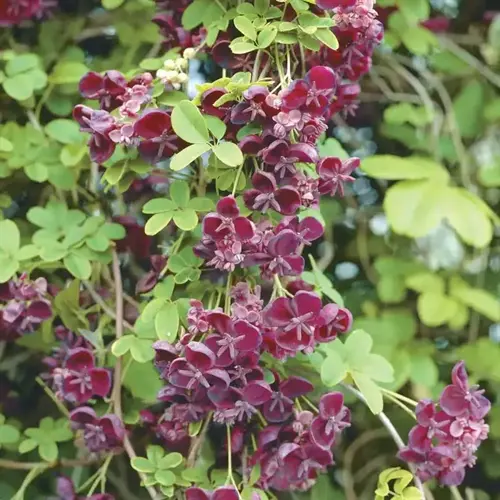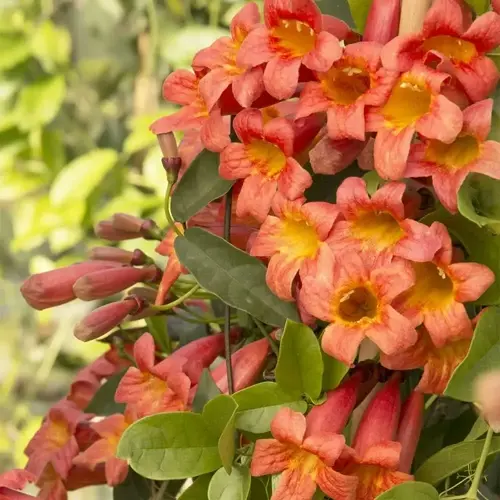

The night the first frost threatened, I pulled the one potted vine off my back fence and onto the cool glassed-in porch. By morning the garden out the window had browned, but those purple cups stayed glossy and green by the glass. I checked it again at noon and the leaves had not turned. That one pot made it through, and that is the whole job of overwintering cup and saucer vine in my zone 7 yard.
You overwinter it by moving a potted plant into a cool, bright frost-free space before the cold sets in. Then you water it only a little all winter. Get it inside ahead of the first frost and you keep it alive. Leave it out one cold night and you lose it. The plant gives you no second chance once the stems freeze.
Here is why this works at all. The RHS rates this plant hardiness H2, which means it takes low temperatures but cannot survive a hard freeze. It wants to sit around 1 to 5 degrees Celsius (34 to 41 Fahrenheit) through the cold months. Drop below freezing and the stems turn to mush within a day.
In its home range the vine is a true perennial that climbs for years. Most gardeners grow it as an annual and let frost end it. But keep it above freezing and it lives on as a tender perennial indoors, ready to climb again next spring. That second-year head start gives you flowers weeks earlier than a fresh seedling, since the roots are already built and the plant skips its slow first stretch.
The spot matters more than anything fancy. You want a cool room, a balcony, or a porch that stays just above freezing but still gets bright light. A heated living room is too warm for it. That extra warmth pushes weak, pale growth that flops over by spring. An unheated garage with one decent window works well, and so does a frost-free greenhouse if you have one. The light keeps the leaves alive while the cold keeps the plant resting.
- Before frost: Move the pot indoors before the first frost hits, since one freeze ends the plant for good.
- Cut back: Trim leggy, tangled growth by about a third so the plant stays tidy and puts less strain on its roots.
- Keep cool: Hold it at 1 to 5 degrees Celsius (34 to 41 Fahrenheit) in a bright, frost-free room or porch.
- Water lightly: Keep the soil barely moist and never soggy, since cool roots rot fast in wet potting mix.
- Move it back outside only after the last spring frost has passed in your area.
Only potted plants are worth the effort here. A vine planted in open ground has roots spread too wide to lift and pot up without wrecking it. If you want a plant to keep, grow it in a large container from the start so you can carry it in and out each year.
Through winter the vine half-sleeps, so do not fuss over it. Skip the fertilizer and let the growth slow right down. Check the soil with your finger about once a week and add a small drink only when the top inch feels dry. Cool and barely moist is your goal. If you see yellow leaves drop, that is normal rest, not a sign you should water more.
When the last spring frost has passed, move the pot back to its warm, sunny fence and let it harden off for a few days first. New shoots push fast once the nights warm up. Feed it then, give it a trellis to grab, and you get a strong, early-blooming vine from a plant you already own.
Read the full article: Cup and Saucer Vine: Complete Care Guide