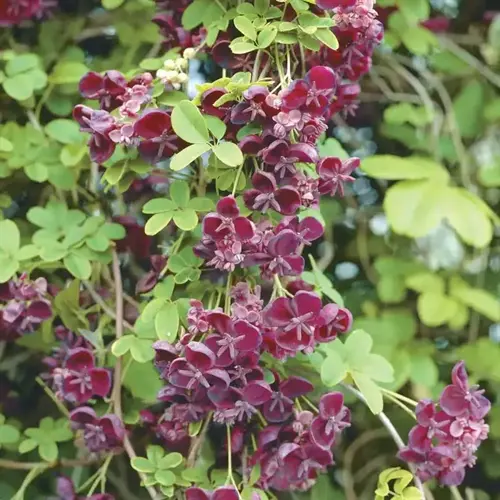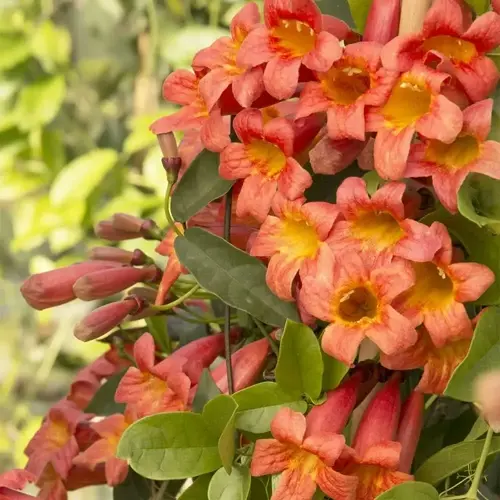

Yes, you can grow this vine in pots with no trouble at all. Give it a large container, rich but free-draining soil, and a tall support, and the purple species form climbs just as hard as it does in the ground. A big pot and a sturdy frame are the two things you cannot skip.
I slid a fast-rooting seedling out of its starter cell by the south-facing back fence, and white roots already spiraled the base. I dropped it into a wide tub against the fence, firmed the mix, and watered it in. Two days later I came out to soft tendrils waving in open air with nothing to grab. I shoved a tall obelisk into the tub right then, working the cane around the young stems before they could flop. The vine grabbed on within the hour.
That scramble is the heart of container growing for this climber. Your pot holds far less soil than open ground, so it dries out faster and runs through nutrients faster too. This is a vigorous plant that reaches 10 to 20 feet (3 to 6 m) in one warm season. All that growth draws from the small volume of mix in your tub. That is why a vine in pots needs more attention to pot size and watering than one in a bed.
Start with a large, deep container that holds at least 15 to 20 gallons (57 to 76 liters) of mix. A wide tub gives your roots room and keeps the heavy top growth from tipping the whole thing over in wind. Fill it with a rich but well-drained potting mix, not garden soil, which packs down and chokes your roots. I add a handful of grit to my own tubs to keep the drainage sharp through a wet spell, and you should too in heavy rain.
Set the support before you ever plant. This is a job for a large pot with support built in from day one, because the tendrils reach for a frame within days and sulk if they find nothing. A tall obelisk or trellis sunk into the mix at planting works best. Skip peat pots for the seedling stage too. The fast roots treat that peat wall as a barrier and circle inside it instead of pushing through.
Choose a deep tub of at least 15 to 20 gallons (57 to 76 liters) with open drainage holes in the base.
Add a rich, free-draining potting mix and work in a little grit so water moves through fast.
Sink a tall obelisk or trellis into the mix first, before the plant goes in, so it stands firm.
Slide the seedling out of any peat pot, set it at the base, and wind the first tendrils onto the frame.
Soak the mix until water runs from the holes, then keep it evenly moist as the vine takes off.
Once your plant is growing, water more often than you would in a bed. Your full tub in summer can drink water every day in real heat, so check the top inch with your finger before the sun climbs. Feed lightly and keep your nitrogen low. Too much pushes leafy growth and holds back the cup and saucer flowers you actually want. A weak feed every couple of weeks is plenty for your vine.
You get one real bonus from a vine in pots here in zone 7. A plant in a tub is the easiest form to wheel indoors when frost threatens. That move lets you carry your tender perennial through winter instead of starting over each spring. The full method is covered in the overwintering article, so I will not repeat it here. Get your pot size, soil, and support right at the start, and the rest of your season runs easy.
Read the full article: Cup and Saucer Vine: Complete Care Guide