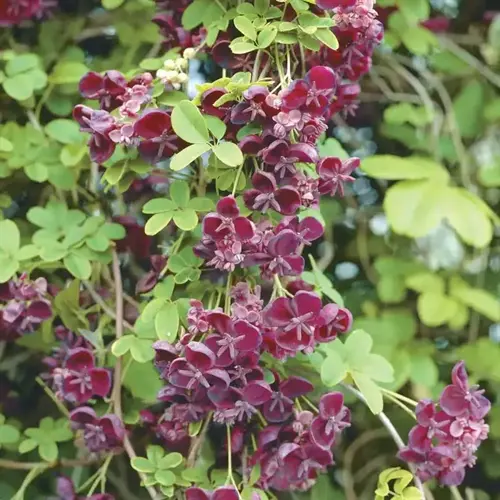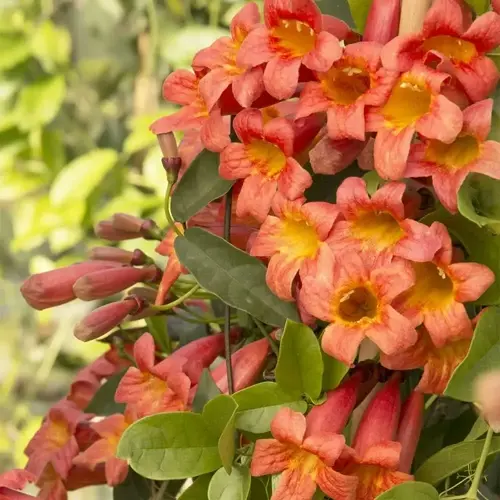

The cup and saucer vine is one of the fastest annual climbers you can grow. Its vine growth rate hits 10 to 20 feet (3 to 6 m) in a single season. Plant it once warm weather settles in and it races up a support faster than almost anything else in your garden.
The pace is easy to picture. A knee-high seedling set out in late spring looks small at first, and for a week or two it barely seems to move. Then the warm days arrive. By midsummer it has climbed past your head, and by late summer it can cover a full trellis in green leaves and dangling purple bells.
This is what makes it such a popular fast growing climbing vine for screens and fences. NC State describes its growth as rapid, and the plant uses that speed to claim space before the season ends. If you want a green wall in a hurry, few annual climbers cover ground this fast.
The biology behind the speed comes down to its grip. The vine climbs with branched tendrils that reach out and circle in the air, hunting for something to hold. Charles Darwin studied climbing plants in the 1800s. He found that these tendrils revolved more vigorously than almost any other climber he watched. That restless searching lets the vine grab a support fast and then shoot upward without slowing down.
All this growth in one season is the whole point of the plant. In most of the country you grow it as an annual, so it has only a few warm months to do its work. The numbers below show why gardeners trust it to fill a trellis from one packet of seed. You get a lot of cover for very little money.
The pace is not steady, and that trips up new growers. The vine creeps for the first few weeks while the roots settle. Then it shifts into high gear as the days warm up. Most of those 10 to 20 feet pile on during the hottest stretch of summer, not the spring. If your plant looks slow in June, give it heat and a little patience. It will catch up fast.
Those figures come from solid sources. NC State puts seasonal annual growth at 10 to 20 feet (3 to 6 m). Cornell reports 10 to 25 feet on a trellis. In its frost-free native home the vine never dies back, so it keeps going and can reach 30 to 40 feet (9 to 12 m) as a true perennial. The annual you grow is the same plant, just cut short by your first cold snap. The vine growth rate stays the same in both cases. Only the length of the warm season changes.
Warmth is the engine, so your timing matters more than anything. Do not rush plants outdoors before the last frost passes. A cold night stalls or kills young vines and wastes weeks of the short window. Wait until the soil and air stay warm, then let the heat do the work for you. If your summers run short, start seeds inside about six to eight weeks before you plan to move them out.
Set up tall, sturdy support from the very start so your vine never outgrows what holds it. A trellis or netting 6 to 10 feet high gives the tendrils room to climb and keeps the top growth from flopping over. Put the support in before you plant, since the roots fill in fast and you do not want to disturb them later. Water through dry spells, give it full sun, and this vine will keep pace with you all summer long.
Read the full article: Cup and Saucer Vine: Complete Care Guide