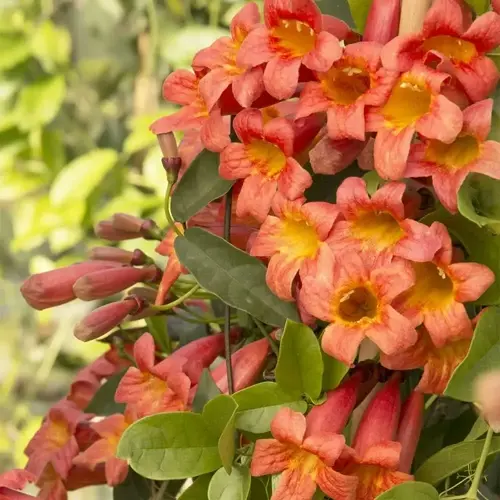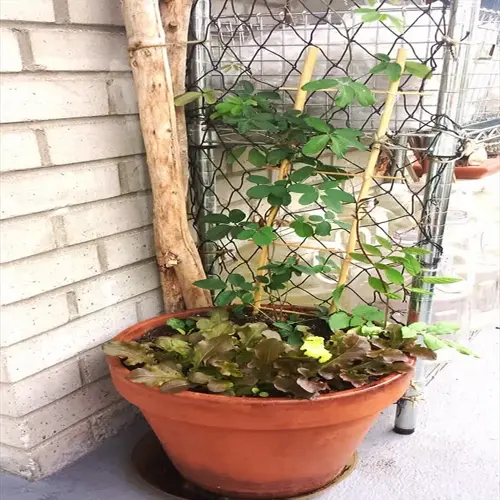

"That red vine will take over your whole yard," my neighbor said. He was leaning over the split-rail fence one July evening as I tied up my first three plants. I waved him off. By the next spring he was half right. Feathery seedlings had popped up two beds away, well past where I planted anything. So is cypress vine invasive? It can be, and the honest answer for you is that the risk depends on where you live.
Here is the part that surprised me. None of my original vines turned into some runaway monster. Each plant stayed the size you would expect. The spread came from seed. One healthy vine in your bed sets hundreds of hard seeds, and they scatter, overwinter, and sprout all over your yard. That is why people call it an aggressive vine. The plant earns that reputation through sheer numbers, not because any one stem you grow goes wild on its own.
This matters because it changes how the plant causes trouble for you. A volunteer army of seedlings can blanket a bed fast. The vines climb anything within reach. They pile their foliage on top of your shorter plants, and sunlight stops getting through. Over a season or two those volunteers can smother the things you planted. That is the real reason gardeners worry about it taking over your beds.
Whether that climbs into true invasive territory depends a lot on your region. In Florida the verdict is firm. UF/IFAS rates cypress vine a high invasion risk there, and it documents real crop harm. The vine has tangled into peanut, cotton, and citrus, where it competes with the crop and makes harvest harder. In that warm climate the seed keeps coming and the plant rarely gets a hard winter to slow it down.
Cross a few state lines and the picture softens for you. NC State Extension says cypress vine is not considered a threat to native plants in North Carolina. Cold winters knock the vine back, and the native plants hold their ground. So the same flower can be a flagged pest in one state and a well-behaved garden annual in another. Neither source is wrong. Each one is just talking about a different climate. That means your local weather is what decides the answer for your own garden, not a blanket label.
Cypress vine is a heavy reseeder, not a single runaway plant. UF/IFAS calls it a high invasion risk in Florida, where it harms peanut, cotton, and citrus. NC State Extension does not consider it a threat to native plants in North Carolina. Your region decides the risk.
So check before you plant. Look up your state or regional invasive-plant list. You can also call your local extension office. Ask them straight out: is cypress vine invasive in your county? It takes five minutes and tells you which camp you are in. If you live somewhere warm where the vine never gets a killing frost, treat that flag seriously. If you garden in a cold-winter zone like mine, you have a lot more room to enjoy it without much guilt.
Either way, you can stay ahead of it. The simplest way to control cypress vine is to cut off its seed supply. Deadhead the spent flowers and snip the pods before they ripen and burst, since no seed means no volunteer crop next spring. In a higher-risk area, grow it in a container instead of open ground so stray seed lands on pavement, not soil. A pot on the patio gives you the red flowers and the hummingbirds without letting the plant write its own spread across your beds.
Read the full article: Cypress Vine: Care, Flowers, and Facts