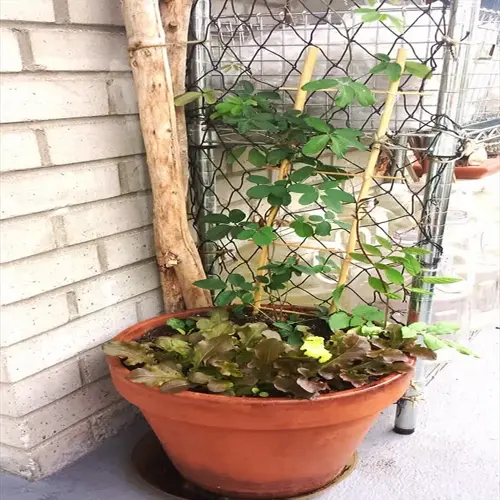
The best dipladenia planting location is the sunniest, best-drained, most sheltered spot you have. Put one plant on a baking south-facing porch. Put another against a shady north wall. The porch plant covers itself in blooms while the wall plant sulks with bare stems. Sun and warmth drive the flowers, so the spot you pick matters more than almost anything else you do.
This is why so many people grow dipladenia in pots instead of putting it in the ground. A pot lets you move the plant to the warmest corner of the yard. You can slide it a few feet and chase the light as the sun shifts through the day. The right placement gives you a wall of color all summer. The wrong one leaves you with a green vine and a handful of sad flowers. With a container you are never stuck with a bad choice, since you can pick the plant up and try a better spot the same afternoon.
Start with the sun, because it sets the whole dipladenia planting location decision. Dipladenia needs at least 6 hours of direct sun each day to bloom well, and 6 to 8 hours is better. Less light cuts your flower count fast. In most yards a south or west exposure delivers this without any trouble. The one exception is brutal heat. In the hottest climates a little afternoon shade keeps the leaves from scorching during a heat wave, but morning sun should still hit the plant hard. Watch the spot for a full day before you commit, since a fence or a tree can steal more light than you expect.
Drainage is the next thing to nail down. Dipladenia likes moist but well-drained soil and rots fast in ground that stays soggy. Aim for a pH between 6.0 and 8.0, which covers most garden and potting mixes. Heavy clay that holds water is the worst place you can put one. This is the second big reason a container wins. You control the mix, you add drainage holes, and water runs through instead of pooling around the roots.
Now think about exact placement, which is the part of the dipladenia planting location that people skip. A front porch, patio, mailbox, or hanging basket all make great homes for this plant. Each one tends to be sunny, sheltered from cold wind, and close to the house where it picks up extra warmth. A spot near a wall or a paved patio holds heat into the evening, and dipladenia loves that. A hanging basket also lets the trailing stems spill over the edge, which shows off the blooms. Tuck the pot somewhere you walk past often and you will enjoy the color every day.
Cold is the deal-breaker that settles the pot-versus-ground question for good. Dipladenia grows outdoors year-round only in USDA zones 10a to 11b. Anywhere colder, it will not survive frost. It will not overwinter in the ground either, no matter how much mulch you pile on. A container fixes this. You carry the plant indoors to a bright spot before the first hard frost, then bring it back out once the weather warms in spring. If you garden outside those warm zones, that portability alone is reason enough to choose a pot over the ground.
So the best spot for dipladenia is a pot in your sunniest, most sheltered place. Use a fast-draining mix and a pot with drainage holes in the bottom. That setup suits nearly every gardener outside the warmest zones. You chase the sun, you control the drainage, and you keep the plant portable for the cold months. Save the deep-watering routine and the full winter how-to for those topics on their own. Pick the right spot first and the flowers take care of themselves.
Read the full article: Dipladenia Plant Care: A Complete Guide