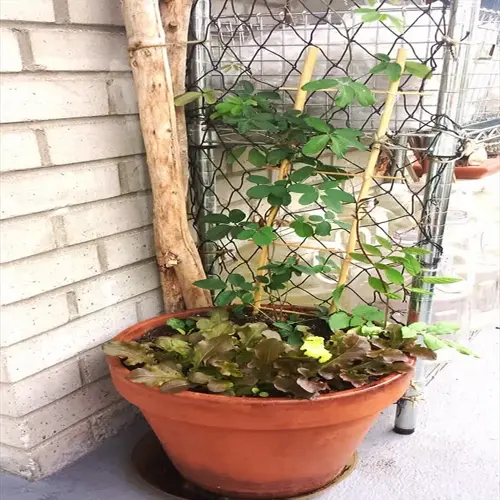
The question of dipladenia sun or shade has a clear answer: sun, and it is not a close call. This plant is a true sun lover that rewards bright spots with heavy blooms. Put it in a dark corner and you get bare, leggy stems instead.
The difference shows up fast in real life. The same plant that sits covered in flowers on a sunny porch goes nearly bare when you move it to a shady corner. Within a few weeks the buds stop forming. The plant then stretches toward whatever light it can find.
To bloom well, dipladenia needs full sun to do its job, and that means at least 6 hours of direct light each day. Give it 6 to 8 hours and you will see the best flowering it can produce. Gardeners often call this a dipladenia full sun plant for that reason. It simply cannot bloom well without strong light to feed it.
Here is why light matters so much. Dipladenia flowers on new growth, not on old stems. Strong sun fuels that fresh growth, and each new shoot brings more buds with it. Cut the light and you cut the engine that makes flowers.
Shade does not kill the plant, but it trades your flowers for foliage. In low light the stems grow long and thin as they reach for the sun. The bloom count drops off hard. You end up with a green plant that looks tired instead of a porch full of color.
You can spot a light-starved plant by how it grows. The gaps between leaves get wider as the stem hunts for sun. New buds become rare, and the few that open look small and pale. Move that same plant into strong light and the new growth comes back thick with color.
Treat 6 hours of direct sun as the bare minimum. Below that mark, blooming falls off fast, and the plant starts stretching for light. Aim for the brightest spot you have.
There is one exception to the all-sun rule. In very hot climates, harsh afternoon rays can scorch the leaves and leave brown, crispy edges. If you garden where summers run brutal, give the plant light afternoon shade during the hottest stretch while keeping it in full sun the rest of the day.
That mild shade is about heat protection, not a sign the plant wants less light. Think of it as a brief break from the worst of the midday burn. Morning and late-day sun should still hit the plant, since that is what keeps the blooms coming.
When you place a dipladenia, pick the brightest spot you have and start there. A south-facing patio, an open deck, or a sunny porch rail all work well. Skip the shaded side of the house, since those corners almost never get enough light for steady flowers.
Growing one indoors changes the math a little. Indoor light is weaker than what the plant gets outside, so set it in your sunniest window and turn it now and then so every side gets a fair share. An east or south window beats a dim interior shelf by a wide margin.
The dipladenia light requirements come down to one simple idea. More sun means more flowers. Put the plant where the light is strongest. In hot regions, hold back only the harshest afternoon heat. Do that and you get the bright, steady color this plant is known for.
Read the full article: Dipladenia Plant Care: A Complete Guide