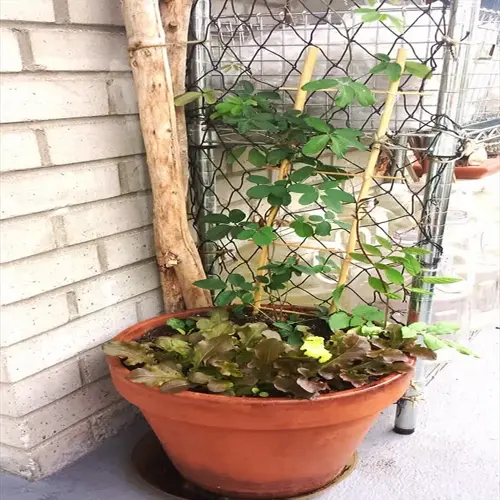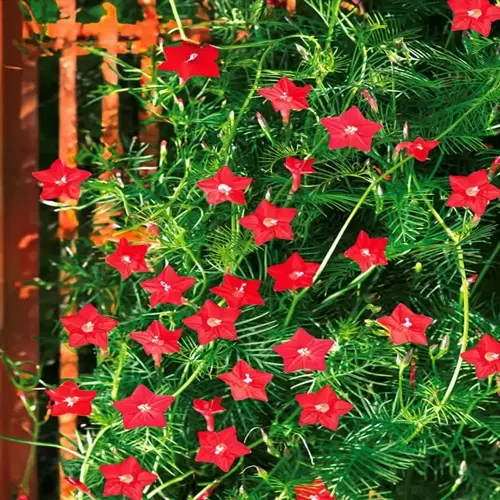
I pulled both of my red porch dipladenias out of the garage in May. Both had pushed fresh green leaves after a whole winter resting in that unheated zone 7 space. Yes, you can keep your dipladenia over winter, and with simple shelter the same plant lasts for years. I did almost nothing to earn that comeback. The work of overwintering dipladenia is light, and you have done harder.
Here is how little it took. I gave each plant a hard cutback, set them in a cool dim corner near the garage wall, and gave them barely any water all season. The garage stayed just above freezing the whole time. The whole trick of overwintering dipladenia is one thing. You keep it above freezing. You do not fuss over it at all.
Good dipladenia winter care starts with timing. Bring the plant in before your first frost, which means early October in many areas. A single hard freeze on the porch will kill it, so do not wait for the leaves to tell you. Clemson advises keeping the plant above 45 to 50°F through the cold months, and that number is your floor, not your goal.
The cool-storage method works because the plant rests semi-dormant. It slows way down, stops trying to bloom, and lives off very little. That is why it does not need a bright warm window to make it through winter. A plant that is barely growing barely drinks, so wet soil in a dark corner will rot the roots fast. Let the pot get close to dry between drinks. I water mine maybe once a month all winter, and even that feels like a lot some years. The leaves may yellow and drop, and that is fine. A bare plant with a living root system is still a plant that comes back.
You have two routes, and the right one depends on your space.
- Store it somewhere just above freezing, like an unheated garage or basement.
- The plant goes semi-dormant and needs only a tiny sip of water now and then.
- Light does not matter much since the plant is resting, not growing.
- Easiest route if you have a frost-free spot you can mostly ignore.
- Keep it in a sunny window above 45 to 50°F to hold it in light growth.
- Water a bit more often, but still let the top inch dry first.
- You may get a few blooms, though growth stays slow and leggy.
- Best if you want a fuller head start come spring.
Before you bring dipladenia indoors, check it over for pests. Spider mites and whiteflies love to ride inside on the leaves, then spread to your houseplants in the dry winter air. Hose the plant down, look under the leaves, and treat with insecticidal soap if you spot anything. A clean plant going in saves you a real headache in January. I skipped this step one year and traded a mite problem to three other pots before I caught it.
Spring is when you set up the next season. The University of Arkansas suggests you prune hard and repot as the weather warms. Cut the plant back to a few inches of strong stems and move it into fresh soil. Wait until nights hold above 50°F before it goes back outside, then ease it into sun over a week so the new leaves do not scorch.
That is the whole job. Get it in before frost, hold it above freezing, keep it dry, then cut it back in spring. My garage plants prove the lazy version works, so start with the cool corner if you have one and let the plant rest.
Read the full article: Dipladenia Plant Care: A Complete Guide