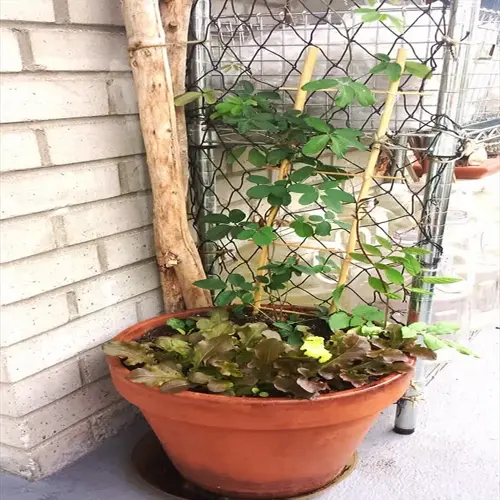
Yes, you should. Cutting back dipladenia helps the plant far more than it hurts it. A leggy, sparse plant that gets a hard prune in early spring comes back fuller and with more flowers than one you leave alone. The bare stems and thin growth you see at the end of winter are exactly what a good cut fixes. It feels harsh to take a tall plant down to a stub, but that fear is the only thing holding most people back. The plant wants to be cut. A few minutes with the shears sets up the whole season.
The reason has to do with where the flowers form. Dipladenia blooms on new growth, not old wood. So pruning dipladenia does the opposite of what worry tells you. Every stem you cut pushes the plant to send out fresh shoots. Those new shoots are the ones that carry the season's blooms. Cut back the old, tired growth and you trade it for more flowering wood. A plant left untouched keeps stretching from its old tips, and those long bare stems flower less and less as the years pass.
This is why a hard cut is safe even when it looks drastic. Extension experts at Clemson and the University of Arkansas have a clear finding here. Prune a plant almost to the ground in late winter or early spring and it still blooms that same summer. The flowers come on new basal shoots that rise from near the base. Even small 4-inch potted plants flower. The plant is built to regrow from low down. You are not risking the season by going short.
Timing is the part most people get wrong. The best answer to when to prune dipladenia is late winter or early spring, right as growth starts to resume. That gives the new shoots the whole warm season to grow and set buds. Skip a hard cut in fall or midsummer. You would be removing the very stems about to flower. The plant also gets little time to recover before the cold.
Make your hard cuts low and clean as growth wakes up. New basal shoots from near the base carry the summer's flowers, so a short plant in March is a full one in July.
Through the summer you can keep the shape with a much lighter touch. Pinch the tips of stems now and then to push side branching. This stops the plant from stretching out and going leggy again. Each pinch turns one growing tip into two, so the plant fills in instead of running long. This light tip work is different from the hard spring cutback. One renews the whole plant. The other just tidies and thickens it as it grows. You can pinch every few weeks all season without harm.
One safety step matters every time you make a cut. The stems release a milky sap when you break them, and that sap can irritate your skin. Always wear gloves when you prune, and keep the cut ends away from your eyes. Wash your hands when you finish. It is a small habit that saves you an itchy afternoon. Use clean, sharp shears too, since a clean cut heals faster and gives pests fewer ragged spots to settle into. Cut just above a leaf node so the new shoot has a clear point to break from.
So the short answer on cutting back dipladenia stays the same. Make the hard cutback in late winter or early spring, pinch the tips lightly through summer, and glove up for both. Do that and your dipladenia rewards you with denser stems and a stronger flush of color than a plant left untouched ever gives. For the full method to grow a thick, bushy plant from there, see the dedicated bushiness guide.
Read the full article: Dipladenia Plant Care: A Complete Guide