To keep dipladenia blooming all season, you need three things working together: full sun, steady food, and a constant push of fresh growth. Your flowers form on new shoots, so the more new growth your plant pushes out, the more blooms you get. Give your plant bright light, feed it often, and snip the spent flowers off as they fade. Do those three jobs and you'll have color from late spring through fall.
Watch your plant for a few weeks and you'll see the pattern for yourself. A dipladenia can be covered in buds one month, then go quiet the next once it stops sending out new shoots. A common worry with dipladenia not blooming is that your plant is sick or dying, but most of the time it has just stalled out. Feed it and give it a light trim, and it bounces back with a fresh wave of color in a week or two. So before you toss a quiet plant, try the easy fixes first.
Here's the core mechanism you need to grasp. Dipladenia only sets flowers on new growth, never on old woody stems. So anything that triggers fresh shoots also triggers more flowers for you. Feeding fuels new shoots. Pinching the tips forces your plant to branch into two new stems where there used to be one. Deadheading stops it from wasting energy on seeds it doesn't need. Each of these moves directly raises your bloom count, and you can stack all four for the biggest payoff.
Put your plant where it gets 6 to 8 hours of direct sun each day. Give it less light than this and you'll get fewer flowers and longer, leggy stems.
Through spring and summer, feed your plant every two weeks with a high-phosphorus dipladenia fertilizer such as 10-20-10. That middle number drives your blooms.
Pinch off faded flowers as soon as you spot them. This keeps your plant making fresh buds instead of seeds.
Nip the growing tips back now and then to force branching. More branches give you more spots for flowers to open.
The dipladenia fertilizer you pick matters more than most people think. A balanced all-purpose feed grows you lots of leaves but not many flowers. You want a high-phosphorus blend like 10-20-10, where that big middle number pushes blooms over green growth. Feed at half strength if your plant sits in a small pot, since the roots can burn fast in tight quarters. Want to feed less often? Work a slow-release granular feed into the soil in early spring. It drips out food for weeks while you handle other chores.
If your established plant stalls out and stops flowering, don't panic. A light cutback of an inch or two off each stem, paired with a feed, almost always sparks a new flush within two to three weeks. Even a hard-pruned plant reblooms the same summer, so you can cut it back fairly far without losing your flowers for the year. You won't lose the season by trimming. A full cut-back has its own method worth reading before you go deep, so don't hack at it blind. To keep dipladenia blooming after a stall, that trim plus a feed is your fastest reset.
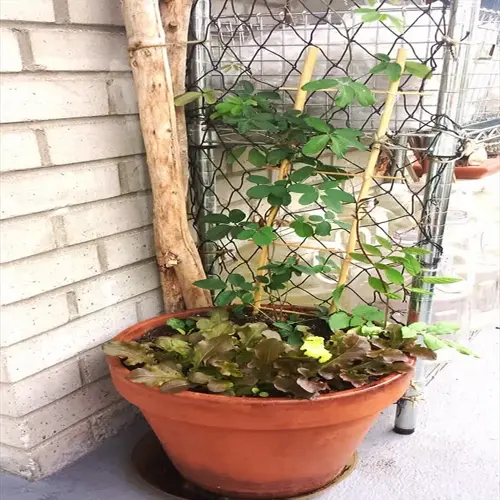
One last trick you can use: dipladenia flowers better when it feels a little crowded at the roots. A snug pot tells your plant to put its energy into blooms rather than spreading out underground. Resist the urge to move it into a much bigger container the moment it looks full. Keep it slightly pot-bound, feed it every two weeks, give it that full sun, and you'll be rewarded with flowers from late spring straight through fall.
Read the full article: Dipladenia Plant Care: A Complete Guide