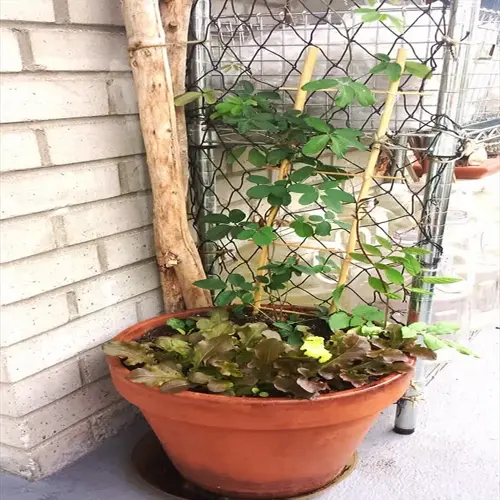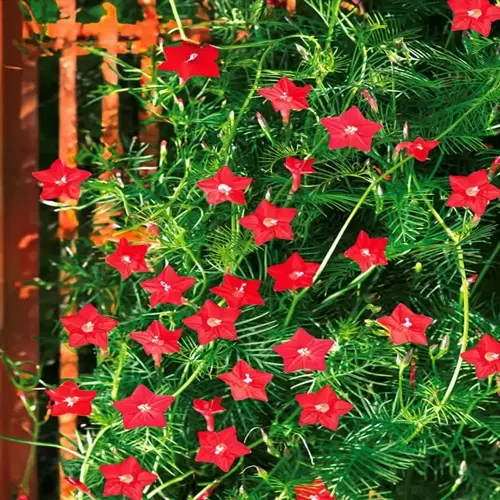
Two red porch dipladenias sat in matching terracotta pots by my front door. One shot straight up into a tall thin stalk with a few flowers at the very top. The other spilled over the rim like a cushion, packed with red blooms from soil to crown. The only difference between them was my thumb and finger. To make dipladenia bushy, you pinch the soft growing tips, and you do it often. The fuller plant got pinched all spring. The leggy one never did.
Pinching dipladenia means nipping off the very tip of a growing stem, just the top half inch of soft green tissue. You can do it with your fingernails or a small snip. That one small cut changes how the whole plant grows from that point on.
Here is the mechanism behind it. The growing tip of each stem makes a hormone that tells the side buds below to stay asleep. This is called apical dominance. It keeps the plant pouring all its energy into one long leader. So you get height, not width. When you remove that tip, the signal stops. Two new side shoots wake up and start growing where there was one. Pinch each of those new shoots later and you get four. Do it again and you get eight.
Each round of pinching multiplies the branches, and more branches means more growing tips. That matters because dipladenia flowers form on new growth. So every pinch is doing two jobs at once. It builds a fuller frame, and it sets up more spots for blooms to open. A plant you let run wild gives you a leggy stalk with sparse flowers up high.
Pinch the soft growing tips every two to three weeks through spring and summer. Stop pinching by late summer so the last flush of buds can bloom before fall.
Timing makes the difference between an okay plant and a bushy dipladenia. Pinch the soft tips every few weeks all through the growing season, from spring into late summer. Then give the plant one hard prune in late winter or early spring, before new growth takes off. Cut the whole plant back by about a third. That hard cut forces a wave of fresh shoots low on the plant, and those become the dense base you pinch from all summer. The two habits together build the fullest mound over a couple of seasons.
Be patient with this, because fullness builds up slowly. You will not see a dense cushion after one pinch or even after one month. It takes a season of steady pinching for the branching to stack up, and a second season for the plant to really fill out. Each cut feels small, but the count of stems doubles every time, so the gains add up fast once you keep at it.
Give the new shoots what they need to grow strong. Dipladenia wants full sun, at least six hours a day, or the new branches come out thin and weak. Feed it every two weeks during the growing season with a bloom fertilizer so each shoot has the fuel to push out leaves and buds. A starved plant in shade will branch, but the branches stay floppy and shy on flowers.
One last thing before you start. Dipladenia leaks a milky white sap when you pinch or cut it, and that sap irritates skin and eyes. Wear gloves, keep your hands away from your face, and wash up after. Then go pinch with confidence, because the way to make dipladenia bushy is simple. Every tip you take off today is two more branches by next month.
Read the full article: Dipladenia Plant Care: A Complete Guide