
No, crossvine does not bloom all summer long. The real crossvine bloom time is early-to-mid spring, when the vine erupts in trumpet flowers while most other vines on the fence are still bare twigs. That is the catch a lot of people miss. They see the spring photos online, plant the vine, and then wait all July for color that never comes in a steady wave. Once the spring flush burns out, the show quiets down fast and you get far fewer flowers through the hot months.
That early burst is what makes the plant stand out. The crossvine spring blooms open weeks before honeysuckle or trumpet creeper even wake up. For a few weeks the vine looks like it is on fire while everything else is still gray. The timing shifts by region, though. The Georgia DNR reports about 3 to 4 weeks of bloom starting in April in the Piedmont, and the flowers open even earlier in south Georgia. Warmer ground means an earlier start. So a gardener in the lower coastal plain may see color in March, while someone further north waits until late April. Either way, the heavy part is short and tied to spring.
Late winter
Buds swell on the woody stems as the vine breaks dormancy in warmer parts of its range.
Early-to-mid spring
The main flush opens, often for three to four weeks beginning in April in the Georgia Piedmont.
Summer
Only lighter, scattered repeat flowers appear, mainly on plants growing in full sun.
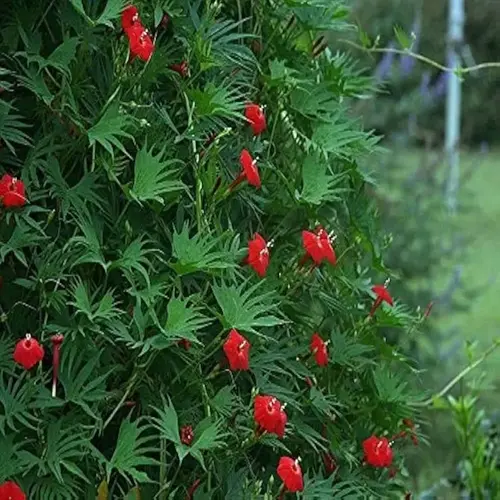
The flowers themselves earn that attention. Each one is orange-red with a yellow throat and runs about 2 inches (5 cm) long. They hang in small clusters of 2 to 5 all along the stems. Bees and early hummingbirds work them hard, since few other plants offer nectar that early in the year. The shape matters too. The blooms are tube-like trumpets, which is exactly what a hummingbird's bill is built to reach into. Bloom is heaviest in full sun, so a plant tucked into deep shade gives you green vine and not much color to show for it.
So what happens after spring? You get a lull, not a second wall of flowers. Wilson Bros Gardens and the USDA Forest Service both note the same thing. Later in the year you may see only lighter, scattered repeat flowers. Those stray blooms pop up here and there, not in a solid sheet. They show up mostly on vines in strong sun. A shaded plant may give you nothing at all once the main flush ends. So if your vine sits under a tree or on a dim wall, expect spring color and then a long green stretch.
Plan for the real pattern and you won't be let down. Treat the spring flush as the main event and any later flowers as a bonus on top. Plant in full sun for the strongest show, since sun drives both the heavy spring bloom and the odd summer flower. Six hours of direct light a day is a good target. Don't crowd the vine against a north-facing wall and expect a wall of color, because it will lean toward leafy green growth instead. Give it room, a sturdy support, and steady sun, and the spring display pays you back.
If you want to push for more, crossvine repeat bloom does respond to a little care. A light trim right after the spring flush, steady water through dry spells, and a sunny spot all help coax those scattered later flowers. Skip the heavy nitrogen feed, since that pushes leaves at the cost of buds. For the full method, see the keeping-it-blooming guide. But set your hopes on a stunning spring and a quieter summer, not a season-long flood of trumpets. Once you learn the crossvine bloom time and work with it, the vine is one of the easiest spring shows you can plant.
Read the full article: Crossvine Plant: Care, Bloom and Wildlife Guide