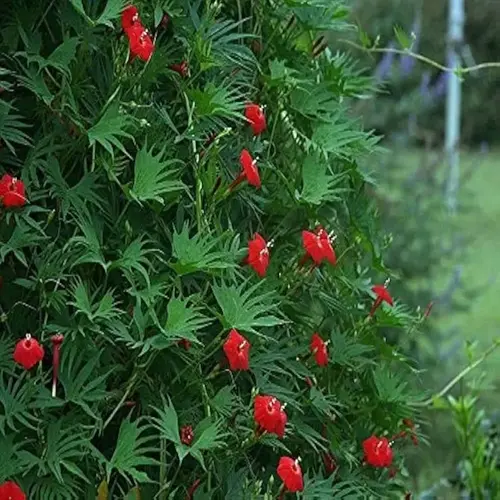

A crossvine trellis is not strictly required, but it helps a lot. Set this vine next to rough brick or a wooden fence and it grabs hold on its own. Give it a structure to follow, though, and it climbs faster and far neater than it does when you leave it alone. So your answer depends on the wall you plan to cover.
You will see the difference within a single season. Left on its own against a fence, the vine sprawls sideways and doubles back on itself. Add a crossvine support structure and you guide that growth straight up. A wire grid or a wood lattice gives the stems a clear path. You end up with a wall of green instead of a tangle, and you spend far less time pruning it back into shape.
The plant climbs with branched tendrils, and each tip carries a tiny adhesive disk. Those disks cling to rough, textured surfaces the way a gecko grips glass. So crossvine sticks well to weathered brick, natural stone, tree bark and a wooden fence with no extra help at all. The disks slip into the small gaps in the texture and lock on. On the right wall you can plant it, point it up, and walk away.
Smooth surfaces are where the vine struggles. The disks slide right off painted or sealed siding because there is nothing for them to grab. On those walls the new growth flops back down instead of climbing up. You might see the vine try the same spot two or three times and fail each time. That is the exact case where a trellis earns its keep and saves you the daily fuss of tying stems by hand.
On rough brick, stone, bark and wooden fences, crossvine grips directly with its adhesive disks and needs no extra support.
On smooth or painted siding, mount a standoff trellis so the vine climbs tidily and the disks grip the trellis instead of the wall.
There is one more reason to add support near your house. Those clinging disks can mark painted siding and leave a sticky residue behind when you pull the vine off later. You may also lift flecks of paint with them. A trellis keeps every disk off the wall, so your paint job stays clean and the repair bill stays at zero. The full grip mechanism gets a closer look in the main guide, but this part you need to know up front.
Here is the practical call for a painted wall. Mount a trellis a few inches off the surface and let the vine cling to that instead of the siding. The gap protects your paint and gives the stems room to breathe and dry after rain. Cedar lattice or a coated steel wire grid both hold up for years outdoors. Anchor it to studs, not just the cladding, so it carries the weight of a mature vine without sagging. A spacer block behind each mount point gives you that gap fast. Keep the bottom of the trellis a foot or so above the soil so the wood stays dry and lasts longer.
If your surface is already rough, skip the extra cost and the build time. Let crossvine climb straight onto brick, stone or a wooden fence and it will hold fine on its own. So back to the core question, does crossvine self cling? Yes, on textured surfaces it grips with no help from you. A crossvine trellis is only worth adding when the wall is smooth, when you want to protect paint, or when you want a tidier shape you can steer.
Read the full article: Crossvine Plant: Care, Bloom and Wildlife Guide