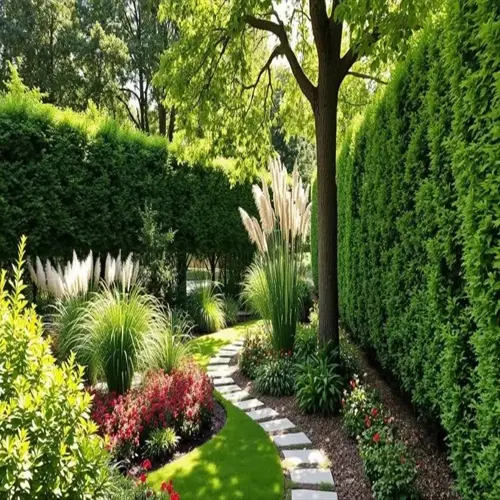
Introduction
The firethorn shrub earns its name in late fall. Its branches glow with thick clusters of orange, red, or yellow berries. Plant folks call it pyracantha. It is a fast-growing, thorny evergreen shrub that keeps its leaves and its color all winter. Birds strip the firethorn berries for months. The long spines turn your loose row of plants into a wall almost nothing can push through.
This plant moves fast. Your young firethorn adds more than 2 feet (0.6 meters) per year, and a mature one reaches 10 to 18 feet (3 to 5.5 meters) tall and wide. You can grow it across USDA zones 6 to 9, in full sun or part shade, even in poor, dry soil. White flowers cover it in spring. They ripen into the berries you see hanging on into late winter.
This guide answers the questions a US gardener asks first. You get a sourced, plain answer on berry safety, not a vague warning. You learn where firethorn turns invasive and where it is fine. And you get a buying plan built around disease-resistant cultivars like Mohave, Teton, and Apache. Those pick the right plant so the common diseases never get a foothold.
Think of firethorn as a plant with two great strengths and two real liabilities. The strengths are the berries and the thorny hedge it builds, dense enough to stop deer and intruders alike. The liabilities are those same sharp thorns and two diseases, fire blight and scab. The genus holds about six or seven species. They grow wild from southwest Europe to southeast Asia. Pick the right cultivar and a so-called problem plant becomes one of the best shrubs you can grow. Here is how you do it.
Best Disease-Resistant Cultivars
A wall of Mohave firethorn has stayed clean and heavy with berries on my sunny south-facing brick wall for eight straight years. Not one outbreak of scab, no blackened fruit, no bare patches in the middle of the plant where leaves should be.
I planted it to replace an older firethorn whose name I never knew. Scab stripped that one bare most autumns, and I sprayed it, fed it, and babied it for nothing. The Mohave that took its place gets no spray at all. The swap to a resistant cultivar is what fixed it.
That is the whole point for you here. Picking a fire blight resistant type is the single most reliable way for you to dodge the two diseases that wreck weak firethorns. So choose your shrub by resistance first, then pick your berry color second.
Clemson's team keeps the longest list of safe pyracantha cultivars in the US. The names that beat fire blight and scab are Apache, Fiery Cascade, Mohave, Navaho, Pueblo, Rutgers, Shawnee, and Teton. You can plant any of them and skip the spray bottle for good.
Virginia Tech adds two compact firethorn varieties you should know. Rutgers stays low and wide at about 3 by 9 feet (0.9 by 2.7 meters). Fiery Cascade sits in the middle at roughly 8 by 9 feet (2.4 by 2.7 meters), so it fits a smaller yard.
The picks below pair each disease-resistant pyracantha with what it looks like and where it earns its space in your garden. Reach for the Mohave firethorn if you want a big, tough barrier. Read on for the narrow, low, and mid-sized options that may suit your space better.
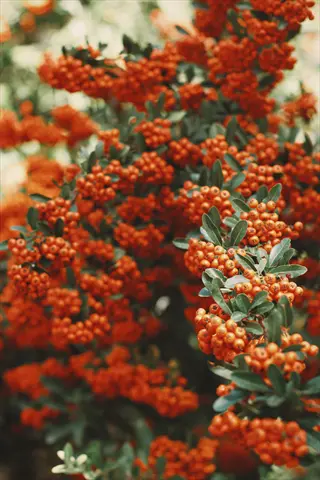
Mohave
- Resistance: Mohave is listed by Clemson among the fire-blight-and-scab-resistant cultivars, making it one of the most reliable choices for trouble-free growing.
- Berries: It carries heavy clusters of orange-red berries that ripen in fall and persist into winter as dependable food for resident and migrating birds.
- Size: Expect a large, vigorous shrub that fits the species range of roughly 10 to 18 feet (3 to 5.5 meters) tall and wide unless pruned or wall-trained.
- Best use: Its vigor and resistance make it a strong pick for a tall barrier hedge or a trained espalier against a sunny wall.
- Growth: Like the species it grows very fast, often adding more than 2 feet (0.6 meters) of new growth in a single season.
- Consider: Give it full sun and good drainage, and prune with thick gloves because the spines are very sharp.
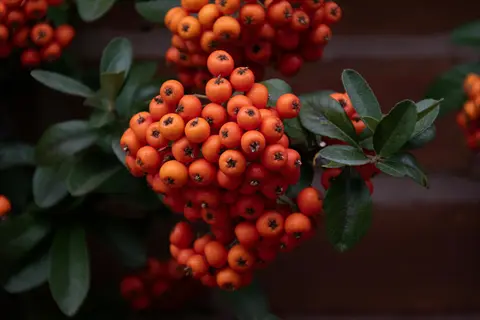
Teton
- Resistance: Teton appears on the fire-blight-and-scab-resistant lists and also carries the UK Award of Garden Merit, signalling proven garden performance.
- Berries: It produces yellow-orange berries, a useful color for gardeners who want fruit that birds often strip later, extending the winter display.
- Habit: Teton tends toward a more upright, columnar shape, which suits narrow spaces and screening where width is limited.
- Best use: Its narrow habit makes it a good fit for tight side returns, slim screens, and fence-line training.
- Hardiness: It grows within the firethorn range of USDA zones 6 to 9, tolerating clay, loam, sand, drought, and salt.
- Consider: As with all firethorn, avoid planting where children, pedestrians, or pets routinely brush against the thorny stems.
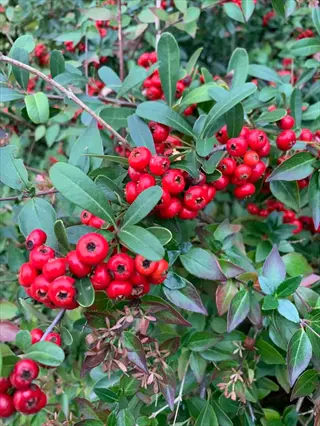
Apache
- Resistance: Apache is named by Clemson among the resistant cultivars, so it sidesteps the two diseases that most often disfigure or kill firethorn.
- Berries: It sets bright red berries in dense clusters that hold well into winter, offering strong seasonal color and reliable bird food.
- Size: It stays more compact than the largest species forms, which makes it easier to keep within a defined hedge or border line.
- Best use: Its tidy size suits lower barrier hedges and mixed shrub borders where a giant firethorn would overwhelm neighbors.
- Conditions: Like the genus it prefers full sun to light shade and a wide soil pH range of about 3.7 to 7.0.
- Consider: Plant in lean rather than rich soil, since very fertile ground drives rampant growth that raises fire blight risk.
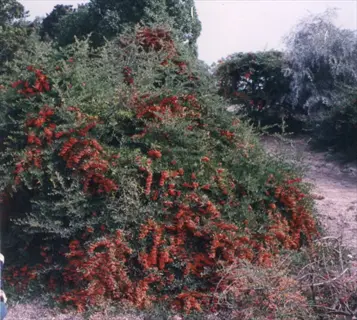
Fiery Cascade
- Resistance: Fiery Cascade is on both the Clemson and Virginia Tech resistant lists, a strong endorsement from two separate extension programs.
- Berries: Its red berries shift through orange tones as they ripen, giving a layered, changing display through fall and into winter.
- Size: Virginia Tech lists it at roughly 8 feet tall by 9 feet wide (2.4 by 2.7 meters), a manageable middle-sized firethorn.
- Best use: That moderate footprint makes it versatile for hedging, wall training, or a single specimen in a medium garden.
- Wildlife: Its spring flowers draw many pollinators while the lasting berries feed birds through the colder months.
- Consider: Site it in full sun for the heaviest fruit set, as too much shade reduces both flowering and berrying.
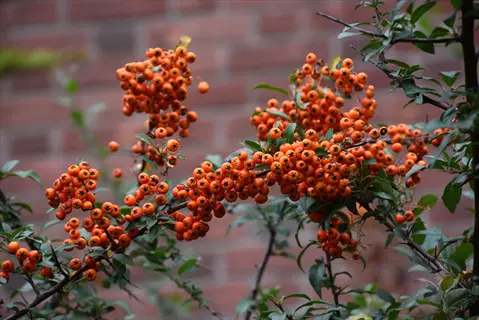
Rutgers
- Resistance: Rutgers is cited by Virginia Tech as a disease-resistant cultivar, well suited to gardeners who have lost firethorn to blight before.
- Berries: It bears orange-red berries in tight clusters that persist into winter, in keeping with the wider firethorn group.
- Size: Virginia Tech lists a low, wide habit of about 3 feet tall by 9 feet wide (0.9 by 2.7 meters), unusual among large firethorns.
- Best use: That spreading, ground-hugging shape suits bank cover, low barriers, and the front of a wide border.
- Hardiness: It performs across the standard firethorn zones of USDA 6 to 9 and tolerates poor, dry soils once established.
- Consider: Because it spreads wide rather than tall, allow generous horizontal room and avoid crowding it against paths.
You will see other names on a UK shelf. Look there for the Saphyr series, Orange Glow, and Teton. Several hold the Award of Garden Merit, a sign of proven garden value. The labels change across the Atlantic, but the rule does not. Resistance comes first, wherever you shop.
Growing Conditions and Hardiness
The best firethorn growing conditions are also the easiest ones to find in a real yard. Give the plant full sun to partial shade and it will reward you with dense growth and heavy fruit. Push it into deep shade and the berries thin out fast, since the plant needs strong light to set a good crop.
This shrub shrugs off ground that would kill fussier plants. It handles clay, loam, and sand without complaint, and it takes the soil pH range from 3.7 to 7.0, which spans acidic all the way to neutral. That is an unusually wide band, so you rarely need to test or amend your soil before you plant.
Firethorn is drought tolerant once its roots settle in, and it even shrugs off salt near roads and coasts. Lean, dry, poor ground is where it does its best work, which makes it a dependable pick for tough, low-water sites. Deer tend to leave it alone too, so it holds up in yards where browsing wrecks softer shrubs.
Match your plant to your USDA hardiness zones before you buy. Scarlet firethorn holds up through zones 6 to 9, while Formosa firethorn wants the milder zones 8 to 10. Pick the wrong one for your winter and a hard freeze can set it back or kill it outright.
Here is the part that trips people up. Rich, fertile soil seems like a gift, but it backfires with firethorn. Feed the plant too well and it throws out rampant soft growth, the kind of lush stems that fire blight loves to attack. That same growth burns its energy on leaves instead of fruit, so you end up with fewer berries. Lean ground is not a compromise here. It is the feature that keeps the plant tough and productive.
Do not plant firethorn in rich, heavily fertilized soil. The lush, fast growth it triggers is more prone to fire blight and actually produces fewer berries than a plant grown lean.
Planting and Spacing
Most shrubs forgive a clumsy first attempt because you can dig them up and try again. Firethorn does not. It resents transplanting, so getting the site right the first time matters far more here than with almost any other plant in your yard. Plan the spot once, plant once, and let it run. That single rule shapes everything about planting firethorn well.
Full sun siting gives you the heaviest crop of berries, so skip the shady corners. When you work out hedge spacing, leave room for the mature 10 to 18 foot (3 to 5.5 meter) spread rather than the small pot in front of you. For a line that knits into a firethorn barrier hedge, set the plants closer together so the thorny stems weave into one solid screen. Keep lean soil over rich ground too, because fertile dirt drives soft, fast growth that brings more fire blight and fewer berries.
Set the shrub well back from paths, doorways, and play areas, so those very sharp thorns become a wall you chose, not a snag someone walks into. As for when to plant pyracantha, aim for fall or early spring into well-drained ground and water it in well. That timing lets the roots settle before the plant throws its fast summer growth.
I set a Mohave whip a hand's width too close to the south-facing brick wall, snugged tight so the espalier wires would sit clean. The rootball pressed flat against the footing with no room to flare. I lifted the whole thing back out, dug the hole wider, and reset it a good 8 inches off the brick. The wires ran straight after that, and the roots finally had ground to spread into on every side.
Use the steps below to put each plant in correctly the first time.
Pick a full-sun site with good drainage, set well back from paths and doorways so the sharp thorns form a barrier rather than a hazard, and avoid overly rich soil.
Allow for the eventual 10 to 18 foot (3 to 5.5 meter) spread; for a hedge, set plants closer in a line, and keep a free-standing shrub clear of walls and neighbors.
Dig a hole as deep as the rootball and wider than it, then set the plant so the top of the rootball sits level with the surrounding soil, giving roots room to spread.
Return the soil around the roots and firm it gently to remove air pockets, keeping the plant upright and steady since firethorn resents being disturbed again later.
Soak the area thoroughly after planting and add a mulch layer to hold moisture, then water regularly through the first season until the fast-growing roots establish.
Pruning and Wall Training
How you cut a firethorn depends on the shape you want it to hold. A free-standing shrub, a security hedge, and a flat espalier each ask for a different hand. The good news is that pyracantha pruning forgives mistakes, because the plant grows back fast and shrugs off a hard cut.
Timing is the one rule you cannot skip. Prune after the white flowers fade, because the wood that just bloomed is the wood that will carry your berries. Cut too early and you snip off the show before it starts. The best answer to when to prune is late spring or early summer, right as the petals drop.
Here is the trick that turns a wall into a wall of orange berries. Stems that grow straight up stay leafy and shy of fruit. Tie those new shoots down flat and horizontal, and their vigor slows. The plant then flowers and fruits all along their length. That single move is the heart of wall-trained pyracantha, and it is why a trained plant fruits far harder than one left to bolt upward.
- Needs only light shaping to keep an open, balanced framework.
- Grows tall and wide fast, making a dense thorny barrier hedge.
- Best pruned lightly after flowering to preserve berrying wood.
- Suits boundaries, screens, and security plantings with room to spread.
- Needs regular tie-in of new shoots flat against wires or trellis.
- Horizontal training slows vigor and increases flowering and fruit.
- Outward-facing shoots are trimmed back to hold a neat flat shape.
- Suits walls, fences, and narrow spaces where width is limited.
An espalier firethorn needs the most regular hand. Tie in the new shoots you want, trim back the ones that jut out toward you, and keep checking the ties so they do not cut into thickening stems. A free-standing shrub asks for far less. You just thin out crossing branches to keep an open framework, then leave it alone.
Do not fear a heavy cut when you need one. Firethorn puts on more than 2 feet of growth a year, so it takes hard pruning in stride and fills back in within a season. If you spot fire blight, cut well past the blackened tissue into clean wood, and wipe your blades between cuts so you do not spread it. An overgrown plant can be cut right back and still recover its shape.
Always wear thick gauntlet gloves and eye protection when pruning firethorn. The spines are long and very sharp, and pruning is when gardeners are most likely to be scratched or jabbed.
Berries, Flowers and Wildlife
Firethorn earns its keep in two seasons at once. White pyracantha flowers froth across the whole shrub in spring. By fall those blooms turn into dense clusters of firethorn berries. The fruit comes in orange, red, or yellow, and it holds that color deep into winter.
That long fruit display is more than looks. These are real berries for birds, and the fruit feeds resident and migrating flocks when little else is ripe. The spring flowers pull in pollinators by the dozen too. Mix cultivars with red, orange, and yellow fruit and you stretch the show, because birds clear the red and orange first and leave the yellow for last.
White Spring Flowers
- Bloom: Clusters of small white flowers open in spring across the whole shrub, creating a froth of bloom before the berries form.
- Scent: The flowers are described by NC State as fetid or malodorous, so they smell unpleasant up close despite looking attractive from a distance.
- Pollinators: Despite the smell, the spring flowers are visited by many kinds of pollinators, making firethorn a genuinely useful plant for bees and other insects.
Persistent Berries
- Form: The fruit is technically a pome that looks berry-like, about a quarter inch (6 millimeters) across, carried in tight, showy clusters.
- Color: Berries come in orange, red, or yellow depending on cultivar, ripening in fall and holding color through the colder months.
- Duration: They persist on the shrub into late winter, giving long-lasting display and a steady food source when little else is fruiting.
Food for Birds
- Feeding: The berries are eaten by resident and migrating birds, and a mix of red, orange, and yellow fruit spreads that feeding across the season.
- Strategy: Birds tend to strip red and orange berries first and leave yellow ones longer, so mixing colors keeps the display going and the buffet open.
- Cover: The dense, thorny growth also gives birds safe nesting and roosting cover, adding shelter value on top of the food it provides.
Deer Resistance
- Browsing: NC State reports firethorn is particularly resistant to damage by deer, a notable advantage in gardens where browsing ruins other shrubs.
- Thorns: The same sharp spines that deter intruders also discourage larger animals from feeding on the foliage and stems.
- Value: This combination of bird food, pollinator flowers, and deer resistance makes firethorn unusually well-rounded for a wildlife-aware garden.
Worried about a lack of berries? Failure almost always traces to one of three causes. Deep shade is the usual culprit, late pruning that cut off the flowering wood is the next, and a hard frost on the open blooms is the third. Name the cause and you can fix it: move the plant into more sun, prune right after flowering, or shelter early blooms from frost.
One heads-up before you choose a spot. The white flowers look lovely from across the yard, but NC State calls them fetid up close, so they smell unpleasant when you lean in. Plant firethorn away from a patio or window you sit near, and let the pollinators enjoy the scent instead of you.
That same wildlife value comes with a catch. Birds eat the fruit and drop the seeds far and wide. New shrubs sprout where they land. That is why firethorn spreads on its own and gets flagged as invasive in some areas. The trait that feeds your local birds also helps the plant escape the garden, so check your area before you plant.
Flowers are visited by many kinds of pollinators. Fruits are enjoyed by birds. This shrub is particularly resistant to damage by deer.
Safety, Toxicity and Invasiveness
Online forums love to repeat one scary claim about the firethorn shrub. They say the bright berries will poison your kids or your dog. Poison Control tells a calmer story. The National Capital Poison Center says the berries are not toxic to people or pets. A big mouthful might cause only mild stomach upset.
So are firethorn berries poisonous in any real sense? No. The pulp is essentially non-toxic. Only large amounts of crushed seeds carry trace cyanide-like compounds. You get the same trace in apple or cherry seeds, and nobody eats enough to matter. CHOP's Poison Control Center even lists firethorn as a nonpoisonous berry.
The same logic answers the pyracantha toxic to dogs worry. For pet safety, poison sources rate the berries a low risk. A dog that grabs a few off the ground is far more likely to be fine than sick. The real hazard sits lower down. Those long spines cause scratches and thorn dermatitis, a red, itchy rash that flares after you brush past the plant.
Is the firethorn invasive? That depends on where you live. UF/IFAS rates scarlet firethorn a high invasion risk. It no longer recommends the plant anywhere in Florida. That is the one clear red flag. It deserves real weight if you garden in the Southeast.
Elsewhere the picture is softer. Some reports say it spreads in Texas, Georgia, and California. NC State Extension calls those reports not substantiated. So this is not a blanket warning. Birds spread the seeds. That is why you check local guidance before you plant a heavy berry producer near wild ground.
The safe move is simple. Check your state or county extension list first. Pick a less aggressive cultivar or a low-fruiting type where you can find one. And keep the plant away from natural areas if you live in a flagged region. Do that, and a firethorn earns its keep without becoming a problem next door.
The berries have not been shown to be toxic to animals or humans, although swallowing large amounts might cause some mild stomach upset.
5 Common Myths
Firethorn berries are dangerously poisonous and will seriously harm anyone or any pet that swallows a few of them.
Poison control sources report the berries are not meaningfully toxic; only large amounts of crushed seeds might cause mild stomach upset.
Firethorn is impossible to keep in bounds because it grows so fast that no amount of pruning can control its size.
Firethorn does grow more than 2 feet a year, but it tolerates hard pruning and wall training that keep it neatly within space.
Every firethorn variety is equally doomed to fire blight and scab, so the disease problem cannot really be avoided.
Disease-resistant cultivars such as Mohave, Teton, and Apache strongly reduce fire blight and scab, making the shrub far easier to grow.
A firethorn that fails to set berries one year is simply a barren plant that will never fruit and should be removed.
Most berry failure comes from late pruning, deep shade, or frost on flowers; correcting the cause usually restores a heavy crop.
Firethorn is safe and recommended everywhere, so you can plant it in any region without thinking about local impact.
Firethorn is rated a high invasion risk in Florida and discouraged in parts of the South, so regional guidance matters before planting.
Conclusion
Growing a strong firethorn shrub comes down to a few clear steps. Start with a disease-resistant pyracantha like Mohave or Teton. Give it full sun and lean, well-drained soil. Then prune for shape and a heavy berry crop. Do that and you get a fast, thorny, bird-feeding evergreen shrub that earns its space.
Keep the headline numbers in mind as your plant grows. Firethorn matures at 10 to 18 feet (3 to 5.5 meters) tall and wide. I watched one young plant put on more than 2 feet (0.6 meters) in a single season once it settled in. It thrives across USDA zones 6 to 9. And the firethorn berries hang on to feed birds into late winter, when little else is left.
The safety picture is simpler than most people fear. Poison control sources agree the berries are not meaningfully toxic to people or pets. A few in a curious mouth are no cause for panic. The thorns are the real hazard. So keep that thorny hedge away from paths and play areas, and wear thick gloves when you trim. The last box to check is local rules, since firethorn is discouraged in Florida and parts of the South.
Garden experts now steer you toward resistant cultivars and smart placement. That shift is what makes this shrub a sound, responsible pick today. Match the right cultivar to the right spot. Do that, and firethorn stops being a problem plant. It turns into a low-fuss, high-impact part of your yard for years.
Glossary
- Cultivar
- A plant variety produced by selective breeding and grown for specific traits such as berry color or disease resistance.
- Cyanogenic glycosides
- Naturally occurring compounds in some seeds that can release tiny amounts of cyanide if the seeds are crushed and eaten in quantity.
- Espalier
- A plant trained to grow flat against a wall or trellis in a deliberate two-dimensional pattern.
- Fire blight
- A serious bacterial disease that can kill firethorn and related rose-family plants by blackening and wilting shoots.
- Pome
- A small apple-like fruit with a fleshy outer layer; firethorn's berry-like fruits are technically pomes.
- Scab
- A fungal disease that defoliates firethorn and turns its berries a dark, sooty color.
- thorn dermatitis
- A red, itchy skin rash some people get after their skin brushes against firethorn's sharp spines.
- USDA hardiness zone
- A region rating that tells gardeners which plants can survive an area's typical winter low temperatures.
External Sources
Frequently Asked Questions
Are firethorn berries poisonous?
No. Poison control sources report firethorn berries are not meaningfully toxic; large amounts may cause only mild stomach upset.
Is firethorn toxic to dogs?
Firethorn berries are not shown to be toxic to dogs; the sharp thorns are the more practical hazard to pets.
How big do firethorn bushes get?
Firethorn shrubs typically reach 10 to 18 feet (3 to 5.5 meters) tall and wide, varying by species and pruning.
Is firethorn fast growing?
Yes. Firethorn grows very fast, often more than 2 feet (0.6 meters) per year under good conditions.
Can you cut pyracantha back hard?
Yes. Firethorn tolerates hard pruning well, though timing matters for keeping berries and limiting fire blight risk.
What is the problem with pyracantha?
The main drawbacks are very sharp thorns, fire blight and scab disease, fast vigorous growth, and regional invasiveness.
What is another name for firethorn?
Firethorn is the common name for the genus Pyracantha; scarlet firethorn and Formosa firethorn name two key species.
Does pyracantha flower every year?
A healthy firethorn flowers every spring, but late or heavy pruning can remove the wood that carries flowers and berries.
Are pyracanthas deep rooted?
Firethorn forms a strong, spreading fibrous root system rather than a single deep taproot, and resents transplanting.
What is the lifespan of a pyracantha?
A healthy firethorn can live for many decades, though fire blight is the disease most likely to cut its life short.