
Introduction
One plant name hides a huge cast of characters. Shop for a euonymus shrub and you might bring home a knee-high groundcover. Or a vine that climbs a fence. Or a bush that lights up crimson in fall. They share a last name, yet they look nothing alike in your yard. So you need to know which one you are buying.
The genus runs deep. About 140 species sit in the family Celastraceae. They spread across evergreen and deciduous shrubs, vines, and low groundcovers. Some keep their leaves all winter. Others drop them and put on a fall show first. Think of euonymus as a family of cousins. They all share the same toughness, but they differ in size, leaf color, and whether they hold their leaves in the cold.
That toughness is why so many gardeners reach for euonymus first. The plants shrug off most soils, drought, road salt, and city grime once their roots take hold. You also get year-round foliage interest. Variegated evergreen shrubs brighten a dull corner. Burning bush turns a famous fiery red each fall. Few plants ask for so little and give back so much.
You should know a few things before you dig a hole. The easy-care story is true, but it is only half the picture. Burning bush and wintercreeper are invasive, and a few states have banned them. Every part of the plant is toxic if you eat it. One white scale insect can quietly kill a healthy shrub. You get honest, sourced answers on all of it. And you get the care steps that keep your euonymus thriving for years.
Popular Euonymus Types
Eight years ago I knelt in the north-side bed by the kitchen window. I set a young 'Emerald Gaiety' wintercreeper into the cold spring soil. A burning bush sat in my cart at the nursery that same morning, and I left it there. I wanted gold-edged leaves I could see from the sink in January. I did not want a bare twiggy stick all through a zone 6 winter.
That choice is the whole point of this section for you. The genus holds about 140 species. Roughly 60 forms turn up from American sellers. So picking by name alone gets confusing fast. Sort the euonymus types by two questions instead. How big does your spot need it to get, and do you want leaves in winter or not?
Evergreen types stay green all year. The wintercreeper holds its leaves. Its plant name is euonymus fortunei. The Japanese type stays green too. Its name is euonymus japonicus. That group gives you most variegated euonymus with gold or white markings. Deciduous types go bare each fall but pay you back with color. The burning bush is euonymus alatus, and like the spindle tree it turns red or pink before the leaves drop.
Here are the species you will actually shop for. Each one lists its size and habit so you can match the right plant to your spot.
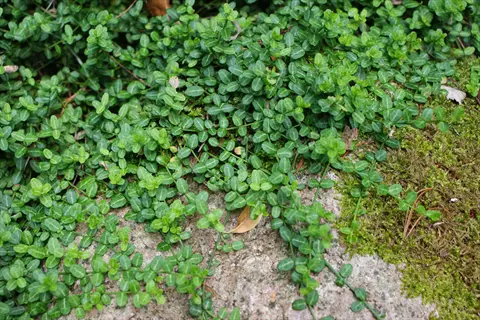
Wintercreeper (Euonymus fortunei)
- Form: Evergreen shrub, vine or groundcover that ranges from 4 to 6 inches tall as a carpet up to about 6 feet as a loose shrub.
- Climbing habit: Climbs by twining stems and aerial rootlets and can reach over 60 feet up a tree as it grows toward the light.
- Color: Many variegated cultivars like 'Emerald Gaiety' and 'Emerald n Gold' hold gold or white markings through winter.
- Hardiness: Rated for USDA zones 4a to 9b, making it the cold-hardiest common type in this group (NC State Extension).
- Caution: Listed as invasive across several Southeast and Northeast states because it escapes into forests and climbs trees.
- Best for: Groundcover, low edging and slopes where its fast spread and evergreen leaves fill space quickly.

Burning Bush (Euonymus alatus)
- Form: Deciduous shrub reaching 10 to 20 feet tall, famous for brilliant crimson fall foliage and corky winged stems.
- Growth rate: Grows slowly at under 12 inches a year, so it takes time to fill a hedge line (Clemson HGIC 1063).
- Fruit: Red fruit with a split husk exposing red-orange seeds that birds eat and spread widely.
- Hardiness: Cold hardy and adaptable, but it drops every leaf in fall rather than staying green.
- Caution: Invasive and legally restricted or banned in states including Pennsylvania and Wisconsin, so check local rules.
- Best for: Fall color as a specimen where it is legal, or choose a seedless cultivar or native alternative instead.

Japanese Euonymus (Euonymus japonicus)
- Form: Dense evergreen shrub growing 10 to 15 feet tall with glossy leaves, often grown in variegated golden forms.
- Use: A classic choice for clipped evergreen hedges, screening and foundation plantings in milder regions.
- Color: Cultivars such as golden euonymus add bright yellow-edged leaves that hold color year round.
- Tolerance: Handles coastal salt, urban pollution and a wide range of soils once it is established.
- Watch: More prone to powdery mildew and scab than some other types, so give it good air movement.
- Best for: Formal evergreen hedges and bright foliage accents in warmer climates.
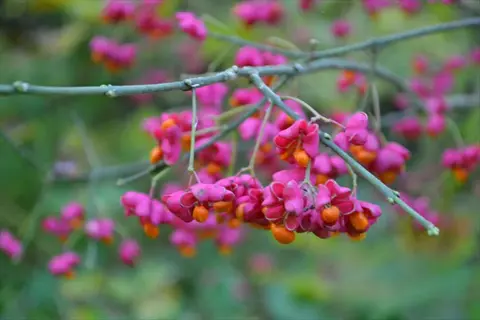
Spindle Tree and Strawberry Bush
- Spindle tree: Euonymus europaeus is a deciduous large shrub or small tree reaching up to 30 feet with pink-and-orange fruit.
- Strawberry bush: Euonymus americanus is a deciduous native shrub of 4 to 6 feet, also called hearts-a-bustin for its showy seed capsules.
- Color: Both offer ornamental fall fruit and good autumn leaf color rather than evergreen foliage.
- Wildlife: Their split capsules reveal bright seeds that attract birds, which helps spread some species.
- Native note: Strawberry bush is North American native and a gentler choice than the invasive Asian species.
- Best for: Naturalistic borders and woodland edges where fall fruit and a looser shape are welcome.
Match the mature size to your space first. Then decide if you want winter leaves. The right pick gets a lot easier that way. A wintercreeper that crawls 4 to 6 inches as groundcover does a far different job than a burning bush at 10 to 20 feet. Check your state rules before you buy too, since a couple of these escape into wild forest and carry legal limits.
Euonymus Care Basics
Euonymus care comes down to one idea. This is a plant that survives almost anywhere but only looks its best when the light and drainage match the type you planted. Match the spot to the leaf color you want, and most of the work is done.
The genus is easy on light. It takes full sun of six or more hours all the way down to deep shade. But euonymus sun requirements still shape how it looks, not just whether it lives. Variegated euonymus keeps its bright gold or white markings in more light, and those same leaves can fade or revert toward plain green in deep shade. So if you bought a plant for its color, give it sun.
For euonymus soil, the rule is short. It handles most soils except waterlogged ground. It even shrugs off road salt, urban pollution, and heavy clay that kills fussier plants. Give it well-drained soil and you remove the one condition it truly hates, which is roots sitting in standing water.
Hardiness depends on the species, so check the hardiness zones for the type you buy. The genus runs USDA zones 6a to 9b, but wintercreeper is tougher and holds up from 4a to 9b. People sell euonymus as drought tolerant, and it is, but only after the first season. Water it through that first year while the roots spread, then it can fend for itself.
Water a new euonymus deeply through its first season before relying on its drought tolerance, because roots need that first year to spread enough to fend for themselves.
Pruning and Shaping
Euonymus is one of the most forgiving shrubs you can put a blade to. It withstands heavy pruning and transplants with ease. So you can cut it hard to renew a tired shape, and the plant bounces right back. The tricky part is the timing, and that is where most people go wrong.
Do your main shaping cut in late winter while the plant is dormant. That is when a hard cut causes the least stress and the fresh spring flush hides your cuts fast. Through the growing season you just need light touch-ups to keep the lines crisp. Learning how to prune euonymus well comes down to those two windows, not constant fussing.
There is one quirk of euonymus pruning that the sales pages skip. Variegated cultivars sometimes throw all-green reverted shoots, plain stems that lost the color the plant was bred for. Those green shoots grow faster and stronger than the variegated growth around them. If you leave them, they slowly take over and your bright hedge goes dull.
A plain-green shoot pushed straight out of my variegated 'Emerald Gaiety' hedge. It was the bed on the north side of the foundation, right under the kitchen window. The shoot stood a good hand taller than the cream-edged growth around it. I caught it on a cold late-winter morning. I traced it down to the main stem and cut it clean at the base. It never came back, and the color around it filled the gap by midsummer.
So make checking for reversion part of every trim. Trimming euonymus takes only a few steps, whether you keep a tight euonymus hedge or a loose mound. Here is the order I follow.
Do the main shaping cut in late winter while the plant is dormant, then make light touch-ups during the growing season as needed.
Remove any dead, damaged or crossing branches first so you can see the true shape before you start shortening healthy stems.
Cut back to just above an outward-facing bud or branch, working evenly around the plant to keep a balanced hedge or mound.
On variegated types, cut out any all-green shoots at their base so the plain growth does not overtake the colorful foliage.
For a tired or oversized plant, cut hard since euonymus tolerates heavy pruning and resprouts strongly from old wood.
Keep sharp, clean tools and your cuts heal faster. Stick to the late winter hard cut, watch for reverted shoots, and a quick pass during summer keeps things neat. Do that and your euonymus stays the size and shape you want for years.
Pests and Diseases
A chalky white crust coated the stems of the north-side 'Emerald Gaiety' hedge by my kitchen window. I found it one morning while filling the coffee pot, and it looked like someone had dusted the branches with flour. The crust was packed armored scale, and a dormant-oil spray cleared it within a season.
That white film is the symptom most people search for, and euonymus turning white points straight to euonymus scale rather than a fungus. A soil drench would have done nothing here. Oil that coats the insects is what works.
Euonymus scale is the most serious pest your shrub will face, and a heavy infestation can kill an untreated plant. The fix is horticultural oil, not a systemic poured into the ground. Soil-applied imidacloprid skips right past armored scales like this one.
Powdery mildew is the most common of the euonymus diseases, and it is also the hardest to control once it sets in. It shows up as a gray dusty film in crowded, shady, humid spots. Crown gall is the third problem worth knowing, since its bacteria sit in the soil for two to three years.
Euonymus Scale
- What it looks like: A white crust of armored scale insects, about one eighth inch long, coating stems and the undersides of leaves.
- Why it matters: It is the most serious euonymus pest and a severe infestation will eventually kill an untreated plant.
- Control: Horticultural oil controls all stages, using a 3 to 4% dormant rate and a 2% spring rate applied at 45 to 85°F.
- Crawler timing: When crawlers are active, an insecticide program of three sprays at 10-day intervals targets them most effectively.
- Avoid: Soil-applied imidacloprid does not control armored scales like euonymus scale, so skip that approach.
- Resistant picks: Choosing E. alatus 'Compactus' or E. fortunei 'Acutus' lowers the risk of serious scale problems.
Powdery Mildew
- What it looks like: A white to gray powdery film on leaves and shoots, most common in crowded, shaded or humid conditions.
- Why it matters: It is the most common and possibly the most difficult disease to control on euonymus.
- Prevention: Improving air movement, spacing plants well and avoiding overhead watering reduce the conditions it favors.
- Susceptible types: Japanese euonymus and variegated forms tend to show mildew and related leaf problems more readily.
- Management: Removing badly affected growth and treating early keeps an outbreak from spreading across the plant.
- Site choice: Placing mildew-prone types in brighter, breezier spots helps far more than repeated spraying.
Crown Gall
- What it looks like: Rough, swollen galls up to several inches across, usually near the soil line or on lower stems.
- Cause: The soil bacterium Agrobacterium tumefaciens, which enters through wounds during planting or pruning.
- Persistence: The bacteria can persist in the soil for two to three years, so the same spot stays risky for replacements.
- Outlook: Infected plants cannot be cured but usually survive and grow for years despite the galls.
- Prevention: Avoiding wounds, planting clean stock and not replanting susceptible shrubs in infected soil are the main defenses.
- When to act: Severely girdled or weak plants are best removed rather than treated, since no cure exists.
Other Leaf and Insect Issues
- Anthracnose: A fungal leaf disease that variegated varieties are especially prone to, causing spots and blotches.
- Cercospora leaf spot: Another fungal spotting disease that disfigures foliage in wet, crowded conditions.
- Scab: A disease that particularly disfigures Japanese euonymus with rough, spotted leaf and stem lesions.
- Aphids: Soft-bodied insects that cluster on new growth and can be rinsed off or treated with insecticidal soap.
- Deer: White-tailed deer frequently damage wintercreeper, though they tend to avoid the winged burning bush.
- General care: Good spacing, airflow and prompt cleanup of fallen leaves prevent most of these minor problems.
Euonymus scale, a white-covered scale insect, is the most serious pest. A severe infestation will make the underside of the leaves and the entire stem white. Unless controlled, this pest will eventually kill the plant.
Most of these troubles trace back to the same root cause, which is poor airflow. Space your shrubs, prune for an open shape and clean up fallen leaves. If you want to dodge scale from the start, plant a resistant pick like E. alatus 'Compactus' and check the stems each spring before crawlers spread.
The Invasiveness Question
The same toughness that makes a euonymus shrub so easy to grow is exactly what causes trouble outside your yard. So are euonymus invasive? Some of the most popular ones are, and a few now carry real legal weight behind that label.
Burning bush came over from Asia in the mid-1800s, and growers loved it for its crimson fall color. Nobody flagged a problem until the 1970s, when people started finding it in the woods far from any garden. Birds eat the orange-red fruit and drop the seeds across miles of forest.
So is burning bush invasive? In much of the Northeast and Midwest, yes. The plant shrugs off deep shade, so it takes over the shrub layer of a forest and crowds out the native plants that wildlife depends on. Pennsylvania now calls burning bush a noxious weed, which makes it illegal to buy, plant, or propagate there. Wisconsin lists the straight species as Restricted.
Wintercreeper carries the same problem in a different shape. It escapes into forests and climbs trees toward the light, and North Carolina lists it as invasive. The traits a gardener loves, like fast growth and shade tolerance, are the very ones that let it run wild once a bird carries the seed past your fence.
You still have good options if you want that fall punch without the risk. Extension sources point to native alternatives that earn their keep. Try native viburnums or red chokeberry. The native dogwoods work too, like silky, gray, and red stem. They feed local birds and stay put where you plant them.
If your heart is set on the original look, a seedless burning bush is the responsible middle path. Sterile selections such as Fire Ball Seedless give you the crimson show without the fruit that birds spread into the woods. Check your local rules first, then plant with a clear conscience.
Burning bush has been declared a noxious weed by the Pennsylvania Department of Agriculture, therefore it is now illegal to purchase, intentionally plant, or propagate this species within the state.
Safety, Wildlife and Uses
Euonymus earns its spot in so many yards because it works hard. The main euonymus uses start with a tight evergreen euonymus hedge along a property line. They also include a low euonymus groundcover that carpets a bare slope. The plant shrugs off road salt, city smog, heavy clay, and coastal wind. So it thrives in parking strips and bare corners where little else lasts.
Wildlife notices it too. Birds eat the bright orange-red seeds and carry them well beyond your garden. That is how this plant spreads on its own. You get a plus for backyard birds out of it. But you also want to watch where new seedlings pop up around your yard.
Deer treat euonymus in two very different ways. So be careful with the deer resistant euonymus label. White-tailed deer often chew up wintercreeper. Yet they tend to leave winged burning bush alone. Your real deer protection depends on the species you plant, not on the genus as a whole.
One honest caution sets this plant apart from the glossy nursery pitch. Every part of the shrub is euonymus toxic to people and pets if eaten in quantity. The good news is that severity stays low. You also will not get a skin rash from touching it. Eating the leaves, stems, or berries can bring on vomiting, diarrhea, weakness, and chills. So your smart move is to place it with care.
Here is where this shrub really pulls its weight around the yard.
- Hedges and screening: Evergreen types like Japanese euonymus clip into dense formal hedges and privacy screens in milder regions.
- Groundcover and slopes: Low wintercreeper spreads quickly to carpet bare ground and hold soil on banks for erosion control.
- Foundation plantings: Compact and variegated forms add structure and year-round color along house foundations and entries.
- Tough sites: Its tolerance of road salt, urban pollution, clay and coastal conditions suits parking strips and exposed spots.
- Site euonymus away from areas where children or pets graze, since all parts are toxic if eaten.
All parts of euonymus, including the colorful berries, are toxic to people and pets if eaten, so place it away from spots where children or animals might nibble the fruit.
5 Common Myths
All euonymus shrubs stay green through the winter the same way, so any type works as an evergreen hedge.
Only species like wintercreeper and Japanese euonymus are evergreen. Deciduous types such as burning bush drop every leaf in fall.
Euonymus is completely safe to plant anywhere because nurseries sell it freely across the country.
Burning bush and wintercreeper are invasive and legally restricted or banned in states including Pennsylvania and Wisconsin, so check local rules.
Euonymus is harmless to people and pets, so the colorful berries are nothing to worry about in the yard.
All plant parts are toxic if eaten, with symptoms like vomiting and diarrhea, so keep berries away from children and pets.
A soil drench of imidacloprid is the easy fix for euonymus scale once the stems turn white.
Soil-applied imidacloprid does not control armored scales like euonymus scale. Horticultural oil at the right timing is far more reliable.
Euonymus is so tough and low maintenance that it never gets serious pests or diseases worth watching.
Euonymus scale can kill an untreated plant, and powdery mildew is hard to control, so regular checks still matter.
Conclusion
Picking the right euonymus shrub comes down to a few clear choices you can make before you ever reach the checkout. The genus holds about 140 species, and they run from a 4 to 6 inch groundcover all the way up to a 30 foot spindle tree. So your first real decision is mature size, and whether you want an evergreen or a plant that drops its leaves in fall.
Once you know the size and form you want, the rest of euonymus care is honestly easy. These plants take most soils, shrug off drought, and bounce back from hard pruning. But three things deserve your full attention before you commit. Get those right and the plant will reward you for years.
First, check your local invasive rules. Burning bush and wintercreeper escape into wild forests, and some states have banned them outright. Second, treat euonymus scale with horticultural oil, not a soil drench. Soil-applied imidacloprid does not control this pest at all. Third, keep in mind that every part of the plant is toxic if eaten, so think twice with young kids or pets in the yard.
The same toughness that makes these shrubs so forgiving is exactly why placement matters. A plant this adaptable can spread where you never meant it to go. So check the rules in your area first. Look at native alternatives too, such as a viburnum or a red chokeberry. Then match the light and size to the variety before you buy. Pick well among the euonymus types and you get a hardy, good-looking shrub that stays right where you put it.
Glossary
- Crown gall
- A bacterial disease that forms rough swollen growths near the soil line, with bacteria that linger in the soil for two to three years.
- Euonymus scale
- A white-armored sucking insect, the most serious euonymus pest, that coats stems and leaf undersides and can kill an untreated plant.
- Horticultural oil
- A refined oil sprayed on plants to smother insects like scale at the right temperature and timing.
- Noxious weed
- A plant officially declared harmful by a government, which can make it illegal to buy, plant, or propagate.
- Powdery mildew
- A fungal disease that leaves a white to gray powdery film on leaves and shoots and is hard to control on euonymus.
- Reversion
- When a variegated plant pushes out plain all-green shoots that can take over if they are not pruned away.
- Variegated
- Foliage marked with two or more colors, such as the gold or white edges on many euonymus cultivars.
- Wintercreeper
- Euonymus fortunei, an evergreen euonymus that can grow as a groundcover, a shrub, or a vine that climbs trees.
External Sources
Frequently Asked Questions
How big do euonymus bushes get?
It depends entirely on the species, from a 4 to 6 inch groundcover to a 30 foot spindle tree.
Do euonymus like sun or shade?
Most euonymus handle full sun to deep shade, but variegated types keep brighter color in more light.
Are euonymus invasive?
Some are. Burning bush and wintercreeper are invasive and restricted in several states.
Is euonymus poisonous to dogs?
Yes. All parts are toxic to dogs and other pets if eaten, though severity is generally low.
Why is my euonymus turning white?
A white crust on stems and leaf undersides usually means euonymus scale, the most serious pest.
Do euonymus stay green all year?
Evergreen types like wintercreeper stay green all year, while deciduous types lose their leaves.
Is euonymus fast growing?
It varies. Burning bush is slow while wintercreeper is very fast at over 25 inches a year.
Where is the best place to plant euonymus?
Pick a well-drained spot with enough room for the mature size and the right light for the type.
Do you cut back euonymus?
Yes. Euonymus handles heavy pruning well, and late winter is the best time to cut it back.
What can I plant next to euonymus?
Choose companions with matching sun, soil and water needs, plus contrasting color and texture.