
One summer I set deep purple salvia and a clump of silvery foliage right under the kitchen window. The late light hit them and they glowed against the gold-edged 'Emerald Gaiety' hedge behind. The best euonymus companion plants want the same things this shrub does. Match a plant to euonymus on sun, soil and water. Then both thrive side by side without a fight.
The matching logic behind good euonymus companion plants is simple once you think in terms of needs. Pick plants to grow with euonymus that share its light. They should also share its drainage and its taste for dry spells. When two neighbors want the same conditions, neither one gets stressed. Neither one sulks while the other takes over the bed.
Euonymus is tough. Many types handle full sun to shade. They shrug off drought once settled. They grow in poor or rocky soil that defeats fussier plants. Clemson HGIC and NC State Extension both note this wide range. That toughness opens the door to a lot of partners. You only need plants that keep up with its easy nature.
Start by reading your own spot before you buy anything. Watch how many hours of sun your euonymus gets each day. Dig a small hole after rain and see how fast the water drains away. Those two facts point you straight to the right partners. If your bed bakes in full sun and dries fast, lean on grasses, salvia and sedum. If it sits in part shade with steady soil, a clipped boxwood or a low evergreen fits better next to it.
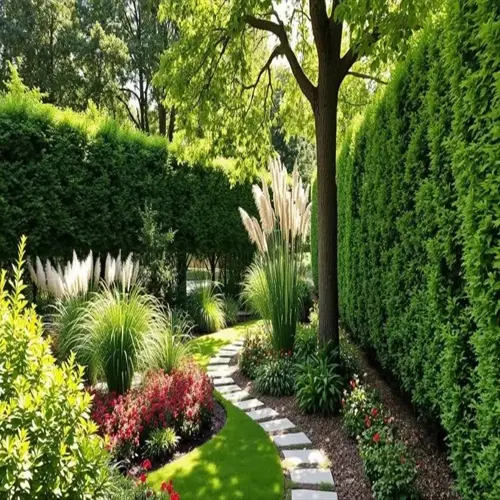
Ornamental Grasses
- Why they work: They love the same lean, well-drained soil and take drought in stride once their roots set.
- The look: Fine, arching blades play off the dense, glossy leaves of euonymus for real texture contrast.
- Good picks: Try blue fescue or little bluestem near the front of a sunny bed.
Salvia And Sedum
- Why they work: Both want sun and sharp drainage, and both sail through hot, dry stretches.
- The look: Deep purple salvia spikes and chunky sedum heads pop against gold or green foliage.
- Bonus: Bees and butterflies work the blooms all season long.
Boxwood And Tough Shrubs
- Why they work: Boxwood and other adaptable shrubs handle the same soils and pruning rhythm.
- The look: A tidy boxwood ball anchors a loose euonymus hedge with clean, formal shape.
- Use case: Great for framing a path or marking a corner.
Color and texture turn a plain grouping into a sharp one. Once the needs match, set your leaf shapes and shades against each other on purpose. A variegated euonymus makes a bright backdrop. So park your darker or finer-leaved neighbors right in front of it. The gold-and-green foliage makes a plum salvia or a silver artemisia read twice as bold. You get a real glow with very little effort.
Space matters as much as color when you set these plants. Give each one room to reach its full size so the roots are not fighting for the same water. A reaching euonymus can swallow a small perennial if you tuck it in too close. Leave a gap and let your companions fill it in over a season or two. You will prune far less, and your bed will hold its shape for years.
The smartest euonymus pairings lean on this contrast. Set bold leaves against fine ones. Set light shades against dark. Put a glossy shrub next to a feathery grass. You end up with a bed that looks layered and full even before anything blooms. That structure carries your planting through the off months when flowers are scarce. It is the part of the design most people skip.
One thing to skip: do not crowd euonymus with moisture-loving plants that want soggy ground. Astilbe, ligularia and bog-style perennials all need wet feet. That constant damp can rot the roots of a shrub built for fast-draining soil. Keep those thirsty plants in their own wet corner. Pick drought-tough neighbors for your euonymus instead. Then the whole bed runs on one easy watering schedule all summer, and you spend less time fussing over it.
Read the full article: Euonymus Shrub: Care, Types and Honest Guide