
Introduction
When most people say cypress shrub, they mean a false cypress in the genus Chamaecyparis. Some mean the low Siberian carpet cypress that hugs the ground. They almost never mean a giant true-cypress tree. So if you came here for an evergreen that stays a sensible size, you are in the right place.
These plants earn their keep. NC State Extension calls false cypress a low-maintenance evergreen shrub. It is hardy across roughly USDA hardiness zones 4 to 8. Once it settles in, it shrugs off drought, handles moderate salt, and even puts up with browsing by deer and rabbits. That is a lot of toughness for a plant you barely have to fuss over.
Here is the gap I want to fill. Most cypress guides just list pretty varieties. Others walk you through watering and feeding. But few pair each pick with its real zone, mature size, and drainage needs. Fewer still warn you about the one rule that trips up new growers: false cypress will not regrow from old bare wood. Cut too hard and you leave a dead brown gap that never fills in. You will get both the full list and that make-or-break care detail right here.
Picking the right type up front matters more than any single care step you take later. A dwarf cypress like a small Hinoki or Sawara can sit by your front door for years and stay neat. A Leyland left unsheared races toward 60 to 70 feet and turns into a wall, not a shrub. This guide covers genuine shrub-scale picks for tight spots, plus the bigger types people shear into hedges and screens, so both kinds of searchers find their match below.
Best Cypress Shrubs to Grow
Not every plant sold as a cypress stays small, and that catches a lot of buyers off guard. Start with the picks that hold a true shrub footprint, then learn which ones are really trees in disguise. Below you get each plant paired with its mature size, USDA zone, and drainage need, so you can match it to your spot before you dig a hole.
Here is the part most lists skip. The plants that stay shrub-sized are the dwarf cultivars, not the wild species. You want a dwarf cypress. Good picks are Golden Mop Sawara, a dwarf Hinoki cypress, or Siberian cypress. Those three keep a low profile for years. Leyland cypress and bald cypress grow into full trees of 60 to 70 ft, so they only belong on this list with a clear warning attached.
From the kitchen window, a Golden Mop Sawara glows like a low gold lamp in the damp back corner where the lawn runs into the woods edge. I planted it about eight years ago, and it still only reaches chest-high, no shearing and no fuss. That thread-like gold foliage holds its color right through winter while everything around it goes gray.
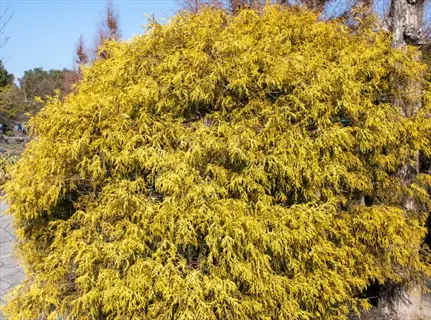
Golden Mop Sawara False Cypress
- Type: A dwarf cultivar of Sawara false cypress (Chamaecyparis pisifera) with soft, thread-like golden foliage that holds color through the year.
- Mature size: Slow growing and shrub-scale, far smaller than the species, which is cultivated at about 20 to 30 ft (6 to 9 m) and reaches 50 to 70 ft in the wild.
- Hardiness: Suited to USDA zones 4a to 8b, handling cold winters and warm summers across much of the country.
- Light and soil: Full sun (six or more hours) to partial shade in moist, well-drained soil of almost any pH, and very drought tolerant once established.
- Best use: A bright foundation shrub, low accent, or container plant where its gold color lights up a dim corner.
- Watch for: Needs good drainage to avoid root rot, and is somewhat prone to bagworms, so check foliage in late spring.
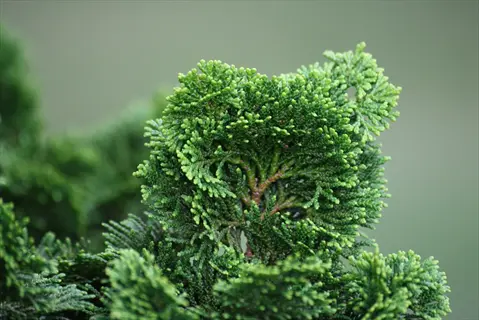
Dwarf Hinoki Cypress
- Type: A compact cultivar group of Hinoki false cypress (Chamaecyparis obtusa), such as Nana Gracilis, prized for layered, fan-shaped green sprays.
- Mature size: Dwarf forms stay shrub-sized for many years, while the full species reaches 50 to 75 ft tall by 10 to 25 ft wide, so the cultivar choice matters.
- Hardiness: Grows in USDA zones 4a to 8b in full sun to partial shade, preferring moist, fertile loam with wind protection.
- Texture: Sculptural, slightly irregular branching gives it a refined, almost architectural look that suits Asian-inspired and rock gardens.
- Best use: A specimen shrub, container focal point, or bonsai subject; the cultivar Reis Dwarf is noted for bonsai.
- Watch for: Susceptible to root rot, juniper blight, and bagworms, so plant in well-drained soil and inspect foliage regularly.

Siberian Carpet Cypress
- Type: Siberian or Russian carpet cypress (Microbiota decussata), a prostrate, mat-forming dwarf conifer rather than an upright shrub.
- Mature size: Stays very low at about 1 to 1.5 ft (30 to 45 cm) tall and spreads 3 to 12 ft (0.9 to 3.7 m) wide as a groundcover.
- Hardiness: The coldest-hardy of the shrub-scale cypresses at USDA zones 3a to 7b, ideal for very cold gardens.
- Light and tolerance: More shade tolerant than groundcover junipers, but intolerant of poor drainage, excessive wetness, and hot, humid summers.
- Best use: Erosion control on slopes, ground-hugging cover, and cold-climate plantings where taller shrubs struggle.
- Watch for: Generally pest and disease free, but root rot can develop in wet areas, so reserve it for cool, well-drained sites.

Leyland Cypress
- Type: Leyland cypress (x Cupressocyparis leylandii), an intergeneric hybrid used mostly as a fast tall hedge or screen rather than a true shrub.
- Mature size: Large, reaching 60 to 70 ft (18 to 21 m) tall (70 to 100 ft not uncommon) by 12 to 20 ft (3.7 to 6 m) wide, growing 3 to 4 ft per year when young.
- Light and soil: Full sun to part shade in well-drained fertile soil, but adaptable and tolerant of occasional poor drainage and coastal salt spray.
- Best use: Sheared privacy screens and windbreaks where space allows; not suited to small shrub borders.
- Main problem: Its most serious problem is a canker causing branch dieback to the trunk; bagworms are a major insect pest.
- Watch for: Prune only during dry periods to limit disease spread, and give it room since it quickly outgrows tight spaces.

Bald Cypress
- Type: Bald cypress (Taxodium distichum), a deciduous conifer often grouped under cypress though it drops its needles each fall.
- Mature size: A large tree at 50 to 70 ft (15 to 21 m) tall by 20 to 30 ft (6 to 9 m) wide, so it is not a shrub-scale plant.
- Hardiness: Very adaptable across USDA zones 4a to 9b, tolerating dry upland soil through standing water and developing knees near water.
- Seasonal color: Looks like a needled evergreen in summer, then turns reddish-brown and drops its foliage in fall.
- Best use: Specimen shade tree for large landscapes, rain gardens, and wet sites where most conifers fail.
- Watch for: Generally tough and long-lived, with minor issues from twig blight, bagworms, spider mites, and chlorosis in alkaline soil.
If you want something that stays small, your picks are the first three. Read the mature size line before you fall for the foliage, because that number tells you whether you bought a shrub or a 70 ft tree. Get the drainage right too, since every cypress here resents wet feet and pays you back with root rot.
True vs False vs Bald Cypress
Most cypress confusion starts with the name itself. Think of cypress as a last name shared by a few plant families. True cypress, false cypress, and bald cypress are relatives. They look alike, but they act very differently in your yard. Sort them out first and the rest of your buying choices get much easier.
True cypress is the genus Cupressus. It is the home of the Italian, Monterey, and Arizona types. False cypress is the genus Chamaecyparis. It is the soft, scale-like group, and it gives you most of the shrub-sized picks. Bald cypress is Taxodium distichum, a deciduous conifer that drops its needles each fall. Three groups, one shared name, and a lot of mislabeled plants at the store.
The Latin helps explain why the false cypress group has so many dwarf forms. The genus name Chamaecyparis comes from two Greek words. The first is chamai, which means low to the ground. The second is kuparissos, for cypress. That low-growing root is baked right into the name. So it makes sense that this group is full of shrub-scale plants you can set near the house.
True cypress is the genus Cupressus, including Italian, Monterey, and Arizona cypress. These tend toward larger, often columnar trees, and most are not the soft, shrub-scale plants a cypress shrub searcher usually wants.
False cypress is the genus Chamaecyparis, with soft, scale-like, often fragrant foliage in green, gold, or blue. Its many dwarf cultivars stay shrub-sized, which is why it is the group most home gardeners actually plant as a cypress shrub.
Bald cypress is the one that trips up the most buyers. It grows feathery green needles all summer and looks like a solid evergreen. But it is a deciduous conifer, so those needles turn rusty bronze and drop in fall, leaving bare branches all winter. NC State Extension puts the point plainly.
Although it looks like a needled evergreen in summer, it is deciduous or 'bald' as the common name suggests.
So if you want year-round green screening, bald cypress is the wrong pick no matter how full it looks in July. Match the group to the job. Reach for false cypress when you want an evergreen shrub, and skip the bald cypress unless you actually want that bare winter look.
Size, Hardiness and Drainage
The size on a nursery tag tells you almost nothing on its own. A Sawara false cypress can top out at 20 to 30 ft as a cultivated shrub, but the wild species runs 50 to 70 ft. Same name, wildly different plant. So the first thing to settle is mature size, then your USDA hardiness zones, and then how your soil drains. Get those three right together and you skip the mistake that kills most of these plants.
No competitor pairs all three numbers in one place, so I built the table below to do it. Read each row across. You see what the plant becomes, where it survives the winter, and what kind of ground it needs. The figures come straight from NC State Extension and Clemson, not a seed packet.
That wild-versus-cultivated gap trips up new buyers more than anything. One site swears a Hinoki hits 75 ft and the next calls it a tidy 4 ft shrub. Both are right. The 75 ft figure is the species, and the small one is a dwarf false cypress cultivar like Nana Gracilis. Check the cultivar name on the tag, because that word decides whether you planted a hedge or a tree.
Now turn the table into a quick pick. For a small space, choose a dwarf false cypress or Siberian carpet cypress, which stays barely a foot tall. For a tall screen, plant Leyland and give it room. For a wet spot where nothing else lives, plant bald cypress, since it handles dry ground all the way to standing water.
Drainage is the part people skip, and it is the part that kills. Nearly every type here wants moist but well-drained soil, with two clear exceptions. Bald cypress shrugs off soggy ground, while Siberian carpet cypress hates wet feet and hot, humid summers in equal measure. That coldest pick is also your best cold hardy cypress, holding strong down to zone 3 where the others quit.
How to Plant a Cypress Shrub
The damp back corner where my lawn meets the woods edge is a healthy green spot now, full and happy. It took me three tries to get there. An arborvitae rotted out first, then a juniper went the same way within a year. The cypress shrub I put in next finally held because I planted it on a raised mound instead of flat ground. The plant was never the problem. The standing water was.
That is why learning how to plant cypress starts with the soil, not the shovel. False cypress wants full sun to partial shade and moist, well-drained soil, and it shrugs off acid, neutral, or alkaline ground without complaint. Get the drainage right and the rest of the job is easy. Get it wrong and even a perfect plant will sit there and slowly rot at the roots.
Run a quick drainage test before you dig anything permanent. Dig a hole about 12 inches (30 cm) deep, fill it with water, and watch the clock. If the water is still sitting there a few hours later, the spot drains too slowly for a cypress. Plant on a raised mound or amend the bed so the roots never sit in a puddle. Spring or fall is the best time to plant, since cooler weather lets roots settle before summer heat or winter cold.
Dig a 12 inch (30 cm) hole and fill it with water. If it has not drained within a few hours, plan to plant on a raised mound, since soggy ground is the main cause of root rot.
Pick a spot with full sun to partial shade and shelter from harsh wind for types like Hinoki. Most false cypress accept acid, neutral, or alkaline soil as long as it drains well.
Make the planting hole as deep as the root ball and two to three times as wide, so the loosened soil lets the wide-spreading roots settle in with ease.
Place the shrub with the top of the root ball level with or slightly above the surrounding soil, never buried deeper, then backfill and firm gently to push out air pockets.
Water deeply right after planting, then add two to three inches (5 to 8 cm) of mulch over the root zone. Pull it back from the trunk so the stem stays dry and rot free.
Keep the soil evenly moist but never waterlogged through the first growing season. After that, most false cypress turn very drought tolerant and need far less water from you.
Dwarf cypress also does well in a pot if you skip dense garden soil and use a well-draining potting mix instead. The same rule carries over here. Roots need air as much as they need water, so a container that drains fast keeps a dwarf shrub healthy for years on a patio or step.
Pruning Without Killing It
Here is the rule that saves most cypress shrubs from a slow, ugly death. False cypress will not regrow on old wood, so once you cut back into the bare brown interior, that gap stays empty for good. Moderate pruning keeps the neat conical form, but only if every cut lands in the right place.
Think of the plant as two layers. The outer shell of soft green needles is your only safe zone to cut. Below it sits the bare inner wood, and that part is a hard no-cut line that won't regrow on old wood no matter how long you wait. When you prune into green growth, the shrub fills back in fast and clean.
Timing and tools matter just as much as where you cut. Do your late winter pruning or early spring shaping with clean, sharp bypass pruners so each cut heals well and disease stays out. For big types like Leyland, only prune during dry spells, since wet cuts open the door to canker that can disfigure or kill the tree.
Shape lightly in late winter or early spring, and for Leyland and other large types prune only during dry periods to limit the spread of disease like canker.
Cut only into living green growth on the outer shell of the shrub. Never cut back into the bare brown interior wood, which will not regrow.
Remove no more than about a third of new growth in a season, using clean, sharp bypass pruners so cuts heal cleanly and disease stays out.
Make light, frequent shaping cuts to guide the natural form rather than rare drastic cutbacks, since slow-growing cypress takes years to recover from heavy pruning.
Never shear a cypress shrub hard back to bare brown wood expecting it to fill in. False cypress will not regrow from old wood, so that cut leaves a permanent dead gap.
These are slow growers, so one bad hard cutback can disfigure a shrub for years. That is why light, regular shaping always beats rare drastic cuts when you start pruning false cypress. It is also the real reason to pick a naturally small dwarf cultivar from the start. Fighting an oversized plant with the pruners is a battle you will lose.
Pests, Diseases and Tolerances
Most trouble with your cypress shrub traces back to one root cause, and it is not a bug or a fungus. It is soggy soil and stressed roots. Get your drainage and airflow right, and you prevent more problems than any spray ever will.
The big killer is root rot, which sets in when roots sit in wet ground for too long. It will fool you. The browning foliage looks like drought even though your soil is soaked. NC State Extension also flags juniper blight. That is a fungal disease called Phomopsis juniperovora, and it spreads fast in wet weather. Then there are bagworms that build small bags from the foliage and chew it bare. Catch them early and you can pick the bags off by hand.
Leyland cypress carries a heavier risk for you. Clemson Cooperative Extension says its worst problem is a cypress canker. The canker causes branch dieback all the way to the trunk. There is no easy cure once it sets in. So prune your Leyland only in dry weather, and lean toward dwarf false cypress in a well-drained spot when you can.
The good news is how tough false cypress proves once it settles in. NC State Extension reports it is deer resistant and shrugs off rabbits too. It is also drought tolerant with some salt tolerance once established. Siberian carpet cypress is the coldest-hardy of the group, but it hates wet feet. Bald cypress goes the other way and handles standing water that would drown other conifers. The table below pairs each problem you might hit with its cause and a simple fix.
Root Rot
- Cause: Develops when roots sit in poorly drained or constantly wet soil, the single most common killer of cypress shrubs.
- Signs: Browning, thinning foliage and general decline, often mistaken for drought even though the soil is too wet.
- Prevention: Plant in well-drained soil or on a raised mound, and avoid overwatering, especially during the dormant season.
Juniper Blight and Bagworms
- Juniper blight: A fungal disease (Phomopsis juniperovora) that spreads in wet conditions and causes branch tip dieback on false cypress.
- Bagworms: Caterpillars that build spindle-shaped bags from foliage and can defoliate a shrub if left unchecked.
- Management: Improve airflow and avoid overhead watering for blight, and hand-pick bagworm bags early in the season before they spread.
Leyland Canker
- Cause: A canker disease that, per Clemson Cooperative Extension, is Leyland cypress's most serious problem, causing branch dieback to the main trunk.
- Impact: It can seriously disfigure or even kill the tree, and there is no simple cure once it takes hold.
- Prevention: Prune Leyland only during dry periods, keep plants unstressed, and favor more disease-tolerant dwarf false cypress where you can.
Tolerances and Resistance
- Deer and rabbits: NC State Extension reports false cypress tolerates browsing by deer and rabbits, making it a reliable choice in wildlife-heavy yards.
- Drought and salt: Once established, false cypress tolerates drought and moderate salt, including some coastal exposure for tougher types like Leyland.
- Cold and wet: Siberian carpet cypress is the coldest-hardy at zone 3a but hates wet feet, while bald cypress thrives in wet ground other conifers cannot handle.
They will tolerate drought and moderate amounts of salt as well as browsing by deer and rabbits.
5 Common Myths
All cypress are the same plant, so any cypress shrub you buy will behave and grow to the same size in your yard.
True cypress, false cypress, and bald cypress are different genera. A dwarf false cypress stays small while Leyland and bald cypress become 60 to 100 foot trees.
A cypress shrub that gets too big can simply be cut hard back to bare wood and it will quickly fill back in with new growth.
False cypress will not regrow from old bare brown wood. Cutting into that wood leaves a permanent dead zone, so prune only into green growth.
Cypress shrubs are tough drought-tolerant evergreens, so the more water you give them the faster and healthier they will grow.
Overwatering and poor drainage cause root rot, the most common killer of these plants. They need moist but well-drained soil, not constant wetness.
Every cypress is a needled evergreen that holds its foliage all winter long no matter which type you choose to plant.
Bald cypress is a deciduous conifer that drops its needles each fall, turning reddish-brown first, even though it looks evergreen in summer.
Cypress shrubs are demanding plants that need spraying and feeding constantly to survive in an average home garden.
Most false cypress are low maintenance, tolerate drought and moderate salt once established, and resist browsing by deer and rabbits.
Conclusion
The right cypress shrub for most yards is a dwarf false cypress or a Siberian carpet cypress, not a giant true cypress or a bald cypress tree. Those big species grow into 50 to 100 foot trees, so they fight you the whole way. Pick a plant that already wants to stay small and the work drops to almost nothing.
Two facts carry the most weight once your plant is in the ground. First, well-drained soil stops the root rot that kills more cypress shrubs than any pest or cold snap. Second, false cypress will not regrow from old bare wood, so you cut only into the green growth and never deeper. Break that one rule and you leave a dead hole that stays bare for good.
Cold-zone gardeners are not stuck either. Siberian carpet cypress is hardy down to zone 3a, which makes it a rare shrub-scale evergreen for brutal winters. Most false cypress sit happy in zones 4 to 8, so check your zone before you buy and you skip the heartbreak of a plant that can't survive your climate.
Match the type to the site up front and you get a true low maintenance evergreen that holds color through all four seasons. A right-sized dwarf cypress shrugs off deer, rabbits, drought, and moderate salt once it settles in. Choose by space first, the small spot gets a dwarf false cypress or Siberian carpet, the tall screen gets Leyland, and the wet corner gets bald cypress. Then give it drainage and a gentle hand with the shears, and your cypress will reward you for decades.
Glossary
- Bald cypress (Taxodium distichum)
- A deciduous conifer often grouped under cypress that drops its needles each fall and tolerates very wet ground.
- deciduous conifer
- A cone-bearing tree that drops all its needles each fall instead of staying green through winter.
- Dwarf cultivar
- A selectively bred form of a plant that stays much smaller than the wild species, keeping cypress shrub-sized for years.
- false cypress
- An evergreen shrub group in the genus Chamaecyparis with soft, scale-like foliage, grown as a garden shrub rather than a tall tree.
- False cypress (Chamaecyparis)
- A group of soft, scale-leaved evergreen conifers in the genus Chamaecyparis whose many dwarf cultivars are the plants most often grown as cypress shrubs.
- Juniper blight (Phomopsis)
- A fungal disease that spreads in wet conditions and causes branch tip dieback on false cypress.
- True cypress (Cupressus)
- The genus Cupressus, including Italian, Monterey, and Arizona cypress, which are generally larger trees rather than garden shrubs.
- USDA hardiness zones
- A map-based scale that rates how cold a region gets so gardeners can match plants to their winter low temperatures.
External Sources
Frequently Asked Questions
What is a cypress shrub?
A cypress shrub is usually a false cypress (Chamaecyparis) or a low Siberian carpet cypress grown as a shrub rather than a tall tree.
What is the best cypress shrub for privacy?
For a true shrub, columnar false cypress and dwarf cypress work for low screens, while Leyland is used as a tall sheared hedge.
Will a cypress shrub grow back if you cut it?
Only when you cut into green growth. False cypress will not push new shoots from old bare brown wood, so hard cutbacks leave a permanent dead zone.
Do cypress shrubs have deep roots?
Most cypress are not aggressive deep-rooters in normal soil; many spread roots wide and shallow, and bald cypress adapts to wet ground.
Is cypress toxic to humans?
Cypress shrubs are not generally listed as seriously toxic, but the foliage and sap are not meant to be eaten and can irritate skin.
What are the downsides of cypress shrubs?
Main downsides are root rot in wet soil, juniper blight, bagworms, Leyland canker, and the rule that cut bare wood will not regrow.
What is the lifespan of a cypress shrub?
False cypress shrubs commonly live for decades, while bald cypress is one of the longest-living trees, lasting many centuries in the right site.
What is the difference between true and false cypress?
True cypress is the genus Cupressus (Italian, Monterey, Arizona); false cypress is Chamaecyparis, the soft-foliage group used as garden shrubs.
Why is the cypress tree a symbol of death?
Tall evergreen cypress trees have long been planted in cemeteries around the Mediterranean, which tied them to mourning and remembrance.
What are the advantages of cypress shrubs?
Cypress shrubs offer year-round evergreen color, low maintenance, drought tolerance, and resistance to deer and rabbits once established.