
It depends on the species. Some euonymus stay green all year. Some drop every leaf in fall. An evergreen euonymus like wintercreeper keeps its foliage through winter. A deciduous euonymus like burning bush goes bare. The plant tag does not always make this clear. So the name matters more than the look you see at the garden center in spring.
Stand in a garden in January and the split is easy to see. Two shrubs both labeled euonymus can look nothing alike. One is still leafy and green. It holds its color against the cold. The other is a bare framework of stems with no leaves at all. Same plant family, very different winter.
The evergreen group has two main types you will run into. The first is wintercreeper. Its Latin name is Euonymus fortunei. The second is Japanese euonymus. You can spot it by the tag name E. japonicus. Both hold their leaves through winter and stay green all year. The deciduous group also has two well-known plants. One is burning bush, sold as E. alatus. The other is the spindle tree. These two color up in fall. Then they drop every leaf. You get bare branches until spring.
Why the big split in one plant family? It comes down to how each type handles the cold. The evergreen kinds have tough, waxy leaves that ride out frost. They keep working through the winter and stay green. The deciduous kinds have thin, soft leaves. These cannot take hard freezes. So the plant pulls back, drops them, and waits for spring. You see the same trick in many shrubs and trees you already know.
- Wintercreeper (E. fortunei) keeps leaves and variegation through winter.
- Japanese euonymus (E. japonicus) holds glossy evergreen foliage year round.
- Best choice for year-round green hedges and screening.
- Burning bush (E. alatus) drops every leaf after its crimson fall display.
- Spindle tree (E. europaeus) loses leaves but shows ornamental fall fruit.
- Bare stems in winter no matter how the plant is pruned.
Color holds up well on the evergreen types too. The white-edged wintercreeper Emerald Gaiety keeps that bright trim all winter. Golden forms of Japanese euonymus carry their yellow tones into the cold months too. Clemson HGIC 1063 lists both as reliable evergreens in mild zones. So your euonymus winter leaves are not just hanging on. They still look good in the snow. That is why this evergreen euonymus works so well as a year-round hedge for your yard.
Burning bush plays a very different role. Gardeners grow E. alatus for its bright crimson fall display. They do not grow it for winter cover. NC State Extension lists it for that fall color, which fades as the leaves drop. The spindle tree works the same way. It does hold pretty pink and orange fruit after the leaves fall. But neither one gives you a green wall in December.
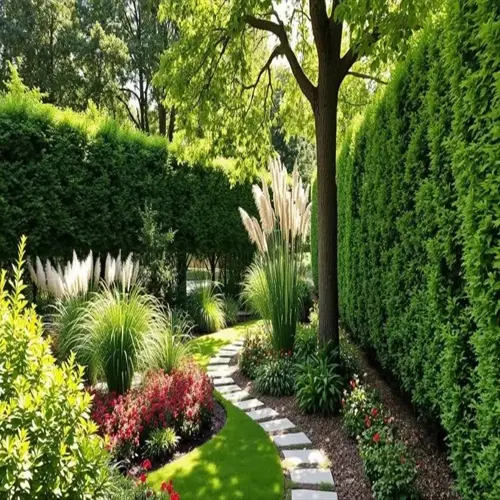
Want year-round green for a hedge or a privacy screen? Then buy an evergreen euonymus by name. Ask the staff for wintercreeper or the Japanese type. Then check the Latin name on the tag before you pay. Pruning will not change any of this. A deciduous euonymus drops its leaves on schedule no matter how you trim it. So picking the right type is the only way to get the winter look you want. Plan your shopping around the name, not the green leaves you see in the warm season.
One more tip for your shopping trip. Many garden centers sell these plants side by side in spring. At that time of year, both groups are full and green. So they look the same to your eye. The only safe way to tell them apart is the label. If the tag says E. alatus or burning bush, expect bare stems by December. If it says fortunei or japonicus, you get green leaves all year. Read the small print and you will not be surprised next winter.
Read the full article: Euonymus Shrub: Care, Types and Honest Guide