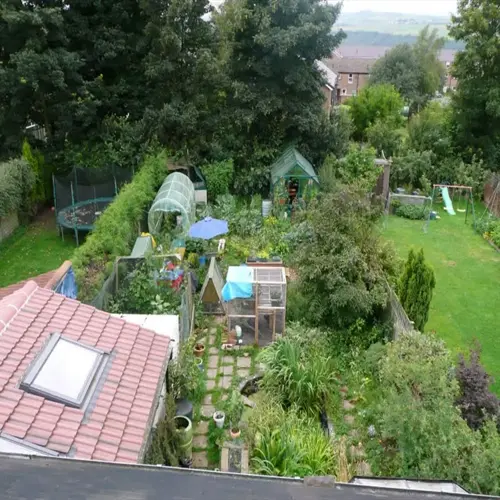

By the second summer, the damp back corner by my kitchen window had filled in. It was a solid green basin now, with almost no bare soil left to see. I had pulled the scattered singles from my first try and replanted the same natives in tight clumps of 3 to 5 instead. Good rain garden plant spacing comes down to one rule. You want about one species per 10 to 20 square feet, planted in groups and not spread out as lone stems.
My first attempt looked nothing like that. I had dotted single plants across the whole corner. One of this and one of that, spaced far apart to cover ground. It read as thin and gappy all season long. Weeds grabbed the open dirt between the stems. The basin never knit together into anything that looked planted on purpose, and I kept staring at the gaps.
The fix was plant grouping, not buying more plants. Put 3 to 5 of the same species side by side. The patch fills the bare soil fast and reads as deliberate rather than random. A clump of one plant shades out weeds sooner than lone stems do. It also holds the soil better when storm runoff sheets across the bed. So the same plants you already own work harder once you bunch them up.
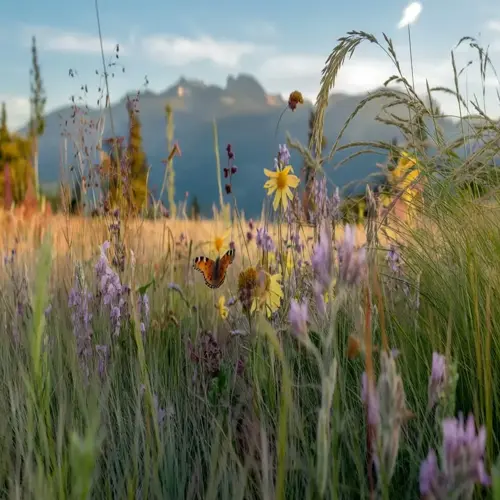
Pollinators care about this too. A bee scanning your yard spots a solid drift of one bloom far easier than a single flower. A lone stem gets lost among five other species. Group the same plant together and you hand the bees an easy target. They work the whole patch and move on. Scattered singles make them hunt one stray flower at a time, so they often skip your yard for an easier one.
Here is the planting density math worked out. Measure your basin first. Then divide that number by the rule to find your species count. The Virginia Tech rain garden guide (426-043) puts it at roughly one species for every 10 to 20 square feet of bed. The wider end of that range gives each clump more room to spread, while the tighter end fills the soil faster.
Take a 140 square foot garden as the example. Divide by 20 and you get 7 species. Divide by 10 and you get 14 species. So that bed wants somewhere between 7 and 14 different plants. Set each one in its own group. Let the wetter middle hold the species that love standing water, and save the dry rim for the tough ones.
Height matters as much as spacing once you start placing the groups. Put your tallest plants toward the center or back of the basin. Keep your shortest ones along the edges where you walk past. That way nothing tall hides a shorter plant behind it. The garden steps down toward the rim, so you see every layer at once instead of a wall of stems. Tall species also tend to want the wet center, which lines up well with this plan.
One last trick keeps the bed from looking like a planted grid. Always set each clump in an odd number, so 3 or 5 rather than 4. Odd groups overlap into each other and read as a natural drift. Even rows line up and look stiff, like a parking lot. Space the plants within a clump close enough that they touch by midsummer. Do that across the whole basin and the corner fills in green like mine did, with no bare gaps left for weeds.
Read the full article: Best Rain Garden Plants by Moisture Zone