
Introduction
A rain garden is a shallow planted basin that catches the runoff pouring off your roof and driveway after a storm. The right rain garden plants soak up that water, filter it, and turn a soggy problem spot into something you actually want to look at. The wrong ones rot in a week.
My first rain garden lost half its plants by August. I had grabbed pretty annuals from the garden center and dropped them in. The trouble is this ground does not stay nicely moist. It floods after every heavy rain, then bakes bone dry between storms. That swing kills most ordinary ornamentals fast. So you need flood and drought tolerant species, not whatever looked nice on the shelf.
This is where native plants earn their spot. In a controlled study, 79% of the most flood-tolerant species tested were native. Their deeper roots ride out both the wet and the dry, so they keep going long after fussier picks give up. That single fact shapes almost every plant on this list.
Picking the right plants for wet soil is only half the job. Where you put each one matters just as much. A plant that loves the soggy center will struggle on the dry rim, and the other way around. So this guide sorts everything by moisture zone, from the wet middle out to the drier edge.
Below you get a plant list sorted by zone. You get the root science behind why natives win. You get real numbers for spacing and depth, plus the simple care that keeps it all alive through year one.
Best Rain Garden Plants
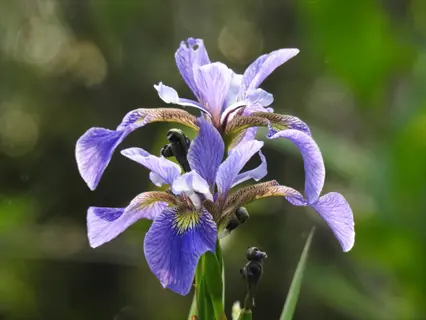
In my back corner by the kitchen window, the ground stayed soggy after every rain. I lost a lavender there first, then I killed a purple coneflower in the same wet spot. So I planted a clump of blue flag iris instead. The next June it threw up violet flowers on tall stems, happy in the wet that had drowned the others.
That swap points you toward the best rain garden plants for real wet-and-dry sites. The science backs it up too. One test put plants through flood and drought cycles. 9 of 10 species stayed strong and stable, and native plants led the pack (Chen, Huang & Wang 2025).
So the picks below are tough natives that take both flooding and dry spells in your yard. For each one you get its moisture zone, light needs, and bloom, so you know not just the name but where you plant it in your basin. The wet center holds your water longest, the middle slope drains faster, and the dry edge stays driest. Every plant here feeds your pollinators too, giving food and shelter to the butterflies and songbirds you want around.
Blue Flag Iris
- Moisture zone: Thrives in the wet center of the basin where water pools longest, tolerating short flooding and damp soil for days.
- Light: Performs best in full sun to part shade, flowering most freely with at least six hours of direct light each day.
- Bloom: Produces striking violet-blue flowers in late spring on upright stems that rise above sword-shaped foliage.
- Size: Reaches roughly 2 to 3 feet (60 to 90 cm) tall, forming neat clumps that spread slowly over time.
- Wildlife: Attracts native bees and hummingbirds while its dense roots help hold soil and slow runoff.
- Why it works: A reliable native that anchors the wettest zone and returns dependably each year with almost no fuss.
Swamp Milkweed
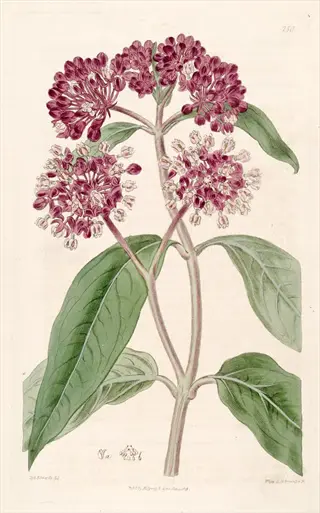
- Moisture zone: Suited to the wet center and inner slope, handling saturated soil yet shrugging off dry spells once established.
- Light: Wants full sun, which keeps the plant sturdy and covered in clustered pink blooms through midsummer.
- Bloom: Sweetly scented rose-pink flower clusters appear from early to late summer, drawing constant insect traffic.
- Size: Grows about 3 to 4 feet (90 to 120 cm) tall on upright stems that need little staking in groups.
- Wildlife: A vital host plant for monarch caterpillars and a nectar magnet for bees and butterflies.
- Why it works: Combines flood-and-drought tolerance with pollinator value, making it a flagship rain garden perennial.
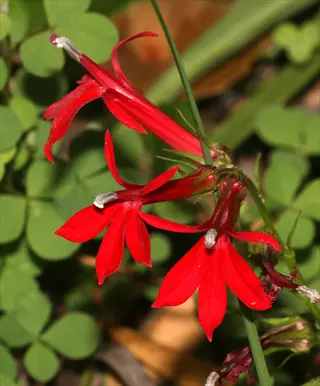
Cardinal Flower
- Moisture zone: Loves the wet center and consistently damp ground, struggling only where soil dries out hard in summer.
- Light: Tolerates full sun in moist soil but appreciates afternoon shade in hotter, drier rain garden edges.
- Bloom: Sends up vivid scarlet flower spikes in late summer that stand out against deep green foliage.
- Size: Reaches about 2 to 4 feet (60 to 120 cm) tall, adding strong vertical color to the planting.
- Wildlife: A favorite of hummingbirds, whose long bills reach the deep tubular red blooms with ease.
- Why it works: Few natives match its color in the wettest zone, and it self-seeds gently to fill gaps.
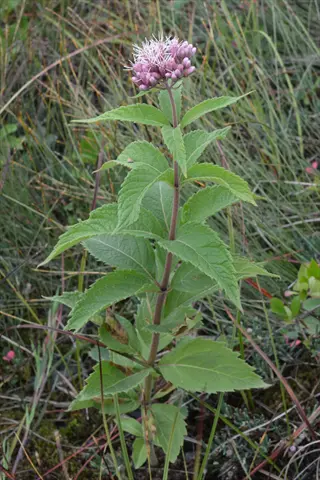
Joe-Pye Weed
- Moisture zone: Fits the inner-to-middle slope, enjoying moist soil while tolerating the brief flooding rain gardens receive.
- Light: Grows best in full sun to part shade, reaching its full height in open, sunny positions.
- Bloom: Large mauve-pink flower domes open in late summer, towering over most other rain garden plants.
- Size: A tall plant at roughly 4 to 7 feet (1.2 to 2.1 m), best placed at the center or back.
- Wildlife: Its broad flower heads buzz with bees, butterflies, and other pollinators through late summer.
- Why it works: Adds bold structure and height while supporting wildlife, ideal as a back-of-basin anchor plant.
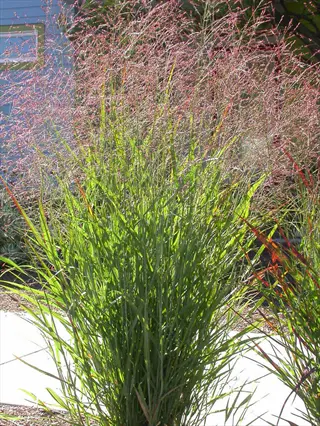
Switchgrass
- Moisture zone: Versatile across the middle slope, handling both the damp inner basin and the drier upper edge with ease.
- Light: Needs full sun to stay upright and dense, where it develops its best fall and winter color.
- Bloom: Airy seed heads rise above the foliage in late summer, turning golden and persisting through winter.
- Size: Forms clumps about 3 to 6 feet (90 to 180 cm) tall, adding movement and screening to the garden.
- Wildlife: Provides seed for birds and winter cover, while deep roots improve infiltration and soil structure.
- Why it works: A tough native grass that bridges moisture zones and gives year-round structure to the planting.
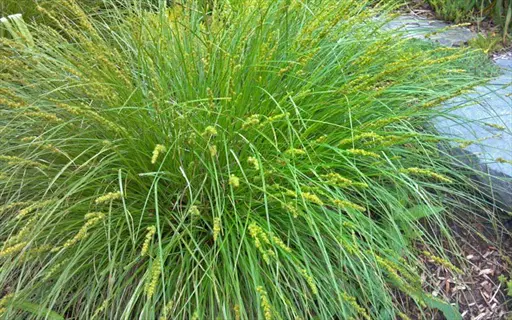
Fox Sedge
- Moisture zone: Excellent for the wet center to inner slope, thriving where soil stays moist and water lingers after rain.
- Light: Adapts to full sun or part shade, keeping its fresh green color in a range of rain garden spots.
- Bloom: Distinctive spiky, bristly seed heads in early summer give the plant its fox-tail name and texture.
- Size: Grows in tidy clumps about 2 to 3 feet (60 to 90 cm) tall and equally wide over time.
- Wildlife: Seeds feed birds, and the dense fibrous roots bind soil to reduce erosion on slopes.
- Why it works: A workhorse sedge that fills wet ground quickly and pairs well with showier flowering natives.
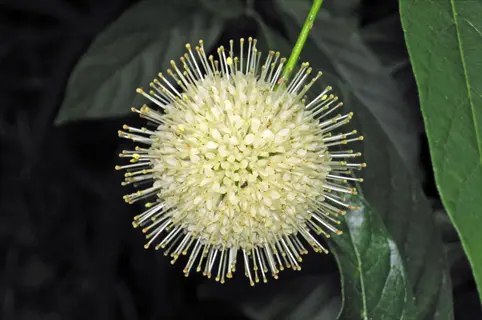
Buttonbush
- Moisture zone: A shrub for the wet center that even tolerates standing water longer than most rain garden plants.
- Light: Flowers best in full sun to part shade and keeps a loose, naturalistic shape in damp ground.
- Bloom: Unusual round white pincushion flowers appear in summer, looking almost like floating spheres of bloom.
- Size: Grows roughly 5 to 8 feet (1.5 to 2.4 m) tall and wide, giving the basin woody backbone.
- Wildlife: Highly valuable for pollinators, with nectar-rich blooms and seeds that waterfowl and birds enjoy.
- Why it works: Adds shrub structure and four-season interest to the wettest zone where few woody plants survive.

Winterberry Holly
- Moisture zone: A shrub for the inner slope to edge, tolerating wet feet while accepting drier conditions once rooted.
- Light: Sets the most berries in full sun to part shade, where flowering and pollination are strongest.
- Bloom: Small spring flowers are modest, but the show comes from brilliant red berries on bare winter stems.
- Size: Reaches about 3 to 6 feet (90 to 180 cm) tall and wide, depending on the variety chosen.
- Wildlife: Its winter berries are an important late-season food source for songbirds when little else remains.
- Why it works: A deciduous native shrub that delivers striking winter color and feeds birds through the cold months.
Mix these picks across your zones and the basin works all year. Put swamp milkweed and iris in the wettest middle, let switchgrass bridge your slopes, and anchor the back with buttonbush or Joe-Pye weed. Your rain garden flowers carry color from late spring into fall, while the grasses and shrubs hold the shape through winter.
Start with 3 to 5 of each plant in groups, not single plants dotted around your bed. Clumps fill in faster, look more natural, and give bees and birds a real patch to feed on. Get your moisture zones right and these natives will thrive on rain alone once their roots take hold.
Why Native Plants Work Best
The advice to pick native plants is everywhere, but the science gives you a real reason to follow it. In a controlled test of 44 species, 79% of the most flood-tolerant plants were native. That is a hard number you can plant by.
Those same researchers ran plants through repeated rounds of flooding and drought. 9 of the 10 toughest species held their chlorophyll readings above a healthy mark in most checks. That kind of steady performance is exactly what your rain garden soil demands week after week.
Here is the part that surprised me. Where a plant grows in the wild does not tell you if it can take this stress. The study found that habitat alone cannot predict water-stress tolerance, so a plant from a soggy ditch might still fail. You need species that have been tested, not just ones that sound right.
The advantage comes down to roots. Picture a sponge with long fingers reaching down into the ground. Deep roots open vertical channels that let pooled water soak in faster, and they trap pollutants as the water passes through. Native plants build this biofilter for you, and they handle the swing between flood and drought tolerant conditions that kills most ornamentals.
Deep Roots Improve Infiltration
- What happens: Long native roots open vertical channels in the soil that let pooled water move down into the ground faster than shallow turf roots.
- Why it matters: Better infiltration means the basin empties on schedule, recharging groundwater instead of running off into storm drains and streams.
- The result: Soil structure improves year after year as roots grow, decay, and renew, keeping the rain garden working over time.
Plants Act As Biofilters
- What happens: As runoff slows and soaks in, plants, soil, and native bacteria trap nutrients, sediment, oils, and metals carried off paved surfaces.
- Why it matters: This filtering protects the surface waters that runoff would otherwise pollute, one of the main reasons rain gardens exist.
- The result: Cleaner water reaches the groundwater table, and the planted basin does the work of a small natural treatment system.
Tolerance Beats Good Looks
- What happens: Rain garden soil swings between flooding and drought, conditions most ornamental garden plants simply are not adapted to survive.
- Why it matters: Choosing for tolerance rather than appearance alone is the single biggest factor in whether a planting lives or dies.
- The result: Natives proven to handle fluctuating moisture give a planting that fills in and thrives instead of thinning out and failing.
Wildlife And Climate Fit
- What happens: Native species evolved alongside local pollinators, birds, and weather patterns, so they slot into the surrounding ecosystem naturally.
- Why it matters: They feed butterflies, songbirds, and bees while needing less coddling than exotics that struggle in local conditions.
- The result: A native rain garden becomes a small habitat that supports wildlife and shrugs off local weather extremes.
One caveat keeps this honest. That study was run in a tropical region, so its exact species do not fit a US garden. The lesson that carries over is the native advantage itself, not the plant list. Pick the natives from your own area and you get plants tuned to your local pollinators, your weather, and your soil all at once.
While both native and non-native species showed varying levels of tolerance, the predominance of native species among immersion-tolerant plants highlights their greater potential for adaptation under fluctuating water regimes.
Plants by Moisture Zone
Picture your rain garden as a shallow bowl. The bottom holds water the longest, the slopes drain within a day or two, and the rim almost never floods. These three bands are your moisture zones, and they decide which plant thrives and which one rots.
Wrong placement is the top cause of plant failure in a rain garden. A list of pretty names means nothing if you drop a dry-loving flower into a soggy spot. Match each plant to the right zone and that same list becomes a survival plan.
The wet center is the harshest band. Plants here sit in standing water for a few days, then bake once it drains, so they must handle both flood and drought. Blue flag iris, cardinal flower, and swamp milkweed shrug off this swing, which makes them reliable plants for wet soil at the heart of the bowl.
Move outward and the soil dries faster. The drought tolerant edges rarely flood, so save your toughest dry-soil species like purple coneflower and little bluestem for that rim. This is the core of smart plant placement. Clemson and Virginia Tech back the same rule. Center plants face the widest moisture swing, and edge plants lean dry.
Keep in mind that even the wet center is not a permanent pond. The standing water should clear in 2 to 4 days, so no zone stays flooded for long. Every plant here still needs to ride out dry spells between storms.
Putting a drought-loving plant like purple coneflower in the wet center is the fastest way to lose it; match each plant to the zone that stays as wet or dry as it prefers.
Design and Plant Spacing
Good rain garden design starts with numbers, not guesswork. Before you buy a single plant, you need to size and shape the basin so water collects, soaks in, and clears out fast.
Size the bowl by taking the area of roof or pavement that drains into it and dividing that by 20. Dig the rain garden depth to 6 to 8 inches (15 to 20 cm) below the surrounding grade. Keep the distance from house at no less than 10 feet (3 meters), so water sinks into the soil instead of pushing against your foundation.
Test your soil first with a cheap trick. Dig a hole 6 inches deep, fill it with water, and watch it. If the water has not drained within 24 hours, the spot is too tight for a rain garden and you should pick another place. A built garden runs from about $5 to more than $20 per square foot, so you want to get the site right before you start.
Now for the plants. Good plant spacing uses about one species per 10 to 20 square feet of garden. A 140 square foot bed, then, needs roughly 7 to 14 species to fill the space without crowding. That density gives each plant room to spread while still covering the soil within a season or two.
Set the right planting density by grouping, not scattering. Plant 3 to 5 of the same species together in a cluster. Grouped plants read as deliberate and tidy, and they fill in faster than lone plants dotted across the bed. A garden of singles looks patchy for years, while clusters knit together and crowd out weeds.
Sun and Shade Plant Choices
The leaf tips on my cardinal flower went brown and crisp through a hot July, even though I had planted it in damp soil. It sat in the full-sun part of the wet back corner, right outside the kitchen window where I could watch it suffer. I moved it to the afternoon-shaded inner slope, kept the roots just as wet, and by August the new leaves came in green and firm.
Moisture is only half the picture. Light is the other half, and you have to match a plant to both at once. Most rain gardens want full sun of 6 or more hours a day, since the strongest performers bloom and root best in bright, open spots. A shadier site is not a problem, but it needs a different plant list.
Here is the part most people miss. A single basin often holds both sun and shade, with a bright outer rim and a shaded inner slope under a tree or the house. Matching each plant to its light pocket matters as much as matching it to moisture. The lists below split reliable sunny rain garden plants from proven shady rain garden plants so you can fill each spot with confidence.
- Swamp milkweed brings pink summer blooms and feeds monarch caterpillars in bright, open spots.
- Switchgrass forms tall sunny clumps that sway with the wind and color up in fall.
- Wild bergamot offers lavender flowers and a herbal scent that pollinators crowd in full sun.
- Purple coneflower handles the sunny dry edge and blooms reliably through the heat of summer.
- Cardinal flower lights up part-shade with scarlet spikes where soil stays consistently moist.
- Cinnamon fern unfurls bold fronds in damp shade where flowering plants struggle to thrive.
- Foamflower carpets shady ground with soft white spring flowers and tidy lobed foliage.
- Marsh marigold brings early yellow blooms to wet, shaded pockets before most plants wake up.
Your full sun rain garden plants do most of the blooming. Give the bright rim your milkweed, bergamot, and coneflower. Save the shaded inner slope for the right crew. Part shade plants like cardinal flower and foamflower will hold that ground all season.
Shade under a tree used to feel like a dead zone for me. Then I leaned on ferns. Cinnamon fern thrives in damp shade, right where most flowers fade. It adds more options, so even the dimmest, wettest corner pulls its weight.
Planting and Establishment Care
The damp back corner by my kitchen window became a filled-in green basin in two seasons. I set natives in tight groups. I gave them water once a week that first summer. By the second year the bare ground had vanished under leaves and bloom.
For years that spot was a puddled patch of dead lawn. I tried ordinary border flowers there twice, and both batches rotted out by midsummer because the soil stayed soggy. The wet corner won every time until I matched the plants to the conditions and gave them one good season of care.
Buy your stock as 1 to 2 year old plants or plugs rather than seed. Plant plugs put down roots far faster and more reliably, and they fill the basin in a single season instead of three. Starting from seed in a wet basin invites weeds to beat your slow seedlings to the open ground.
Set plants in groups of 3 to 5 of the same species, with one species per 10 to 20 square feet. Planting groups read as deliberate rather than scattered, and matched plants knit together to crowd out weeds. Keep taller species toward the center and shorter ones at the dry edge.
After you plant, spread 2 to 3 inches (5 to 8 cm) of organic mulch across the basin. That mulch depth holds moisture, blocks weed seeds, and shields young roots while they settle. Pull the mulch back a finger's width from each stem so the crowns stay dry.
Excavate a shallow bowl 6 to 8 inches (15 to 20 cm) below grade, at least 10 feet (3 meters) from the house, with gently sloping sides.
Set flood-and-drought tolerant species in the wet center and drier-loving plants at the edges, keeping taller plants toward the center or back.
Install one species per 10 to 20 square feet in groups of 3 to 5 of the same plant so the basin reads as deliberate and fills in quickly.
Spread 2 to 3 inches (5 to 8 cm) of organic mulch to hold moisture, suppress weeds, and protect young roots while plants settle in.
Give about 1 inch (2.5 cm) of water per week the first season, longer for woody plants, then let an established native planting rely on rainfall.
Establishment watering is the one job you cannot skip that first year. Give the basin about 1 inch (2.5 cm) of water per week through the opening season, soaking deep so roots chase the water down. Plan on roughly 3 months of this care for perennials and up to 9 months for woody shrubs and trees.
Once the roots take hold, a native planting leans on rainfall and asks for little else. Your rain garden maintenance drops to a yearly mulch top-up, a spring trim, and pulling the odd weed. That short stretch of weekly water is what carries new plants through to the point where the rain does the work for you.
5 Common Myths
A rain garden is just a pond, so it stays full of water and becomes a breeding ground for mosquitoes all summer long.
A rain garden drains in 2 to 4 days, far faster than the week mosquitoes need to breed, so it does not hold standing water.
Any pretty flower or shrub will thrive in a rain garden because the soil there is always nice and moist for the roots.
Rain garden soil swings between flooding and drought, so most ornamentals fail; only flood-and-drought tolerant plants survive there.
You can place a rain garden right next to your house wall, since the whole point is to catch the runoff coming off the roof.
Rain gardens belong at least 10 feet from foundations so infiltrating water moves into the ground, not against your basement walls.
Native plants look messy and weedy, so a rain garden full of them will always make the yard look neglected to neighbors.
A defined edge, mowed border, and grouped plantings frame natives neatly, giving an intentional, tidy look while keeping the ecological benefits.
Rain gardens need constant watering and heavy maintenance, making them far more work than an ordinary flower bed in the yard.
After the first season of about 1 inch of water weekly, established native rain gardens largely rely on rainfall and need little upkeep.
Conclusion
The whole job comes down to one idea you can hold onto. Pick rain garden plants that shrug off both flood and drought, set each one in the right spot, and the garden mostly runs itself. You match the plant to the moisture, and the plant does the rest of the work for you.
Lean native wherever you can. One test put 44 species through harsh flooding. Of the plants that came through best, 79% were native. So betting on native plants is the safest call you can make. They handle your local rain, your dry spells, and your local bees with little fuss from you.
Sort your picks by moisture zones and the layout falls into place. Thirsty species like swamp milkweed and cardinal flower go in the wet center. Tougher plants for wet soil that also take dry heat sit along the rim. A garden built this way filters dirty runoff and refills the groundwater below. It feeds bees and butterflies all season too. And once the roots take hold, it asks little of you.
Keep the basic numbers straight and you will get there. Standing water should drain in 2 to 4 days, the basin sits at least 10 feet from the house, and you space plants in groups of 3 to 5. Hit those marks, match the plant to its zone, and any homeowner can grow a rain garden that thrives for years.
Glossary
- biofilter
- A planted, soil-based system whose plants, soil, and bacteria trap pollutants from runoff before the water soaks in.
- bioretention
- An engineered version of a rain garden that uses layered drainage and amended soil to filter stormwater on larger sites.
- bioswale
- A shallow, planted channel that slows and filters runoff as it moves across a site.
- infiltration
- The process of water soaking down through the soil into the ground instead of running off the surface.
- infiltration test
- A simple check where you dig a 6-inch hole, fill it with water, and see if it drains within a day to confirm the soil can soak up runoff.
- moisture zone
- A band within a rain garden basin, from the wet center to the dry edge, that determines which plants belong where.
- moisture zones
- The wet-to-dry bands of a rain garden, from the water-holding center out to the rarely-flooded rim, that decide where each plant goes.
- plug
- A small, young nursery-grown plant with an established root system that establishes faster than starting from seed.
External Sources
Frequently Asked Questions
What is the best plant for a rain garden?
Native species that tolerate both flooding and drought, such as blue flag iris, swamp milkweed, switchgrass, and Joe-pye weed.
What plants grow best in wet areas?
Wet-tolerant plants include:
- Blue flag iris
- Cardinal flower
- Swamp milkweed
- Buttonbush
- Joe-pye weed
What plant likes to be waterlogged?
Plants that handle waterlogged soil include marsh marigold, blue flag iris, cardinal flower, and buttonbush.
What plants like full sun and moist soil?
Full-sun moisture lovers include:
- Swamp milkweed
- Switchgrass
- Joe-pye weed
- Wild bergamot
- Great blue lobelia
What makes a good rain garden?
A good rain garden drains in 2 to 4 days, sits at least 10 feet from foundations, and uses native plants placed by moisture zone.
What herbs grow well in wet soil?
Damp-tolerant herbs include:
- Mint
- Bee balm
- Sweet flag
- Angelica
- Lovage
Is October too late to plant a rain garden?
In mild climates October is fine for planting, since cooler soil helps roots establish before winter dormancy.
What is another name for a rain garden?
Engineered or larger versions are often called bioretention cells or bioswales.
How do you space plants in a rain garden?
Space about one plant species per 10 to 20 square feet and plant in groups of 3 to 5 of the same species.
Do you need to water a rain garden once established?
Once established after the first season, a well-planted rain garden of natives usually survives on rainfall alone.