
Introduction
Lettuce is the salad crop most people try first, and for good reason. It sprouts fast, takes little space, and gives you fresh leaves within weeks. But lettuce growing comes with one real catch that trips up new gardeners every season. Heat makes the plant bolt, which means it shoots up a tall stalk and the leaves turn bitter and tough almost overnight.
This is no niche backyard hobby either. In 2022 U.S. growers earned $21.8 billion from vegetable and melon sales. Lettuce alone made up nearly one-fifth of that, says the USDA Economic Research Service. It is the most widely eaten leafy green in the country. So when you start growing lettuce at home, you join a crop people clearly love to eat.
Here is the part most guides skip. They warn you that lettuce bolts in the heat, but they stop there. Heat does two jobs at once, and both work against you. Warm weather pushes the plant to flower early, and it also stops the seeds from sprouting once soil climbs above about 80 to 85°F (27 to 29°C). Knowing both halves of that problem changes how you plan the whole season.
Think of how to grow lettuce as timing a cool-weather window. Plant in the mild shoulders of spring and fall and the crop almost grows itself. Miss that window into summer heat and the same plant turns bitter and runs to seed. Lettuce is a cool season crop at heart, so the calendar matters as much as the soil.
The good news is that lettuce rewards a little planning. It matures in 40 to 80 days, and one packet of seeds can feed you for weeks if you sow a small batch every couple of weeks. Ahead you will find the best types to grow and when to plant them. You will also learn soil and water basics, the science behind bolting, common pests, and how to harvest for repeat picks.
Best Types of Lettuce to Grow
The first morning I cut leaves, I knelt by the back patio and filled a bowl with frilly Black Seed Simpson in under a minute. I had sown that looseleaf seed about 5 weeks back. The romaine I planted the same day still needed weeks to head up.
That gap is the whole reason to pick your lettuce by type before you buy a single seed packet. The main types of lettuce split into four families, and each one gives you a clear reason to grow it. Most mature in 40 to 80 days, with looseleaf the fastest and crisphead the slowest of the bunch.
Looseleaf Lettuce
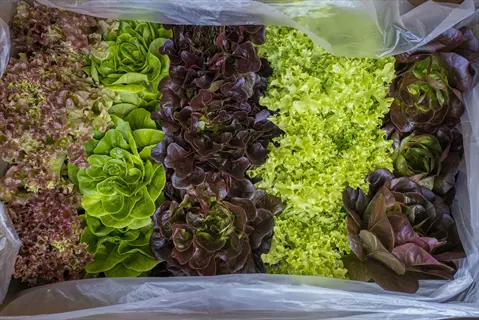
- Days to harvest: Fastest of all, with baby leaves in about 30 days and full plants in roughly 40 to 50 days, ideal for impatient or first-time growers.
- Spacing: Thin plants to about 4 inches (10 centimeters) apart in the row, the tightest spacing of the common types because heads never form.
- Form: Open, frilly rosettes that never make a tight head, so you simply pick outer leaves as you need them.
- Best for: Cut-and-come-again harvesting, which lets a single plant regrow several times across the season.
- Popular picks: Black Seed Simpson, Salad Bowl, and red oakleaf types add color and reliable speed to a salad bed.
- Beginner value: Forgiving of imperfect timing and the easiest family to start with for a quick, rewarding first crop.

Romaine Lettuce
- Days to harvest: A mid-length crop ready in roughly 60 to 75 days, slower than looseleaf but earlier than crisphead.
- Spacing: Give plants about 8 inches (20 centimeters) in the row so the upright heads have room to form.
- Form: Tall, sturdy upright heads with crisp ribs that hold up well in salads and on sandwiches.
- Best for: Gardeners who want a substantial head and a longer storage life than soft leaf types.
- Popular picks: Parris Island and Little Gem are dependable, with Little Gem giving compact heads in tighter space.
- Beginner value: Tolerates cool weather well and is one of the most consumed lettuce types in the United States.
Butterhead Lettuce
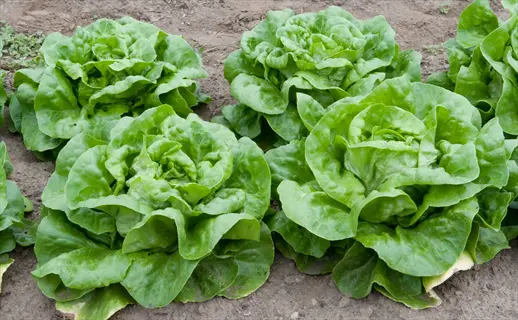
- Days to harvest: Typically ready in about 55 to 70 days, forming a loose head rather than a tight ball.
- Spacing: Allow roughly 8 inches (20 centimeters) between plants so the soft heads can fill out.
- Form: Tender, buttery leaves wrapped in a loose, rounded head that feels delicate and folds easily.
- Best for: Cooks who prize soft texture and mild, sweet flavor over crunch.
- Popular picks: Buttercrunch, Bibb, and Boston types are classics that handle home conditions reliably.
- Beginner value: Compact and well suited to containers, making it a strong choice for small spaces and balconies.

Crisphead and Iceberg
- Days to harvest: The slowest family, often needing 70 to 80 days or more to form a dense head.
- Spacing: Needs the widest room, about 12 to 15 inches (30 to 38 centimeters) in the row for full heads.
- Form: Tight, crunchy heads of pale, water-rich leaves that store and ship better than soft types.
- Best for: Gardeners set on classic supermarket-style crunch who can give it a long cool season.
- Popular picks: Iceberg-style heading types remain the recognizable choice for crisp, mild salads.
- Beginner value: The most demanding family for timing and temperature, so it suits patient growers more than absolute beginners.
If you want the quickest win, start with leaf lettuce. It forgives bad timing and lets you cut a handful of leaves whenever you want a salad. Romaine lettuce and butterhead sit in the middle, giving you a real head without the long wait that a crisphead demands.
Plan for your weather too. As summer warms up, reach for a heat-tolerant lettuce variety. These types resist turning bitter, while plain looseleaf and butterhead both bolt fast in the heat. Pick the family that fits your season and your patience, and the rest of the garden gets a lot easier.
When and How to Plant Lettuce
Timing matters more than almost anything else with this crop. The best answer for when to plant lettuce is the cool shoulders of the year. Start a spring crop a few weeks before your last frost, then plant a fall crop in late summer as the heat begins to ease.
Seeds sprout best when the soil sits around 60 to 65°F (16 to 18°C). The rules for how to plant lettuce are short and simple. Sow shallow, keep the surface moist, and give young plants room to size up. The steps below walk you through the whole job from bed to seedling.
Plant in the cool shoulders of the year, a spring crop a few weeks before your last frost and a fall crop in late summer as the heat eases.
Loosen the top few inches of soil, mix in compost, and rake it smooth so small seeds sit in fine, even ground.
Scatter or place seeds about an eighth of an inch (3 millimeters) deep and barely cover them, since lettuce seed needs light to sprout.
Thin seedlings to about 4 inches (10 centimeters) for leaf types and 8 inches (20 centimeters) for romaine and butterhead so plants size up.
Keep the surface evenly moist with a fine spray until seedlings establish, avoiding heavy streams that wash shallow seeds away.
Plant a small new batch every two weeks so a steady supply of young, tender lettuce keeps coming instead of arriving all at once.
You have two good ways to start. Direct sowing drops seeds straight into the garden, which skips transplant shock and gets plants growing fast in place. Transplanting lettuce from indoor starts gives you a head start and helps young plants dodge slugs while they are small. Both work, so pick the path that fits your space.
Whichever route you choose, the planting depth stays the same. Lettuce seed needs light to sprout, so set it about an eighth of an inch deep and barely cover it. The other habit that keeps salad coming is succession planting. Sow a small new batch every two weeks and you get a steady harvest for months instead of one big glut.
Burying lettuce seed too deep is one of the top reasons it never comes up. Because the seed needs light, sow it almost on the surface and press it in rather than covering it with thick soil.
Soil, Water, and Feeding Basics
Lettuce roots stay shallow and grow fast, so they live or die on the top few inches of your bed. Get the dirt and moisture right and the plant does most of the work for you. Most beginners obsess over feeding when the real win is steady water in loose, rich soil.
Aim for a soil pH between 6.0 and 7.0, the range this leafy crop likes best. A cheap test kit from the garden store tells you where you stand in a few minutes. If your soil reads too low, a bit of garden lime nudges it up over a few weeks.
Work 2 to 3 inches of compost into the bed before you plant. Loose soil that drains well lets roots spread and holds just enough water to keep growth quick and the leaves sweet.
Now for the part that trips up most growers: watering lettuce. The goal is to keep soil moist at all times without drowning the roots. Think of the soil like a wrung-out sponge, damp through and through but never soggy or muddy.
How often to water lettuce depends on your weather more than any fixed schedule. In warm, dry spells a light drink every 1 to 2 days keeps growth fast and the leaves tender. Cool or cloudy stretches mean you can back off and let the top inch dry a touch first.
Timing matters as much as amount. The University of Maryland Extension lays out the rule clearly for home growers.
Use frequent, light watering to encourage rapid growth. But, do not over-water, as this may contribute to root and leaf diseases. Overhead watering should always be done in the morning to give plants time to dry off during the day.
Water in the morning so the sun dries the leaves through the day. Wet leaves that sit overnight invite root and leaf disease, the main reason careless watering ruins a crop. A morning soak gives you fast growth and clean, healthy foliage.
Feeding comes last for a reason. Steady water matters more than heavy fertilizer for sweet leaves. Lettuce grows for its leaves, so it loves nitrogen, the nutrient that drives green growth. Mix rich compost and aged manure into the bed and it often carries the crop start to finish.
If your plants look pale or slow, a light dose of a balanced fertilizer for lettuce gives them a quick push. Skip the heavy hand though, since too much feed grows leaves faster than they can stay tender and can leave a bitter edge.
Bolting and the Heat Problem
One spring my row of looseleaf in the raised bed by the back patio shot up tall, ugly stalks almost overnight. A 3-day heat wave hit, and the sweet leaves I had picked all week turned harsh and bitter lettuce I could not eat. The next season I threw a shade cloth over the bed and sowed a few weeks earlier, and the crop stayed tender.
That fast switch is bolting, when the plant stops making leaves and races to flower and set seed. So why does lettuce bolt so fast in summer? Heat is the main trigger. A 2018 study in Frontiers in Plant Science found that high temperature is the primary driver. It ramps up a gene called LsFT, which pushes the plant into early flowering.
The science backs up what every gardener feels. The LsFT gene is negatively linked to bolting time, so the warmer it gets, the sooner that flower stalk appears. Once it does, the leaves toughen and load up with the bitter compounds that ruin the flavor. There is no fixing a bolted plant, so the whole game is prevention through timing.
Heat causes a second problem that catches a lot of growers off guard. Once your soil climbs past roughly 80 to 85 degrees Fahrenheit (27 to 29 degrees Celsius), the seed often refuses to sprout at all. That stall is called thermodormancy, and it is why a midsummer sowing can fail before it even starts.
Your real safe zone is narrow. Consistently warm weather above 70 to 80 degrees Fahrenheit (21 to 27 degrees Celsius) puts the crop at risk, so spring and fall are your friends. Cooler autumn weather even improves the flavor, which makes a fall crop one of the sweetest you will grow. Timing is the one big lever you control, and a few heat-tolerant lettuce varieties give you extra room when a warm spell sneaks in.
Time Around the Heat
- Cool windows win: Plant in spring and fall so the crop matures before consistently warm temperatures, roughly above 70 to 80 degrees Fahrenheit (21 to 27 degrees Celsius), arrive.
- Fall flavor bonus: Cooler autumn weather actually improves flavor, making a fall crop one of the most reliable for sweet, non-bitter leaves.
- Avoid midsummer sowing: Starting lettuce at the peak of summer fights both bolting and poor germination at the same time.
Add Shade in Warm Spells
- Shade cloth helps: A light shade cloth lowers leaf temperature and can delay bolting by a week or two during a heat spike.
- Use taller neighbors: Planting lettuce in the cooler shadow of taller crops gives natural afternoon shade as the season warms.
- Mulch the soil: A thin mulch keeps roots cooler and moisture steadier, both of which slow the stress that triggers flowering.
Choose Resistant Varieties
- Slow-bolt types: Some varieties are bred to resist bolting and hold quality longer when the weather turns warm.
- Read the packet: Seed packets often flag heat-tolerant or slow-to-bolt types, which are worth picking for late spring sowings.
- Match type to season: Save the most heat-prone crisphead types for the coolest part of the year and lean on resilient leaf types otherwise.
Beat Thermodormancy
- Cool the soil: Once soil rises above roughly 80 to 85 degrees Fahrenheit (27 to 29 degrees Celsius), lettuce seed often refuses to germinate.
- Sow in cooler ground: Start seeds in a shaded spot or indoors during heat, then move seedlings out, to dodge germination failure.
- Water to cool: Lightly watering the seedbed and shading it lowers surface temperature enough to coax stubborn seeds into sprouting.
The expression of LsFT was negatively correlated with bolting in different lettuce varieties, and was promoted by heat treatment.
Pests, Problems, and Clean Leaves
Most lettuce trouble shows up on the leaves first, so you can catch it early if you know what to look for. The common lettuce problems fall into a few buckets, and almost every one comes back to the same root causes. Heat, uneven water, and damp soil drive most of them.
The grid below pairs each symptom with its cause and a clear fix. Match what you see on your plants to the right row, then act. You will spot aphids and slug damage by eye, while a bitter lettuce problem or brown leaf tips point you back to heat and watering.
Aphids
- What you see: Clusters of tiny green or gray insects on leaf undersides and new growth, sometimes with sticky residue.
- Why it happens: Soft, fast-growing lettuce leaves are an easy target, and aphids multiply quickly in mild weather.
- The fix: Spray them off with water, encourage beneficial insects, and plant aromatic neighbors like chives nearby as a deterrent.
Slugs and Snails
- What you see: Ragged holes in leaves and slimy trails, usually worst in damp, shaded conditions and overnight.
- Why it happens: Moist soil and dense low foliage give slugs cover and easy access to tender leaves.
- The fix: Hand-pick in the evening, water in the morning so the bed dries by night, and consider starting plants indoors to get ahead of them.
Brown Leaf Tips
- What you see: Edges and tips of leaves turning brown and papery, a disorder often called tipburn.
- Why it happens: Uneven moisture and rapid growth swings interfere with how the plant moves calcium to leaf edges.
- The fix: Keep watering steady and even, avoid feast-or-famine moisture, and harvest before stressed leaves decline further.
Bitter Flavor
- What you see: Leaves that taste sharp and unpleasant, often alongside a tall central stalk starting to form.
- Why it happens: Heat and bolting drive the bitterness, and once it sets in the change cannot be reversed.
- The fix: Prevent it with cool-season timing, shade, and steady water, and harvest promptly before warm weather pushes the plant to bolt.
Keeping Leaves Clean
- What you see: Soil-splashed lower leaves and grit that is hard to rinse out after harvest.
- Why it happens: Overhead splashing and low foliage touching the ground transfer soil and microbes onto leaves.
- The fix: Water at soil level when you can, harvest with clean tools, rinse in clean water, and use dense planting to lift leaves off the dirt.
Clean leaves matter as much as healthy ones. Where your water comes from is the quiet risk. A study of Belgian lettuce farms by Holvoet and colleagues found that about 99% of greenhouse samples had no detectable E. coli, against 90% of open-field samples, and dirty irrigation water was a key reason for the gap.
in approximately 99% of the greenhouse lettuce samples, no E. coli was enumerated (< 10 cfu/g) in contrast to 90% of the open field farms
You can borrow that lesson at home with a few plain habits. Water at soil level when you can, so you keep splashed dirt off the leaves and starve slugs and other lettuce pests of the damp cover they love. Harvest with clean tools, then rinse the leaves in clean water before they hit your plate.
Dense planting helps on both fronts. Tight spacing lifts the foliage off the ground, which keeps the lower leaves cleaner and gives pests fewer easy targets. It is a small change that ties pest control and food safety into one move you make at planting time.
Harvest, Regrowth, and Storage
Last spring I knelt by the raised bed near my back patio with a colander. I cut the outer leaves off a row of Black Seed Simpson looseleaf. The plants filled the bowl in a few minutes. Within days fresh growth had closed the gaps back in, and that one bed fed me salads for weeks.
Harvesting lettuce is the easy part once you know the trick. You pick the outer leaves and leave the center alone, so the plant keeps making new growth instead of stalling out. This is the cut-and-come-again method, and it stretches one sowing into a much longer harvest.
So how many times can lettuce regrow from a single plant? Leaf types bounce back three to four times if you cut them about an inch (2.5 centimeters) above the crown. Most lettuce hits its days to harvest mark between 40 and 80 days depending on the type, and the leaf kinds reward you longest.
Cut in the cool of the morning when the leaves hold the most water and crunch. Pick young, before warm weather pushes the plant to bolt, because young leaves taste sweetest and skip the bitter edge.
Pick leaves while they are tender and before warm weather pushes the plant to bolt, since young leaves taste sweetest and least bitter.
Take the outer leaves first and leave the central crown, so the plant keeps producing new growth for several more harvests.
For leaf types you can shear the whole plant about an inch (2.5 centimeters) above the crown, and it will regrow three to four times.
Cut in the cool of the morning when leaves are crisp and full of water, which helps them keep their texture after picking.
Wash leaves in clean water and dry them well, since excess surface moisture speeds spoilage in the fridge.
Refrigerate promptly in a loose bag or container, because lettuce is highly perishable and the cold chain keeps it crisp longest.
Avoid bruising leaves when you harvest and pack them. Damaged, wounded surfaces brown and break down fastest, so gentle handling does as much for shelf life as a cold fridge.
Lettuce is highly perishable, so the clock starts the moment you cut it. The fix for storing lettuce is simple. Rinse, dry the leaves well, and get them into the fridge fast in a loose bag or container.
That cold start keeps the leaves crisp far longer than a warm counter ever will. A short chill also tames any slightly bitter edge, so the leaves you cut at dawn taste cleaner by dinner. Handle them gently and one planting feeds you for weeks.
5 Common Myths
Lettuce needs constant full sun and heat to grow well, so summer is the perfect season to plant it in the garden.
Lettuce is a cool-season crop. Heat triggers bolting and bitter leaves, so spring and fall, with some shade in summer, work far better.
You should bury lettuce seeds deep in the soil like beans so they stay protected and germinate more reliably.
Lettuce seeds need light to sprout and should be sown shallow, about an eighth of an inch (3 millimeters) deep, barely covered.
Once you cut a lettuce plant for salad, it is finished and you must pull it out and replant from scratch.
Many leaf types regrow several times. Harvest outer leaves or cut above the crown and the plant keeps producing new growth.
More water and fertilizer always make lettuce grow faster, so heavy feeding and soaking are the keys to big plants.
Lettuce prefers steady light moisture and modest feeding. Overwatering invites disease, and too much fertilizer does not fix heat-driven bolting.
Lettuce that has bolted and turned bitter can be fixed by trimming, watering more, or moving it into the shade.
Once lettuce bolts and turns bitter, the change is permanent. The fix is prevention through cool timing, shade, and bolt-resistant varieties.
Conclusion
If you take one idea away from this guide, make it this: lettuce growing rewards good timing more than anything else. Lettuce is a cool season crop, so it does its best work in the mild weeks of spring and fall. Match your seeds to those cool windows and most of your problems solve themselves before they start.
The data backs up that simple rule. Most types reach the bowl in 40 to 80 days, and they grow fastest in loose soil with a pH of 6.0 to 7.0. Water often and lightly in the morning so the leaves dry before night. And when the air turns hot, expect bolting and a bitter taste, since heat is the one trigger you cannot reverse once it kicks in.
None of this asks for a green thumb or a big yard. Beginners win at growing lettuce with two plain moves. Plant into the cool weeks of the year. Then pick the leaves while they are still young and sweet. A small pot on a windowsill gives you fresher, cleaner leaves than any store bag. And lettuce is the most eaten leafy green in the country, so you are in good company.
So here is your next move. Sow a small batch of seeds. Then sow another batch about every two weeks. That habit is called succession planting, and in my own garden I planted a fresh short row this way all season. It turns one cheap seed packet into weeks of steady salad, not one big rush you cannot eat in time. Start this weekend, keep it cool, and harvest young. The rest takes care of itself.
Glossary
- bolting
- When heat or long days trigger lettuce to send up a flower stalk early, which turns the leaves bitter and tough.
- cool season crop
- A plant that grows best in the mild temperatures of spring and fall rather than summer heat.
- crisphead lettuce
- Lettuce that forms a tight, crunchy head of pale leaves, such as iceberg, and takes the longest to mature.
- cut-and-come-again
- A harvesting method where you cut the outer leaves or shear the plant above its crown so it keeps producing new growth.
- looseleaf lettuce
- Lettuce that grows as an open rosette of leaves instead of a tight head, making it the fastest and easiest type to grow.
- succession planting
- Sowing small batches of seed every couple of weeks so a steady, continuous harvest replaces one large glut.
- thermodormancy
- A state where lettuce seeds refuse to sprout because the soil is too warm, usually above about 80 to 85 degrees Fahrenheit.
- tipburn
- A disorder where leaf edges turn brown and papery, usually caused by uneven moisture interfering with calcium reaching the leaves.
External Sources
Frequently Asked Questions
How long does it take to grow lettuce?
Most lettuce is ready to harvest in 40 to 80 days, depending on the type. Baby leaves can be picked in as little as 30 days.
What month is best to plant lettuce?
The best months are early spring (often March to April) and late summer for a fall crop, since lettuce thrives in cool weather.
How often should I water lettuce?
Water frequently and lightly to keep the soil evenly moist, often every one to two days in warm, dry weather.
Why is lettuce so hard to grow?
Lettuce is mostly tricky because of heat, which causes bolting, bitter leaves, and poor germination above about 80 degrees Fahrenheit.
How many times can lettuce regrow?
Leaf lettuce usually regrows three to four times if you harvest outer leaves and leave the central crown intact.
What should you not plant next to lettuce?
Avoid planting lettuce beside tall or aggressive feeders that block light or hog water and nutrients.
What is a good natural fertilizer for lettuce?
Compost, aged manure, and gentle nitrogen-rich organic feeds support the fast leafy growth lettuce needs.
Can you grow lettuce all year round?
In many climates you can grow lettuce year round by using shade in summer and cold frames or indoor light in winter.
Is October too late to plant lettuce?
October is not always too late, since row covers, cold frames, and mild climates extend the planting window into fall.
Do coffee grounds help lettuce grow?
Coffee grounds help most when composted first, adding organic matter, while heavy raw use can harm young lettuce.