
Keep your lettuce away from tall, sprawling, and heavy-feeding plants that block its sun and drink up its water. Good lettuce companion planting starts with one simple rule. The wrong neighbor wins the fight for light, water, and root space, and your lettuce loses every time. When you plan your bed around that single idea, you avoid most lettuce problems before they start.
Picture a low row of lettuce sitting in the afternoon shade of a big tomato plant. The leaves stretch tall and turn pale instead of staying short and crisp. The lettuce reaches for light it cannot get, so it grows thin and weak. The heads stay loose and floppy, and the flavor turns bitter as the plant stresses. That one scene explains most of the plants to avoid near lettuce, and it has nothing to do with the plant's name. It has to do with its size and its appetite.
Lettuce is shallow-rooted and low to the ground. Its roots sit in the top few inches of soil, and its leaves stay close to the dirt. So any neighbor that grows tall, spreads wide, or pulls hard on water and nutrients will starve it. The problem is not a fixed list of bad plants. The problem is competition for light, water, and food. Once a neighbor wins that fight, the lettuce never catches up, no matter how often you water it.
Once you know the principle, you can spot the worst neighbors fast. Watch out for these three types when you plan your beds and your rows.
Tall, Sprawling Crops
- The problem: Tall plants like staked tomatoes and pole beans cast deep shade by midsummer, and lettuce needs at least 4 to 6 hours of sun to stay full.
- What you see: The shaded row goes pale and leggy, and the heads never firm up.
- The fix: Plant lettuce on the cool north or east side so it gets morning sun and light afternoon shade in heat.
Heavy Feeders
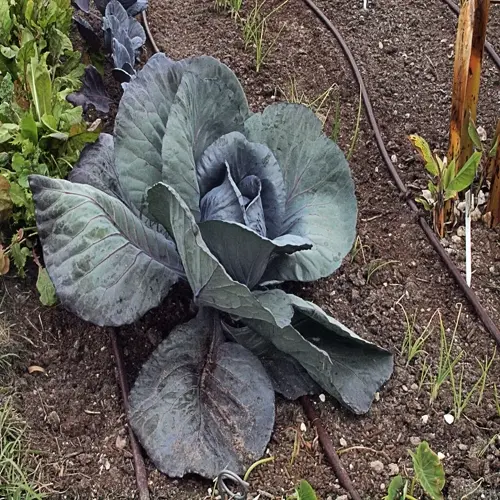
- The problem: Big brassicas like broccoli and cabbage pull hard on nitrogen, the nutrient lettuce needs most for green leaves.
- What you see: Lettuce next to them grows slow and yellow while the brassica thrives.
- The fix: Give heavy feeders their own bed, or feed the whole row well and space plants wider.
Thirsty Spreaders
- The problem: Crops like celery and big squash spread wide and drink a lot, so they dry out the top soil where lettuce roots live.
- What you see: Lettuce wilts fast on warm days even when you water often.
- The fix: Keep at least 12 inches between lettuce and any wide, thirsty neighbor.
Not every neighbor hurts lettuce, though. The best lettuce garden neighbors are short plants that share without taking over. Aromatic herbs like chives and dill sit nearby without stealing light, and their scent helps push away aphids that love tender leaves. Low root crops like radishes and carrots work well too, since they pull from a different soil depth than lettuce roots. Radishes also grow fast, so you pull them before they ever crowd the row. The goal is balance, not a long list of rules to memorize.
Give your lettuce its own well-lit space, or tuck it on the cool side of taller crops so it gets sun in the morning and shade in the heat. Leave good gaps between heads so air moves freely through the row. Crowded, damp leaves invite mildew and rot, and wide spacing keeps the whole patch dry and healthy. Smart lettuce companion planting comes down to this: give the plant light, water, and room, and keep greedy neighbors at arm's length. Do that and your lettuce stays short, crisp, and green all season.
Read the full article: Lettuce Growing: A Complete Beginner Guide