
Introduction
Imagine celery turned up to full volume. That is the lovage plant, a leafy green with a bold, savory bite that makes regular celery taste shy. One small leaf can flavor a whole pot of soup. You may also see it sold by its plant name, Levisticum officinale. It comes from the same plant family as celery and carrots.
People have grown this herb for a very long time. Lovage has been grown in Europe since about 800 AD. Back then a famous garden text from Charlemagne, the Capitulare de villis, told royal estates to grow it. So you are tending a crop that fed kings more than a thousand years ago.
Here is where this guide goes further. Many lovage articles stop at how to grow it. This one adds the science-backed health detail and the one safety note you want before you start harvesting. We cover the growing part in full, and then we keep right on going.
You will learn exactly what this perennial herb is and why it comes back every spring on its own. We walk through how to grow it from seed to harvest, and how to cook with that big celery flavor in soups, stews, and stocks. Then you get what science actually says about lovage, framed in plain terms. You also get a real safety tip for handling the leaves on a sunny day.
Think of this as the one complete reference you need. It covers the plant from seed to plate to medicine cabinet in a single read. So you can stop opening new tabs and start growing.
Meet the Lovage Plant
So what is the lovage plant? It is a tall perennial herb, and you may see it on a plant tag by its Latin name, Levisticum officinale. It sits in the Apiaceae family next to celery, carrots, and parsley. What sets it apart is simple. It is the sole species in its genus, so nothing else quite matches it.
Lovage comes from Afghanistan and Iran. People have grown it in gardens for hundreds of years. You may also meet it under another name. Cooks call it the Maggi plant because the leaves taste like that famous seasoning. Old garden books list it as smellage, garden lovage, or even mountain celery.
This is a big plant that earns its space. A mature lovage grows 6 to 8 feet (1.8 to 2.5 meters) tall. It spreads 2 to 3 feet (60 to 90 centimeters) wide. So it acts more like a small shrub than a tidy kitchen herb. It does well across USDA hardiness zones 4 to 9, which covers most of the country.
Those numbers describe a cared-for garden plant. In the wild, lovage can push even higher, and the tallest recorded specimen hit about 9 feet (2.78 meters). So if your plant tops 8 feet, you have not done anything wrong. You just gave it room and good soil.
Here is the easiest way to picture the flavor. Lovage is to celery what a strong espresso is to a milky coffee. Same base character, far more concentrated. That punch is why one plant is usually plenty for a whole kitchen, and it is also good news that lovage has low toxicity to humans.
How to Grow Lovage
One nursery start went into the damp back corner of my yard. A few seasons later it stood 6 to 8 feet tall and waved at me from the kitchen window. I gave it almost nothing. No fussing, no feeding, just the wet shade that corner already had and a hose now and then in a dry spell.
That single plant turned into a clump wide enough to feed a whole street. So the first rule of how to grow lovage is to plan for one plant, not five. It is a long-lived perennial that can thrive for a decade or more, which makes the spot you pick a one-time choice worth getting right.
Start with the soil and the site, since both stay fixed once the roots dig in. Lovage wants rich, moist, deep, well-drained soil and a pH between 6.0 and 7.0. It grows happily in full sun or light shade, so the back of a bed with room for that 6 to 8 foot spread suits it well.
Chill seeds in a damp medium in the refrigerator for about two weeks to break dormancy and improve germination.
Sow 6 to 8 weeks before your last frost on the soil surface, as light aids germination, and expect sprouts in 10 to 14 days.
Once seedlings have several true leaves, acclimate them outdoors, then plant 24 to 36 inches (60 to 90 centimeters) apart in rich, moist soil.
Pick a back-of-bed site in full sun to light shade with room for a 6 to 8 foot (1.8 to 2.5 meter) clump that returns each year.
Give about 1 inch (2.5 centimeters) of water per week and mulch to hold moisture, then let this tough perennial largely care for itself.
Growing lovage from seed rewards a little patience up front. Chill the seed for about two weeks to break dormancy, then sow on the soil surface, since light helps it germinate. Most sprouts show in 10 to 14 days, and from there planting lovage is the easy part.
Once it settles in, growing lovage asks for almost nothing beyond that inch of water a week and the right amount of room. Space your plants 24 to 36 inches (60 to 90 centimeters) apart so each one can fill out. The one habit to watch is self-seeding, which is where the tip below comes in handy.
Lovage self-seeds eagerly. Snip off most of the flower heads before the seeds drop if you do not want volunteer seedlings spreading through the bed.
Lovage Care and Pests
Here is the good news about lovage care. You do not tend this plant like a fussy annual herb that needs you every week. Think of it as a shrub you visit a few times a year. A drink in dry spells, a feed in spring, a hard cut after it flowers, and you are mostly done.
That low-maintenance habit is what makes caring for lovage so forgiving. It shrugs off deer, drought, and even muggy summer air. The few jobs that matter take minutes, and the list below sorts them by task so you can see the whole year at a glance.
Watering and feeding
- Water: Give about 1 inch (2.5 centimeters) of water per week, more in dry spells, since lovage prefers moist soil.
- Feed: A spring topdressing of compost is all the feeding an established clump needs across the whole season.
- Mulch: A layer of mulch around the base conserves moisture, suppresses weeds, and protects the crown through winter.
Cutting back and renewal
- Cut back: Shear the plant after it flowers to trigger a fresh flush of tender, milder leaves for the kitchen.
- Deadhead: Remove most flower heads before seeds drop to limit vigorous self-seeding around the bed.
- Divide: Lift and divide congested clumps every few years in spring to keep the plant productive and healthy.
Pests to watch
- Leaf miner: The celery leaf-mining fly tunnels pale trails inside leaves; pick off and destroy affected leaves promptly.
- Chewing pests: Slugs and celery worms can graze foliage, so handpick them and clear hiding spots near the base.
- Resistance: Lovage shrugs off deer, drought, and humidity, which keeps overall pest pressure low.
Diseases and prevention
- Blights: Early and late blight and leaf spots can appear in wet conditions, showing as dark or yellowing patches.
- Airflow: Space plants 24 to 36 inches (60 to 90 centimeters) apart and avoid crowding to keep leaves dry and healthy.
- Hygiene: Remove and bin badly affected foliage rather than composting it to slow the spread of disease.
Most lovage pests stay minor, and the leaf miner is the one you will see most. It leaves pale, winding trails inside a leaf where the fly larva has fed. The fix is simple. Pinch off the mined leaf and crush or bin it before the next batch hatches, and the plant carries on without missing a beat.
The hard cut after flowering does double duty. It stops the plant from pouring energy into seed, and it forces a fresh wave of tender, milder leaves. So cutting back keeps your kitchen supply going while it tidies the clump. One brutal-looking shear in midsummer, and you get a second harvest by late summer.
Store the leaves you pick by freezing them, since that holds the bright celery punch far better than drying. Chop fresh leaves, pack them into ice cube trays with a little water, and drop a cube straight into soups and stews. Drying does work as a usable backup, but expect a fainter flavor, so save it for the surplus you cannot fit in the freezer.
Flavor and Kitchen Uses
I cut one stem from the damp back corner by the fence line, and the scent jumped straight up my arm. That celery on steroids smell clung to both hands the whole walk back, and I could still catch it at the kitchen window. A small handful went into the soup pot. By dinner the whole thing tasted of deep, green celery, from a few leaves I almost left on the plant.
Everyone reaches for that celery on steroids line, and it fits. But the lovage flavor runs deeper than one word can hold. Under the celery you taste fresh parsley. Then comes a faint hit of aniseed. Last is a savory, almost meaty note that lingers on the back of your tongue.
So what does lovage taste like once you get past the celery comparison? You taste the depth that comes from its volatile oils and the phthalides in every part of the plant. Those same compounds give celery seed its punch. Lovage carries far more of them, so the herb hits your palate hard and stays a long time.
The most useful rule for cooking with lovage is plain: a little goes a long way. Drop a few leaves in and you season a whole pot. Treat the herb as a background savory note rather than the star of your dish. Lean on it too hard and you push every other flavor off the plate.
Every part of the plant earns its place in your kitchen, and the lovage uses stretch across the whole growing season. You can steep the leaves into tea, soup, and stews. The seeds flavor your breads and cakes. The flowers taste of celery in a salad, the stems blanch into a vegetable, and the roots cook down like a strong parsnip. Cooks have leaned on it since the Roman cookbook Apicius, and you can still use it as a stand-in when you cannot find celery or parsley.
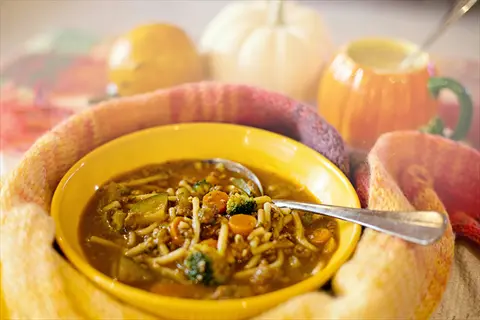
Leaves in soups and stews
- Use: Tear a few young leaves into soups, stews, and broths for a deep, savory, celery-like background note.
- Amount: A small handful flavors a whole pot, since the leaves are far stronger than celery or parsley.
- Timing: Add near the end of cooking to keep the fresh, green aroma from fading away with long heat.
- Pairings: Lovage loves potatoes, beans, chicken, and grains, lending a meaty depth to otherwise plain dishes.
- Raw option: Very young leaves can be shredded thinly into salads, but use a light hand for raw use.
- Storage: Freeze surplus leaves whole or in oil cubes to keep that flavor on hand year-round.

Seeds for baking and seasoning
- Use: Toasted lovage seeds season breads, cakes, crackers, and savory biscuits with a warm, celery-like spice.
- Flavor: The seeds carry a concentrated, aromatic punch close to celery seed but rounder and more herbal.
- Toasting: Lightly toast the seeds in a dry pan first to release their aroma before grinding or scattering.
- Harvest: Collect seed heads as they ripen and dry them fully before storing in an airtight jar.
- Pairings: They suit cheese biscuits, savory scones, and pickling brines where a celery note is welcome.
- Restraint: Use sparingly, as a teaspoon of seed can dominate a recipe with its strong aroma.
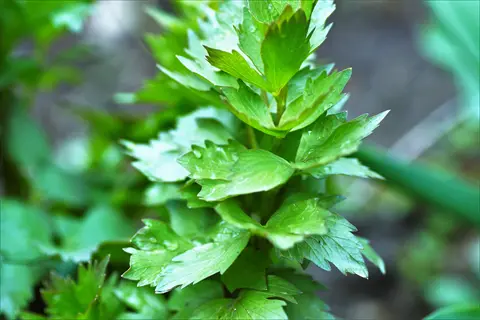
Stems and stalks as a vegetable
- Use: The hollow young stems can be blanched and eaten as a vegetable or used like celery sticks.
- Candied: Traditionally the stalks were candied in sugar, much like angelica, for a sweet aromatic treat.
- Texture: Stems are more fibrous than celery, so peel and cook tougher ones rather than eating them raw.
- Straws: Hollow stems make aromatic edible straws for tomato-based or savory drinks in some kitchens.
- Timing: Harvest stems while young and tender, before the plant flowers and the flavor turns bitter.
- Pairings: Blanched stems work in braises and stocks where their celery character can mellow and spread.
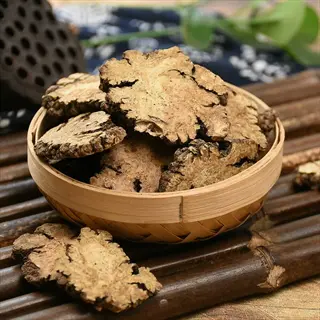
Roots cooked or dried
- Use: The thick taproot can be cooked as a root vegetable, much like a strongly flavored parsnip or celeriac.
- Tea: Dried, sliced root is traditionally simmered into a herbal tea with a warm, earthy celery flavor.
- Flavor: Roots are the most intense part of the plant and carry its highest concentration of aromatic compounds.
- Drying: Dried roots store very well, keeping most of their flavor compounds for years when kept airtight.
- Caution: Handle freshly dug roots in cool light, since their compounds can make skin react to sunlight.
- Pairings: Cooked root adds body to broths and stocks where a long, slow savory depth is wanted.
Health and Medicinal Uses
Most guides wave at lovage benefits and then back away with a quick disclaimer. The real story sits in regulatory monographs and lab papers, and it is more honest than the hype. So here is what the evidence actually shows, and where it stops.
The strongest claim has decades behind it. Lovage root counts as a traditional herbal medicine. European drug regulators clear it for minor urinary problems, and that nod rests on at least 30 years of use. People take it to make more urine and flush out the urinary tract, the classic lovage diuretic action. This is supportive care, not a cure. And it works only when you drink plenty of water too.
The chemistry helps explain the rest of the lovage medicinal uses people talk about. Lab work found the roots packed with coumarins, with one called pimpinellin showing up most in every sample. Fresh roots held about 1.7 to 2.9 mg per gram, and dried roots climbed to 15 to 24. These same compounds tie lovage's bold smell to its long folk reputation as a herbal remedy.
Traditional urinary support
- Recognition: The European Medicines Agency lists lovage root as a traditional herbal medicinal product for minor urinary complaints.
- Action: It is used to increase urine output and help flush the urinary tract as a supportive measure only.
- Limits: It is meant for use after a doctor rules out serious conditions, and adequate fluid intake is essential.
Coumarins and phytochemistry
- Profile: Research identified lovage roots as rich in coumarins, with pimpinellin the most abundant in every sample tested.
- Levels: Fresh roots held about 1.7 to 2.9 milligrams per gram of coumarins, rising to 15 to 24 in dried roots.
- Meaning: These compounds underpin lovage's antioxidant and aromatic properties and tie its flavor to its chemistry.
Antibacterial activity
- Finding: A 2020 study isolated phthalides from lovage roots that showed antibacterial activity against several bacteria.
- Strength: The most active compound inhibited Staphylococcus aureus at a concentration of 16 micrograms per milliliter.
- Caveat: This was laboratory testing on isolated compounds, not evidence that eating lovage treats infections in people.
Anti-inflammatory and lab cancer research
- Finding: A 2024 study reported lovage extracts were selectively toxic to colorectal cancer cells grown in the laboratory.
- Selectivity: The extracts spared non-cancerous cells, with no significant toxicity recorded on normal cell lines.
- Caution: These are in-vitro results only, with no human trials, so lovage is not a cancer treatment in any form.
These findings suggest for the first time that lovage roots are a good source of furanocoumarins with proven bioactivity, making lovage a functional food product.
Keep two things straight here. The antibacterial and anti-cancer results come from cells in a dish, not from people. They are promising leads. But they need human studies before anyone can call lovage a cure. The urinary use is the one with real traditional herbal medicine roots. And even that one waits on a doctor first.
Safety matters as much as the upside. The EMA monograph says do not use lovage root if you are pregnant or breastfeeding. Skip it too if you have an inflammatory kidney disorder. It is also not recommended for children under 12. Treat the plant as a food and a folk remedy. Talk to your own doctor before you use it for any health complaint, and you stay on solid ground.
Harvesting Lovage Safely
Timing matters most when harvesting lovage. Cut leaves before the plant flowers, because the leaves turn bitter once those tall flower heads form in summer. For the mildest, freshest taste, pick the youngest outer leaves. Take only what you need at a time.
There is one safety habit worth building into how to harvest lovage, and it costs you nothing. Lovage roots are rich in furanocoumarins. These are the same group of compounds tied to sun-triggered skin trouble across the carrot family. So handle the roots and any big batch of leaves in cool morning light. Then rinse your hands before you step out into bright sun.
Make this a simple morning routine and the risk takes care of itself. Early light is gentle, the leaves are crisp, and a quick hand rinse seals the deal. You skip the sun-sensitivity risk without ever thinking of it as a thing to fear.
- Time it right: Harvest leaves before the plant flowers, since foliage turns bitter once flower heads form in summer.
- Pick the best leaves: Cut the youngest outer leaves for the mildest, freshest flavor, and take only what you need at a time.
- Handle in cool light: Gather roots and large amounts of foliage in cool morning light, then rinse your hands to lower the sun-sensitivity risk.
- Freeze for flavor: Freeze leaves whole or chopped into oil cubes, the method that best preserves lovage's strong flavor.
- Dry as a backup: Dry leaves in a dehydrator or low oven if you prefer dried herbs, accepting some loss of aroma.
- Save seeds and roots: Collect and dry seeds, and store dried sliced roots, both of which keep their flavor compounds for a long time.
Storing lovage well comes down to one choice, and freezing wins. Freezing lovage leaves whole or chopped into oil cubes locks in the strong, celery-like punch better than any other method. Drying is the long-running debate here, and the honest answer is that it works as a backup but costs you aroma. A dehydrator or low oven will get you usable dried leaves if you prefer them.
Seeds and roots are the easy wins for preserving lovage over the long haul. Collect and dry the seeds, and store the roots sliced and dried, since both hold their flavor compounds far longer than the leaves do.
Lovage contains furanocoumarins that can make skin react to sunlight. Handle roots and large harvests in cool, low light, then wash your hands before going out into bright sun.
5 Common Myths
Lovage is just another name for celery, so the two plants can be swapped one for one in any recipe.
They are different plants in the same family. Lovage is far stronger, so a small amount replaces a much larger quantity of celery.
Lovage is a delicate herb that needs constant care, rich feeding, and replanting every season to keep producing leaves.
Lovage is a tough, long-lived perennial that returns each year on its own and often thrives for a decade or more with little help.
Because lovage is a kitchen herb, every part of it is completely harmless to handle and eat in any quantity you like.
Lovage is low in toxicity to eat, but its roots carry furanocoumarins that can make skin react to sunlight, so handle it in cool light.
Lovage is a proven medicine that cures urinary infections, kidney disease, and even cancer when taken as a tea or extract.
Lovage root has only traditional use for flushing the urinary tract. Cancer and infection findings are early lab results, not human cures.
You need several lovage plants in a row to grow enough leaves and seeds for regular use in the kitchen.
One mature lovage plant is usually more than enough for a household, since each clump grows large and produces abundantly for years.
Conclusion
The lovage plant packs a whole celery patch into one stem, and it asks for almost nothing back. It is a hardy perennial herb that grows in zones 4a through 9b. Give it moist soil and it comes back on its own each spring. Stop seeing it as fussy, and you see the easiest big flavor in the garden.
Growing lovage rewards patience more than skill. One mature plant can reach 6 to 8 feet (1.8 to 2.5 meters) tall, and that single clump usually feeds a whole kitchen for years with little care. The lovage uses stack up fast once you have that much leaf, stem, seed, and root on hand. You can chop the leaves into soup, hollow the stems for a savory straw, toast the seeds, and even dig the roots for an intense celery note.
The honest picture matters here. Lovage is a low-toxicity culinary herb. For ages folks used it to flush the urinary tract and ease minor bladder trouble. The flashier lovage benefits you may read about are different. The antibacterial and anti-cancer talk rests on early lab findings, not proven cures. Treat those as hopeful research, not medicine. Skip the root tea if you are pregnant, nursing, or have a kidney problem.
Picture one tall lovage clump at the back of your own herb bed. It leans over the chives and thyme like an old friend who got there first. It is a forgotten herb finding new fans. Planting it feels like reviving something old and truly useful at once. Give it a sunny corner and a little room. It will pay you back at the dinner table for a decade.
Glossary
- Apiaceae
- The carrot and celery plant family, which also includes lovage, parsley, and fennel.
- Cold stratification
- Chilling seeds in a damp medium to mimic winter and break their dormancy so they germinate.
- Coumarins
- A group of natural aromatic compounds found in lovage roots that contribute to its scent and antioxidant activity.
- Furanocoumarins
- A type of coumarin in lovage that can make skin more sensitive to sunlight when handled.
- In-vitro
- Research done on cells in a laboratory dish rather than in living people or animals.
- Perennial
- A plant that lives for several years, regrowing each season rather than dying after one year.
- Phototoxicity
- A reaction where certain plant compounds on the skin trigger irritation or burns after sun exposure.
- Phthalides
- Aromatic compounds in lovage roots, studied for antibacterial activity, that also shape its celery-like flavor.
External Sources
Frequently Asked Questions
What does lovage taste like?
Lovage tastes like a strong, concentrated celery with hints of parsley and a faint aniseed note, which is why it is often called celery on steroids.
Is lovage the same as celery?
No. Lovage and celery are different plants in the same Apiaceae family. Lovage is a perennial herb with a far more intense, celery-like flavor.
Can you eat raw lovage?
Yes. Young lovage leaves are edible raw in salads or as a garnish, but use small amounts because the flavor is very strong.
Is lovage good for kidneys?
Lovage root is traditionally used to increase urine output and flush the urinary tract, but it is not a proven treatment for kidney disease and should not be used with kidney disorders.
Is lovage safe to eat?
Yes. Lovage is a common culinary herb rated low in toxicity for humans. Avoid large medicinal doses during pregnancy or with kidney problems.
What are the health benefits of lovage?
Lovage offers traditional support for digestion and urinary flushing, and research shows its roots contain antioxidant, antibacterial, and anti-inflammatory compounds.
How tall does a lovage plant grow?
A mature lovage plant typically reaches 6 to 8 feet (1.8 to 2.5 meters) tall and 2 to 3 feet (60 to 90 centimeters) wide.
How do you harvest and store lovage?
Harvest leaves before the plant flowers, and preserve them by:
- Freezing leaves whole or in oil cubes
- Drying leaves in a dehydrator or low oven
- Collecting and drying the seeds
- Storing dried roots for tea
What is lovage used for in cooking?
Lovage is used to flavor soups, stews, stocks, broths, salads, and potato dishes, while its seeds season breads and its stems can be candied.
Is lovage easy to grow?
Yes. Lovage is one of the easiest herbs to grow. It is a hardy, long-lived perennial that tolerates many soils and has few pests.