
Introduction
Few shrubs give you so much across the seasons as nandina domestica. You get clouds of white flowers in spring, bright red berries through winter, and leaves that shift from green to deep crimson as the year turns. It asks for almost nothing in return, which is why it shows up in so many yards.
Here is the honest tension this plant carries. The same shrub that looks gorgeous on a foundation bed is also invasive across much of the Southeast and toxic in every part. Sold as heavenly bamboo or sacred bamboo, it is not a true bamboo at all. It came to Western gardens in 1804 and is the only species in its genus, points confirmed by NC State Extension and UF/IFAS.
Plenty of nandina guides cover light, soil, and water well. This one goes a layer deeper into the peer-reviewed science. Which sterile cultivars truly stop making fruit. How the berries release cyanide. Where this evergreen shrub should never go in the ground. You get that research in plain words so you can plant with your eyes open.
You will get the full care routine and a clear pick of non-invasive cultivars. You will see the real toxicity and invasiveness facts, plus simple pruning steps. And you will learn quick fixes for the common problems people run into. Let's start with what this shrub needs day to day.
Nandina Domestica Care Guide
Three one-gallon Gulf Stream nandinas went into my east-facing foundation bed eight years ago. I watered them through that first summer and then mostly forgot about them. They have shrugged off droughts, ice storms, and my total neglect, and they look better now than the day I planted them.
That hands-off survival is why nandina domestica has a name as a tough, easy shrub. Good heavenly bamboo care comes down to a few basics. Learn the numbers below, and your plant pretty much runs itself.
Most landscape plants settle in at a mature size of 3 to 8 ft tall and 2 to 5 ft wide, the range NC State Extension reports. Clemson lists 6 to 8 ft, and plants only push toward 10 ft in the wild. For a home bed, treat the 3 to 8 ft figure as your working number and prune if you want it shorter.
This is an evergreen shrub that holds color in USDA zones 6a to 9b, and it grows fast once established. Despite the common name, it sits in the family Berberidaceae and is no relation to true bamboo. The cane-like stems and lacy leaves just make it look the part.
Site it almost anywhere. It takes full sun to deep shade, though more sun gives you richer fall and winter color. Nandina is heat- and drought-tolerant once its roots take hold, and deer leave it alone. Clemson and NC State both note no serious disease or insect problems in most gardens, so you can skip the spray schedule.
Water new plants regularly through their first season, then ease off. Established nandina is genuinely drought-tolerant and rarely needs extra water in normal weather.
The real payoff is the show across the seasons. You get white spring flowers, then red berries that hang on through fall and winter, and foliage that drifts from green to deep red as the weather cools. That year-round interest, paired with the easy care, is why gardeners keep planting it.
Best Non-Invasive Cultivars
The best way to grow heavenly bamboo without harm is to plant a low-fruit or no-fruit type. Birds eat the red berries and drop the seeds far from your yard. A plant that makes few or no berries cuts off the main way this shrub spreads.
Plant tags name plenty of pretty nandina varieties. They rarely tell you which ones stay fruitless. A 2024 University of Florida trial gives us that proof. The team grew the plants at three sites for close to two years. They counted every berry. So we can rank these picks by real measured fruiting, not by sales copy.
Think of a sterile cultivar like a seedless grape or a seedless melon. You still get the full look of the plant, the leaves and the shape, with no seeds to let it spread. Each variety they tested was diploid. So the lack of fruit comes from the breeding, not from extra sets of chromosomes.
The picks below are the strongest non-invasive nandina choices the data backs. These are the proven sterile cultivars and near-sterile cultivars from the trial. The top three set no berries at all. The rest make just a tiny share of the wild plant's crop.
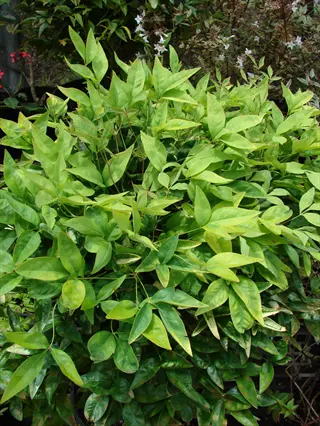
Lemon-Lime
- Fruiting: Produced no fruit at any site or time in University of Florida trials, making it female sterile with full fruit reduction.
- Foliage: Bright lime-green new growth gives a soft, fresh look that brightens shaded foundation beds and borders.
- Habit: Stays compact and mounding, which suits low hedges, mass plantings, and the front of mixed beds.
- Why choose it: Combines lively color with zero berry production, so it will not seed into nearby natural areas.
- Care: Handles full sun to part shade and the same easy watering as the species once it settles in.
- Best use: A strong pick where you want foliage color rather than the traditional red winter berries.
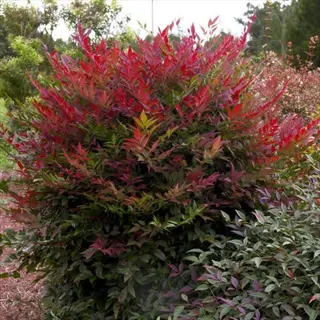
Greray
- Fruiting: One of the three cultivars that set no fruit at all in the University of Florida study, rated 100% fruit reduction.
- Foliage: Fine, airy leaves with multi-tone coloring add texture and movement to a planting.
- Habit: Upright and well-branched, giving a fuller look than some narrower selections.
- Why choose it: Delivers the classic heavenly bamboo silhouette without the seed-spread risk that drives invasiveness.
- Care: Adaptable to a wide range of soils and light, in keeping with the species' famous toughness.
- Best use: Works as a specimen or repeated through a border for a consistent, low-fruit screen.
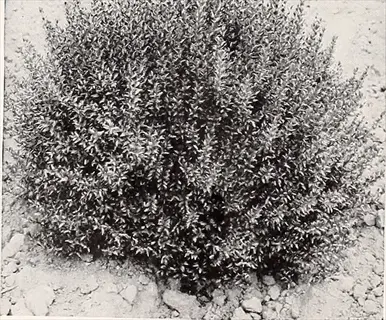
Chime
- Fruiting: The third fully sterile cultivar in the trial, producing no berries at any site, so it adds no seed to the landscape.
- Foliage: Dense, finely cut leaves hold color well and give a refined, layered appearance.
- Habit: Compact and rounded, fitting tidy foundation lines and container plantings.
- Why choose it: Offers the look of nandina with the lowest possible invasiveness risk thanks to total fruit reduction.
- Care: Tolerates sun to shade and shrugs off short dry spells once roots are established.
- Best use: A reliable choice for smaller gardens where you want neat structure and no berries.
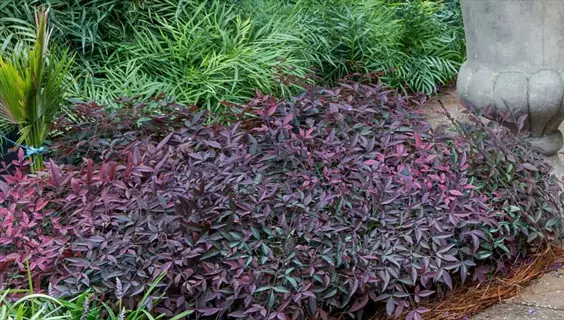
Murasaki, SEIKA and Twilight
- Fruiting: This trio showed very high fruit reduction in the University of Florida trial, Murasaki 97.7 to 99.9%, SEIKA 97.7 to 100%, and Twilight 95.9 to 100% versus the wild type.
- Foliage: Each brings rich seasonal color, from deep purples to variegated and shifting tones across the year.
- Habit: Generally compact, suiting borders, foundation plantings, and accent groupings.
- Why choose them: Near-sterile fruiting means a strong reduction in the berries that birds spread into wild areas.
- Care: Same easy, drought-tolerant care as the species once established, in sun to part shade.
- Best use: Good options when you want bold foliage color and accept a small, low-fruit footprint.
These numbers hit home once you see how much fruit the wild plant makes. In the trial, the standard species made up to 5,619 berries across just five plants in north Florida. A few plants can seed a whole patch of woods. That is why the fruitless cultivars above are such a safe swap.
One name to skip is Emerald Sea. It fruited as much as the wild plant or more. So it carries the same spread risk and earns no spot on this list. Read the tag. If a variety has no fruiting data, treat it as a normal berry-maker until proof says otherwise.
Want a tidy front-of-bed shape? The compact and dwarf nandina picks like Lemon-Lime, Chime, and Murasaki give you neat form with little clean-up. A low-berry pick is the single best move for growing this shrub with a clear conscience. The seeds birds carry are what turn a garden plant into a wild problem.
Light, Soil and Watering Needs
The light requirements for this shrub are about as relaxed as a plant gets. Nandina handles full sun to deep shade and still looks good in both spots. Think of light as a color dial. More sun turns up the red and burgundy tones, while deep shade keeps the foliage greener and softer.
If you want the richest fall and winter color, give it as much sun as you can. Plants tucked into a shady corner stay leafy and pretty, but the bright reds fade toward green. Either way the shrub stays healthy, so the choice comes down to the look you want.
Soil is the easy part. Nandina grows in clay, loam, or sand, and it shrugs off soil pH from acidic to alkaline. It does best in slightly acidic ground around pH 6.0 to 7.0, but you do not need to chase those numbers. Heavy clay can be loosened with a little compost, though that step helps more than it is required.
Watering follows the same forgiving pattern. Once the roots settle in, nandina is drought tolerant and gets by on rainfall in most years. The one rule that matters is drainage. Give it well-drained soil that never stays soggy, and water deep but rarely during long dry spells instead of a daily splash.
This easygoing nature across light, soil, and moisture is exactly why you see nandina in so many yards across the South. A spot with full sun to partial shade suits it fine, and that is part of the problem. A plant that thrives almost anywhere with little help can also spread on its own into places where nobody planted it.
Planting nandina in soggy, poorly drained soil is the fastest way to weaken it. The roots tolerate drought far better than constant wet feet.
Pruning and Year-Round Color
The eight-year-old 'Gulf Stream' nandinas in my east-facing foundation bed had gone bare from the knee down. Naked, woody stems held all their leaves in a tuft up top, like little green palm trees in a row. So I cut the three tallest canes flat to the ground that February. By June the base had filled back in with soft new growth, and the next spring those refilled shrubs carried sprays of white flowers again.
That is the whole case for renovation pruning over shearing. Pruning heavenly bamboo with hedge trimmers gives you a tidy box for a week. Then you get a thicket of leggy stems with bare ankles and no berries. Cut cane by cane instead and you keep the loose, fountain shape this plant wants to have.
The method is simple once you see it. You work one stem at a time, you take out the oldest wood first, and you stop before you remove too much. Late winter to early spring is the window, while the plant is easy to read and bounces back fast. Here is the order I follow every year.
Prune in late winter or early spring before new growth begins, when the plant is easiest to assess and recovers quickly.
Identify the tallest, thickest, and woodiest canes, which are usually the ones that have gone bare and leggy at the bottom.
Remove those oldest canes right down to ground level, encouraging fresh growth to fill in from below rather than from the top.
Cut a few remaining stems to varying heights just above a node so the shrub keeps a full, layered shape instead of a flat top.
Remove no more than about a third of the canes in a single year so the plant stays vigorous and keeps its display.
Never shear nandina into a box or ball. Shearing leaves bare, leggy stems and sacrifices the flowers, berries, and natural fountain shape.
Cane-by-cane pruning protects a show that runs all year. Nandina opens loose sprays of white flowers in late spring, from about April through June. Those blooms set bright red berries by fall, and the berries hang on the plant straight through winter. Shear the shrub and you cut off the very wood that carries that display.
Light placement works alongside your pruning to drive the year-round interest. The foliage runs green through summer, then turns red and burgundy once the cold sets in. A spot in full sun brings out the deepest color, while plants in shade stay greener and softer. Give the shrub sun and a yearly cane thinning, and it earns its keep in every season.
Toxicity and Invasiveness
You will see nandina toxicity get one line in most guides. That sells you short. The truth is that you find a hidden toxin in every part of nandina domestica, from the root to the berry. These toxins go by the name cyanogenic glycosides, and they give off hydrogen cyanide once you chew or digest the plant. Scientists have logged 366 chemical constituents in this one shrub.
The cyanide moves fast in the body. It blocks an enzyme called cytochrome oxidase. Once that enzyme stops, your cells can no longer use oxygen. A lethal dose can kill in minutes to an hour. That is why the cyanide berries matter so much more than a quick warning lets on.
Here is the good news for you and your family. A Texas review found 875 child exposures from 2000 to 2015, all in kids five and under. Serious outcomes stayed rare. Just 3.7% of kids threw up, and only 1.0% had belly pain. Keep your kids away from the bright fruit. But do not panic over one stray berry.
Cyanide In Every Part
- Compounds: All parts, the fruits, leaves, and stems, contain cyanogenic glycosides that release hydrogen cyanide when chewed and digested.
- Mechanism: The released cyanide blocks the enzyme cytochrome oxidase, which halts the body's ability to use oxygen at the cellular level.
- Severity: Extension sources rate the poison severity as high, with the fruits, leaves, and stems all listed as toxic parts.
- Aging berries: Research notes the berries become less cyanogenic as they age on the plant over the season.
Risk To People
- Symptoms: Raw berries are considered poisonous, with nausea, vomiting, diarrhea, and abdominal pain reported after ingestion.
- Pediatric data: A review counted 875 exposures in Texas children aged five and under from 2000 to 2015, peaking in March and April.
- Outcomes: Serious outcomes were rare in that data, with vomiting at 3.7% and abdominal pain at 1.0% the most common reactions.
- Sensible care: Even with mostly mild outcomes, keeping children from eating the bright berries is the simple, sensible precaution.
Risk To Birds And Pets
- Cedar waxwings: A 2009 Georgia case linked a mass cedar waxwing die-off to nandina berries, the sole stomach contents in all five necropsied birds.
- Why birds gorge: Fruit makes up about 84% of cedar waxwings' annual diet, and the birds eat large quantities in a single feeding.
- Pets: Leaves and berries may be toxic to dogs, cats, livestock, and horses, so keep curious animals from chewing the plant.
- Spread by eating: The same birds that are harmed also carry surviving seeds for miles, linking the toxicity and invasiveness problems.
Why It Is Invasive
- Status: Nandina is a Category 1 invasive in Florida and is listed across ten introduced southeastern states.
- How it spreads: It reproduces by both bird-dispersed seed and underground root fragments, and even a piece of root left behind can regrow.
- Forest impact: Research shows it can reduce light levels in hardwood forests by up to 40%, which impacts native plant regeneration.
- Responsible choice: Choosing sterile cultivars, removing berries, and avoiding plantings near wild areas keeps the shrub from escaping.
Birds carry the real tragedy here. In April 2009, dozens of cedar waxwings died in Thomas County, Georgia. Nandina berries were the sole stomach contents in all five birds checked. These birds gorge in one feeding bout. Fruit makes up about 84% of their yearly diet. So they swallow a deadly dose before they ever feel sick. One small mercy helps. The berries grow less cyanogenic as they age on the plant.
The same berries that poison birds turn this shrub into an invasive species. In Florida the state ranks it as a Category 1 invasive, the worst tier on the list. It now grows wild in ten southeastern states. It spreads in two ways. Birds drop the seed, and root pieces sprout underground. So even a bit of root left in the soil can grow a new plant.
Once it escapes, it crowds out the natives. Research shows nandina can cut the light in a hardwood forest by up to 40%. That starves young trees and seedlings of the sun they need. So plant it with care. Choose sterile cultivars. Snip off the berries before they ripen. And keep the shrub far from wild areas, since it spreads most freely across the Southeast.
The berries contain the toxin cyanide, which causes bird mortality. Cedar waxwings are most susceptible to poisoning because they consume large quantities of fruit in a single feeding.
Problems, Pests and Propagation
The new leaves on my single Fire Power dwarf looked puckered and cupped one morning. Each tip curled in tight like a closed fist. The pot sat on the patio right by the kitchen window, so I caught it over coffee. I went out to look for scale or aphids and found nothing. That cupping was the harmless cultivar virus, and the plant kept pushing bright red growth all season.
Most nandina problems stay rare because this shrub is tough. In most gardens it has no serious disease or insect issues. It also shrugs off deer better than almost anything else you can plant. You will spend far more time enjoying it than fussing over it. Trouble is the exception here, not the rule.
When pests do show up, cottony cushion scale is the one to know. You will spot small white waxy bumps on the stems and leaf undersides, and a heavy load can drain the plant over time. Powdery mildew is the other repeat offender, leaving a white film on leaves in humid, crowded spots with poor air flow. Both respond well to early action, so a quick weekly look pays off.
- Scout pests: Check stems and leaf undersides for cottony cushion scale, the most likely insect pest, and treat early before it builds up.
- Watch for mildew: Improve air flow and avoid overhead watering to limit powdery mildew, which shows up as a white film on leaves in humid conditions.
- Know the harmless virus: Expect some leaf cupping or crinkling on dwarf selections like Firepower and Harbour Dwarf from a nonlethal virus that does not need treatment.
- Fix leggy growth: Renew bare, leggy plants by cutting the oldest canes to the base rather than shearing, which restores fullness from below.
- Propagate carefully: Use semi-ripe cuttings with rooting hormone or divide runners, but propagate only sterile cultivars to avoid spreading an invasive plant.
- Choose deer-resistant nandina with confidence, since browsing damage is rarely a problem.
Old plants often go bare at the base with tall, leggy stems and a tuft of leaves up top. The fix is simple. Cut the oldest canes right down to the ground and the plant fills back in from below within a season. Shearing the top just makes the legginess worse.
Propagation gives you three easy routes. You can sow seed, take semi-ripe cuttings dipped in rooting hormone, or dig up and divide the runners that spread from the base. The cuttings are the most reliable for matching the parent plant. One firm rule though: only propagate a sterile cultivar. Multiplying a fruiting type spreads a plant that is invasive across much of the Southeast, and that is the last thing you want to hand off to a neighbor.
5 Common Myths
Heavenly bamboo is a true bamboo, so it spreads aggressively underground exactly the way running bamboo canes do in a yard.
Nandina is not a bamboo at all. It belongs to the Berberidaceae family and only resembles bamboo because of its slender, cane-like stems.
Nandina berries are harmless decorations, so it is perfectly safe to plant the shrub anywhere children, pets, or wild birds gather.
All parts release cyanide when chewed, and nandina berries caused a documented cedar waxwing die-off in Georgia in 2009, so placement matters.
Every nandina is equally invasive, so there is no responsible way to grow heavenly bamboo without spreading it into wild areas nearby.
University of Florida trials found sterile cultivars like Chime, Greray, and Lemon-Lime produced no fruit, removing the seed-spread that drives invasiveness.
Nandina needs full sun and rich, constantly moist soil, so it struggles and thins out in any shaded or dry corner of the garden.
Nandina tolerates full sun to deep shade and becomes drought-tolerant once established, though full sun gives the brightest fall and winter color.
You should shear nandina into a tidy hedge shape every year to keep the plant full, neat, and under control in the landscape.
Shearing creates bare, leggy stems. The better method is removing the oldest, tallest canes at the base so new growth fills in from below.
Conclusion
Nandina domestica is a tough, good-looking shrub that asks for almost nothing once it settles in. It handles full sun to deep shade, shrugs off drought, and shifts color through the year. The catch is simple. This plant earns its spot in your yard only when you choose and place it with care.
Keep a few facts in mind. Heavenly bamboo grows across USDA zones 6a to 9b. It reaches about 3 to 8 ft tall (0.9 to 2.4 m), and the exact size shifts with the source and the cultivar. All parts of the plant release cyanide when eaten. The berries have killed cedar waxwings in a documented case. That risk is real, but it is easy to plan around.
Your single best move is to plant a sterile cultivar. University of Florida trials tested several, and Chime, Greray, and Lemon-Lime made no fruit at any site. No fruit means no bird hazard and no spread into wild land. So pick one of these non-invasive nandina types. Keep it well away from natural areas near you. Already have a fruiting type? Clip the berries off before they ripen.
None of this makes nandina a hard plant to live with. The science just turns a murky choice into a clear one. Pick a fruitless variety. Give it decent soil and a spot that fits your zone. You still get the white spring flowers, red foliage, and year-round structure that drew you to it. The downsides that gave this shrub its mixed name fall away. That is a fair trade, and an easy one to make. Sterile cultivars make it work.
Glossary
- Broadleaf evergreen
- A plant that keeps its wide, non-needle leaves through all four seasons.
- Cyanogenic glycosides
- Plant compounds that break down to release hydrogen cyanide when the tissue is chewed or digested.
- Cytochrome oxidase
- An enzyme cells use to take up oxygen, which cyanide blocks to cause poisoning.
- Diploid
- A plant with two sets of chromosomes, the normal arrangement, rather than the extra sets seen in polyploids.
- Female sterile
- A plant cultivar that sets no viable fruit or seed, so it cannot spread by seed.
- FISC Category 1
- A Florida Invasive Species Council rating for plants that are altering native plant communities.
- Renovation pruning
- Cutting the oldest, tallest stems down to the base to refresh a shrub and encourage new growth from below.
- Rhizome
- An underground stem that spreads sideways and can sprout new shoots and roots.
External Sources
Frequently Asked Questions
Is Nandina domestica toxic to humans?
Yes, all parts contain cyanide-releasing compounds, and the raw berries can cause vomiting, nausea, and stomach pain if eaten.
How toxic is Nandina to dogs and cats?
Nandina leaves and berries can be toxic to dogs and cats because they release hydrogen cyanide when chewed and swallowed.
Is Nandina invasive and where should you not plant it?
Yes, nandina is invasive across the Southeast and is listed in ten introduced states, spreading by bird-carried berries and root fragments.
Which Nandina cultivars are non-invasive?
Sterile cultivars are the safest choice, including:
- Chime, Greray, and Lemon-Lime produced no fruit at all
- Murasaki, SEIKA, and Twilight showed over 95 percent fruit reduction
- Avoid Emerald Sea, which fruits as heavily as the wild type
Does Nandina grow in sun or shade?
Nandina grows in full sun to deep shade, but full sun produces the most vivid fall and winter foliage color.
Will Nandina survive winter?
Nandina is reliably hardy in USDA zones 6a through 9b and keeps its leaves through winter in most of that range.
Do Nandina grow well in pots?
Yes, compact and dwarf nandina cultivars grow well in pots with well-drained soil and regular watering during dry spells.
What are common Nandina problems?
Nandina has few serious issues, but cottony cushion scale, leaf-spot viruses, and leggy growth are the main things to watch.
How long does Nandina take to grow?
Nandina has a rapid growth rate and usually reaches its mature height within a few years under good conditions.
What plants pair well with Nandina?
Nandina pairs well with low evergreens, ornamental grasses, and shade perennials that contrast with its fine, colorful foliage.