
Introduction
The sorrel plant is the rare green that earns a spot in your garden and on your plate. You plant it once and it comes back every spring, and the lemony leaves taste like fresh citrus straight off the stem. No squeezing, no zesting, just sharp bright flavor you can pick by the handful.
Most people meet garden sorrel (Rumex acetosa) as a clump-forming perennial herb that shrugs off cold winters. It is hardy down to USDA Zone 3. A grown plant reaches 0.5 to 1 m tall, or about 20 to 40 inches. The RHS and University of Minnesota Extension both back that. Get one going and it can feed you for years.
Here is the odd part. Gardening guides teach you how to grow it, and health guides talk up its vitamins, but the two rarely sit in one place. This guide joins both with real sources, and it does not skip the oxalic acid facts that so many pages leave vague. You get the honest version, not the scare or the hype.
You will learn what sorrel really is, how to spot the varieties and look-alikes, and how to grow, harvest, and care for it. Then you will see the nutrition, the safety facts, and the best ways to cook it. By the end you will know how to raise this plant and how to eat it well.
What Is the Sorrel Plant?
The sorrel plant is a leafy green you grow for one reason above all others. Its leaves taste sharp and sour, and that bite is what cooks want. You will see it sold under the Latin name Rumex acetosa. It belongs to the buckwheat family, the group that botanists call the Polygonaceae. So your sorrel is a close cousin of buckwheat and rhubarb, not lettuce or spinach.
This is a clump-forming perennial herb, which means it comes back on its own every spring once you plant it. You grow it for the long, arrow-shaped leaves that point out from the base like green spearheads. The plant reaches about 0.5 to 1 m tall when mature, roughly 20 to 40 inches, and spreads 4 to 20 inches wide. In early summer it sends up tall stalks with small reddish flowers, then the foliage dies back over winter.
Sorrel is tough. The RHS rates it hardy to H7, so it shrugs off cold below minus 20°C (minus 4°F) and survives hard winters most herbs cannot. There is one quirk worth knowing before you plant. Sorrel is dioecious, so the male and female flowers grow on separate plants, and the females drop seed freely. Each plant also drives down a deep tap root that fights you when you try to pull it out. Pick the spot with care, because moving an old clump is no easy job.
The flavor is the whole point. That sour, lemony bite comes from acids in the leaf, and it tastes bright and clean rather than bitter. Cold-climate cooks treat fresh sorrel as a stand-in for lemon juice, since the plant thrives where citrus trees never could. Sorrel grows wild across Europe and Asia. For generations it has flavored soups and sauces from Eastern Europe to France. That long kitchen history makes it a true staple, not a passing trend.
A hardy, clump-forming perennial herb with edible, sour-tasting, oblong leaves, arrow-shaped, 7-15cm long at the base.
Sorrel Varieties and Look-Alikes
More than one plant goes by the name sorrel. That mix-up trips up cooks and gardeners every season. The sorrel varieties you want in your garden are true Rumex plants with arrow-shaped, sour leaves. The trouble starts when a weed or a drink plant borrows the same name.
The crimson veins caught the morning light along my back path. That red glow made me crouch down for a look. I grew one clump of common sorrel from seed in a sunny raised bed in my Zone 4 garden. It earned its keep in soups all spring. So I planted a red-veined sorrel beside it just for looks. I found its bite sharper and brighter than the common type. I started tearing the young leaves into salads instead of cooking them down.
Three garden types do most of the work in your kitchen plot. French sorrel is the mild one. It forms a low mat of small shield-shaped leaves, and the 'Silver Shield' pick gives you silvery color. Common sorrel grows upright to about 50 cm (20 in) with a sharper lemon bite, so you reach for it in soups. Red-veined sorrel earns its spot for the crimson veins more than the harvest.
Now for the look-alikes that cause real trouble. Wood sorrel is an Oxalis, a plant from a whole other family that just shares the sour name. Your garden sorrel has arrow-shaped leaves. Wood sorrel has clover-like leaves split into three parts, so check the leaf shape first. Sheep sorrel is a weed, not the salad green you want. And the Caribbean sorrel sold for holiday drinks is a hibiscus, an unrelated plant.
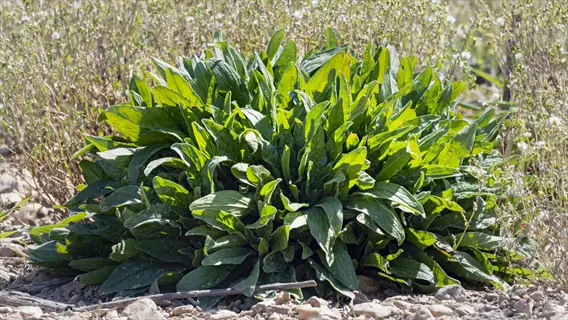
Common sorrel (Rumex acetosa)
- Identity: The classic garden sorrel, an upright clump-forming perennial reaching about 50 cm (20 in) tall in good soil.
- Leaves: Bright green arrow-shaped leaves with a sharp lemony bite that defines the flavor most cooks expect.
- Use: Best for soups, sauces, and as a fresh lemon substitute where a clean sour note is wanted.
- Hardiness: Reliably perennial to USDA Zone 3, returning each spring from the same crown for years.
- Habit: Self-seeds freely and forms deep tap roots, so give it a permanent spot rather than a tidy annual bed.
- Note: This is the species behind most nutrition and growing information you will find for sorrel.
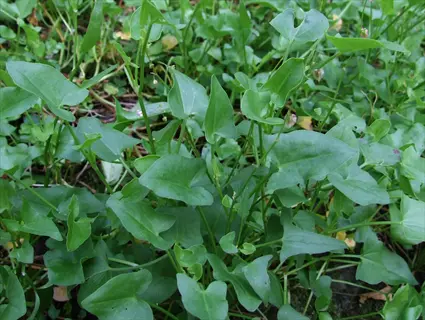
French or buckler-leaf sorrel (Rumex scutatus)
- Identity: A low mat-forming sorrel with small shield-shaped leaves, milder and more citrusy than common sorrel.
- Flavor: Gentle lemon tang that works raw in salads without overwhelming other ingredients.
- Growth: Spreads as a low mat, making it useful as an edible groundcover in a herb bed.
- Cultivar: The named selection 'Silver Shield' offers attractive silvery foliage for ornamental herb gardens.
- Care: Prefers the same full sun and free-draining soil as common sorrel and is just as hardy.
- Best for: Cooks who want a softer, salad-friendly sour leaf rather than a sharp cooking green.
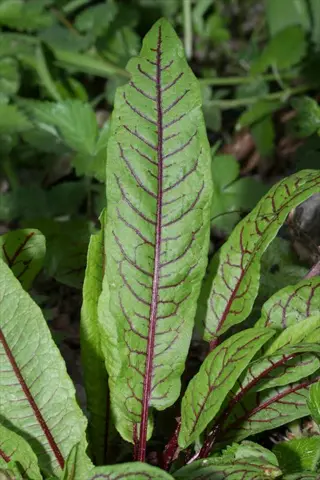
Red-veined sorrel (Rumex sanguineus)
- Identity: A decorative sorrel grown as much for looks as for eating, with green leaves marked by deep red veins.
- Appearance: Striking crimson veining makes it a popular microgreen and ornamental edge plant.
- Flavor: Mildly tangy when young; older leaves toughen, so harvest small for the best texture.
- Use: Adds color to salad mixes and garnishes more than bulk to cooked dishes.
- Growth: Compact and clumping, suiting containers and small kitchen gardens.
- Note: Sometimes sold as bloody dock, which points to its close kinship with the wild docks.

Wood sorrel (Oxalis, a look-alike)
- Identity: Not a true sorrel at all but an Oxalis, a separate plant family that shares only the sour name.
- Leaves: Clover-like trifoliate leaves, completely different from the arrow shape of garden sorrel.
- Why it matters: The shared sour taste and name cause frequent mix-ups in foraging and cooking.
- Identification: If the leaves look like three-part clover, it is wood sorrel, not Rumex garden sorrel.
- Use: Edible in small amounts but botanically distinct, so growing advice for garden sorrel does not apply.
- Takeaway: Check leaf shape first; arrow leaves mean Rumex, clover leaves mean Oxalis.
How to Grow Sorrel
By June my Zone 4 raised-bed clump shot up a tall flower stalk, and the fresh leaves I counted on just stopped coming. That clump came from seed I started indoors three springs back, and it had fed me all spring. I snipped the seed stalk down to the base, and within two weeks a flush of tender new leaves filled the gap.
That is the whole trick to growing sorrel well. How to grow sorrel is one of the easiest jobs for a new gardener. The steps below match what the RHS and UMN Extension teach.
Sorrel likes full sun and soil that drains well, though it puts up with part shade just fine. If your bed is sandy or heavy clay, work in a few inches of compost first, and your plants will reward you with bigger, healthier leaves. Pick a spot you can leave alone, because this plant comes back year after year.
Starting sorrel from seed is simple. Sow indoors about 3 weeks before your last frost, or direct sow in early spring once the soil can be worked. Set the seed about 1 cm deep, and you should see sprouts in 1 to 2 weeks at around 15°C (59°F).
Pick a full sun to part shade bed with good drainage. Sorrel is a long-lived perennial, so give it a permanent home.
Loosen the bed and mix in compost, especially in sandy or heavy clay soil, so roots settle into rich, moisture-holding ground.
Start seed indoors about 3 weeks before last frost or direct sow in early spring, setting seed about 1 cm deep.
Thin or set young plants 8 to 12 in (20 to 30 cm) apart so each clump has room to widen over the years.
Provide at least 1 in (2.5 cm) of water each week, keeping the soil evenly moist while plants establish and through dry spells.
Here is the payoff for all this planting sorrel effort. Sorrel comes back on its own down to USDA Zone 3. Its RHS hardiness rating is H7, so it shrugs off cold below minus 20°C (minus 4°F). One planting keeps giving leaves for years, so you skip the yearly replanting that annual salad greens need.
Snip out flower or seed stalks as they appear to keep plants producing tender leaves and to limit self-seeding, much like managing rhubarb.
Harvesting and Plant Care
Knowing how to harvest sorrel is the part most new growers get wrong. They wait for a big leafy plant, then pick everything at once. The better move is to start early and pick often, taking the youngest leaves from each clump. You can begin in early spring and keep going right up until the first frost.
Think of sorrel as a cut-and-come-again crop, a bit like mowing a lawn for greens. Every time you pick the young leaves, the plant pushes out fresh growth to replace them. Skip a few weeks and the leaves get tough, stringy, and far more bitter. Steady picking is the whole trick, and it doubles as your main job for sorrel care through the season.
Two other jobs keep a planting strong for years. Divide sorrel clumps every 4 to 5 years in spring, lifting and splitting crowded crowns so each piece has room to grow. Then mulch once a year to lock in moisture and hold back weeds. These small habits are why one sorrel plant can outlast annual greens by a wide margin, and the steps below break the whole routine down.
Harvest young leaves often
- When: Pick from early spring right through until frost, taking the youngest leaves for the most tender texture.
- Why: Regular cut-and-come-again harvesting encourages a steady supply of fresh leaves all season.
- Avoid: Letting leaves age on the plant, since older leaves become tough and noticeably more bitter.
Remove flower and seed stalks
- Action: Snip out flowering stalks as soon as they rise to redirect energy back into leaf production.
- Benefit: This keeps plants productive much like removing rhubarb flower stalks does.
- Bonus: Cutting stalks early also limits the self-seeding that sorrel does so readily.
Divide and mulch on schedule
- Divide: Lift and split clumps every 4 to 5 years in spring to rejuvenate crowded, less productive plants.
- Mulch: Apply mulch annually to hold soil moisture and suppress competing weeds around the crowns.
- Result: These two simple jobs keep one planting vigorous and productive for many years.
Manage pests and weedy relatives
- Pests: Protect seedlings from slugs and snails, and check soft new growth for aphids during flushes.
- Weed warning: Do not confuse garden sorrel with sheep sorrel (Rumex acetosella), an aggressive perennial weed.
- Spread: One sheep sorrel plant can set up to 1,600 seeds a year that may stay viable up to 80 years.
Sorrel pests are few, which is part of why the plant is so easy to live with. Watch for slugs and snails on young seedlings, since they can strip tender shoots overnight. Check soft new growth for aphids during spring flushes too. One thing to never confuse with your salad crop is sheep sorrel, a separate aggressive weed. A single sheep sorrel plant can drop up to 1,600 seeds a year, and those seeds may stay alive in the soil for as long as 80 years.
Sorrel is best harvested regularly to encourage a steady supply of fresh young leaves. Older leaves can become tough and bitter.
Sorrel Nutrition and Safety
The numbers behind sorrel nutrition look strong for such a light leaf. A 100 gram serving has just 22 calories, but it still packs in real vitamins and minerals. USDA nutrient data puts the big wins on vitamin A and vitamin C. You also get a useful dose of iron and magnesium.
Here is what one 100 gram serving of raw sorrel gives you, based on USDA nutrient data.
Those vitamin and mineral totals are real, and they make the leaf a smart add to a salad. The broader sorrel benefits you read about online ask for more caution. Claims that the plant fights cancer, protects your heart, or detoxifies your body rest mostly on test-tube and animal work. Human studies are thin, so treat these as early ideas rather than proven results.
One myth needs a quick fix. Sorrel gets sold as an antioxidant powerhouse, but the science says otherwise. Researchers tested seven Rumex species side by side. Garden sorrel came in dead last. It had about 23 mg of phenolics per gram, while the weedy docks topped 100. So eat sorrel for its bright taste and its honest vitamin C, not for some big antioxidant punch it does not have.
Safety is where sorrel earns its warnings, and the cause is oxalic acid. The lethal dose in adults runs from 15 to 30 grams. Doses under 5 grams have sometimes turned deadly too. A 2025 case even tied kidney damage in a child to a heavy dose of sorrel. You will not hit those amounts from a normal meal. Still, the numbers show why portion size matters.
The estimated lethal dose of oxalic acid in adults ranges from 15 to 30 g, with lower doses (< 5 g) sometimes causing fatal outcomes.
Some people should hold back more than others. If you deal with kidney stones, gout, arthritis, rheumatism, or high stomach acid, limit sorrel or skip it. For everyone else, a few simple habits lower the oxalate load. Pair the leaves with calcium-rich foods, cut back on salt, and drink plenty of water through the day. Cooking helps too, since heat softens both the tartness and some of the acid.
Cooking and Using Sorrel
My first pot of sorrel soup went from vivid green to a muddy olive within minutes on the stove. I had cut the leaves from my Zone 4 raised-bed clump an hour before. They slumped in the broth, lost their shine, and turned the color of pond water as it warmed. But the smell rising off the pan stayed sharp and lemony. That first spoonful had the same clean sour bite as a raw leaf straight from the garden.
That drab color throws a lot of new cooks. Sorrel turns from bright green to dull olive or brown because its own acids break down the chlorophyll as the leaves heat. This is normal chemistry, not spoilage, so don't toss the pot when the green fades. The lemony flavor survives the heat even though the pretty color does not.
Heat changes the taste too, and that works in your favor. Cooking greatly reduces the tartness, so you can wilt large amounts of sorrel into a single pot of soup. The same heat that dulls the color also lowers some of the oxalic acid. That softens both the sharp bite and the mineral edge. This is why cooking with sorrel lets you use a big handful where a few raw leaves would taste too sour.
Knowing how to use sorrel opens up more than soup. The plant pairs with fish, eggs, and potatoes in classic French and Eastern European kitchens. A splash of cream or sour cream then rounds off the acidity and balances the dish. Many sorrel recipes treat the chopped leaves as a clean lemon substitute. You get that bright sour note without reaching for a citrus. Here are the main ways to put it to work.
- Raw: Toss small young leaves into salads for a fresh lemony lift, or use red-veined sorrel as a colorful garnish.
- Soups: Wilt large amounts into soups such as classic sorrel soup, where cooking tames the tartness into a gentle sour note.
- Sauces: Cook sorrel down into a quick sauce for fish, eggs, or potatoes, finishing with a little cream to soften the acidity.
- Lemon stand-in: Use chopped sorrel where you want a clean sour note without lemon, a favorite trick for cold-climate cooks.
- Expect cooked sorrel to turn from bright green to a drab olive color, which is a normal acid-on-chlorophyll change rather than spoilage.
Cooking greatly reduces the tartness, so you can put large amounts of sorrel in soups.
5 Common Myths
Sorrel and Caribbean sorrel are the same plant, so the leafy herb and the red holiday drink come from one source.
They are unrelated. Garden sorrel is a Rumex leaf herb, while the Caribbean drink is brewed from hibiscus roselle flowers.
Sorrel contains no oxalic acid, so it is perfectly fine to eat in unlimited amounts at every single meal.
Sorrel does contain oxalic acid. Peer-reviewed research puts the lethal adult oxalic dose at 15 to 30 grams, so moderation matters.
Because sorrel is so tart and antioxidant rich, it is the most powerful antioxidant green in the Rumex family.
Garden sorrel actually had the lowest antioxidant activity of seven Rumex species tested; the weedy docks were far richer.
Wood sorrel with its clover-shaped leaves is just a smaller version of the same garden sorrel plant.
Wood sorrel is Oxalis, a different family. Garden sorrel is Rumex with arrow-shaped leaves, not clover-like trifoliate ones.
Sorrel is a fussy annual that must be replanted from seed every spring like lettuce or basil.
Sorrel is a hardy perennial reliable to USDA Zone 3. One planting returns for years if you divide it every four to five years.
Conclusion
Few plants give you this much for so little work. The garden sorrel plant is a hardy perennial herb. It comes back each year and hands you a food crop and a bright, lemony kitchen herb from one patch. Plant it once, give it simple care, and you get fresh tart leaves for years.
The care really is that basic. Sorrel is hardy to USDA Zone 3, so it survives hard winters that kill off most tender greens. Space your plants about a foot apart, give them roughly 1 inch of water a week, and pull the seed stalks the way you would with rhubarb. Do that and one healthy clump stays productive for years before it needs dividing.
On the plate, sorrel pays off too. The raw leaves bring you vitamin C, iron, and magnesium. And a green this good for you adds just 22 calories per 100 grams. The real sorrel benefits sit in that plain nutrition. They do not sit in the big antioxidant claims you see online. In fact, garden sorrel tests lowest for antioxidants of all its wild Rumex cousins. So enjoy it as a tasty, healthy leaf, not a cure.
Here is the balanced takeaway. Eat sorrel freely in normal cooking amounts. Lean on heat to do the work, since cooking softens both the sharp tartness and the oxalate. The catch is oxalic acid. That is why you should skip sorrel if you are prone to kidney stones or gout. For everyone else, a few handfuls in a soup or sauce is a treat, not a threat.
So grow it, pick it young, cook it down, and enjoy it with realistic expectations instead of hype. The FAQs below tackle the questions that likely brought you here. You will find how sorrel tastes and who should avoid it. You will also learn to spot the look-alikes and see how its nutrition stacks up against other greens.
Glossary
- Bolting
- When a leafy plant rushes to send up a flower stalk and set seed, which turns the leaves tougher and more bitter.
- Dioecious
- A plant that bears male and female flowers on separate individuals, meaning you need both to produce seed.
- Oxalate
- The salt formed when oxalic acid binds minerals like calcium, which can build into kidney stones in people who are prone to them.
- Oxalic acid
- A naturally occurring acid in sorrel that gives the leaves their sharp sour taste and, in large amounts, can bind calcium and stress the kidneys.
- perennial herb
- A herb plant that lives for several years, regrowing each season instead of needing to be replanted from seed.
- Roselle
- A hibiscus species whose dried red flower parts are brewed into the Caribbean drink also called sorrel, which is unrelated to the leafy garden herb.
- Rumex acetosa
- The botanical name for common garden sorrel, a leafy perennial herb in the buckwheat family grown for its tangy arrow-shaped leaves.
- USDA Zone 3
- A cold-hardiness zone where winter lows reach about minus 40 degrees, used to show how much cold a plant can survive.
External Sources
Frequently Asked Questions
Is it safe to eat sorrel?
Sorrel is safe to eat in normal culinary amounts for most healthy people. It contains oxalic acid, so large quantities are discouraged.
What does sorrel taste like?
Sorrel tastes sharp, sour, and lemony. The tang comes from oxalic and ascorbic acid, and cooking mellows it.
Are hibiscus and sorrel the same?
No. Garden sorrel is a leafy Rumex herb, while the Caribbean drink called sorrel is made from hibiscus roselle.
What is sorrel called in the USA?
In the United States sorrel is also called garden sorrel, common sorrel, sour grass, or spinach dock.
Who should not eat sorrel leaves?
People prone to kidney stones, gout, arthritis, rheumatism, or hyperacidity should limit or avoid sorrel because of its oxalic acid.
Is sorrel healthier than spinach?
Sorrel and spinach are both low-calorie, oxalate-rich leafy greens with overlapping nutrients, so neither is clearly healthier.
What does sorrel do to the human body?
Sorrel supplies vitamin C, vitamin A, iron, magnesium, and fiber, but most broader health claims rest on early studies.
What are the side effects of sorrel?
Eating large amounts of sorrel can cause stomach upset and, in rare cases, oxalate-related kidney problems.
What country is sorrel native to?
Sorrel is native across Europe and Asia rather than one country, growing wild through much of Eurasia.
Why do people drink sorrel?
People drink sorrel for its tart, refreshing flavor and festive tradition. The Caribbean drink is brewed from hibiscus roselle, not the leafy garden herb.