
My single stone trough sat by the gravel path on the south-facing slope, packed tight with sempervivum rosettes and tufts of dwarf dianthus. I crammed maybe a dozen plants into a box the size of a kitchen sink. I crouched by it every morning with my coffee, and it became my favorite spot in the whole yard. The best small rock garden ideas work like that. You can use a trough garden, an awkward slope corner, or a low raised bed. A crevice garden does the same trick. Each one turns a tiny patch into something you want to study up close.
Small spaces suit rock gardens far better than most people expect. Compact alpines and succulents stay tiny on purpose, so you can fit thirty kinds of plant where one shrub used to sit. A contained space also makes sharp drainage simple. You control the soil, the grit, and the slope in a box or a corner, instead of fighting heavy clay across a whole bed.
There is one more reason a small footprint shines for you. Alpine plants reward a close look. The flowers can be the size of a shirt button and the leaf rosettes sit flat against the stone. You miss that detail at a distance, so put a tight space near your path or your seat. That way the show lands right where your eyes go.
Here are the formats I reach for most when the room is tight.
Stone or Hypertufa Trough
- Best for: A trough is perfect for a patio or balcony, holding a tiny collection of compact alpines and succulents at viewing height.
- Plants: Fill it with sempervivum, dwarf dianthus, and small sedums that stay neat and never outgrow the container.
- Care: Use a free-draining gritty mix and top with gravel, since contained spaces are easy to keep sharply drained.
Slope or Bank Corner
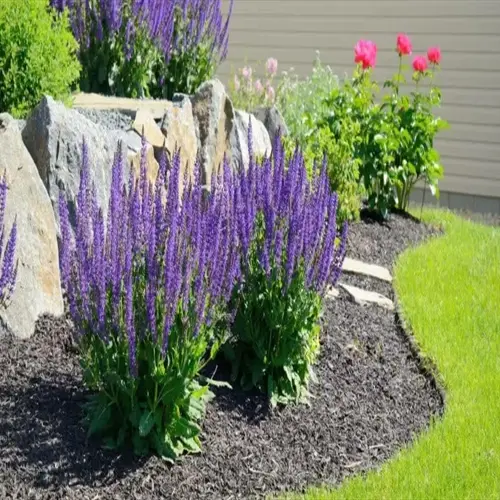
- Best for: An awkward dry corner or small slope makes an ideal mini rockery where grass struggles to grow anyway.
- Plants: Mat-forming creeping thyme and phlox knit across the surface and control erosion on the incline.
- Care: A few well-placed rocks plus gravel mulch turn a problem corner into an easy-care feature.
Crevice Garden
- Best for: A crevice garden packs many compact alpines into a small footprint using slabs of rock set on end.
- Plants: Miniature alpines root deep into the narrow gaps, which conserve moisture and protect roots.
- Care: This modern style suits collectors who want maximum variety in minimal ground space.
Pick your plants with real care, because the wrong choice swallows a small bed in one season. Skip anything labeled vigorous or fast-spreading. A crevice garden needs slow, well-behaved plants above all. One rampant grower will choke the narrow gaps and bury its neighbors fast. Look for the word dwarf or miniature on the tag. Check the spread too, not just the height, so you know how wide each plant gets.
Match the plant to the format too. In a trough, plant sempervivum and dwarf dianthus that stay in tidy clumps. On a slope corner, let creeping thyme knit across the surface and hold your soil. For a crevice garden, choose the fussy little alpines that hate wet roots and thrive jammed between stones. When you pair the right plant with the right spot, the bed almost cares for itself.
Keep the surface sharp and the whole bed reads as deliberate rather than neglected. Spread a layer of gritty gravel topdressing right up to the compact alpines. Refresh it once a year when winter rain washes some away. That thin layer of grit drains the crown, blocks weeds, and shows off the plants. Once you set the bones, your small rock garden stays handsome for years on almost no work. Give it a quick weed and a top-up each spring and it holds its shape.
Read the full article: Best Rock Garden Plants for Any Yard