
Introduction
That dry, awkward slope in your yard can turn into a wash of color that drinks almost no water. The right rock garden plants spill over stone, bloom hard in spring, and shrug off the heat that bakes the rest of your beds. It looks like the easiest garden you will ever grow. The truth is a little more honest than that.
Here is the part you rarely hear. Rock gardens have high maintenance requirements, and weed control is the biggest problem you will face. That finding comes straight from a state university plant guide. So forget the effortless pitch. The plants ask for little once they settle in, but the soil prep, the drainage, and the first two years of weeding are real work. Knowing that up front is what saves your garden.
A plant list usually picks one lane. Full sun or shade, and it assumes you live somewhere cold and dry. This guide goes wider. You get sun and shade rock garden plants, picks for cold mountains, hot humid summers, and bone-dry desert yards. You also get the full picture here. That means the well drained soil these plants demand, how to build the bed, and how to keep it alive without losing your weekends.
Think of a rock garden as a sharply drained alpine slope shrunk down to fit your yard. Alpine plants and the other rockery plants you want here evolved on lean, gritty mountainsides. They want poor footing, not rich pampered soil. Feed them too well and they sprawl, flop, and rot. Below you will find the toughest, prettiest picks for a real low maintenance rock garden, plus the honest care that keeps them thriving for years.
10 Best Rock Garden Plants
I knelt on the gravel path along my south-facing slope and pushed a single hens and chicks rosette into a pocket between two rocks. My yard sits in zone 5, and that one rosette looked lonely against all that stone. By the next summer it had thrown off a dozen offsets and filled the whole crevice with a tidy clump.
That slow, clumping spread is what you want from the best rock garden plants. Colorado State University Extension says the smart pick is a low-growing plant that spreads slowly. The catch is simple. These plants fill in over time, so give them room and resist the urge to overplant on day one.
A few of these plants take light foot traffic too. Creeping thyme and Irish moss both shrug off the odd footstep, so you can tuck them between stepping stones and let them fill the gaps. The 10 picks below mix flowering mats with structural dwarf conifers. You get color from sedum, creeping phlox, ice plant, and candytuft, plus woody plants that hold the garden together through winter.
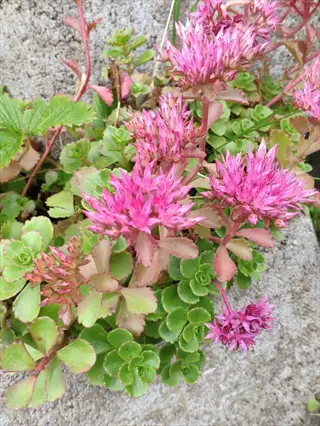
Sedum (Stonecrop)
- Exposure: Sedum wants full sun and lean, sharply drained soil, making it one of the most forgiving and reliable rock garden plants for beginners.
- Habit: Low mat-forming and upright types both exist, with creeping varieties spilling beautifully over rocks and walls without crowding neighbors.
- Bloom: Star-shaped flowers appear from summer into fall in shades of yellow, pink, and red that draw pollinators to the garden.
- Hardiness: Most stonecrops are very cold hardy and store water in fleshy leaves, so they shrug off drought and neglect once established.
- Care: Avoid rich soil and overwatering, since soggy winter ground is the main cause of rot in this otherwise tough succulent.
- Use: Plant it cascading over a low wall or massed on a slope where its fleshy foliage and long bloom carry the display.
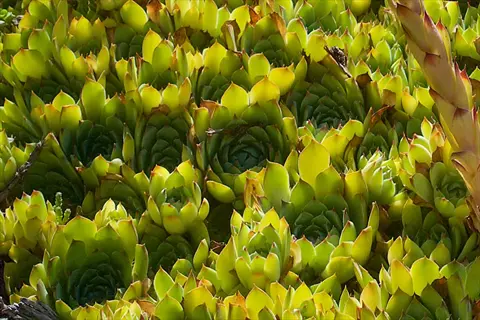
Hens and Chicks (Sempervivum)
- Exposure: These rosette-forming succulents love full sun and gritty, fast-draining pockets between rocks where little else will grow.
- Habit: Each parent rosette, the hen, produces small offsets, the chicks, that slowly fill a crevice into a tidy clumping mat.
- Hardiness: Sempervivums are remarkably cold hardy and evergreen, holding their geometric form through winter for year-round structure.
- Color: Foliage ranges from green to deep red and purple, with some types blushing brighter in cold weather or strong sun.
- Care: They need almost no feeding, and lean soil keeps the rosettes compact and richly colored rather than soft and stretched.
- Use: Tuck them into wall crevices, troughs, and small spaces where their sculptural rosettes add detail at close range.
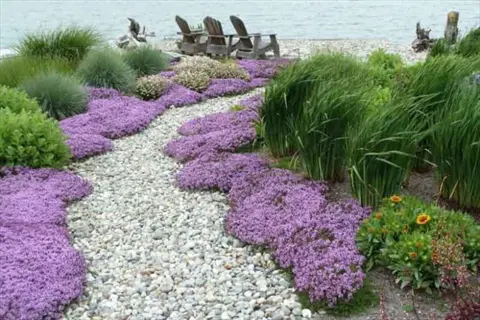
Creeping Thyme
- Exposure: Creeping thyme thrives in full sun and poor, well-drained soil, releasing fragrance when brushed or walked on.
- Habit: It forms a dense, low carpet that hugs the ground and weaves attractively between stepping stones and paving cracks.
- Bloom: Tiny pink, purple, or white flowers blanket the foliage in early summer and are a magnet for bees.
- Foot traffic: This is one of the few rock garden plants that tolerates light foot traffic, making it ideal for paths and crevices.
- Care: Shear lightly after flowering to keep the mat tidy, and avoid heavy, wet soil that rots the stems.
- Use: Plant it as a fragrant living mulch around larger rocks or as a lawn alternative in small sunny areas.
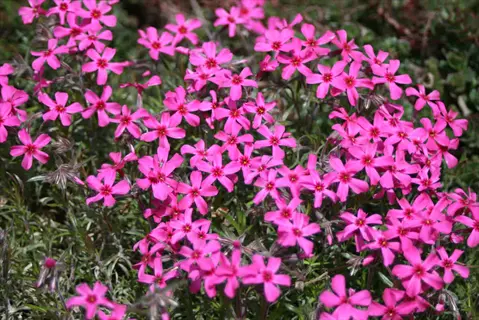
Creeping Phlox (Phlox subulata)
- Exposure: Creeping phlox wants full sun and good drainage, where it forms a spreading mat that controls erosion on slopes.
- Habit: Its needle-like evergreen foliage stays low and dense, cascading over rock walls and softening hard edges.
- Bloom: In spring it erupts into a sheet of pink, purple, white, or blue flowers that nearly hide the foliage.
- Hardiness: This North American native is cold hardy and dependable, returning reliably year after year in most regions.
- Care: Shear it back after the spring flush to encourage tight growth and an occasional rebloom later in the season.
- Use: Mass it along a sunny slope or wall top where its spring color and erosion control make the biggest impact.
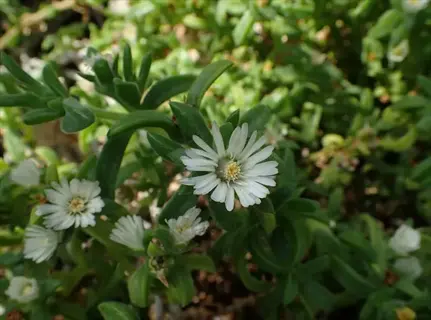
Ice Plant (Delosperma)
- Exposure: Ice plant demands full sun and the sharpest drainage you can give it, where it rewards you with vivid daisy-like blooms.
- Habit: It forms a low, succulent mat of fleshy leaves that spreads steadily without becoming aggressive or woody.
- Bloom: Shimmering flowers in magenta, orange, and yellow appear over a long season and seem to glow in strong sunlight.
- Drainage: Extension sources note well-drained soil is critical for delosperma, since wet winter ground is its main weakness.
- Care: Give it room to spread, water sparingly, and never let it sit in soggy soil that invites rot.
- Use: Plant it on hot, dry banks and gravel beds where its bright color thrives on conditions that defeat thirstier plants.
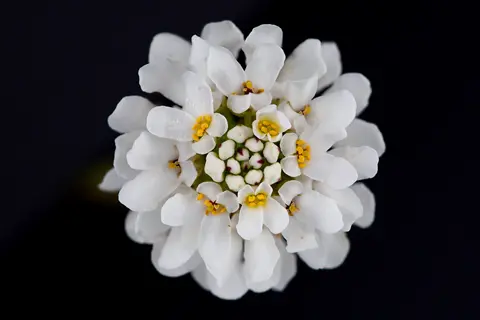
Candytuft (Iberis sempervirens)
- Exposure: Candytuft prefers full sun and well-drained soil, forming a neat evergreen mound that looks good even out of bloom.
- Habit: It stays low and mounding with dark green foliage that holds its shape and softens the edges of rocks.
- Bloom: Clusters of crisp white flowers smother the plant in spring, brightening the garden when little else is flowering.
- Hardiness: This dependable perennial is cold hardy and evergreen, providing winter structure as well as spring color.
- Care: Trim it back after flowering to keep the mound compact and prevent the center from opening up and going woody.
- Use: Edge a path or cascade it over a low wall where its white spring bloom and tidy evergreen form shine.
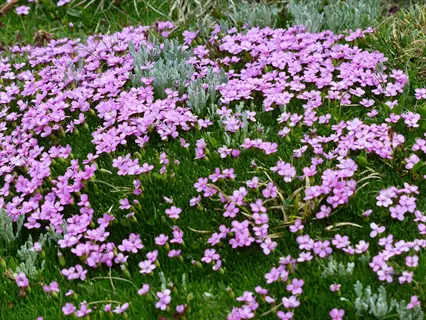
Dianthus (Pinks)
- Exposure: Dianthus loves full sun and lean, well-drained, slightly alkaline soil, conditions that rock gardens naturally provide.
- Habit: It forms tidy low cushions of blue-gray foliage that look attractive and structural even between bloom periods.
- Bloom: Fringed pink, red, and white flowers rise above the foliage in early summer, often carrying a sweet, spicy clove scent.
- Hardiness: Most garden pinks are cold hardy and long-lived when kept in the sharp drainage they prefer.
- Care: Deadhead spent flowers to extend bloom, and keep the soil lean so the cushions stay compact and floriferous.
- Use: Plant pinks at the front of a rock garden or along crevices where their scent and silvery foliage can be enjoyed up close.
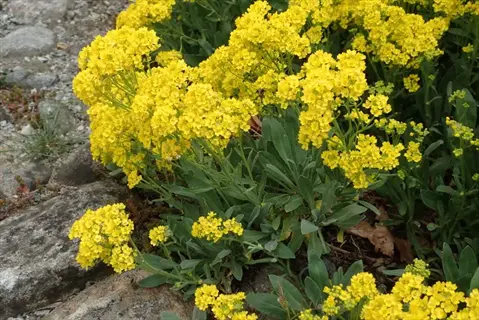
Basket of Gold (Aurinia saxatilis)
- Exposure: Basket of gold thrives in full sun and gritty, well-drained soil, where it tumbles brightly over rocks and walls.
- Habit: It forms a spreading mound of gray-green foliage that cascades naturally over vertical drops and ledges.
- Bloom: Masses of tiny golden-yellow flowers cover the plant in mid-spring, pairing beautifully with blue and purple neighbors.
- Hardiness: This cold-hardy perennial is well suited to the lean, dry conditions that many richer garden plants dislike.
- Care: Shear it back after flowering to keep it dense, and avoid rich, moist soil that causes it to flop and rot.
- Use: Site it at the top of a wall or slope where its golden flowers can spill downward for a dramatic spring display.
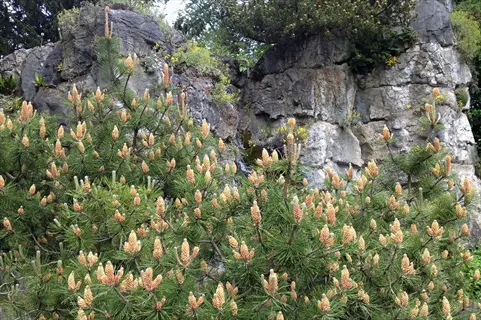
Mugo Pine (Pinus mugo)
- Exposure: Dwarf mugo pine handles full sun and well-drained soil and brings evergreen structure to a planting of low mats.
- Habit: Compact cultivars stay small and rounded for years, anchoring a rock garden with a slow-growing woody focal point.
- Interest: Its dense green needles hold color all winter, giving the garden form and substance when perennials are dormant.
- Hardiness: Mugo pine is very cold hardy and tough, tolerating wind, poor soil, and the exposed conditions of a rocky slope.
- Care: Choose a true dwarf cultivar and prune the spring candles if you want to keep growth especially tight and compact.
- Use: Use it as a structural anchor among low spreading plants so the garden keeps shape and interest through every season.
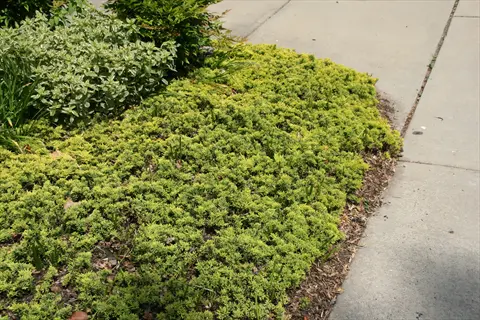
Creeping Juniper
- Exposure: Creeping juniper wants full sun and well-drained soil, where its low evergreen branches sprawl over rocks and banks.
- Habit: It forms a tough, ground-hugging evergreen carpet that covers slopes and suppresses weeds once established.
- Interest: Foliage in green, blue-green, or gold holds through winter, adding year-round color and texture to the garden.
- Hardiness: This rugged conifer is extremely cold hardy and drought tolerant, ideal for hot, dry, exposed sites.
- Safety: Extension sources advise against planting junipers within 30 feet (9 m) of a house in fire-prone areas.
- Use: Spread it across a large bank or slope where its evergreen sprawl gives broad coverage and erosion control.
Plants for Sun and Shade
Walk your yard at noon and again at 5 p.m. before you buy a single plant. The light you have decides everything, and the best full sun rock garden plants will sulk and stretch in a spot that bakes for only 2 hours a day.
Most rock garden plants want full sun. But shady corners are not out of the picture. A few are shade-tolerant exceptions, and Colorado State experts point to three of them that you can lean on. Try ajuga, or veronica, or the little blue harebell. These plants brighten dark spots where little else will bloom.
Sunny beds give you sedum, creeping thyme, and dianthus that flower hard from spring into fall. Once you drop below about 4 hours of direct light, switch to part shade perennials that flower in cooler, slightly moister soil. Coral bells and columbine both thrive in that dappled gap between sun and full shade.
A shade rockery can be just as colorful as a sunny one. Here the color comes from leaves more than flowers. Hellebore opens cup-shaped blooms while snow still sits on the ground, and ferns unfurl in pure green. Plant coral bells nearby for ruby and amber leaves. Then tuck in epimedium for season-long texture under the trees.
The hardest spot to plant is dry shade. This is the parched ground under a maple or pine, where roots drink up every drop of water. Reach for tough ground covers here. Epimedium, wild ginger, and lamium hold their own against tree roots once they settle in. The best shade rock garden plants for these corners earn their keep with leaves that look good for months, not days.
In dry shade under trees, water new plants regularly for the first two seasons, since tree roots compete hard for moisture until your ground covers establish.
Soil and Drainage Basics
Get the soil wrong and nothing else you do will save your plants. Sharp drainage is the one rule you cannot bend, because most rock garden plants come from thin mountain ground where water never lingers. Sit those roots in soggy ground over winter and they rot, no matter how pretty the plant looked in spring.
The folks at Colorado State University Extension are clear on this point. Most rock garden plants need well drained soil, and the top killer is standing water in cold months. Got heavy clay? The Extension says to mix organic matter into it before you plant. That opens up the packed ground so water can drain away fast.
Think of good rock garden soil mix like a sieve, not a sponge. A sponge holds water against the roots, while a sieve lets moisture pass through and leaves the roots damp but never drowned. You reach that texture with gritty soil, so mix in coarse sand or fine gravel until the ground feels loose and crumbly in your hand.
Lean soil beats rich soil here, which trips up most new gardeners. Rock plants evolved in poor mountain dirt, so heavy feeding makes them grow floppy, weak, and short-lived. Skip the deep compost and the fertilizer, and put your effort into drainage for rock garden beds instead. The chart below breaks down how to build the right base step by step.
Start With Sharp Drainage
- Why it matters: Most rock garden plants require well-drained soil, and standing water in winter is the leading cause of plant death.
- Fix heavy clay: Colorado State University Extension advises incorporating organic matter into heavier clay soils to improve their drainage before planting.
- Add grit: Mixing in coarse sand or fine gravel opens up dense soil so water moves through quickly instead of pooling around roots.
- Test it: Dig a hole, fill it with water, and watch how fast it drains, since slow-draining sites need amending before you plant.
Keep the Soil Lean
- Avoid rich feeding: Unlike vegetable beds, rock gardens perform best in poor, lean soil that keeps growth compact and sturdy.
- Skip heavy fertilizer: Rich, fertilized ground often produces floppy, weak plants that are shorter-lived and more prone to rot.
- Mimic the wild: Alpine and rock plants evolved in thin mountain soils, so they actually thrive on the lean conditions other plants struggle in.
- Use grit, not compost piles: A gritty, mineral-heavy mix suits these plants far better than a deep layer of rich organic material.
A Common Soil Mix
- Balanced base: A widely used mix combines roughly equal parts loam, leaf mould, and grit to balance moisture and drainage.
- Adjust for clay: On heavier sites, increase the grit and add organic matter to lift drainage closer to what rock plants need.
- Top with gravel: A surface layer of gravel or chippings keeps plant crowns dry, suppresses weeds, and sets off the foliage.
- Match the plant: Treat this as a starting point, not a strict rule, and tweak it to suit the specific plants and your local soil.
Manage Moisture Wisely
- Water deeply but rarely: Once established, most rock plants prefer occasional deep watering over frequent shallow sprinklings.
- Protect winter crowns: A gritty surface keeps the base of each plant dry through wet weather, which prevents crown and stem rot.
- Watch new plantings: Young plants need steadier moisture in their first season before their roots reach down into the soil.
- Read the plant: Succulents and alpines tolerate far more dryness than shade plants, so group plants with similar needs together.
Do not dig in rich compost or fertilizer to help rock plants grow faster, since the lush growth it triggers tends to flop, rot, and die back over winter.
How to Build a Rock Garden
Learning how to build a rock garden comes down to three things you do in order. You pick the right spot, you set your stones, and then you plant. Get the first two right and the plants almost take care of themselves.
Start with a natural slope or a terrace that gets plenty of sun. Sloped ground drains on its own, which is exactly what these plants need, and it shows off low growers as they spill over the rocks. A flat, soggy corner of the yard fights you the whole way.
Your rock placement matters more than people expect. The folks at Colorado State University Extension lay it out for you. A good rock garden needs several large rocks, and some should weigh 200 pounds (90 kg) or more. And each one should sit with at least one-third buried below the surface. Use stone of one kind, not a mix, so the garden looks natural instead of random.
I set a heavy slab on a south-facing slope one spring and it would not stay put. It shifted and tilted every time I stepped near it, and twice it rolled a few inches downhill on me. I dug the hole deeper, dropped the rock back in until a third of it vanished underground, and packed soil tight around the base. It sat rock solid after that, through rain and frost heave both.
Here is the build, step by step.
Pick a natural slope or terrace with good sun and drainage, since sloped ground sheds water and shows off cascading plants. Avoid low, soggy spots where water collects.
Clear weeds thoroughly and improve drainage by working grit or gravel into heavy soil. Removing every weed root now saves major work later, since weeds are the biggest ongoing problem.
Set several large rocks, some weighing 200 pounds (90 kg) or more, using stone of one geological type for a natural look. Bury each rock so at least one-third sits below the surface.
Fill the planting pockets between rocks with a gritty, sharply drained soil mix. Firm it gently so there are no large air gaps around where the roots will sit.
Set low, slow-spreading plants into the pockets without overcrowding, then top the surface with a gravel mulch to keep crowns dry and suppress weeds.
That gravel mulch on top does real work. It keeps plant crowns dry, holds soil moisture below, and chokes out most of the weed seeds that try to take hold. Skip it and you sign up for far more weeding down the road.
If you want to take this further, look at the crevice garden. Czech rock gardeners made this style popular in the mid-1980s, and it has spread across the United States since. You set flat slabs on end with narrow gaps between them, and plants root down deep into those cracks for steady moisture. It packs more plants into a small space and waters itself once the roots reach down.
A crevice garden is a type of rock garden that emulates an alpine rock environment, where plants grow in crevices between slabs of rock.
Care and Weed Control
Every plant catalog sells you the same dream of a low maintenance rock garden that takes care of itself. The truth is harder. Research from Colorado State University found that rock gardens take real work. The biggest job you will face is weed control.
My back slope is a sheet of thyme and sedum now. It knit so tight that visitors stop on the path to ask how I keep it weed free. They never see the part that earned it. For two seasons I crouched on that gravel and pulled weeds by hand. The thyme and sedum crept across the bare grit and closed one gap at a time, until the open soil was gone.
That slow start is normal, and it is the part you need to plan for. Ground covers need at least two years to fill in, and three or more at high altitude, before they grow dense enough to crowd out weeds. No rock garden runs itself. None can be completely neglected, even once the planting is well set.
So plan for steady light work rather than zero work. Good rock garden maintenance comes down to a few simple habits. And watering rock garden plants the right way matters as much as the weeding. The tasks below keep your slope tight, dry, and clean through the seasonal care that your bed truly needs.
- Weed often: Hand weed regularly, especially in the first two years before plants knit together, since weed control is the single biggest job in a rock garden.
- Mulch with gravel: Keep a layer of gravel or grit over the soil to block weed seeds and stop crowns from sitting in moisture.
- Water deeply: Once established, water deeply but infrequently, since most rock plants prefer dry spells to constant moisture.
- Shear after bloom: Trim spreading plants like creeping thyme, phlox, and basket of gold after flowering to keep their mats dense and tidy.
- Avoid overfeeding: Skip heavy fertilizer, since lean soil keeps plants compact, colorful, and far less prone to flopping and rot.
- Check that drainage stays sharp and clear gravel of fallen leaves each autumn.
Rock gardens have high maintenance requirements. Weed control is the biggest problem.
Climate and Hardiness Guide
Picking the right plant starts with knowing your USDA hardiness zones and matching the plant to your real site. A lower zone rating means a tougher plant, so something rated for zone 3 will shrug off cold that kills a zone 7 plant. Get this match right and your garden survives. Get it wrong and you replant every spring.
Mountain gardeners face the hardest job here. For high spots, pick plants hardy to USDA zones 2 to 4. Most rock garden plants on the CSU list survive up to 8,000 feet (2,440 m). There is a catch worth knowing. Most nursery stock grows below 6,000 feet (1,830 m), so it may not be ready for your higher site. Buy stock grown in cooler northern areas and you get high elevation plants that adapt faster and shrug off your winters.
Cold is not the only test a plant has to pass. Heat and humidity kill many alpines. But the right cold hardy alpine plants and xeric species handle muggy summers just fine. A display at the UT Gardens in Tennessee proves it. They grow sedums, conifers, prickly pear, and rosemary, and all of them thrive in the East Tennessee heat. The trick is to pick climate resilient plants that fit your weather instead of fighting it.
Use the table below to find rock garden plants for hot humid climates, cold mountains, mild temperate yards, or dry desert ground. One more thing about timing. Ground covers take at least two years to fill in, and three or more at high altitude, so plan for patience while your young plants settle and spread.
In fire-prone areas, do not plant junipers within 30 feet (9 m) of a house, since their resinous foliage can carry fire toward the building.
5 Common Myths
Rock gardens are completely low-maintenance and basically take care of themselves once the plants are in the ground.
University extension research shows rock gardens have high maintenance needs, and weed control is the single biggest ongoing job for gardeners.
Rock garden plants only grow in cold, dry mountain climates and will never survive hot, humid summers in warmer regions.
Botanical gardens prove xeric and alpine plants can survive hot, humid summers when you choose species suited to your specific climate.
You should enrich rock garden soil with plenty of rich compost and fertilizer so the plants grow lush and fast.
Most rock garden plants prefer lean, poor soil, and rich fertilized soil often causes floppy, short-lived growth and weaker plants.
Rock gardens are only for full sun, so a shady yard cannot support an attractive rockery of any kind.
Shade rockeries thrive with plants like hellebores, ferns, and coral bells that prefer dappled light and cooler, moist conditions.
Any plant will work in a rock garden as long as you give it enough water during the growing season.
Sharp drainage matters far more than watering, and plants that sit in damp soil over winter usually rot and die quickly.
Conclusion
The best rock garden plants share a simple profile. They stay low, spread slow, and shrug off dry spells once their roots take hold. Match those drought tolerant plants to your light and your climate, and the hard part is mostly done. A sunny slope wants sedum, thyme, and ice plant. A shady corner wants hellebore, epimedium, and coral bells. The plant does the work as long as you put it in the right spot.
Be honest with yourself about the upkeep, though. The plant experts at Colorado State say it plain and clear. Rock gardens take real work, and weed control is the biggest problem you will face. That makes two things matter more than your plant list. You need well drained soil that never lets water pool, and you need to pull weeds before they seed. Get those right and the garden rewards you for years. Skip them and even tough plants struggle.
Here is the freeing part. One low maintenance rock garden can hold both sun lovers and shade dwellers, and you can build it almost anywhere. Cold mountain yards, hot humid backyards, and bone-dry desert lots all suit different rockery plants. You are not stuck with the cold, dry alpine setup people picture. You just pick species that already thrive in your conditions and let them settle in.
So start small. Plant a slope corner or fill a single trough, then add more as your first plants spread over their first two years. Crevice gardening and water-wise planting keep gaining fans for good reason, since they save water and look great with little fuss. A garden built with care now is both beautiful and smart for the years ahead. You have everything you need to break ground.
Glossary
- Alpine plants
- Compact plants native to high mountain slopes above the tree line that need lean, well-drained soil.
- Crevice garden
- A type of rock garden where plants grow in the narrow gaps between slabs of rock set on end.
- Delosperma
- A low, spreading succulent known as ice plant, grown for its bright daisy-like flowers.
- Mat-forming
- A growth habit where a plant spreads into a low, dense carpet that hugs the ground.
- Sempervivum
- A hardy rosette-forming succulent, commonly called hens and chicks.
- Sharp drainage
- Soil that lets water pass through very quickly so roots never sit in standing water.
- USDA hardiness zone
- A numbered region based on average winter low temperatures used to judge whether a plant survives a given area.
- Xeric
- Describing plants adapted to very dry conditions with little water.
External Sources
Frequently Asked Questions
What is the best plant for a rock garden?
There is no single best plant, but the most reliable choices are low-growing, drought-tolerant perennials and succulents.
- Sedum (stonecrop)
- Creeping thyme
- Hens and chicks (sempervivum)
- Creeping phlox
- Ice plant (delosperma)
What plants grow well in a rockery?
Plants that handle lean soil and sharp drainage thrive in a rockery.
Are rockery plants hardy?
Many rockery plants are extremely cold hardy, though hardiness varies by species and climate.
Can succulents be used in rockeries?
Yes, many succulents are among the best rockery plants because they love sharp drainage and lean soil.
What plants grow well in gravel?
Drought-tolerant plants that need sharp drainage grow well in gravel.
How do you build a rock garden?
Build a rock garden by choosing a sloped site, setting large rocks securely, and planting in sharply drained soil.
What plants can be planted in October?
Many hardy perennials, alpines, and dwarf conifers can be planted in October in most regions.
Is October too late to plant a rock garden?
In most regions October is not too late, since cool soil helps hardy rock plants root before winter.
What are some small rock garden ideas?
Small rock gardens work well in troughs, slope corners, raised beds, and crevice gardens.
What should you not put in a raised garden bed?
Avoid aggressive spreaders, soggy or overly rich fill, and any contaminated or treated material.