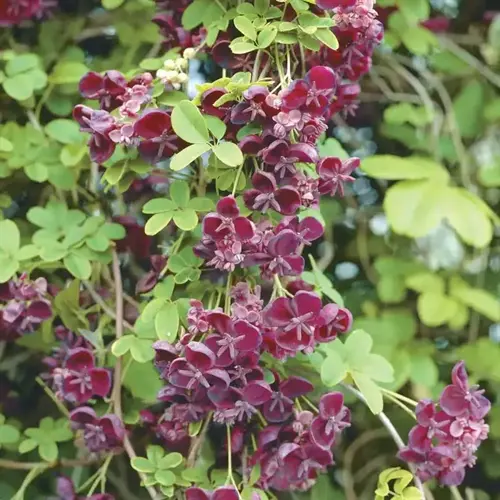

A hard freeze hit my Georgia Piedmont yard this past January. I walked out to the back fence at the woods edge and found the Tangerine Beauty crossvine holding every leaf. The glossy green had washed over with a dusky reddish-purple. The whole tangle had gone the color of old wine. That dusky flush is the crossvine winter color you get in cooler areas. The plant is semi-evergreen, so it keeps its leaves instead of dropping them.
So the short answer is this. Crossvine does not go bare in winter. It holds its foliage and just changes shade. The leaves stay on the vine, and the green deepens into purple-red tones once the cold settles in. You keep your living wall of leaves while most other vines around it drop bare. That makes crossvine a strong pick if you want winter cover on a fence or arbor.
Where you live decides how green it stays. In the Deep South you get a true crossvine evergreen winter, with the leaves staying dark and glossy right through January. Farther north the same plant turns that reddish-purple I see on my own fence. That is the classic semi-evergreen look. The colder your winters run, the more purple you will see, and the more leaves the vine may shed in the worst stretches.
The color shift is not a sign of trouble. Cold weather pulls the green pigment back and lets the red tones show through, much like fall color in a tree. So the crossvine winter color is a stress response, not a disease. Your vine is not sick or dying when it goes purple. It is doing exactly what a hardy native plant should do in the cold. Come spring, the new leaves push out that same glossy green you saw in summer.
Up close the leaves give it away even in the cold. Each one is compound with two leaflets, dark and glossy, and runs about 4 to 6 inches (10 to 15 cm) long. That paired-leaf shape stays the same all winter. You can spot a crossvine on a fence even when the color has shifted to purple. Look for two leaflets growing off one stem, and you have found your plant. The vine also keeps its tendrils, the little branched grippers that hold it to the fence. Those stay put through the cold and keep the plant anchored in place.
In a really brutal winter the top growth can take a hit. The vine may die back to the ground when the cold runs deep and long. Do not write it off when that happens. Crossvine is hardy in roughly USDA zones 5 to 9, and the roots almost always pull through. They push fresh shoots up once the soil warms in spring. I have watched a bare vine fill back in to a green wall in one season. Give yours the same chance before you dig anything out.
Here is what to do if you garden in a colder zone. Expect some winter dieback in the worst years and plan for it. Leave the dead stems alone through the cold so they shield the crown, then cut them back to live wood in spring once new growth starts. Trust the roots. This semi-evergreen vine comes back fast from a hardy base. By late spring the new stems will run up the fence again with fresh glossy green. You get your screen of leaves back every year, even after a rough winter knocks the vine down.
Read the full article: Crossvine Plant: Care, Bloom and Wildlife Guide