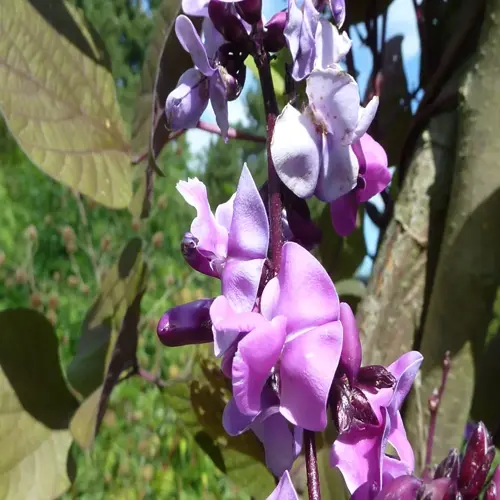

"What are those glowing white flowers?" My neighbor leaned over the fence one warm evening and asked about the arbor by my back porch. She could not believe the blooms had opened only after sunset. That moment sums up the moonflower special features better than any plant tag. The huge, sweet-smelling flowers open and put on their show only at night. That single habit is what stops people in their tracks and makes them ask.
Most garden flowers do their work in daylight and shut down by dusk. Moonflower flips that script for you. The buds stay tight and folded all afternoon, then unfurl into 5 to 6 inch (13 to 15 cm) white blooms right as the sun drops. Each flower spins open in minutes, almost while you watch it. You can pull up a chair at dusk and see a closed bud become a full saucer-sized flower before your eyes.
The scent is the other half of the trick. As the petals open, they pour out a sweet evening perfume that drifts across your whole yard. That smell is not there for you, though you get to enjoy it. It calls in night-flying moths, and these moonflower unique features work as a pair. The big white petals catch the moonlight, and the fragrance guides moths in for the last stretch. Without that scent, the flowers would sit in the dark with no way to be found.
Those pollinators put on a show of their own for you. Sphinx and hawk moths hover at each bloom like tiny birds, dipping a long tongue deep into the throat of the flower. I have stood at the porch and watched them feed for ten minutes straight. The blooms are among the largest in the morning glory family, so they give these big moths plenty to land on. If you want pollinators most gardens never see, this plant brings them right to your fence. You get the kind of evening wildlife that usually shows up only deep in a meadow.
Speed makes this plant even more useful to you. A single moonflower can climb 10 to 20 feet (3 to 6 m) in one season from seed. I planted one against a plain back fence and it swallowed the whole panel by August. That covers a fence, an arbor, or a bare wall in a few short months. As a night blooming vine, it fills a part of your garden that most plants leave empty after dark.
This plant rewards you if you spend your evenings outside. Office workers and night-shift folks get to see it at its best, since the flowers fade by mid-morning anyway. If your day keeps you busy until sundown, you still catch the whole show. The vine also fits small spaces with ease. Give it one post or a string of twine, and it climbs up instead of sprawling out, so you can grow it on a tiny patio or balcony.
Pair it with a daytime morning glory on the same support for round-the-clock color. The morning glory carries the show through the day, then your moonflower takes over at dusk. Plant both at the base of one trellis and you get blooms from sunrise to deep night. Few plants give you that, and that mix of size, scent, speed, and night habit is what keeps a moonflower special. Those moonflower special features all stack into one easy-to-grow vine.
Read the full article: Moonflower Vine Growing and Care Guide