
"What could pollinate that thing in the cold?" my friend asked. She pointed at the yellow ribbons of bloom on a November day. I leaned in close with her to the back-corner shrub in my yard. A cloud of tiny gnats hung over the flowers. A single drab moth crept across the petals. It fed in the mild sun while the rest of the garden sat bare and quiet.
That little scene answers the question for you. Witch hazel wildlife falls into two simple groups. Small insects work the odd winter flowers, and birds and mammals take the seeds later. The shrub feeds your local food web when almost nothing else blooms. That timing makes it a rare cold-season resource for your yard, and it is the main reason I keep mine.
The flowers run on witch hazel pollinators that most people never notice. Night-flying noctuid moths are the key visitors. They warm their bodies by shivering, so they can still fly when the air turns cool. On mild days your blooms also draw flies, gnats, small wasps, and a few bees. None of them look showy. But they keep the plant set with seed each year, which is all that matters to the shrub.
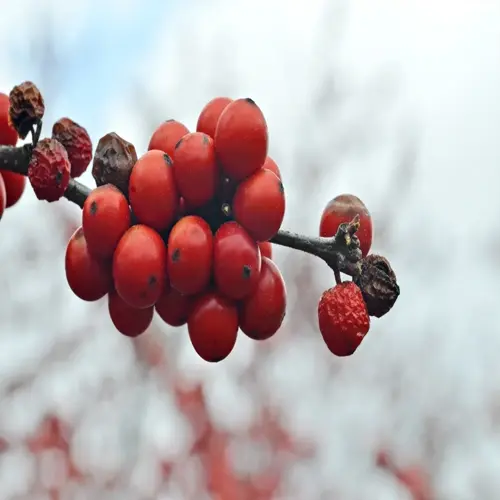
Those seeds are where the larger animals come in. Each woody capsule dries through the summer. Then it snaps open with real force in fall. It flings two shiny black seeds 10 to 20 feet from the plant, scattering them across the ground below. The pop is loud enough to hear in a quiet yard, and you may catch one going off near you.
Once the seeds land, they feed ground birds and small mammals. The seeds eaten by birds include those taken by ruffed grouse, wild turkey, and Northern Bobwhite. All three forage along the leaf litter where your seeds fall. Fox squirrels gather them too. This wide seed drop spreads the meal out over a big patch. So several animals can share one shrub in your yard without crowding each other out. If you have other native plants nearby, you give those same animals more reasons to stay through the lean winter months.
The shrub raises insects too, not just feeds them. It is the larval host of the witch hazel dagger moth. Those caterpillars chew the leaves through the summer and then drop off to pupate. The plant hosts a harmless gall aphid as well. The aphid forms the small cone-shaped bumps you sometimes spot on the foliage. These insects then feed the songbirds that hunt caterpillars to raise their chicks.
If you want this activity in your own yard, plant witch hazel as a native pollinator and bird resource. Set several plants in a loose group instead of one alone. A bigger patch pulls in more moths and drops more seed for ground feeders. Give it a spot you can see from a window so you catch the moths and squirrels at work. It also makes a native swap for invasive shrubs like burning bush. So you gain wildlife value instead of losing it, and you spread a plant that belongs there.
One care habit matters most for you here. Skip the heavy spraying around the plant. That way the moths and the harmless gall aphids it hosts can survive the season. The caterpillars and aphids are part of the deal, and they feed the very birds you want to see. Let your shrub run a little wild. The witch hazel wildlife will find it on their own.
Read the full article: Witch Hazel Shrub: Grow, Care, and Bloom