
Introduction
Your winterberry holly drops its leaves every fall and stands bare with no berries at all. You bought it for those bright red winter berries, and yet branch after branch shows nothing. The plant looks healthy, so what went wrong? This guide gives you the fix, and it starts with one fact most labels never explain.
Winterberry holly is dioecious, which means each plant is either male or female. Only female plants make berries, and they need a male plant nearby to pollinate them. Get that pairing wrong and you get an empty shrub. Get it right and you grow fruit that feeds over 48 species of birds, including cedar waxwings, through the cold months.
Most winterberry guides stop at basic care and never go deeper. They skip the wildlife payoff, the rain garden uses, and the bloom-time matching that decides whether your berries set at all. This guide covers all of it. Ilex verticillata is more than a pretty plant. It is a true native shrub and an ecological workhorse for the wet, acidic spots where little else thrives.
Here is what comes next. You'll learn how pollination works and which cultivars to pick. Then you'll see where and how to plant, plus how to handle soil and water all year. We close with the wildlife value and a season by season care plan. This deciduous holly earns its spot in any garden built for winter color and birds.
Why Your Winterberry Has No Berries
Your plant looks healthy, the leaves are green, and yet not a single red berry shows up in fall. The fix almost always comes down to one trait that catches new growers off guard. Winterberry holly is dioecious, which means each plant is either male or female. A female plant cannot fruit on her own.
You need both a male and female winterberry in the same garden for berries to form. The female carries the fruit, but she only does so after pollen reaches her flowers from a nearby male. If you bought one plant, or two that turn out to be the same sex, you will wait forever for a crop that never comes.
Here is how the two plants split the job. Knowing which one does what makes shopping at the nursery much easier.
- Produce the bright red, orange, or gold berries that give winterberry its winter display.
- Only set fruit when a compatible male blooms nearby at the same time.
- Berry more heavily in full sun than in deeper shade.
- Examples include Red Sprite, Winter Red, Winter Gold, and Berry Heavy.
- Produce no berries but supply the pollen that female plants need.
- One male can pollinate up to about ten nearby females within roughly 50 feet (15 meters).
- Must bloom at the same time as the females they are meant to pollinate.
- Examples include Jim Dandy for early bloomers and Southern Gentleman for late bloomers.
You do not need one male for every female, and this is where the advice online seems to clash. Spaced far apart, plan on 1 male per 4 or 5 females. Plant the male within 40 feet (12 meters) of the group and a single male can serve up to 20 females. The honest middle ground most gardeners can count on is 1 male per 10 females within about 50 feet (15 meters).
The reason that range exists is simple. Pollen does not travel far on its own, so a closer male reaches more plants. Put your winterberry holly pollinator near the center of the bed. Bees then carry the pollen outward through cross-pollination.
Distance is only half the puzzle. Bloom timing decides whether the pollen ever does its job. A male pollinates a female only when their flowers open at the same time. An early male paired with a late female gives you nothing. Match early with early and late with late. Red Sprite pairs with Jim Dandy, while Southern Gentleman covers the later females like Winter Red.
The more overlap you have between the timing of male and female blooms, the better the pollination and therefore berry production.
Once you have the pairing right, light is the next lever. Think of a female plant like a solar panel, since more sun means more output. UConn research shows females in full sun set far more fruit than the same plant stuck in deep shade. Heavy shade is one of the most common reasons a paired-up female still berries poorly.
A few other culprits can also leave your branches bare. Young plants often need 2 to 3 years before they fruit well, so patience matters with a fresh planting. Drought or transplant stress can drop a season's crop. Prune at the wrong time and you cut off the buds that would have become berries. And if berries showed up then vanished, hungry birds likely beat you to the harvest.
Best Winterberry Holly Cultivars
One December a bare corner by my fence lit up with glossy red berries for the first time. The compact Red Sprite had sat there for three winters with nothing on its branches at all. The only thing that changed was a small Jim Dandy male I tucked in nearby that spring.
Those bare years showed me the real point behind the winterberry holly varieties you see at the nursery. The name on the tag matters far less than the pollinator next to it. A great female with no matching male is just a green shrub all winter long.
So the smart way to read this list is in pairs, not one plant at a time. Each female blooms either early or late in spring, and it needs a male that opens its flowers in the same window. Early females want an early male, and late females want a late male.
The two males do most of the work here. Jim Dandy is the early bloomer for early females like Red Sprite and Afterglow. Southern Gentleman is the late bloomer for late females like Winter Red, Winter Gold, and Sparkleberry. Match the bloom timing and you get fruit.
Berry color gives you room to play with the look too. Most cultivars set bright red fruit, but Winter Gold carries soft golden-orange berries and Afterglow leans toward warm orange-red. Each one reads differently against snow, brick, or a dark row of evergreens.
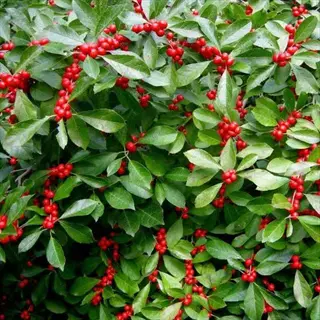
Red Sprite (Female)
- Size: A compact, dwarf female reaching only about 3 to 4 feet (0.9 to 1.2 meters) tall and wide, ideal for small gardens.
- Berries: Produces unusually large, bright red berries that look heavy against its small frame in late fall and winter.
- Bloom timing: An early bloomer, so it should be paired with an early-blooming male for reliable pollination.
- Pollinator: Pair with the male Jim Dandy, whose early bloom overlaps with Red Sprite for good fruit set.
- Best use: Suited to foundation plantings, small beds, and containers where a full-size shrub would be too large.
- Care note: Like all winterberry, it wants moist, acidic soil and more sun for the heaviest berry display.

Winter Red (Female)
- Size: A vigorous upright female forming a rounded shrub to around 8 feet (2.4 meters) tall with dense branching.
- Berries: Bears profuse bright red, glossy fruit that persists into winter consistently, a favorite for cut branches.
- Bloom timing: A late bloomer that needs a late-blooming male partner for its flowers to be pollinated.
- Pollinator: Pair with the male Southern Gentleman, whose later bloom matches Winter Red's flowering window.
- Reputation: Widely regarded as one of the best winterberries for its heavy, reliable, long-lasting fruit.
- Best use: Excellent as a specimen, in mass plantings, or as a backdrop where its full height is welcome.

Winter Gold (Female)
- Size: A branch sport of Winter Red with a similar upright habit reaching roughly 6 to 8 feet (1.8 to 2.4 meters).
- Berries: Carries soft golden-orange to pinkish fruit instead of red, offering an unusual winter color contrast.
- Bloom timing: A late bloomer, so it pairs with the same late male partner used for Winter Red.
- Pollinator: Pair with the male Southern Gentleman to match its late flowering and ensure berries form.
- Design value: The gold fruit glows against evergreens and snow, making it a striking accent plant.
- Care note: Needs the same moist, acidic conditions and a nearby male as every other female winterberry.
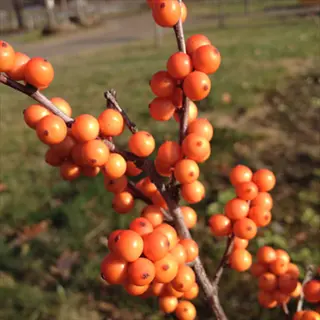
Afterglow (Female)
- Size: A rounded, medium female shrub generally in the 3 to 6 foot (0.9 to 1.8 meter) range depending on conditions.
- Berries: Sets reddish-orange fruit that brings a warmer tone than the standard bright red varieties.
- Bloom timing: An early bloomer that should be matched with an early-blooming male for pollination.
- Pollinator: Pair with the male Jim Dandy, whose early bloom overlaps with Afterglow's flowers.
- Design value: The orange-red berries blend well in naturalistic and native plantings.
- Care note: As with all winterberry, more sun produces a fuller, brighter berry display on this female.

Berry Heavy (Female)
- Size: An upright, productive female that typically reaches about 6 to 8 feet (1.8 to 2.4 meters) tall and wide.
- Berries: Named for its exceptionally heavy crop of bright red berries that weigh down the branches in winter.
- Bloom timing: Pollination depends on a male whose bloom window overlaps with its flowering period.
- Pollinator: Commonly paired with a compatible compact male sold alongside it for matched bloom timing.
- Best use: A strong choice when maximum berry quantity is the goal for winter color or wildlife.
- Care note: Plant in moist, acidic soil with a nearby male to realize its heavy fruiting potential.

Jim Dandy (Male)
- Role: A male pollinator that produces no berries but supplies pollen for nearby female plants.
- Size: A compact male, usually around 3 to 6 feet (0.9 to 1.8 meters), easy to tuck near the females it serves.
- Bloom timing: An early bloomer, making it the correct partner for early-blooming females.
- Pairs with: Matches early females such as Red Sprite and Afterglow for reliable fruit set.
- Placement: One male can pollinate up to about ten females within roughly 50 feet (15 meters).
- Care note: Give it the same moist, acidic soil so its bloom timing stays in step with the females.
These named cultivars give you control over size, color, and habit, which the wild plant cannot. A dwarf winterberry like Red Sprite fits a small bed where the straight species would sprawl past 10 feet. That tidy, compact shape is the main reason people reach for cultivars at all.
You should know one trade-off first. The University of Minnesota says these cultivars are smaller and more compact than the wild plant. But it also says they help fewer birds and bees than the wild species. So if you want to feed wildlife, lean toward the straight species and save the compact picks for tight spots.
Where and How to Plant
I lowered the root ball into the soggy low corner of my yard. A hydrangea and two azaleas had rotted out in that spot over three wet springs. Water pooled around my boots as I set the crown level with the soil and backfilled. That shrub thrived where the rest had drowned. It showed me where to plant winterberry holly for good.
Winterberry wants the wet spot that most plants hate. In the wild it grows along stream edges, in swamps, and across low woods. So a soggy patch in your yard reads as home. The plant takes moist to wet acidic soil with ease. That is why Clemson HGIC names it a top pick for a rain garden that catches and filters stormwater runoff.
Give it full sun to part shade when you pick the site. More sun means more fruit, so a female in the open will load up with berries far heavier than one tucked in shade. The soil needs to stay acidic, and the ground can hold real moisture without trouble. This combo of wet soil and sun is the hard part to find for most shrubs, but it is exactly what this one craves.
Here is how to grow winterberry holly the right way from the first day in the ground.
Pick a spot with moist to wet acidic soil and full sun to part shade; more sun gives a female heavier berries.
Place a compatible male with overlapping bloom time within about 50 feet (15 meters) so females can be pollinated.
Dig a hole as deep as the root ball and twice as wide, spacing plants about 3 to 5 feet (0.9 to 1.5 meters) on center.
Position the root ball so the top sits level with the surrounding soil, then backfill and firm gently around the roots.
Water deeply after planting and add a few inches of acidic mulch to hold moisture and protect the shallow roots.
Watch your spacing as you set plants out. Clemson HGIC calls for about 3 to 5 feet (0.9 to 1.5 meters) on center. That gap gives the roots room to spread. A row will fill into a thick screen over a few years. Pack them tighter and you fight crowded stems later.
Get the male sorted at planting time, not as an afterthought. Slot a compatible male into the same bed so a female has a partner from day one. Squeezing one in later is much harder once the bed fills out. Match the ecotype too. A local-source plant suits your climate and bloom window better than one shipped from far away.
Do not plant winterberry in alkaline soil. Neutral-to-alkaline ground causes yellowing chlorosis and can even kill the shrub, so test and acidify the soil first.
Soil, Water and Yearly Care
Good winterberry holly care starts with the soil, and this is where most people go wrong. The University of Maryland Extension says the plant wants acidic soil, a pH of 4.5 to 6.5. Push the pH higher and you run into trouble fast.
NC State Extension warns that alkaline soil can yellow the leaves and even kill the plant. The cause is simple. High-pH soil locks up iron so the roots can't take it in, which leaves the foliage pale and sickly. That yellowing has a name, chlorosis, and it tells you the soil is too sweet for this shrub.
The good news is winterberry holly handles a wide range of dirt. NC State Extension reports it grows in clay, loam, and sand and shrugs off heat, drought, and soil compaction once it settles in. It is hardy across USDA hardiness zones 3 to 9, so the same plant thrives from cold northern yards down through the warm South.
Think of this shrub as a wetland plant at heart, and your watering plan falls into place. It comes from boggy ground, so it takes wet soil far better than it takes dry stress in a poor site. For the first two years, give it deep, regular watering so the roots reach down and lock in. After that the plant mostly fends for itself in moist ground.
Fertilizing is easy once you know the acid rule. Feed with a fertilizer made for acid-loving plants, the same kind you would use on azaleas or hollies. Skip the de-icing salt near the roots in winter, since road salt raises soil pH and undoes the acidity this plant needs.
Adding to winterberry's charm in the landscape is its capacity to berry heavily both in full-sun and part-shade, as well as its relative resistance to disease and insect pests.
Pruning needs a light hand and good timing. Cut in late winter while the plant sleeps, and take out no more than one third of the branches in a single year. Never cut so hard that you strip off the coming berry crop, because those red fruits are the whole reason you planted it. A few shaping cuts each year keep the shrub full without costing you the show.
Wildlife and Native Garden Value
Most plant tags sell you the red berries. The bigger payoff is what those berries feed. A fruiting winterberry holly for birds turns into a winter feeder you never refill. It keeps stocking itself long after you have raked the last leaves.
The numbers back this up. The fruit feeds over 48 species of birds, including cedar waxwings, per NC State Extension. University of Maryland names the top visitors you will see. That short list reads like a backyard wish board.
Birds do not all rush in at once. They feed hardest after repeated freeze-thaw cycles soften the berries through late winter. So the plant earns its keep in the lean months, when almost nothing else on the property holds food.
The value runs deeper than birds. Winterberry is a butterfly host plant for Henry's Elfin. It also feeds a specialized native bee, Colletes banksi. The small white spring flowers feed bees early, before most of the garden has woken up. As one of the best native shrubs for winter interest, it pulls double duty: color for you, food and shelter for the rest.
Berries for Winter Birds
- Species count: The fruit is eaten by over 48 species of birds, including cedar waxwings and small mammals, per NC State Extension.
- Named visitors: High-value berries draw American Robin, Cedar Waxwing, Gray Catbird, and Eastern Bluebird, per University of Maryland.
- Timing: Birds often feed most heavily after repeated freeze-thaw cycles soften the berries through late winter.
- Garden role: A fruiting winterberry works like a self-stocking winter feeding station for songbirds.
Butterflies and Native Bees
- Host plant: Winterberry is a larval host for Henry's Elfin butterfly, supporting its life cycle, per NC State Extension and Clemson.
- Specialized bee: It supports the specialized bee Colletes banksi, a pollinator tied closely to this plant.
- Flowers: The small white spring flowers are bee-pollinated and provide an early-season nectar source.
- Native value: As a native shrub, it fits naturally into pollinator-focused and wildlife garden plantings.
Rain Gardens and Wet Sites
- Stormwater use: Its tolerance of wet sites suits rain gardens that capture and filter stormwater runoff, per Clemson HGIC.
- Native habitat: In the wild it grows along stream and pond edges, swamps, thickets, and low woods.
- Thicket habit: In moist soil it spreads by root suckers to form thickets that aid erosion control.
- Landscape fit: This makes it valuable for boggy low spots where many ornamental shrubs fail.
Cover and Nesting
- Shelter: The dense, multi-stemmed, twiggy form provides cover and nesting habitat for birds and small mammals.
- Winter forage: It provides significant winter forage for wildlife when other food is scarce, per University of Minnesota.
- Straight species: The wild species is usually more beneficial to wildlife than compact cultivars.
- Year-round value: Combined with its berries, this makes it a true four-season wildlife shrub.
The Winterberry is a host plant for Henry's Elfin butterfly and attracts other pollinators. Its fruits are eaten by over 48 species of birds, including cedar waxwings, and small mammals.
There is one more job this shrub does well. In the wild it grows along stream and pond edges, so it shrugs off the wet, low spots that drown other plants. That makes it a strong rain garden plant, soaking up runoff and filtering stormwater where it falls.
In moist soil it spreads by root suckers and knits into thickets, per Clemson HGIC. Those roots bind the soil and slow erosion on slopes and soggy ground. So the same plant that feeds your birds also holds your yard together. Few shrubs give you that much for so little fuss.
Seasonal Care Calendar
One January morning my shrub stood bare to the wood, every red berry gone overnight. I thought a disease or a hard frost had wrecked the whole crop. Then I spotted the cedar waxwings, dozens of them, picking the last fruit clean. A run of freeze-thaw cycles had softened the berries, and the birds cleared the branches in a day.
That bare shrub was not a failure. It was the plant doing its job. The best seasonal care for winterberry holly comes down to working with this rhythm instead of fighting it. The calendar below maps what to do and what to expect across the full year.
Knowing the winterberry bloom time helps you plan everything else. Small white flowers open from spring into early summer, anywhere from April through June depending on your region. That overlap between male and female blooms is what sets your berry crop for the months ahead.
Late Winter
Prune while dormant to shape the shrub, removing no more than one third of branches and keeping the coming berry framework.
Spring
Small white flowers open from spring into early summer; male and female bloom overlap is what sets the berry crop.
Summer
Water deeply and steadily as fruit develops; green berries form and begin coloring up toward late summer.
Fall
Foliage turns yellow to golden-orange, then drops as berries color fully red, orange, or gold from August through December.
Winter
Bare branches show off persistent berries until birds strip them after repeated freeze-thaw cycles soften the fruit.
The question of when to prune winterberry has one clean answer. Prune in late winter while the shrub is still dormant and the leaves are gone. With bare branches you can see the whole framework and shape it without guessing. Remove no more than one third of the branches in any single year so you keep next season's fruiting wood.
Do not skip the fall foliage show. Leaves turn yellow to golden-orange for a brief window before they drop, and the timing shifts a little each year with the weather. Plan your photos for that gap when gold leaves and reddening fruit share the same branch. It only lasts a week or two.
Once the leaves fall, the winter berries take over. They cling to bare gray stems for weeks, glowing red against snow until the birds finish the crop. So if your shrub empties out by midwinter, count it a win. You grew exactly what 48 species of birds came looking for.
5 Common Myths
Many people believe one winterberry holly bush will produce a full crop of red berries entirely on its own.
Winterberry is dioecious, so a female only fruits when a compatible male blooms nearby at the same time.
A common belief is that winterberry holly is an evergreen that keeps its glossy green leaves through the cold winter.
Winterberry is a deciduous holly that drops every leaf in fall, leaving bare branches lined with bright berries.
Gardeners often assume any male holly will pollinate any female winterberry as long as a male is present.
Only a male with overlapping bloom timing pollinates a female, so early and late cultivars must be paired carefully.
Some assume winterberry holly is harmless and that the bright red berries are safe for people and pets to eat.
The berries carry minor toxicity from saponins and can cause vomiting or diarrhea, so they should never be eaten.
People think winterberry needs constant sun in dry, well-drained beds like many other ornamental garden shrubs.
It is a wetland native that thrives in moist to wet acidic soil and berries well in both full sun and part shade.
Conclusion
One rule decides whether your winterberry holly ever earns its name. The plant is dioecious, so a female only fruits when a compatible male blooms near her. Plant the females alone and you get bare branches every December. Pair them with the right male within about 50 feet and your shrubs glow red all winter.
The rest of the math is simple. This plant, known as Ilex verticillata, is hardy across USDA zones 3 to 9. It wants acidic soil in the pH 4.5 to 6.5 range, since alkaline ground turns the leaves yellow and can kill the plant. Give it full sun to part shade and you get the heaviest fruit. Those berries then feed over 48 species of birds, from cedar waxwings to robins, well into the cold months.
Put those pieces together and this native shrub asks for very little in return for what it gives. A moist, acidic, partly sunny spot pays you back with bright winter berries. It gives you dense summer cover too, plus a steady food source through all four seasons. It is one of the few plants that looks its best in the months when the rest of the garden has gone quiet.
More gardeners now plant for the wildlife as much as the view, and the winterberry sits right at that meeting point. Picture your own bare branches in January, still and gray, suddenly lined with red and busy with hungry birds. That quiet scene is the real reward, and it returns to you every single winter.
Glossary
- Chlorosis
- Yellowing of a plant's leaves caused by a lack of available iron, which in winterberry happens when the soil is too alkaline.
- cross-pollination
- The transfer of pollen from a male plant to a female plant, usually by bees, so the female can set fruit.
- Cultivar
- A plant variety selected and bred by people for specific traits such as compact size or berry color, like Red Sprite or Winter Gold.
- Dioecious
- A plant species with separate male and female individuals, so only female plants bear fruit and a nearby male is needed to pollinate them.
- Henry's Elfin butterfly
- A small native butterfly whose caterpillars feed on winterberry holly, making the shrub a host plant for the species.
- Ilex verticillata
- The botanical (Latin) name for winterberry holly, the reliable identifier when shopping since the plant has many common names.
- pollinator (male winterberry)
- A male winterberry plant that bears no berries but supplies the pollen nearby females need to fruit.
- Rain garden
- A planted, shallow basin designed to capture and filter stormwater runoff, a use winterberry suits because it tolerates wet soil.
External Sources
Frequently Asked Questions
Do you need two winterberry bushes to get berries?
Yes. Winterberry holly is dioecious, so you need at least one male plant near your female plants for berries to form.
Where is the best place to plant winterberry holly?
The best spot has moist to wet acidic soil, full sun to part shade, and room for a male plant nearby.
Do winterberry holly lose their leaves in winter?
Yes. Winterberry is a deciduous holly, so it drops its leaves each fall and shows bare, berry-covered branches in winter.
How long does winterberry take to grow and fruit?
Winterberry has slow to moderate growth and usually begins setting noticeable berries within about three to five years.
Is winterberry holly toxic to dogs and people?
Winterberry berries have minor toxicity from saponins and can cause vomiting or diarrhea if eaten, so keep pets and children away.
Can I plant winterberry holly next to my house?
Yes, if you choose a size-appropriate cultivar and give roots and branches enough room from the foundation.
What are the benefits of winterberry holly?
Benefits include:
- Bright winter berries and color on bare branches
- Food for over 48 bird species and small mammals
- Host plant for butterflies and support for native bees
- Tolerance of wet sites for rain gardens and erosion control
What does winterberry look like in winter?
In winter, winterberry shows leafless gray-to-black branches densely lined with bright red, glossy berries.
What are the downsides of holly bushes?
Downsides include needing a male pollinator, suckering habit, strict acidic soil needs, and mildly toxic berries.
What is another name for winterberry holly?
Other common names include black alder, fever bush, coralberry, Canada holly, swamp holly, and Michigan holly.