
On a hard-freeze morning the shrub in my back corner held its petals furled tight. Each one was a thin yellow knot, curled up against the 18°F (-8°C) air. By the mild afternoon those same petals had unrolled into loose, strap-shaped threads. The whole corner of the yard smelled faintly sweet, and it was the same plant on the same day.
The short answer is simple. A witch hazel winter bloom happens because cold is the trigger, and the petals are built to take it. The plant flowers after a stretch of cold weather. Its petals can pull back from a freeze and open again when the sun returns.
Flowering depends on a chilling period below 45°F (7°C). Penn State Extension notes that the shrub needs this run of cold before it sets blooms. So you see the flowers show up in late winter, not spring. The cold is not a problem your plant survives. It is the cue your plant waits for.
The petals are the clever part. Each flower has four thin, strap-shaped petals. These petals coil and unfurl with the temperature. In a hard freeze they roll up tight to guard the soft tissue. Once the air warms past freezing, they unroll again. The University of Maryland Extension has a name for this move. They call it the coil-and-unfurl. It is how the flower limits frost damage during a long bloom.
Curling the petals shut in a freeze keeps the soft flower tissue from harm. When the temperature climbs back above 32°F (0°C), the same petals unroll. The flower keeps blooming, sometimes for weeks through cold snaps.
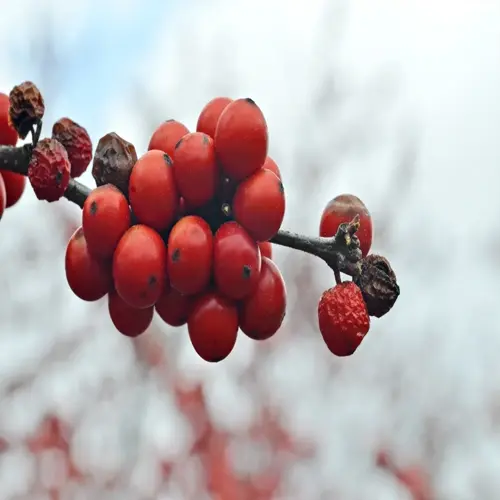
Winter timing also fits the plant's whole life cycle. The genus name Hamamelis means "together with fruit." The shrub carries flowers and last year's ripening fruit at the same time. So when you look close, the petals open in the cold while the old seed pods finish up right beside them on the branch. You get both stages on one twig.
Blooming in the cold also helps the plant find pollinators. Few flowers are open in January and February. The small winter moths and gnats that are active on mild days have little to compete with. So they visit the witch hazel. The faint, spicy scent carries far on still cold air. That is why you smell the shrub before you see it.
I almost cut my first shrub down one January. Its bare branches looked dead next to the rest of the garden. Then a warm spell hit, and the gold ribbons opened along every twig. The branches that looked done were the ones in full bloom.
So if your witch hazel flowers in the dead of winter, that is normal and healthy. It is not a sign of stress. The shrub is doing what it evolved to do. There is nothing to fix, and no reason to cover or protect it during a freeze.
You can stretch the show by picking different species for your yard. The native common witch hazel blooms in late fall. The Ozark and hybrid types bloom later, from January into March. Plant one early kind and one late kind. That way you get color and scent across several cold months, not just a few weeks.
Cutting a few branches lets you bring the bloom indoors, too. Snip a stem when the buds are swollen but still closed. Put it in a vase of water in a warm room. Within a day or two the petals coil and unfurl open, and your kitchen fills with that spicy scent. You get the same winter show on your table that the shrub puts on outside.
Read the full article: Witch Hazel Shrub: Grow, Care, and Bloom