Introduction
A single yew shrub can hide an ugly foundation, build a dense privacy hedge, or get clipped into a clean green wall along your driveway. Few plants flex like this. The same yew bush works in full sun or deep shade, holds its color all winter, and shrugs off the hard pruning that kills most evergreens. That is why you see it everywhere from old churchyards to brand new front yards.
Now for the part you need to respect. Almost every piece of a yew is poisonous, from the needles to the bark to the seed inside the bright red berry. Only the soft red flesh of that berry, the aril, is harmless. The toxins are called taxine alkaloids, and they hit the heart hard. Yet that same chemistry gave us paclitaxel. It is a cancer drug pulled from the bark of the Pacific yew, and that poison now saves lives in hospitals.
So this guide gives you the full picture. You get the real story on toxicity, backed by medical sources and explained in plain terms. You get the pests and diseases that kill these plants, named one by one. And you get how a wild conifer became one of medicine's biggest wins. All of it comes with honest safety advice and facts you can trust.
Yews belong to the genus Taxus, a true evergreen conifer that you treat more like a shrub than a tree. They are slow growing and famously shade tolerant, happy in USDA zones 4 to 8, and they can live for centuries. So this is not a one season buy. Plant one right and it may outlive you. The chapters ahead walk you from picking the best variety, to planting and pruning, to handling every part of this plant with care.
Yew Varieties Worth Growing
Most variety guides hand you a product grid and let you sort it out. The smarter way to pick yew varieties starts with the shape of the plant, not the species name. The cultivar habit decides what you get. A tall screen or a low mound.
Three species do almost all the work in home gardens. English yew (Taxus baccata) is the classic European yew for zones 6 to 7. Japanese yew (Taxus cuspidata) is the cold-hardy one for zones 4 to 7. And the Anglojap yew (Taxus x media) crosses the two and is sold as named cultivars across zones 4 to 7.
Size swings hard inside that group. A compact form can sit at 2.5 ft (0.8 m). The big tree form Taxus cuspidata 'Capitata' climbs near 50 ft (15 m). So check the cultivar before you dig. One more buyer detail nobody mentions: yews are dioecious, so a male plant must grow near a female for the red arils to form.
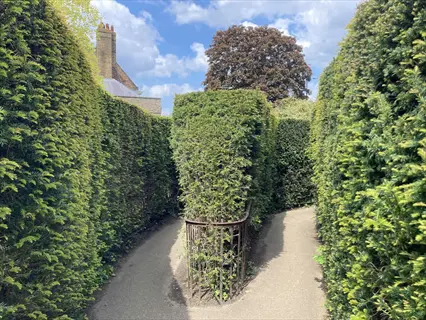
Hicks Yew (Taxus x media 'Hicksii')
- Habit: A narrow, upright Anglojap cultivar that forms a dense columnar wall, making it a top pick for formal privacy hedges and screens.
- Anecdote: I dropped a row of Hicks yew along the shaded fence line in the damp back corner about eight years ago. The plants filled in so evenly that the gaps closed into one clean green wall, and you stopped seeing the fence behind them.
- Size: Typically reaches around 10 to 12 ft (3 to 3.7 m) tall and stays fairly narrow, so it suits tight property lines and boundaries.
- Hardiness: Grows reliably in USDA zones 4 to 7, tolerating cold winters that English yew cannot handle as well.
- Light: Thrives in full sun to partial shade and keeps good density even where light is limited along a fence line.
- Use: Plant in a row for a clipped evergreen hedge, spacing plants 6 to 12 ft (1.8 to 3.7 m) apart depending on the look you want.
- Care: Responds well to shearing and resprouts from old wood, so it stays neat for decades with light yearly trimming.
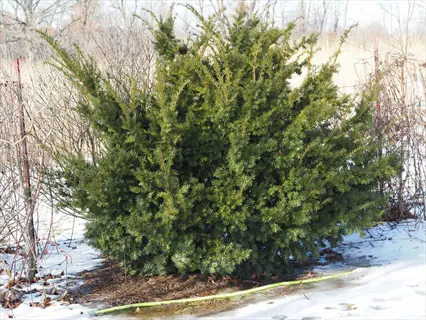
Densiformis Yew (Taxus x media 'Densiformis')
- Habit: A low, dense spreading Anglojap cultivar that grows wider than tall, ideal for foundation plantings and informal groundcover.
- Size: Usually stays around 3 to 4 ft (0.9 to 1.2 m) tall while spreading 4 to 6 ft (1.2 to 1.8 m) wide over time.
- Hardiness: Cold hardy through USDA zones 4 to 7, holding deep green color through winter in most regions.
- Light: Performs in full sun to deep shade, which makes it useful on the shaded north side of a house.
- Use: Works well as a low mass planting under windows or along walkways where a tall hedge would block the view.
- Care: Shear lightly each spring to keep the spreading mound tidy, and avoid soggy soil that invites root rot.
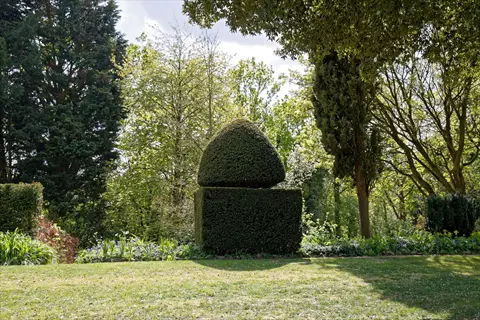
English Yew (Taxus baccata)
- Habit: The classic European yew prized for rich dark foliage and a long history in formal gardens, topiary and churchyards.
- Size: Very cultivar dependent, from compact forms to large specimens, and famous for living over many centuries.
- Hardiness: Best in USDA zones 6 to 7, as it is the least cold tolerant of the three landscape species.
- Light: Handles full sun to deep shade and takes hard clipping, which is why it is the traditional topiary yew.
- Use: Choose for formal hedges, shaped specimens and heritage-style plantings where slow refinement is the goal.
- Care: Demands sharp drainage and rewards patient pruning, resprouting from bare wood when renovated over several years.
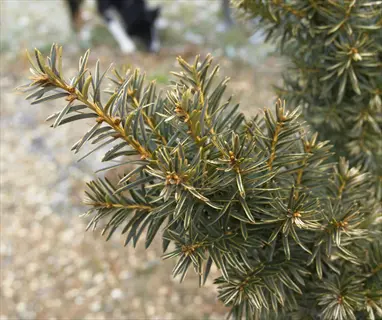
Japanese Yew (Taxus cuspidata)
- Habit: A tough, cold-hardy species with upright and spreading cultivars, including the large tree form 'Capitata'.
- Size: Ranges from low shrubs up to 'Capitata' near 50 ft (15 m), so check the specific cultivar before planting.
- Hardiness: The hardiest landscape yew, reliable in USDA zones 4 to 7 and a mainstay in colder regions.
- Light: Grows in full sun to deep shade and keeps dense foliage even in difficult low-light sites.
- Use: Good for hedges, screens and specimen plantings in northern gardens where English yew struggles.
- Care: Needs well-drained soil and benefits from a male plant nearby if you want the female plants to set red arils.
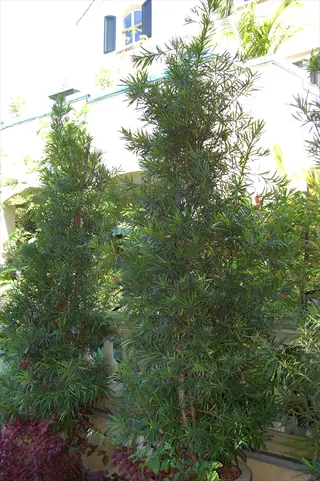
Plum Yew (Cephalotaxus harringtonia)
- Habit: Not a true yew but a close-looking relative that fills the same garden role in hot, humid climates where Taxus struggles.
- Size: Forms range from low spreaders to upright columns, so cultivar choice matters as much as it does with true yews.
- Hardiness: Better suited to warmer zones than most Taxus, making it a go-to evergreen for southern gardens.
- Light: Tolerates shade well and resists heat better than true yews, holding up where summer sun is intense.
- Use: Choose as a true-yew alternative for privacy and foundation plantings in regions too warm for Taxus.
- Care: Shares the yew preference for good drainage and is also toxic, so handle and site it with the same caution.
Match the habit to the job and the choice gets easy. I reach for an upright cultivar like Hicks yew when I want a privacy screen or a clipped boundary. I reach for a low spreading yew like the Densiformis yew when I want a foundation planting or a green carpet under windows.
One last point that trips up shoppers: the plum yew (Cephalotaxus) is not a true yew at all. It looks the part and fills the same garden role. But it shrugs off heat and humidity. So it serves warm southern gardens where true Taxus species struggle.
How To Plant And Site Yews
Learning how to plant yew shrubs starts with where you put them, not how you dig the hole. These shrubs grow happily in full sun or deep shade, so light is rarely the problem. The thing that decides success or failure is drainage, because yew roots rot fast in soggy ground.
My first yew went into the damp back corner where the lawn meets the shaded fence line. The needles yellowed within a season, then whole branches browned out and the roots turned to mush. I dug up the dead plant, built a low raised bed about 8 inches high, and set a new Hicks yew on top of it. That one held its color and filled in over the next two years on the exact same spot that had killed the first.
So before you start planting yew shrubs, watch how your site behaves after heavy rain. If water pools or the ground stays spongy for hours, plant on a raised bed or a low ridge so the root ball sits above standing water. In heavy clay this trick saves the plant. Well-drained soil is not a nice extra here. It is an absolute requirement.
Soil chemistry comes second. Yews lean toward acid soil but handle neutral ground without complaint, and sources disagree on the perfect pH anyway. Do not waste time chasing an exact number. Sharp drainage beats rich or fine-tuned soil every time. The right yew zones run from USDA 4 to 8, so cold is not the worry for most gardeners either.
The steps below walk through planting yew shrubs the right way, from picking the spot to yew spacing for a hedge. Set plants 6 to 12 ft (1.8 to 3.7 m) apart, closer for a fast solid screen and wider for single specimens you want to show off.
Choose a site that never holds standing water. Yews accept full sun to deep shade, but soggy soil is the main thing that kills them.
In heavy clay or low ground, build a raised mound or ridge and plant on top so the root ball sits above water that collects after rain.
Dig a hole as deep as the root ball and two to three times as wide, loosening the sides so roots can spread into the surrounding soil.
Place the yew so the top of the root ball sits level with or slightly above the surrounding soil, then backfill and firm gently to remove air pockets.
For a hedge, set plants 6 to 12 ft (1.8 to 3.7 m) apart, spacing closer for a faster solid screen and wider for individual specimens.
Water deeply to settle the soil, then mulch around the base while keeping mulch off the stem to hold moisture without trapping rot at the crown.
Poorly drained soil (such as clay soils or soils in low areas) is the 'kiss of death' to yews.
Yew Care And Pruning
Good news on yew care: once your plant settles in, it asks very little of you. Established yews handle drought well and need almost no feeding from you. Your real jobs are watering young plants, light shaping, and watching that your soil drains. That makes the yew a genuine low maintenance shrub for most yards.
The part that trips people up is pruning yew, and most of that worry is misplaced. Trim in spring through early summer and follow the one-third rule, so you never cut off more than a third of the growth at once. Stop hard cuts after mid-summer. Fresh growth needs time to firm up before the cold hits, or it browns at the tips.
Here is the trick that sets a yew apart from almost every other conifer. Yews resprout from bare old wood, while a spruce or juniper cut back that far stays bare for good. So if you ask when to prune yew that has gone leggy, the answer is now. You can cut deep into the old wood and bring the plant back to life. Gardeners call this big cut rejuvenation pruning, and you want to spread it out. Do a bit each year for about 3 years, since the plant needs time to fill back in.
I sharpened my shears and started in on my eight-year-old Hicks yew hedge that runs along the shaded fence line. My first hard pass left holes where I had cut past the green and into plain brown stems, and my stomach dropped at the gaps staring back at me. I left it alone through the season and watched it. By the next summer new shoots had pushed straight out of that bare wood and closed my hedge line back up, greener than before.
- Watering: Water young yews regularly through the first season or two, then ease off, as established plants are drought tolerant and dislike constantly wet soil.
- Feeding: Yews need little feeding. A light spring application of a balanced or evergreen fertilizer is plenty for plants that are not thriving.
- Routine Pruning: Trim in spring through early summer using the one-third rule, and avoid heavy cuts after mid-summer so new growth hardens before cold weather.
- Renovating Overgrown Plants: Cut leggy or overgrown yews back hard into old wood and renew them gradually over about three years, since recovery takes several seasons.
- Winter Protection: In exposed, windy sites, screen young plants from harsh winter wind and sun to limit winter burn that browns the foliage.
- Disposing Of Clippings: Bag and bin trimmings rather than leaving them out, because the cut foliage stays toxic to pets, children and grazing animals.
Unlike most conifers, yews resprout from bare old wood, so a badly overgrown plant can be cut back hard and renewed instead of dug out.
One rule matters after every cut you make. Your clippings stay toxic even when they dry, so they are not safe yard waste. Bag and bin your trimmings rather than leaving piles where pets, children, or grazing animals could reach them. Never burn them, and never compost yew where your livestock graze.
Beyond that, give the plant a clean line and let it work. Light shearing yew once or twice a season keeps a hedge tight, and a yew forgives a bold hand far more than its stiff reputation suggests. Treat it as the easy, lasting plant it is, and it will hold its shape for decades.
Yew Toxicity And Safe Handling
Almost every part of a yew is poisonous. The toxin is strong enough to stop a heart. The simple rule worth memorizing is this: only the soft red flesh around the seed is safe, and everything else carries the poison.
So are yews poisonous? Yes, and the danger is real. The plant makes taxine alkaloids that block the sodium and calcium channels in your heart muscle. That blockage throws off the heart's rhythm and can stop it. Taxine B is the most potent of these alkaloids. There is no antidote, so doctors can only treat the symptoms while the toxin runs its course.
The numbers spell out how little it takes. The minimum lethal oral dose is just 0.6 to 1.3 grams of yew leaves per kilogram of body weight. That figure comes from case reports in the European Heart Journal. The leaves stay toxic even after you cut them and let them dry, so a pile of clippings is still dangerous weeks later.
Pets and livestock face the same risk you do. Yew toxicity hits cats, dogs and horses hard. A curious animal that chews a dropped branch can get a fatal dose fast. Is a yew poisonous to dogs? Treat the answer as a firm yes, and keep the plant well out of reach.
The table below breaks down which parts of the plant are toxic and which one is not.
Notice the trap built into the berry. Are yew berries poisonous? The honest answer is split. The soft red aril that wraps the seed is harmless. But the hard seed inside it is loaded with toxin. A child or pet who swallows that seed swallows the real danger, so never treat the berry as a safe snack.
Safe handling comes down to a few habits. Wear gloves every time you prune, and wash your hands the moment you finish. Bag up clippings and keep them away from pets, livestock and the compost pile, since dried foliage stays just as toxic as fresh. A little caution turns a beautiful shrub into a safe one.
There is no antidote to yew poisoning, and treatment is only supportive. If a person or pet eats any part except the red flesh, seek emergency help at once.
Pests, Diseases And Problems
Most yew problems trace back to one root cause, and it is rarely the plant being fussy. A healthy yew shrub shrugs off cold, deer, and deep shade, so when one starts to fail the soil is the first place to look. Soggy roots cause more yew deaths than every pest and disease combined.
Here is the plain answer to the most common worry. When a yew turning brown or yellow shows up in your hedge, suspect waterlogged roots and root rot in yews before you blame bugs or sun. Wet feet in heavy clay suffocate the roots, and that is what triggers most of the yew diseases gardeners panic over.
You can sort almost every issue into three groups by cause. Too-wet roots cause rot and browning from the inside out. Insects like the black vine weevil, scale, and mites leave stippled or chewed foliage. Harsh winter wind and sun cause winter burn on the exposed side. Match the symptom to the cause below and you will know what to fix.
Root Rot From Wet Soil
- Cause: Waterlogged or heavy clay soil suffocates roots and invites fungal root rot, the single most common reason healthy-looking yews decline.
- Symptoms: Foliage browns or yellows from the inside out, growth stalls, and the plant may collapse despite regular watering.
- Fix: Improve drainage by raising the bed or moving the plant, and reduce watering, since the problem is too much water rather than too little.
Black Vine Weevil
- Cause: Adult weevils feed at night while their grubs chew roots below ground, weakening the plant from both ends over a season.
- Symptoms: Notched, ragged leaf margins from adults above and slow decline or wilting from grub damage to the roots.
- Fix: Encourage healthy, well-drained growing conditions and treat persistent infestations with appropriate controls timed to the grub stage.
Scale And Mites
- Cause: Brown scale insects and tiny mites cluster on stems and needles, draining sap and stressing the plant over time.
- Symptoms: Sticky residue, sooty mold, stippled or off-color needles, and a general loss of vigor on affected branches.
- Fix: Prune out heavily infested wood, improve air flow, and use horticultural oil or suitable treatments on stubborn populations.
Winter Burn
- Cause: Cold, drying winter wind and sun pull moisture from the needles faster than frozen roots can replace it, scorching the foliage.
- Symptoms: Browning or bronzing of needles, usually worst on the windward and sun-exposed sides after a hard winter.
- Fix: Shelter exposed young plants from harsh wind, water well before the ground freezes, and trim damaged foliage in spring as new growth appears.
Notice the pattern across all four. Fixing the site beats reaching for a spray bottle nearly every time. Raise a wet bed, open up air flow, and shelter young plants from winter wind, and most of these troubles never start. The chemicals are a backup, not the first move.
From Poison To Cancer Drug
The same poison that can stop your heart also stops cancer cells from dividing. That twist sits at the center of the yew tree history you should know. The plant you might use as a hedge gave the world one of medicine's most important drugs.
The story starts in a Washington forest. In 1962 a USDA botanist named Arthur Barclay collected Pacific yew bark. He was part of a wide hunt for plants that might fight disease. Two years later, two scientists at the National Cancer Institute pulled the active cancer drug out of that bark. Monroe Wall and Mansukh Wani named it paclitaxel.
For years nobody knew how the molecule worked. Then in 1979 Susan Band Horwitz cracked it. She found that Taxol from yew locks up microtubules, the tiny fibers a cell needs to split in two. A cancer cell that cannot divide cannot grow. That single insight turned the plant in your yard into a lifesaver.
1962
USDA botanist Arthur Barclay collects Pacific yew bark in Washington State as part of a broad screening of natural compounds.
1964
National Cancer Institute researchers Monroe Wall and Mansukh Wani isolate the active cytotoxic compound and name it paclitaxel.
1979
Susan Band Horwitz identifies how paclitaxel works, disrupting microtubules to stop cancer cells from dividing.
Early 1990s
Semisynthesis ends the supply crisis, since harvesting bark killed the slow-growing tree and demand far outstripped wild supply.
1992 to 1994
Paclitaxel wins approval for ovarian and then breast cancer, later treating lung and pancreatic cancers as an essential medicine.
Success brought a brutal problem. The bark harvest killed the slow-growing tree. It took about 20,000 lb (9,000 kg) of bark to make roughly 2.2 lb (1 kg) of taxol. Wild yews could never keep up. The same drug that saved patients was wiping out the forests that supplied it.
Chemists fixed the supply crisis with a clever swap. They built the drug from a compound in the needles of common garden yews. So no one had to strip bark from old trees. Today paclitaxel yew medicine fights cancer of the breast, ovary, lung, and pancreas. The World Health Organization lists it as an essential medicine. It is still a core part of chemotherapy, and you may already know someone it has helped.
Within a month, we knew that we had a very interesting molecule that was doing something to cells, which no one else had seen occur with a small molecule. It was very exciting.
5 Common Myths
Only the red yew berries are poisonous, so the rest of the shrub is harmless to handle and grow around pets and children.
The opposite is true. The red fleshy aril is the only non-toxic part, while the seeds, leaves, bark and wood all contain dangerous taxine alkaloids.
Yews must have full sun to grow well, so they are a poor choice for the shaded corners of a garden where little else thrives.
Yews are remarkably shade tolerant. Pacific yew is rated the most shade tolerant tree in the Pacific Northwest, and most yews grow in full sun to deep shade.
An overgrown yew that has gone bare and woody is finished, so the only real option left is to dig it out and start over.
Unlike most conifers, yews resprout from bare old wood. A neglected plant can be cut back hard into woody stems and will slowly refill with new growth.
Yews are fussy plants that need rich, constantly moist soil and frequent feeding to stay healthy and keep their deep green color.
Yews are low maintenance but demand sharp drainage above all. Waterlogged soil is the kiss of death, while sharp drainage matters far more than rich feeding.
The yew is purely a deadly plant of churchyards and old legends, with no real value beyond a dark and gloomy reputation.
The same toxic chemistry gave medicine paclitaxel, a chemotherapy drug from Pacific yew bark that treats breast, ovarian, lung and other cancers worldwide.
Conclusion
The yew shrub earns its spot in the garden by lasting. It is a slow growing evergreen that holds its deep green needles through hard winters in USDA zones 4 to 8. Plant one for a hedge, a foundation bed, or a shaded corner where most plants sulk, and you get a green wall that can outlive you.
Good yew care comes down to a few facts you have now seen throughout this guide. Sharp drainage matters more than pH, so pick a spot where water never sits and your roots stay healthy. I have pulled out a dead yew that drowned in a low, soggy bed, and the lesson stuck. As a shade tolerant evergreen, the yew handles full sun to deep shade without complaint. And because yews resprout from old wood, they forgive a hard cut that would kill most conifers. An overgrown plant can come back from bare branches, which is why these shrubs reward you for decades.
The one thing you must not forget is yew toxicity. Every part except the red aril is poisonous, from the needles to the seed inside that bright berry. Keep clippings out of reach of pets, children, and livestock, and bag your trimmings rather than tossing them where animals graze. Wear gloves when you prune. Say it plainly to your family, because this is the warning that protects the lives around you.
Here is what makes the yew worth that respect. The same alkaloids that poison the heart gave us paclitaxel. That cancer drug was first drawn from Pacific yew bark, and doctors now use it against breast, ovarian, and lung cancers. So you are tending a plant that is both dangerous and quietly remarkable. Site it with care, handle it with care, and the yew shrub will stand in your garden long after the season's quick favorites are gone.
Glossary
- Anglojap yew
- A hybrid yew (Taxus x media) bred from English and Japanese yews, valued for hardiness and cultivars like Hicks.
- Aril
- The soft red fleshy cup surrounding a yew seed, which is the only non-toxic part of the plant.
- Dioecious
- A plant whose male and female flowers grow on separate plants, so a male yew must be near a female for berries to form.
- Paclitaxel
- A chemotherapy drug, sold as Taxol, first isolated from Pacific yew bark that stops cancer cells from dividing.
- Rejuvenation pruning
- Cutting an overgrown shrub back hard into old wood to renew it, which yews tolerate because they resprout from bare stems.
- Taxine alkaloids
- The toxic compounds found in nearly every part of the yew that interfere with the heart's electrical signals.
- well-drained soil
- Soil that lets water pass through so roots never sit in standing water.
- Winter burn
- Browning of evergreen foliage caused when cold wind and sun dry the needles faster than frozen roots can refill them.
External Sources
Frequently Asked Questions
Are yew bushes toxic to dogs?
Yes. Every part of the yew except the red fleshy aril is toxic to dogs, and the taxine alkaloids it contains can stop the heart with no antidote available.
What is the most poisonous part of a yew?
The seeds and the foliage carry the most taxine alkaloids. Only the red fleshy aril surrounding the seed is non-toxic, but the hard seed inside it is dangerous.
Do yews prefer sun or shade?
Yews are unusually adaptable. They grow well in full sun, partial shade and even deep shade, which makes them one of the few evergreens for dark corners.
What drug is made from the yew tree?
Paclitaxel, sold as Taxol, is a chemotherapy drug first isolated from Pacific yew bark by the National Cancer Institute. It treats several cancers.
Why are yew trees planted in churchyards?
Yews live for centuries and stay green all year, so their longevity and evergreen foliage made them lasting symbols of endurance at sacred and burial sites.
What is the lifespan of a yew bush?
Yews are among the longest-lived plants. Pacific yew reaches maturity at 250 to 350 years and often survives several centuries beyond that.
Is it safe to touch a yew tree?
Brushing against the foliage is low risk because the poison must be eaten to harm you. Still, wear gloves when pruning and never eat any part.
Can yews be kept small with pruning?
Yes. Yews tolerate hard pruning and resprout from bare old wood, so regular shearing keeps even vigorous cultivars compact and neat for years.
How fast do yew trees grow?
Yews are classed as slow growers across the genus. That slow pace makes them easy to hold at a chosen size with only light yearly trimming.
Why are yew trees considered special?
Yews stand out for living for centuries, tolerating deep shade like few evergreens, resprouting from old wood and giving the world a cancer drug.