Herb · Apiaceae
Garden Angelica
Angelica archangelica
A big, friendly woodland-edge herb that hands you candied stems and bold flower heads, then calls it a day after one bloom.
Partial shade
Every 3–7 days
41–77°F · 5–25°C
USDA 4–9
Overview
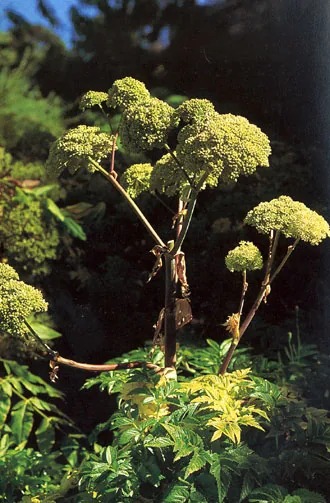
Want a herb with real presence? Garden angelica is about as big as they come, pushing up hollow ridged stems and wide, dome-shaped flower heads that easily clear head height. It's part of the carrot family, and out in the wild it grows along the cool, damp edges of northern Europe, which pretty much tells you what it's after at home: rich, moist soil and a little shade. People have grown it for ages, partly for those candied stems and partly because it makes such a striking shape at the back of a bed.
Here's the thing to know up front: it runs on a clock. Angelica's a biennial that's really monocarpic, so it spends its first year or two building a deep taproot and a big mound of leaves, then it shoots up a flower stalk, sets seed, and dies once that seed is ripe. You can keep it going a bit longer by cutting the flower stalk before it opens, but once it flowers, that's the end of the road.
There's a catch worth respecting, too. The sap has compounds that can burn your skin in sunlight, and angelica looks an awful lot like poison hemlock, so it pays to handle it carefully and to be absolutely sure what you've got before anything goes near the kitchen.
Care
The short version: give it part shade and rich, deep soil that stays moist but never waterlogged, and keep the water coming through that first season so the taproot doesn't dry out.
Light
Angelica likes partial shade best, which makes sense given it grows at the edge of woodland. It'll handle full sun in cooler spots or wherever the soil stays nice and moist, but hot, dry sun really stresses it and cuts short a life that's already pretty brief.
Water
Keep the soil consistently moist and don't let it dry out, especially that first season while the taproot's getting going. A bit of mulch does a lot of the work here, locking in moisture and keeping the roots cool, which is exactly the woodland-edge vibe this herb's after.
Soil
Go for rich, deep, moist loam that still drains well and is loaded with organic matter. A pH of 6.0 to 7.0 keeps it happy, and digging in some compost or well-rotted manure feeds all that big, leafy growth it puts on.
Temperature
This one's tough and likes things cool, sitting happily somewhere around 41°F and 77°F (5°C to 25°C). It'll take hard winters down to USDA zone 4 no problem, but it really doesn't enjoy serious heat, which is another good reason to give it some shade in warmer gardens.
Humidity
Average humidity of about 40% to 60% suits it just fine, and that's pretty much what most gardens give you outdoors anyway. That damp, cool woodland-edge air is way closer to its natural home than a hot, dry, exposed corner would be.
Feeding
Feed it in spring with a balanced fertilizer, or just top-dress the crown with compost or well-rotted manure. A monthly feed through the growing season keeps those big leaves and tall stems coming along.
Pruning
Deadhead the spent flower stalks before they set seed and you can squeeze another year out of it while keeping its self-sowing in check, plus cut away any tired foliage. Once angelica's allowed to flower and seed, though, it dies, so any pruning's really just buying time.
Repotting
There's not much to do here, since angelica's rarely repotted and that deep taproot hates being messed with, which is why you sow it right where it'll grow. Just leave it where it is and let it run its short course instead of trying to dig it up and move it.
Size & spacing
This is a big herb, hitting 5 to 8 feet (150 to 250 cm) tall and spreading 2 to 4 feet (60 to 120 cm) across. Give it room at the back of a bed, where the height actually works for you and those umbels have space to open up.
When to plant
Angelica's all about fresh seed and a bit of cold. Sow it in late summer or fall while the seed's still alive, or chill it and sow in early spring instead. Either way, you'll get leaves the first year and flowers in the second or third, and then it sets seed and bows out.
Northern hemisphere
Southern hemisphere
Typical months for a temperate climate: start earlier in warm zones, later where spring frosts linger.
- Plant: Sow fresh seed where it is to grow in late summer to fall, or cold-stratify and sow in early spring; direct-sow because the taproot resents transplanting.
- Harvest: Large greenish-white compound flower umbels appear in early to mid summer of the second (or third) year, after which the plant dies; harvest tender young leaf stems and leaves in year one to two.
Hardiness
USDA hardiness zones: 4–9
Temperature: down to -34°C
Troubleshooting
Honestly, angelica doesn't ask for much, and the most dramatic thing it does is die after flowering, which is totally normal. The few real problems tend to turn up on the leaves or down at the crown. Find the one that looks like yours below, then go from there.
Once it blooms and seeds, the whole thing yellows and goes
Don't panic, this isn't a disease, it's just how angelica works. It's monocarpic, so it flowers once in its second or third year, ripens its seed, and then the whole crown fades away. Let a bit of seed drop to kick off the next generation, or save some fresh seed for replacements, and clear out the spent plant once you've got what you need.
Fix:
- This is normal; allow some seed to ripen and self-sow, or save fresh seed to start replacements
- Remove the spent plant after seed harvest
A wilting plant sitting over a dark, squishy crown
When water sits around the base, it brings on crown and root rot, and you'll see the stem bases go soft and dark right at the soil line. Once the crown's rotted there's really no saving it, so pull and bin the worst ones to stop it spreading. Better drainage and watering that keeps the soil moist but never soggy stops it before it starts.
Fix:
- Improve drainage and reduce watering
- Remove and destroy badly affected plants to limit spread
Sticky, warped leaves dotted with pale trails and nibbled bits
All that soft new growth tends to pull in aphids, which gather under the leaves and leave a sticky film behind. Those pale, twisty lines? That's leaf miners working away inside the leaf, and ragged holes usually mean the green-and-black celery worm, which is the black swallowtail caterpillar. You can knock the aphids off with a jet of water or use insecticidal soap, pull the mined leaves, and either pick off the caterpillars or just let them turn into butterflies.
Fix:
- Dislodge aphids with a strong jet of water or treat with insecticidal soap
- Remove and destroy mined or heavily chewed leaves
- Hand-pick caterpillars (or tolerate them, as they become swallowtail butterflies)
Toxicity
It's worth treating this herb with a bit of care. The sap and leaves carry furanocoumarins that can blister your skin once sunlight hits it, and grazing animals can react the same way on their paler patches. The biggest worry, though, is mixing angelica up with deadly poison hemlock or water hemlock, so don't eat any part unless you're certain of the plant.
Toxic to
Cats · Dogs · Horses · Rabbits · Livestock · Birds · People
Cats Mild
If a cat chews the foliage it might drool or get a bit of an upset stomach, and sap on the skin can leave it sore. It usually sorts itself out, but it's still smart to keep a curious cat away from cut stems.
Dogs Mild
A dog that nibbles the leaves can end up drooling a bit with an upset stomach, and that's usually as far as it goes. If sap gets on the muzzle or paws it might irritate the skin, so just rinse it off.
Horses Caution
The furanocoumarins in the leaves and sap can make a horse's skin react badly to sunlight, with redness and soreness on the muzzle and any pale patches. Easiest thing is to keep angelica out of grazing paddocks altogether.
Rabbits Caution
Don't offer angelica as forage. The same sap compounds that burn human skin can upset a rabbit's gut and put it off its food, so stick to greens you know are safe.
Livestock Caution
Grazing cattle, goats, and sheep can get photosensitization from the furanocoumarins, which shows up as scabbing and peeling on light-skinned areas after a day in the sun. Best to fence the plant off from pasture.
Birds Caution
There's not much to suggest angelica belongs in a bird's diet, and the sap compounds make it a poor pick anyway. Keep pet birds away from the fresh foliage and stems.
People Caution
The young leaf stems are a traditional candied treat, but the fresh sap can blister skin that later meets sunlight, a reaction called phytophotodermatitis. The far bigger danger is mistaking angelica for deadly poison hemlock or water hemlock, so never eat a plant unless you're sure what it is.
Wear gloves and long sleeves when cutting or handling fresh stems and foliage, and wash skin promptly; avoid sun exposure on sap-contacted skin to prevent phototoxic burns. CRITICAL: Angelica closely resembles deadly poison hemlock (Conium maculatum) and water hemlock (Cicuta spp.); never forage or eat a plant unless its identity is absolutely certain.
Helpline numbers

United States
ASPCA Animal Poison Control: (888) 426-4435 (fee applies)
Poison Control: (800) 222-1222



Canada
Poison Centres: 1-844-764-7669
Varieties
Most folks just grow the true species, but there's also a coastal type that's good to know about if you garden anywhere near the sea.
Angelica archangelica (species)
This is the classic garden angelica, the one with hollow ridged stems that cooks have candied for generations and those big domed umbels of greenish-white flowers.
Angelica archangelica subsp. litoralis
This is a slimmer coastal type from northern Europe that's right at home along the shoreline, where the salt and wind would be too much for most other herbs.
How to propagate
Angelica only comes from seed, and the whole trick is sowing it fresh before it quietly loses its spark.
SeedModerate
Sow fresh seed in late summer to fall, or cold-stratify and sow in early spring. · 1 to 2 years to reach flowering size
Start angelica from fresh seed only, because it loses its life within months of ripening, so old seed just won't do. The seed needs light and a cold spell to wake up, so scatter it on the surface and leave it uncovered, sowing fresh in late summer or cold-stratifying for an early spring start. Sow it right where it'll grow, since that deep taproot hates being moved, and give it 1 to 2 years to build up to flowering size.
Myths
Angelica is something you cook with, so handling it can't hurt you.
Sure, people have eaten the candied stems for centuries, but the fresh sap and foliage hold furanocoumarins that can blister your skin once sunlight hits it. The fix is easy: wear gloves and long sleeves when you cut it, and wash off any sap before you head out into the sun.
A tall plant topped with big white Apiaceae flowers is safe to pick, same as angelica.
Trouble is, angelica's got some deadly look-alikes. It resembles poison hemlock and water hemlock closely enough that a wrong guess can kill you. So never eat a wild plant unless you're certain what it is, and leave foraging these tricky umbellifers to people who really know them apart.