Herb · Apiaceae
Dill
Anethum graveolens
Feathery, fast, and friendly: the cool-season herb that practically plants itself next year.
Full sun
Every 3–7 days
50–77°F · 10–25°C
40–90 days
Overview
Think of dill as a cool-season crop at heart. It's happiest in spring and early fall, while summer heat nudges it to flower fast, a habit gardeners call bolting. Drought and root stress only speed that up, so a little planning goes a long way.
Want a steady supply of young leaves? Succession-sow a fresh batch every couple of weeks and you'll always have tender growth coming along. Since dill grows from a deep taproot and hates being transplanted, just sow it right where you want it to grow rather than moving seedlings around.
This is a tall, airy plant that runs 2 to 4 feet (60 to 120 cm) high on hollow stems, with a slim spread of 12 to 18 inches (30 to 45 cm). Spacing plants close together actually helps, since they lean on each other for support when the wind picks up.
Care
The short version: Give dill full sun for six or more hours, keep the soil evenly moist with an inch of water a week, and sow it straight into loose, well-drained ground at pH 5.5 to 6.5. It does best between 50°F to 77°F (10°C to 25°C), feeds lightly, and stays bushy if you pinch it often. Cut leaves early and re-sow to stay ahead of bolting.
Light
Dill wants full sun, six or more hours a day. In a hot summer it'll take a bit of afternoon shade just fine, but too much shade leaves you with thin, floppy plants that bolt early and give you less leaf to harvest.
Water
Aim for even moisture, roughly an inch of water a week. This matters most during germination and the seedling stage, since a dry spell early on can trigger early flowering before the plant has done much growing.
Soil
Dill likes well-drained, fertile loam with some organic matter worked in and a pH of 5.5 to 6.5. Keeping the soil loose really helps, because it lets that deep taproot run straight down the way it wants to.
Temperature
The sweet spot sits between 50°F to 77°F (10°C to 25°C). Once it climbs past that, dill stops putting energy into leaves and shifts toward flowering, which is when bolting takes over.
Humidity
Outdoors, average humidity in the 40% to 70% range suits dill just fine. What really counts is airflow, not moisture in the air, so don't crowd plants too tightly or they'll stay damp and start inviting problems.
Feeding
Dill is a light feeder, so one balanced feed or a bit of compost at planting time is plenty. Pile on too much nitrogen and you'll get soft, leggy stems that flop over instead of standing tall.
Pruning
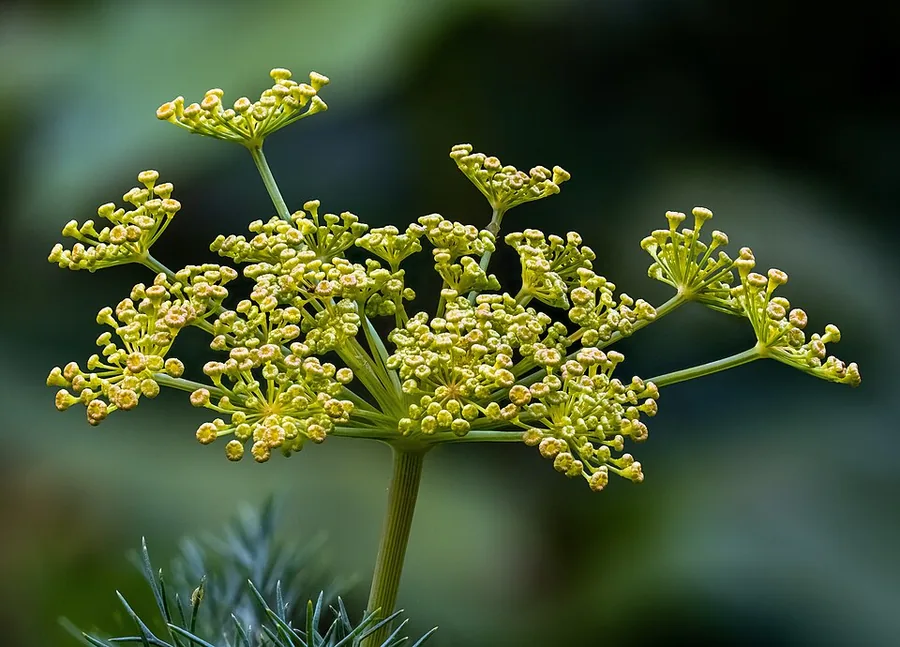
Want bushier dill that holds off on bolting? Pinch or cut the foliage often. From there it's your call: snip the flower heads to keep the leaves coming, or let the umbels mature if you're after seed.
Repotting
Here's the easy part: dill isn't repotted at all. It's a direct-sown annual with a taproot that resents being moved, and squeezing it into a container often leads to stunting or fast bolting.
Size & spacing
Expect dill to reach 2 to 4 feet (60 to 120 cm) tall with a spread of 12 to 18 inches (30 to 45 cm). The stems are tall and hollow, so planting close together is smart, letting neighbors prop each other up against the wind.
When to plant
Timing is half the game with dill. Because it's a cool-season herb, spring and early fall are your sweet spots, and a fresh row sown every couple of weeks keeps young, leafy plants coming before heat sends them to seed.
Northern hemisphere
Southern hemisphere
Typical months for a temperate climate: start earlier in warm zones, later where spring frosts linger.
- Plant: Direct-sow in early spring after danger of hard frost; cool-season crop that bolts quickly in summer heat. Succession-sow every 2-3 weeks for continuous leaf harvest.
- Harvest: Cut leaves anytime once plants are established; yellow flower umbels form in summer, followed by seeds harvested as they ripen and turn brown.
Hardiness
USDA hardiness zones: 2–11
Temperature: down to -46°C
Troubleshooting
Dill is pretty forgiving, but a few things tend to come up. Here's what to watch for, from early bolting and hungry caterpillars to aphids and floppy, wind-battered stems, along with simple ways to handle each one.
Bolting in summer heat
When the days get long and hot, dill tends to bolt, and drought or root stress only hurries it along. The central stalk shoots up and forms flower umbels while leaf growth slows down. To stay ahead of it, harvest leaves early, succession-sow, and keep moisture steady with a little afternoon shade in the heat.
Fix:
- Harvest leaves promptly before flowering
- Succession-sow new plantings
- Provide consistent moisture and light afternoon shade in heat
Black swallowtail caterpillars
Spot green caterpillars with black bands and yellow spots? Those are black swallowtail (Papilio polyxenes) larvae, and dill is one of their favorite host plants. The damage can look dramatic, but it rarely sets a healthy plant back. Just relocate them or grow a few extra plants, and remember they turn into butterflies.
Fix:
- Hand-pick and relocate caterpillars if foliage loss is a concern
- Plant extra dill to share with larvae as a pollinator host
Aphids on the shoots
Those small green or gray soft-bodied insects clustering on new shoots are aphids, and they leave behind sticky honeydew. Knock them off with a strong jet of water, reach for insecticidal soap if it gets severe, go easy on the nitrogen, and welcome ladybugs and other beneficials.
Fix:
- Spray with a strong jet of water
- Apply insecticidal soap if severe
Stems lodging in the wind
A tall plant on hollow stems out in an open, windy spot can bend or snap near the base, and rich soil that fuels soft, leggy growth makes it worse. Stake the tall ones, pick a sheltered spot, and space plants close so they can lean on each other.
Fix:
- Stake taller plants
- Plant in a sheltered location
Toxicity
Good news on the safety front: dill is a culinary herb that's safe for people and pets. The ASPCA doesn't list it as a pet toxin, so the worst-case note is minor and only applies to certain animals grazing huge amounts.
Safe for
People · Cats · Dogs · Horses · Rabbits · Livestock · Birds
Cats None
Cats are safe around dill, since the ASPCA doesn't list it and a nibble is perfectly fine.
Dogs None
Dogs are safe too, and the soft leaves mean some folks even add a little to treats.
Horses Safe
Horses are safe, and dill sometimes turns up in herbal feed blends.
Rabbits Safe
Rabbits are safe and tend to enjoy fresh dill as a treat, feathery leaves and all.
Livestock Mild
Livestock are mostly fine, with one mild caveat: very heavy grazing of the furanocoumarin foliage may cause mild photosensitivity.
Birds Safe
Birds are safe, and pet birds along with backyard hens will happily peck at leaves and ripe seeds.
People Safe
People are safe, since this is a kitchen herb whose leaves and seeds are both edible, just rinse before use.
Edible herb safe to handle and consume; wash before use. Sap and furanocoumarins can rarely cause mild skin photosensitivity in sensitive individuals.
Varieties
Not all dill is the same, and the variety you pick shapes whether you're after leaves, seed heads, or a compact plant for a pot. Here are four favorites worth knowing.
Bouquet
Bouquet is a popular compact type that delivers a heavy crop of seed heads along with a strong, classic dill flavor.
Fernleaf
Fernleaf is a dwarf that's slow to bolt, fits neatly in a container, and keeps producing leaves longer than most.
Mammoth (Long Island Mammoth)
Mammoth, also called Long Island Mammoth, is a tall heirloom that brings the biggest yields of both foliage and seed.
Dukat
Dukat is slow-bolting with sweet, aromatic leaves, which makes it a favorite for fresh use.
Companions
Dill earns its keep near other crops by drawing in pollinators and the predatory insects that hunt garden pests.
How to propagate
Starting dill couldn't be much simpler, since it grows from seed and nothing else. The trick is sowing it where it'll live, because that taproot really doesn't like being moved.
SeedEasy
Direct-sow in early spring and succession-sow through the cool season · 7 to 21 days to germinate; harvestable leaves in about 40 to 60 days
Sow seed straight into the garden where it'll grow, pressing it in shallowly since the taproot resents transplanting. Seeds germinate in 7 to 21 days, leaves are ready to harvest in about 40 to 60 days, and a fresh row every couple of weeks keeps it coming through the cool season. Let a few plants flower and they'll self-seed for next year.
Myths
Dill transplants easily like any other seedling.
Not quite. Dill's deep taproot resents being moved, and the disturbance often shocks it into bolting. Direct-sow it where it will grow instead of starting it in cells.
Dill is toxic to cats and dogs.
Nope. Dill is a culinary herb that's regarded as safe, and the ASPCA doesn't list it among plants that poison cats or dogs. A nibble is nothing to worry about.