Herb · Apiaceae
Lovage
Levisticum officinale
Give it rich, moist soil and full sun, and a single lovage plant keeps the kitchen in celery flavor for years.
Full sun
Every 3–7 days
90–120 days
USDA 3–9
Overview
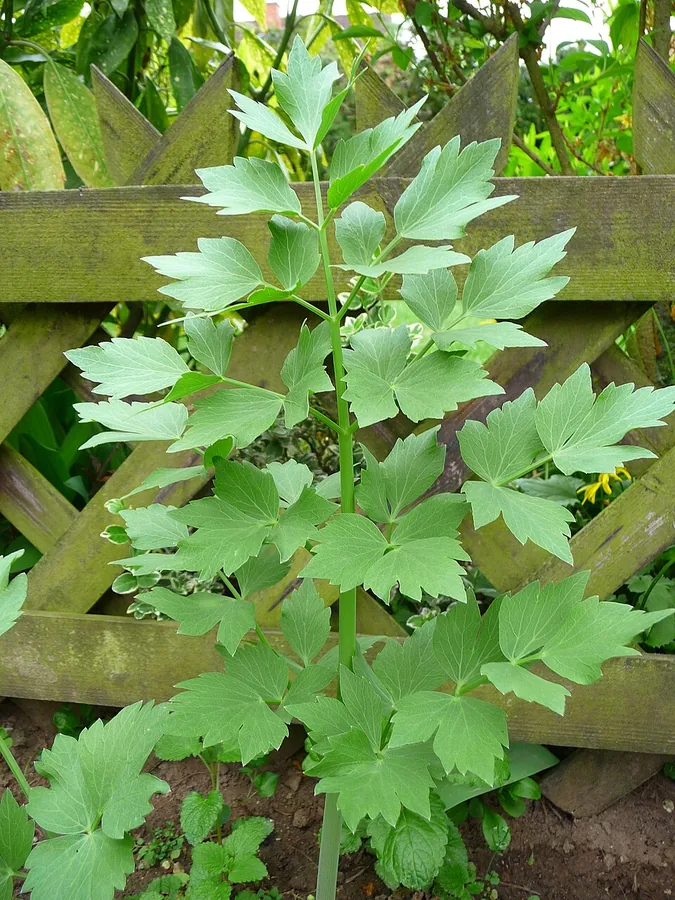
Lovage is a tall, hardy perennial herb that tastes like celery with the volume cranked way up. It sits in the same family as carrots and parsley, and it grows from a deep crown, coming back every year with hollow stems and glossy, divided leaves. Honestly, one plant is usually all a kitchen ever needs.
Just be ready to give it room, because this herb gets big. By midsummer it can hit 4 to 6.5 feet (120 to 200 cm) and spread a good couple of feet wide, then send up airy yellow-green flower heads that tower over everything nearby. Want it to behave? Tuck it at the back of a border or into a corner where its size won't crowd out the smaller stuff.
The best part is that lovage barely asks for anything once it's settled in. It laughs off brutal winters, comes back stronger each spring, and it's forgiving if you're still learning. Keep the soil rich and the roots moist, and the leaves, stems, and seeds all pull their weight in the kitchen.
Care
The short version: full sun or a bit of shade, deep fertile soil kept evenly moist, and plenty of room for a herb that grows shoulder-high. Give it a feed in spring and split the crown every few years, and it'll stay happy.
Light
Lovage loves full sun, but it's totally happy in partial shade too, which comes in handy where summers get hot. A little afternoon shade keeps those tall leaves from scorching, though you'll get the fullest, most generous growth out in an open, sunny spot.
Water
Keep the soil consistently moist, because this big herb is a thirsty one and wilts fast the moment it dries out. Water it deeply when things get dry, about every 3 to 7 days depending on the heat, but don't let the ground stay soggy or the crown will start to rot.
Soil
Plant it in deep, fertile, moisture-holding loam with plenty of organic matter mixed in. Lovage isn't picky about pH and does just fine anywhere from 6.0 to 7.5, as long as the soil stays rich and the roots stay damp without sitting in water.
Temperature
This is one tough, cold-hardy herb, taking winters down to -29°F (-34°C) and summers up to 86°F (30°C). When it gets cold it just dies back to the crown, then pushes out fresh new growth again come spring.
Humidity
Regular outdoor humidity suits it fine, roughly 40% to 70%, and there's really no number to chase here. What matters way more is moisture at the roots and a bit of air moving around the leaves.
Feeding
Give it a single feed in spring, either a balanced fertilizer or a top-dressing of compost or aged manure. That one seasonal boost is enough to see this hungry herb through the year and power all those broad leaves and tall stems.
Pruning
Cut back the flowering stalks to keep the tender leaves coming, and snip off the flower umbels before they set seed if you'd rather it didn't spread. Pick the outer leaves as you go, and shear the whole plant back after it flowers to bring on a fresh flush of foliage.
Repotting
Lovage gets too big to keep in a pot for long, so it's really happier in the ground. Instead, just freshen it up by dividing the crown every 3 to 4 years, which keeps the leaves full-sized and the stems nice and thick.
Size & spacing
Expect a big plant, 4 to 6.5 feet (120 to 200 cm) tall and 2 to 3.3 feet (60 to 100 cm) wide. Give it a clear spot at the back of the bed so it doesn't end up shading the smaller herbs.
When to plant
Lovage runs on the seasons and doesn't mind the cold one bit, staying hardy from zone 3 to zone 9. Start it indoors in late winter or sow it fresh in autumn, move the young plants outside in spring once the frost's gone, and keep snipping leaves and stems all through the season while those tall flower heads come up in early summer.
Northern hemisphere
Southern hemisphere
Typical months for a temperate climate: start earlier in warm zones, later where spring frosts linger.
- Sow: Late winter to early spring, 6-8 weeks before last frost (fresh seed germinates best)
- Plant: Spring, after the last frost when soil has warmed
- Harvest: Harvest leaves and stems through the growing season; tall yellow-green flower umbels appear early to mid summer, followed by seed
Hardiness
USDA hardiness zones: 3–9
Temperature: down to -40°C
Troubleshooting
Lovage hardly ever gives you grief, and when it does, it usually shows up on the leaves or those tall stems. Catch it early and a quick fix normally does the job. Just find what matches below and step in before it spreads.
Wilting plant with a soft, brown crown at the base
If the plant's wilting and the base has gone soft, brown, and mushy, that's crown and root rot, and it shows up when the soil stays soggy and water sits around the base. The crown turns squishy and smells off, and the roots go black down below. Sadly there's no rescuing tissue that far gone, so sort out the drainage, cut away or replace the sick plant, and ease off on the watering going forward.
Fix:
- Improve drainage
- Remove affected tissue or replace plant
- Avoid overwatering
Tall stems flopping or snapping after a storm
Here's the thing: lovage shoots up on hollow stems that get top-heavy, so once the flower stalks fill out, a strong wind or a soaking rain can tip them over or snap them. The trick is to stake or cage the tall stems before they reach their full height, and it helps to trim back a few of the flowering shoots so there's less weight up top. Pop it somewhere out of the worst wind, too, and you'll save yourself a lot of the trouble.
Fix:
- Stake or cage tall stems
- Cut back flowering stalks to reduce height and weight
Pale squiggly trails or nibbled holes on the leaves
So what's leaving those marks? The pale, winding tunnels are leaf miner grubs munching around inside the leaf, the ragged holes are usually celery worms, which are the green swallowtail caterpillars, and any soft clumps on the new tips are aphids. It's an easy fix: pull off and toss the damaged leaves, pluck the caterpillars off by hand, and either hose the aphids away or dab on a bit of insecticidal soap.
Fix:
- Remove and destroy mined or infested leaves
- Handpick caterpillars
- Spray aphids off with water or use insecticidal soap
Toxicity
Lovage is a kitchen herb that's safe for people and pets alike, with no toxin in the leaves, stems, or seeds. The only thing to keep in mind is the sap, which holds furanocoumarins that can leave sensitive skin sun-sensitive after you handle a big batch, so it's smart to wear gloves and rinse off when you're out in bright sun.
Safe for
People · Cats · Dogs · Horses · Rabbits · Livestock · Birds
Cats Safe
Good news for cat owners, this herb is a safe one to have around. If a cat munches a big pile of the strong, aromatic leaves it might get a quick tummy ache, but that's really the worst of it.
Dogs Safe
Dogs are fine around lovage, so there's no need to fence it off. A big mouthful might just give them a bit of gas or a loose stool, and that'll clear up on its own.
Horses Safe
Horses can graze it no problem, since the leaves don't carry any toxin. That said, one that really goes to town on the pungent foliage might just decide it's a little too strong.
Rabbits Safe
Rabbits can tuck into the leaves safely. Just start them off with a little at a time, like you would with any new green, so their tummy can get used to it.
Livestock Safe
Goats, sheep, and cattle can all browse lovage without coming to any harm. There's simply nothing in it that poisons grazing animals.
Birds Safe
Backyard hens and pet birds have nothing to worry about here. A nibble of the leaves or a taste of the seed won't hurt them one bit.
People Safe
The leaves, stems, and seeds are all kitchen favorites and totally safe to eat. The only catch? The furanocoumarins in the sap can leave sensitive skin sun-sensitive after handling, so it's worth wearing gloves and rinsing off on a bright day.
The foliage and sap contain furanocoumarins; skin contact with the sap followed by sun exposure can cause mild phytophotodermatitis (photosensitivity) in sensitive handlers. Wear gloves and wash hands after handling large quantities, especially in bright sun.
Helpline numbers

United States
ASPCA Animal Poison Control: (888) 426-4435 (fee applies)

United Kingdom
Animal PoisonLine: 01202 509000 (fee applies)

Australia
Animal Poisons Helpline: 1300 869 738
Varieties
With lovage there's basically just one species to learn, not some long list of named types, so it keeps things nice and simple.
Levisticum officinale (species)
There's really just the one to know, the standard culinary species, and it's easy to spot by its hollow, deeply celery-flavored stems and glossy, deeply cut leaves.
How to propagate
Lovage is an easy one to make more of, whether you sow fresh seed or split an old clump into new plants.
SeedEasy
Late summer/early autumn when seed is fresh, or late winter to early spring indoors · 2-3 weeks to germinate; one full season to establish
Here's a quirk worth knowing: lovage seed goes stale fast, so it's best sown fresh in late summer or early autumn, or started indoors in late winter to early spring. Rather than burying it, just press it onto the surface, because a bit of light nudges it along, and you'll usually see seedlings in 2 to 3 weeks with a full season before the plant's really settled.
DivisionEasy
Early spring or autumn · One growing season
Got an older clump? It'll pull apart easily in early spring or autumn. Just lift the crown and cut it into chunks, making sure each piece hangs onto both roots and growth buds, and the divisions will find their feet over a single growing season.
Myths
Lovage is just celery going by another name.
Sure, they both taste strongly of celery, but they're genuinely different plants. Lovage is a tall perennial herb, Levisticum officinale, while real celery is the annual Apium graveolens, a totally separate genus and species that just happens to share the Apiaceae family. Side by side, they look and grow nothing alike.