Ornamental · Poaceae
Annual Ryegrass
Lolium multiflorum
Sow it in fall and annual ryegrass gives you fast cover, hungry roots, and a stand that mostly bows out by spring.
Full sun
Every 3–7 days
50–120 days
USDA 6–9
Overview
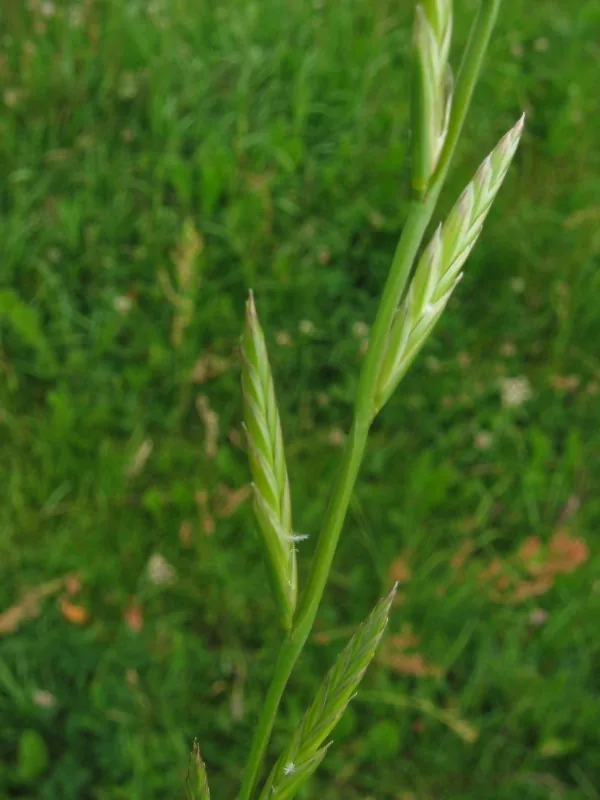
Need bare ground covered in a hurry? Annual ryegrass is the cover crop folks grab first. It's a cool-season bunchgrass from the genus Lolium, sporting bright, glossy leaves, and it sprouts and roots faster than just about anything else you can sow. Gardeners and farmers grow it to hold soil over winter, mop up leftover nitrogen, and feed grazing animals.
Just don't mix it up with cereal rye or with its perennial cousin. This one's a true annual, so it lives its whole life in a single season, throwing up flower spikes in spring and dying back when the heat or cold rolls in. And that short life? It's actually the point, because a cover crop that wraps up on its own saves you a termination pass.
The thing to keep an eye on is how it loves to spread. Annual ryegrass sets seed heavily and can be stubborn to kill, so it'll sneak into fields and edges as a weedy volunteer if you let a stand mature. Manage the timing and it works for you; ignore it and, well, it works against you.
Care
The short version: sow it shallow into moist soil in full sun, keep it watered while it settles in, and it'll handle most soils all by itself. Mow no closer than 3 to 4 inches, and end it at early bloom before it seeds.
Light
Annual ryegrass loves full sun but takes partial shade just fine. More light gets you a thicker, faster stand, which is exactly what you want from a cover crop racing to blanket bare ground.
Water
It wants steady soil moisture to come up fast and settle in, and it sulks when things get dry. A long stretch of heat and drought will do it in, though it handles wet and even briefly flooded soil better than most cover crops, so a soggy patch isn't the end of the world.
Soil
Honestly, few grasses are this laid-back about where they grow. It takes clay, loam, sand, rocky, and high-organic soils across a wide pH of 5.0 to 7.5, though it grows best in rich, moist, well-drained loam.
Temperature
This is a cold-hardy grass that runs from about 10°F to 81°F (-12°C to 27°C). It loves cool weather and backs off once summer heat shows up, which is exactly why it's sown for fall and spring.
Humidity
Outdoor humidity? Not something to worry about, so there's no number to hit. What matters way more is moisture in the soil, the thing that fuels its quick germination and early growth.
Feeding
Most of the time it needs no feeding at all, because it scavenges leftover soil nitrogen instead of living off fertilizer. Toss in a nitrogen source at planting only when the soil's genuinely poor.
Pruning
Mow to keep it as living mulch or temporary turf, but never closer than 3 to 4 inches. When you're done with it, terminate at early bloom by mowing, tilling, or a contact herbicide, since mowing alone might not finish off an established stand.
Repotting
none
Size & spacing
Sown as a stand rather than spaced-out plants, it grows 1 to 3 feet (30 to 91 cm) tall, with each plant taking up only about 8 to 12 inches (20 to 30 cm). The seeding rate, not the spacing, decides how dense it ends up.
When to plant
Since it's a cool-season grass, annual ryegrass works the shoulders of the year, not the dog days of summer. Direct sow it from late summer into fall to overwinter in mild zones, or go with early spring, and in cold country get it down at least 40 days before the first killing frost. When the flower spikes pop up in spring? That's your cue to terminate before seed sets.
Northern hemisphere
Southern hemisphere
Typical months for a temperate climate: start earlier in warm zones, later where spring frosts linger.
- Sow: not typically started indoors; direct sown
- Plant: Late summer to early fall (late July through October) for overwintering in mild zones, or early spring; in zone 5 and colder sow at least 40 days before first killing frost
- Harvest: Flower spikes in spring; terminate before seed set. As a cover crop, biomass is produced over fall, winter and spring.
Hardiness
USDA hardiness zones: 6–9
Temperature: down to -23°C
Troubleshooting
With annual ryegrass, trouble is less about disease and more about timing and control. The big things to watch are letting it seed, losing a stand to winter or drought, and a thin start from dry ground. Find what matches what you're seeing below and act before a little problem spills into next year's crop.
It keeps showing up as a volunteer
Let a stand flower and finish its seed, and guess what? You've set yourself up for headaches next season. One plant scatters about 300 seeds that sprout like crazy, and here's the kicker: a mower won't finish the job, especially since some populations laugh off glyphosate. So end it at early bloom by disking, plowing, or spraying a contact herbicide before any seedheads ripen.
Fix:
- Terminate at early bloom before seed set by disking, plowing, or a non-persistent contact herbicide
- Use a chaff/seed collection system at harvest if grown to seed nearby
- Repeat control passes since seeds germinate in both fall and spring across a wide temperature range (36 to 104 degrees F)
Brown bare spots over winter
What's going on here is usually winterkill, and it bites hardest in zone 5 and colder when there's no snow to tuck the crowns in. Summer heat and drought above roughly 80°F (27°C) thin things out the same way. So sow early enough for the roots to dig in before the cold, at least 40 days before that first killing frost, and if you actually wanted a cover that quits on its own? Then the dieback is doing you a favor.
Fix:
- Reseed bare areas in mild zones, or accept winterkill where a self-terminating cover is desired
- Plant early enough (at least 40 days before first killing frost) so plants establish before cold
Thin, patchy stand after sowing
Nine times out of ten it's just dry soil, because the seed wants steady moisture to come up quick, and seed buried too deep can't punch through to the light. So sow it shallow, 1/4 to 1/2 inch deep, and water it in if the rain's a no-show. And stick to a sensible rate, around 10 to 20 lb per acre drilled or 20 to 30 lb broadcast, and those bare spots knit right back together.
Fix:
- Sow at 1/4 to 1/2 inch depth and ensure rainfall or irrigation for good establishment
- Use proper seeding rates (10-20 lb/acre drilled, 20-30 lb/acre broadcast)
Toxicity
As a lawn or cover crop, annual ryegrass is safe around cats and dogs, who at worst get a mild upset stomach from chewing grass. The real heads-up is for horses and grazing livestock: ryegrass that's picked up fungal endophytes carries alkaloids that cause ryegrass staggers, a tremor and incoordination thing. Just graze or cut it before the seedheads form.
Toxic to
Horses · Rabbits · Livestock · Birds · People
Safe for
Cats · Dogs
Horses Moderate
This is where you've got to pay attention. A horse grazing endophyte-infected ryegrass can come down with ryegrass staggers, meaning muscle tremors, a stiff or jerky walk, and stumbling that gets worse the second the horse is stressed or asked to move. And those ergot alkaloids in the seedheads? They tighten up the blood vessels too.
Rabbits Caution
Plain ryegrass is everyday rabbit food, but here's the catch: the same fungal alkaloids that bother grazing livestock can pile up in older, seedy growth. So keep rabbits clear of heading or endophyte-affected stands and give them young, clean grass instead.
Livestock Moderate
Cattle, sheep, and goats on affected pasture can get the same staggers from lolitrem B, trembling and going down when they get worked up or try to run. The ergovaline that rides along with it squeezes the blood vessels and drags down how they do.
Birds Caution
Ryegrass seed shows up in tons of bird diets and isn't a known poison. The one question mark? Ergot in mature seedheads, so it's smart not to let birds gorge on heavy, fungus-marked grain.
People Caution
No part of this grass is meant for eating, so there's nothing here to cook up. For people the real annoyance is the pollen, that classic trigger of hay fever come late spring.
Cats None
No need to fret about cats, because the grass isn't toxic and the ASPCA doesn't flag it at all. If a curious cat chews a blade or two, it might cough a bit back up, and honestly that's the whole story.
Dogs None
Dogs can romp on it as a lawn or cover crop, no problem. A mouthful of the leaves does nothing worse than the mild, here-and-gone tummy upset any grass might cause.
Safe as a lawn, forage, or cover-crop grass around pets; the foliage itself is non-toxic to cats and dogs. For pastured horses and livestock, manage endophyte- and ergot-affected seedheads - cut or graze before heading and avoid feeding affected, mature ryegrass.
Helpline numbers

United States
ASPCA Animal Poison Control: (888) 426-4435 (fee applies)
Poison Control: (800) 222-1222



Canada
Poison Centres: 1-844-764-7669
Varieties
A few different types go by the ryegrass name, and they don't all act the same. Here are the ones worth telling apart before you grab seed.
Annual / Italian ryegrass (Lolium multiflorum)
This is the speedy cover-crop and forage type, a short-lived cool-season bunchgrass with bright, glossy leaves that usually winterkills once cold zones turn harsh.
Perennial ryegrass (Lolium perenne)
It's a close cousin grown for turf and pasture that keeps coming back year after year, unlike the annual Lolium multiflorum that calls it quits each season.
Westerwolds annual ryegrass
It's a true-annual form of Lolium multiflorum that flowers and sets seed in its very first season without needing a cold spell, which makes it great for fast, single-season cover or forage.
Diploid vs tetraploid types
Tetraploid cultivars have doubled chromosomes that hand them bigger, juicier leaves and seeds plus tastier grazing, while diploids settle into denser, finer stands.
How to propagate
There's just one way to grow annual ryegrass, from seed sown straight into the ground, and honestly it couldn't be much easier.
SeedEasy
Late summer to early fall for overwintering, or early spring; sow at least 40 days before first killing frost in cold zones · Germinates and establishes very quickly, often within 1-2 weeks in moist cool soil
There's really only one way to grow it: from seed sown right into the ground, never indoors. Want it to overwinter? Sow in late summer to early fall, or go with early spring instead, and in cold zones get it down at least 40 days before the first killing frost. Broadcast at 20 to 30 lb per acre or drill at 10 to 20 lb per acre, just 1/4 to 1/2 inch deep, into moist soil, and it'll sprout and take hold within a week or two.
Myths
Annual ryegrass is the same plant as cereal rye.
They share a word in their names, and that's pretty much it. Annual ryegrass is Lolium multiflorum, a fine-leaved forage and turf bunchgrass, while cereal rye is Secale cereale, the tall, super cold-hardy grain that ends up in bread. Two different grasses from two different genera, so the seed and growing tips for one just won't carry over to the other.