Ornamental · Poaceae
Cereal Rye
Secale cereale
Sow it late, let it green up the off-season, and it builds your soil while smothering winter weeds.
Full sun
USDA 3–8
2–6 ft · 0.5–1.8 m
Overview
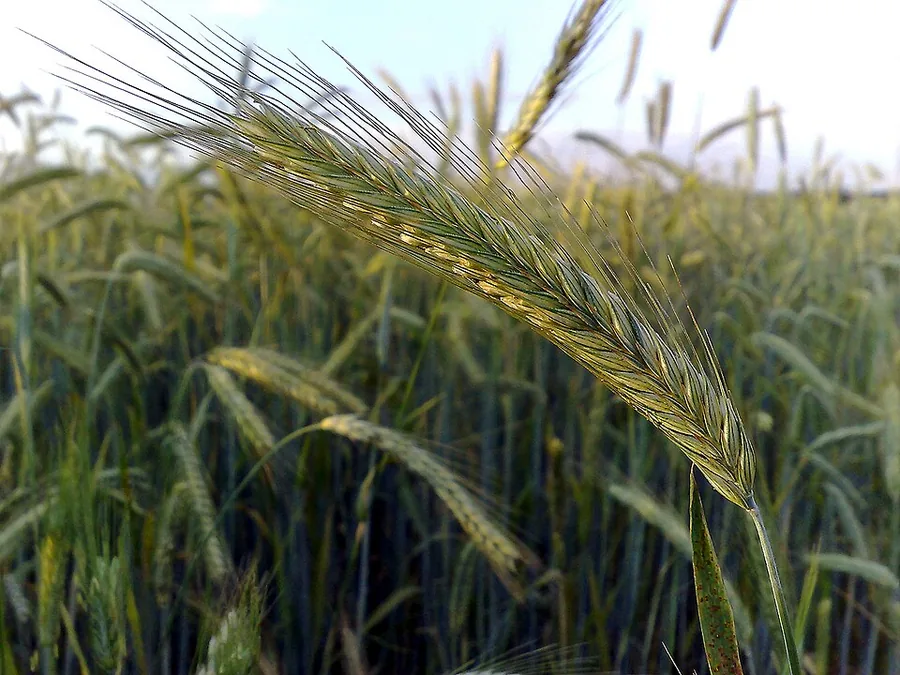
Think of cereal rye as the workhorse of cover crops, a tough annual grass that's cousin to wheat and barley. So why do gardeners keep coming back to it? Because hardly anything stops it: it sprouts in cold soil, doesn't mind poor ground, and overwinters farther north than any other cover crop. Scatter it over a bare bed in fall and it'll green up the dead months and hold the fort until spring.
What really earns rye its keep is the stuff happening below and above the soil. Those dense roots grab leftover nitrogen before winter rain can wash it away, and the thick top growth shades out weeds. Then, as it breaks down in spring, it leaves behind organic matter plus a chemical residue that holds back germinating weed seeds, a neat trick called allelopathy.
Here's the catch, though: that same vigor means timing is everything. Kill it on schedule and you get clean soil and a tidy mulch, but let it run to seed and you've basically planted a weed. Most of the job is watching the calendar, not fussing over care.
Care
The short version: sow it in fall into full sun and just about any soil, let the rain handle watering, skip the fertilizer completely, and plan to kill it at flowering before it sets seed.
Light
Give rye full sun and you'll get the fullest stand and the thickest weed-smothering growth. It'll put up with a bit of shade, but an open, sunny bed is really where it does its thing.
Water
Rye pretty much runs on natural rainfall and barely needs watering once it's up. It shrugs off dry spells and drought better than wheat does, so you can sow it and mostly just leave it be.
Soil
Honestly, few cover crops are this easy to please. Rye grows in loam, sand, heavy clay, even shallow rocky and poorly drained ground, and it outperforms other cover crops on infertile, sandy, or acidic soil. Anything from a pH of 5.0 to 7.0 works fine.
Temperature
This one's a cold-season grass through and through. It'll germinate at temps as low as 34°F (1°C) and keep growing in cool weather up to around 86°F (30°C), which is exactly why you can sow it so late and it still settles in before winter.
Humidity
Regular outdoor humidity is all rye wants, so there's nothing to fuss with here. Good airflow in a thick stand helps keep foliar disease down, though rye hardly ever runs into it anyway.
Feeding
Don't bother fertilizing cereal rye. Grown as a soil-builder, it gets no feed at all, and instead it scavenges the nitrogen already in the soil, mopping up nutrients that'd otherwise leach away over winter.
Pruning
Rye isn't really pruned, it's terminated. Once it flowers in spring, mow it, roll or crimp it flat, or till it under to kill it before it sets seed, which stops it reseeding and heads off nitrogen tie-up in the next crop.
Repotting
none
Size & spacing
Sown thick as a cover crop, rye makes one solid stand instead of spaced-out plants, so there's no spacing to sweat. It climbs from a low fall clump up to 1.5 to 6 feet (45 to 180 cm) tall by spring before you cut it down.
When to plant
Rye works on a fall-to-spring clock, which is backwards from most garden plants. Sow it late, even once the first cold has set in, and it'll germinate in chilly soil and overwinter as a low clump. Then come spring? It shoots up fast, and that growth spurt is your cue to terminate it before the seed heads show up.
Northern hemisphere
Southern hemisphere
Typical months for a temperate climate: start earlier in warm zones, later where spring frosts linger.
- Sow: Not started indoors; direct-sown.
- Plant: Late summer through fall (later than most cover crops); to midwinter in zones 8 and warmer.
- Harvest: Bolts and heads in spring; terminated before seed set rather than harvested.
Hardiness
USDA hardiness zones: 3–8
Temperature: down to -40°C
Troubleshooting
Rye barely gets bothered by pests or disease, so most of its problems come down to timing instead of care. Kill it too late and you trade an easy cover crop for a woody mess that shortchanges the next planting. Look over the signs below and act before the seed heads set.
Rye you left too long goes woody and stubborn
Let the crop push past flowering and things get awkward: the stems stiffen up and turn fibrous, the plant digs in and resists being killed, and whatever seed it drops sprouts as a weed next year. Then there's nitrogen tie-up, where that woody residue borrows soil nitrogen while it rots and leaves the next crop hungry. So mow, roll, or till it at flowering, do it at least 10 to 14 days before you plant, and hand the following crop a little starter nitrogen to even things out.
Fix:
- Terminate at the right stage by mowing, rolling/crimping, or tilling at flowering before seed set
- Terminate at least 10-14 days before planting the following crop to allow decomposition
- Add starter nitrogen or apply nitrogen early to the following crop to offset immobilization
Tiny seeds sulk if you sow right after rye
Wondering why the carrots came up thin? That's allelopathy at work, where breaking-down rye residue puts out compounds that hold germination back. Small seeds like carrots, lettuce, and onions feel it most, while transplants and big seeds barely notice. Good news is it doesn't last, usually clearing up inside about 30 days. So give it two to three weeks before you direct-seed the small stuff, or just lean on transplants and large-seeded crops for now.
Fix:
- Wait about 2-3 weeks (allelopathy generally tapers off within roughly 30 days) before sowing small-seeded crops
- Use transplants or large-seeded crops, which are far less susceptible
- Allow rye residue to decompose before direct-seeding small crops
Live rye can pass pests to the next grass crop
Here's a sneaky one: living rye can act like a green bridge, giving insects and pathogens a place to hang out before they stroll onto a following grass crop like corn or wheat. It's worst when you plant into rye that got killed just a few days back. So kill the rye well before that next grass crop goes in, and let the old residue die off, and there's nothing left for the pests to camp on.
Fix:
- Terminate rye well ahead of planting the next grass crop to break the green bridge
- Allow time between termination and planting so the host residue declines
Toxicity
Cereal rye is a food grain and forage grass, not a poison, so it's safe to have around pets, kids, and most grazing animals. The one thing to keep an eye on is ergot, a fungus that can get into the seed heads and make the grain toxic if it's eaten in quantity, which mostly matters for livestock and horses on heavily headed rye. Clean foliage and screened grain? No worries there.
Safe for
People · Cats · Dogs · Horses · Rabbits · Livestock · Birds
Cats None
Cats are totally fine around it. If one chews a grassy blade, nothing bad happens, because the leaves don't carry anything toxic.
Dogs None
Dogs have nothing to worry about here. It's a food-crop grass, so a dog nibbling it won't get anything worse than a mild upset stomach if it eats way too much.
Horses Caution
Clean rye pasture and forage are just fine for horses. The one thing to watch is ergot: heads with the fungus carry alkaloids that, eaten in bulk, can mess with circulation, cause lameness, and cause trouble for pregnant mares, so keep horses off heavily headed, ergot-spotted rye.
Rabbits None
Rabbits can happily graze the green blades. It's a safe grass forage, and there's nothing toxic in the leaves.
Livestock Caution
Cattle, sheep, and goats graze rye all the time as regular forage. The catch is ergot in mature seed heads, where those dark sclerotia hold alkaloids that can cause ergotism, so keep them off ergot-infected grain rather than the leafy growth.
Birds None
Rye grain is a bird favorite, and the plant's safe for poultry and wild birds alike. Clean seed and foliage give them no trouble at all.
People Safe
Rye is an everyday food grain, ground into flour for bread and safe to eat. The only thing to skip is ergot-contaminated grain, which gets screened out of food rye anyway, so don't eat harvested grain showing dark sclerotia.
Like other cereal grasses, rye seed heads can occasionally be infected by ergot (Claviceps purpurea), a fungus whose dark sclerotia produce toxic alkaloids that can cause ergotism in livestock and people if contaminated grain is eaten; this is a grain-consumption concern, not a risk from the cover-crop foliage. Rye pollen can also be a mild seasonal allergen.
Varieties
Most cereal rye just gets sold as plain cover-crop seed, but a handful of named cultivars are bred for certain climates and jobs. Here are the ones worth knowing.
Aroostook
It's a super cold-hardy, early-maturing northern type, and one of the go-to cover-crop ryes all through the mid-Atlantic and cooler regions.
Wheeler
It's a well-liked mid-Atlantic cover-crop pick, a tetraploid that came out of breeding work in Michigan.
Elbon
It's a southern type made for Oklahoma and Texas, and its roots pull double duty as a trap crop against root-knot nematodes, plus it heads about two weeks before Abruzzi.
Wrens Abruzzi
Bred in Georgia for the Southeast, it does great down there, but it doesn't handle the cold North very well.
How to propagate
There's really only one way to grow rye, and lucky for you it's the easy one: drop the seed straight onto the soil. It's so cold-tolerant that you can sow it long after most plants have packed it in for the year.
SeedEasy
Direct-sow in late summer to fall, later than most cover crops; germinates and establishes in cold soil. · Germinates quickly in fall and establishes before winter; resumes fast growth in spring.
Growing rye couldn't be simpler: you just sow the seed right onto the ground, and it's the most cold-hardy cover crop out there. Put it down in late summer or fall, later than pretty much anything else, and it sprouts fast in cool soil and settles into a low clump before winter. That's the whole trick, really, because being that tough is why you can sow it so late and still count on it greening up and taking off again in spring.
Myths
Cereal rye and ryegrass are the same plant.
Nope, they just share the word rye and that's it. Cereal rye is Secale cereale, the tall, hardy one that pulls double duty as a cover crop and a bread grain, while ryegrass is in the genus Lolium and gets grown mostly for lawns and forage. They're two different grasses, and ryegrass really doesn't belong in a vegetable garden.
Sources
- NC State Extension Gardener Plant Toolbox
- USDA SARE - Managing Cover Crops Profitably
- Penn State Extension
- Iowa State University Extension - Integrated Crop Management
- Kansas State University Agronomy eUpdate
- Texas A&M AgriLife Extension - Bexar County
- ASPCA Animal Poison Control - Toxic and Non-Toxic Plants