Bulb · Liliaceae
Crown Imperial
Fritillaria imperialis
Tall spring bulbs topped with nodding bells and a stubborn skunky scent that voles quickly learn to leave alone.
Full sun
Every 7–14 days
USDA 5–8
3–4 ft · 0.9–1.2 m
Overview
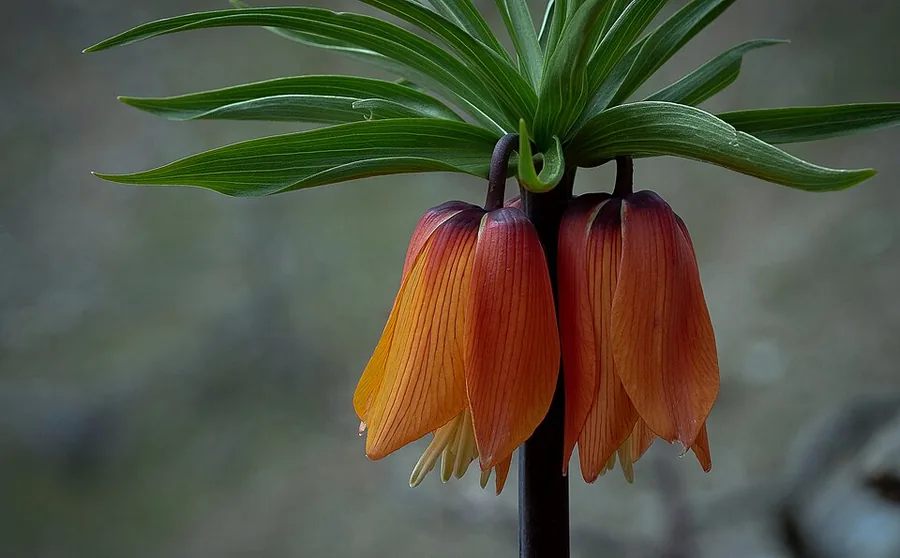
Crown imperial towers over just about every other spring bulb, pushing up a thick stalk 3 to 4 feet (91 to 122 cm) high, crowned with a ring of drooping bells and a leafy tuft that looks a bit like a pineapple. It's part of the lily family and comes from the rocky slopes of the Middle East and the Himalayas. Give it a home at the back of a border, where that early color really pulls its weight.
The whole plant puts out a strong skunky, musky smell, and believe it or not, that's a good thing. The scent keeps voles, mice, and other diggers away from the bulbs. It also means you'll probably want it set back a little from a path or doorway, so you're not brushing past that smell every day.
This is a bulb that just wants to be left in peace. It takes its time getting established, then flowers for years, and it really hates being dug up, so choose the spot carefully. Nail the drainage and plant the bulb the right way, and crown imperial turns into one of those easygoing plants that shows up every spring without asking for a thing.
Care
The short version: give it full sun and deep, rich soil that drains sharply. Keep it evenly moist while it's growing in spring, then let it dry out once the leaves fade, and don't go digging it up.
Light
Crown imperial blooms best in full sun, but it'll put up with a little afternoon shade where springs run warm. Give it too much shade, though, and you'll get tall, floppy stalks and fewer bells.
Water
Keep the soil evenly moist while it's growing in spring, watering every 7 to 14 days if the rain isn't keeping up. Once the leaves die back in early summer, stop watering and let the bulb dry out, since soggy soil is exactly what rots it.
Soil
It wants deep, rich, well-drained loam or clay loam with plenty of organic matter worked in. A pH somewhere between 6.0 and 7.5 works well, and honestly sharp drainage matters most of all, because standing water will finish off the bulb.
Temperature
This is a tough, cold-hardy bulb that copes with -20°F to 75°F (-29°C to 24°C). It actually needs that winter chill to bloom and doesn't mind hard frost, but it isn't a fan of hot, humid summers.
Humidity
Regular outdoor air suits it just fine, so there's no number to chase. What matters more is air moving around the leaves, because crowded, damp foliage is an open invitation to leaf spot and rust.
Feeding
Mix in a balanced bulb fertilizer or some compost when you plant in fall, then feed again in early spring as the shoots break through. That seasonal top-up is all the feeding it really needs to flower nicely.
Pruning
Snip off the spent flower stalk once it's finished, but leave the leaves alone until they turn yellow and die back by themselves. Those fading leaves are busy sending next year's flower back down into the bulb.
Repotting
Crown imperial would rather be left alone. Only lift and divide a clump every 3 to 5 years, and only when flowering starts to drop off or the bulbs get too crowded.
Size & spacing
Each stalk climbs to 3 to 4 feet (91 to 122 cm) tall and spreads roughly 12 to 18 inches (30 to 46 cm) wide. Space the bulbs 9 to 12 inches apart so the clumps have breathing room and air can flow between them.
When to plant
Crown imperial follows the bulb's own schedule, so let it lead. Plant in fall while you can still work the soil, watch the shoots come up early, and enjoy those bells right through mid to late spring before the whole thing dies back and rests underground for the summer.
Northern hemisphere
Southern hemisphere
Typical months for a temperate climate: start earlier in warm zones, later where spring frosts linger.
- Plant: Plant bulbs in fall, 6 inches deep and 9-12 inches apart, positioned sideways to prevent water collecting in the stem cavity
- Harvest: Mid to late spring, April to June
Hardiness
USDA hardiness zones: 5–8
Temperature: down to -29°C
Troubleshooting
Most crown imperial problems either begin down at the bulb or turn up on the leaves once it's growing. Spot the early clues and you can jump in before things spread. Find what matches below, then step in while it can still make a difference.
When the bulb turns to mush and nothing sprouts
You're looking at bulb rot, and it usually comes down to wet ground or a bulb sitting upright so water settles into the stem cavity. Dig up one you're worried about and the tissue around the central hole will be brown and smell bad. Toss whatever's far gone, put the firm ones back on their side in soil that drains fast, and mix in some grit so water keeps moving.
Fix:
- Discard severely rotted bulbs
- Replant healthy bulbs on their side in sharply drained, raised soil
- Improve drainage with grit or organic matter
Streaky, mottled leaves on a plant that's slowing down
Blotchy light-and-dark patterning that stays put no matter what you do is a sign of mosaic virus, and aphids usually bring it in. Once a plant's got it, there's no fixing it. So pull the sick ones and destroy them, keep those sap-suckers under control, and clean your tools between plants so it doesn't hitch a ride.
Fix:
- Remove and destroy infected plants to limit spread
- Control aphid vectors
- Disinfect tools between plants
Rusty bumps and blotches showing up on the foliage
That's leaf spot and rust, a pair of fungal problems that move in when leaves stay wet and packed together. Flip a leaf over and you'll spot raised, rusty bumps, so snip off anything marked. Open the plants up for more air and keep water off the leaves, and the trouble tends to fizzle out.
Fix:
- Remove and destroy affected foliage
- Improve air circulation
- Avoid overhead watering
Toxicity
This one really is worth taking seriously. Every part of crown imperial holds steroidal alkaloids, and the bulb is the riskiest bit, packed with imperialine and related compounds. Eat it and you're in for vomiting and stomach pain, and a big enough dose can upset the heartbeat, so keep bulbs away from pets, livestock, and kids. That strong skunky smell puts most animals off, but don't count on it every time.
Toxic to
Cats · Dogs · Horses · Rabbits · Livestock · Birds · People
Cats Toxic
Bite into a bulb and a cat will usually drool first, then bring on vomiting and diarrhea. Take in more of the alkaloids and it can turn weak and sluggish.
Dogs Toxic
Dogs love to dig at the bulbs, which is the problem. Swallowing one leads to drooling, a queasy stomach, and vomiting, and a big mouthful can knock the heartbeat off its rhythm.
Horses Toxic
Those bulb alkaloids upset a horse's stomach, and in any real amount they can mess with the heart. So keep crown imperial well away from where horses graze.
Rabbits Toxic
This isn't rabbit food. Even one small nibble of bulb or leaf can start a rabbit drooling and turn it off its meals, with diarrhea not far behind.
Livestock Toxic
Cattle, goats, and sheep that break into the bulbs can end up with an upset gut and, with enough of the alkaloids on board, trouble with the heart's rhythm.
Birds Toxic
Count the bulbs and foliage as off-limits, because the very alkaloids that harm mammals can make a bird sick if it pecks at them.
People Caution
None of this plant is meant to be eaten. Chew a fresh bulb and you'll get vomiting and belly pain, and a large dose of the alkaloids can reach the heart, so keep bulbs out of reach of kids.
All parts of the plant have a strong skunky or musky odor, which usually discourages tasting; wash hands after handling bulbs.
Helpline numbers

United States
ASPCA Animal Poison Control: (888) 426-4435 (fee applies)
Poison Control: (800) 222-1222



Canada
Poison Centres: 1-844-764-7669
Varieties
A handful of named crown imperial forms turn up more than the rest, plus one much smaller relative that's nice to know about. So here's what to keep an eye out for.
Rubra
This is the crown imperial everyone pictures, with its circle of nodding bells in burnt orange running toward deep vermilion red.
Lutea
Want gold instead of orange? This one blooms in clear yellow bells that really brighten up a spring border.
Fritillaria meleagris (Checkered Lily)
A far smaller relative, only 8 to 12 inches, with nodding bells checkered in purple, red-brown, and white, sort of like a guinea hen's feathers.
How to propagate
Crown imperial is slow to multiply, and the patient routes work out a lot better than seed. Here's how each one goes and roughly how long you'll be waiting.
Offsets & pupsModerate
Lift and separate offset bulblets in late summer to fall when foliage has died back · 1-3 years to reach flowering size
Your best bet for more plants is to dig up the clump in late summer or fall, once the leaves have died back, and gently break off the little offset bulbs. Be careful with them, since they bruise easily and a bruised bulb rots, and figure on 1 to 3 years before an offset is big enough to flower. And yes, the bulbs and foliage come with that strong skunky, musky smell.
DivisionModerate
Divide established clumps in fall every few years · 1-2 seasons
Once a clump starts feeling crowded, lift it in fall and split it up, doing this every few years. Get each piece back in the ground right away at the right depth, laid on its side so water can't collect in the bulb, and it'll be flowering again within 1 to 2 seasons.
SeedDemanding
Sow fresh seed in fall · Slow; 4-6 years or more from seed to first bloom
Seed is the long game here. Sow fresh seed in fall and it's 4 to 6 years, sometimes more, before you see a single flower, so most folks go with offsets or division instead.
Myths
Crown imperial bulbs are edible because people say they can be eaten after cooking.
The fresh bulbs are poisonous and hold steroidal alkaloids, even if extension sources call the poison severity low. Don't treat this as a food plant, and handle the bulbs as toxic, keeping them away from pets and children.