Bulb · Liliaceae
Oriental Lily
Lilium
Tall, richly scented summer blooms that perfume a whole garden, with just one hard rule: keep them away from cats.
Full sun
Every 3–7 days
USDA 3–9
1–6 ft · 0.3–1.8 m
Overview
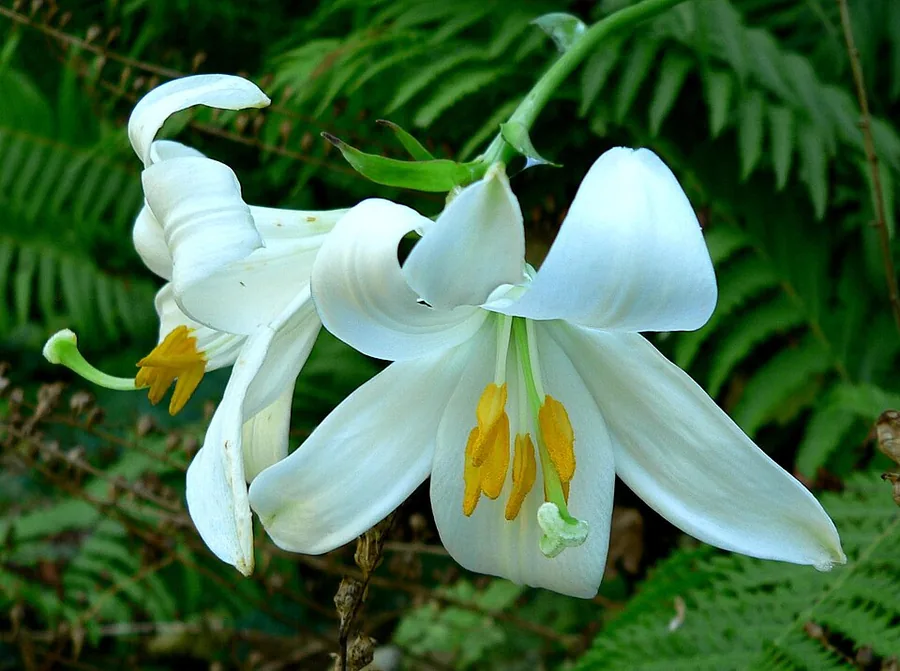
Oriental lilies are the big, fragrant lilies of high summer, and you'll usually smell them before you even spot them. They grow from bulbs in the genus Lilium, and they trace back to species from Japan that breeders crossed into the showy hybrids people plant now. Stargazer is the one most folks picture, but honestly the whole group shares those same upright stems and big, heavily perfumed flowers.
These are hardy perennials, so they come back year after year from the same bulb and spread slowly into clumps as they go. In a good spot the stems can hit 6 feet (183 cm), holding their blooms well up above the rest of the border in mid to late summer. They take a couple of seasons to really find their feet, and then they put on their best show once the clump has settled in.
There's one thing every cat owner has to know before planting, and it's a big one. Oriental lilies are deadly to cats, way more than to any other animal, and the danger's real enough to rule them out of some homes completely. But plant them with that in mind and they're otherwise an easy, generous plant that doesn't ask for much beyond sun and soil that drains.
Care
The short version: full sun with maybe a little afternoon shade, planted deep in rich soil that drains freely, kept evenly moist with the roots mulched and cool, and a light feed early in spring.
Light
Give Oriental lilies full sun and you'll get the best flowering, though they'll take a little partial shade through the hottest part of the day just fine. The classic trick is sun on the flowers and shade on the roots, and that's exactly where a good mulch earns its keep.
Water
Keep the soil evenly moist but never waterlogged, because standing water is what rots the bulbs. Water every 3 to 7 days depending on the weather, and lay down some mulch to hold that moisture in and keep the roots cool right through summer.
Soil
Plant them in fertile, humus-rich soil that drains freely, on the acidic to neutral side at a pH of 5.5 to 7.0. They won't put up with alkaline ground at all, so test first if you're not sure and work in plenty of organic matter.
Temperature
Oriental lilies handle a wide range, from about 30°F to 84°F (-1°C to 29°C), and the bulbs are tough enough to overwinter right in the ground across their zones. They're fine with summer heat too, as long as the roots stay cool and moist.
Humidity
Average outdoor humidity suits them, so there's really no figure to chase here. Airflow matters way more than moisture in the air, because it's crowded, damp foliage that lets botrytis get a foothold.
Feeding
Go easy on the feeding. A balanced fertilizer in early spring, right as the new growth pushes up, is all they need for the whole season, and piling on more won't do a thing.
Pruning
Deadhead the spent flowers, and on cut stems snip the anthers off so the pollen doesn't stain everything it touches. Let the foliage die back on its own, since that's what feeds the bulb for next year, then cut the stems down in fall.
Repotting
Divide a clump every 3 to 4 years in fall once it's gone dormant, and that keeps the blooms from shrinking. Bulbs in containers like a refresh every few years too, and thin flowering, crowded clumps, or bulbs heaving up to the surface are your cue that it's time.
Size & spacing
Stems run anywhere from 1 to 6 feet (30 to 183 cm) tall depending on the cultivar, with a spread of 1 to 3 feet (30 to 91 cm). Give each one a bit of room so air can move around, and stake the tallest stems if they start to flop.
When to plant
Lilies run on a bulb's clock, and it's a pretty simple one. Plant the bulbs in fall or early spring, about 6 inches deep, let them root and push up stems through spring, and the flowers show up from mid to late summer, with some cultivars carrying on into fall.
Northern hemisphere
Southern hemisphere
Typical months for a temperate climate: start earlier in warm zones, later where spring frosts linger.
- Plant: Plant bulbs in fall or early spring, about 6 inches deep
- Harvest: Mid to late summer, some cultivars into fall
Hardiness
USDA hardiness zones: 3–9
Temperature: down to -40°C
Troubleshooting
Most lily trouble either starts underground or turns up during a wet spell, so that's where to look first. Keep an eye on the bulbs and the lower leaves, because that's where rot and disease dig in before anything else. Match what you're seeing below, and jump on it before it works its way up the plant.
Mushy bulbs and stems that just never show up
So nothing came up, and the bulb feels soft? That's bulb rot, and nine times out of ten it's the soil staying too wet. A bulb that's stuck in soggy ground just sits there until fungus moves in and finishes it. Pull out anything mushy and bin it, dig some compost through the bed to loosen it up, and pop the firm bulbs back somewhere the water actually drains away.
Fix:
- Improve drainage by amending soil with organic matter
- Remove and discard rotted bulbs
- Replant healthy bulbs in raised or better-drained sites
Brown or gray spots and a bit of fuzzy mold after rain
When the leaves are packed in tight and stay damp, botrytis tends to show up, and it's a gray mold that spots the foliage and softens the stems through a wet patch. Snip off whatever's marked and get rid of it, don't just toss it on the pile. Then give the plants some breathing room and water them down at the base, because dry leaves are what keep the spores from spreading.
Fix:
- Remove and destroy affected foliage
- Improve air circulation and spacing
- Avoid overhead watering
Chewed-up leaves and buds with little red beetles on them
See a bright red bug on your lilies? That'll be the lily leaf beetle, and its larvae can chew through leaves and buds in a hurry. The fix is low-tech: just pick the adults and grubs off by hand every time you walk past. Aphids love the buds too, so knock them off with a blast from the hose or a shot of insecticidal soap, and keep an eye out through spring and early summer before they really get going.
Fix:
- Handpick beetles and larvae
- Spray aphids off with water or treat with insecticidal soap
- Monitor regularly through the growing season
Toxicity
Okay, this plant comes with a serious warning. Oriental lilies are catastrophically toxic to cats, and even a trace of pollen or a sip of the vase water can cause fatal kidney failure, so they really have no business being in a home with cats. They're much gentler on dogs and horses, and they're no real danger to people, but the cat risk is the thing that decides everything.
Toxic to
Cats · Dogs · Horses · Rabbits · Livestock · Birds
Safe for
People
Cats Severe
Here's the one that actually kills, so it's worth reading twice. Any bit of the plant, a lick of pollen off the fur, or a sip of vase water can shut a cat's kidneys down, and the early signs are so easy to miss: throwing up, going right off food, and turning droopy and tired. Give it a day or two and that turns into acute kidney failure, which goes fatal fast without emergency help, so a vet trip really can't wait.
Dogs Caution
Dogs get off pretty easy next to cats, thankfully. If one chews on the plant, you'll probably see some drooling and vomiting, but the kidneys aren't in danger, and most dogs bounce back once it's out of their system.
Horses Caution
A horse that has a nibble of the leaves might get a mild stomachache and a bit of drool going. It's more uncomfortable than actually dangerous, but there's still no good reason to let one graze on it.
Rabbits Caution
Extension sources say lilies aren't safe for rabbits, so don't hand over the leaves, stems, or flowers. Keep pots and any cut stems well out of the way of a rabbit that's got the run of the house or garden.
Livestock Caution
Cattle, goats, and sheep are better off away from lily plantings, since grazing the foliage can leave them with an upset gut. Just fence off any bed where the bulbs are growing and you're set.
Birds Caution
Pet birds shouldn't be nibbling the leaves or blooms either. Treat the whole plant, pollen and all, as strictly off limits anywhere near a cage.
People Safe
Good news for you: Oriental lilies aren't a poisoning risk for people, and there's no part you need to eat or steer clear of for safety. The pollen does stain skin and clothes though, so brush the anthers off cut stems, and wash your hands after handling if there's a cat at home.
Keep all parts of the plant and any cut stems, fallen pollen, and vase water completely out of reach of cats; even brushing against pollen and grooming it off the fur can poison a cat. Wash hands after handling.
Helpline numbers

United States
ASPCA Animal Poison Control: (888) 426-4435 (fee applies)

United Kingdom
Animal PoisonLine: 01202 509000 (fee applies)

Australia
Animal Poisons Helpline: 1300 869 738
Varieties
There are loads of named Oriental lily hybrids out there, but a handful keep showing up. These are the ones worth knowing by name.
Stargazer
It's the famous one, with crimson-pink blooms that look right up at the sky, edged in white and dusted with orange pollen, and it opens a bit earlier than most other Oriental lilies.
Rubrum (Lilium speciosum var. rubrum)
It's a fragrant Japanese show lily, and you'll know it by the white-and-pink spotted petals that curl right back on themselves.
Casa Blanca
It's the one people grow for those big, pure white, outward-facing flowers and a heady scent that drifts clear across the garden.
How to propagate
Lilies multiply so easily from the bulb itself that hardly anyone bothers with seed. Each route below just trades a little speed for how soon you get flowers, so take your pick.
Bulbs & cormsEasy
Fall when dormant · 1-2 growing seasons to flowering size
The easiest way in? Lift a dormant bulb in fall, peel a few of the fleshy outer scales off it, and pot those up. Each scale grows its own little bulblet, and they'll reach flowering size in one to two seasons.
Offsets & pupsEasy
Fall · 1-2 seasons
Established bulbs make their own little offset bulblets without any help from you. Come fall, just separate them from the parent and replant each one about three times its own height deep, and they'll fill out over one to two seasons.
DivisionEasy
Fall when dormant · 1 season to reestablish
Got a clump that's gotten crowded? Dig it up in fall while it's dormant and just pull it apart into smaller pieces. The divisions settle right back in and bloom again the next season.
SeedDemanding
Fall or spring · Several years to flowering
Seed is the slow lane, sown in fall or spring if you've got the patience for it. Seedlings take several years to reach blooming size, so honestly most people just stick with bulbs.
Myths
A cat has to eat the leaves to be poisoned, so pollen and vase water are harmless.
Nope, every part of a true lily is toxic to a cat, not just the leaves. A cat can poison itself just by grooming a few grains of pollen off its coat or taking a drink from the vase, and even a tiny, indirect exposure can trigger fatal kidney failure.
Lilies are equally dangerous to cats and dogs.
Not even close, honestly. True lilies cause severe, often fatal kidney failure in cats specifically, while a dog that eats one usually gets nothing worse than a quick upset stomach, with no kidney harm at all.