Ornamental · Poaceae
Japanese Forest Grass
Hakonechloa macra
Give it shade and steady moisture, and this grass spills over the edge of a bed like water tumbling down.
Partial shade
Every 3–7 days
USDA 5–9
12–18 in · 30–46 cm
Overview
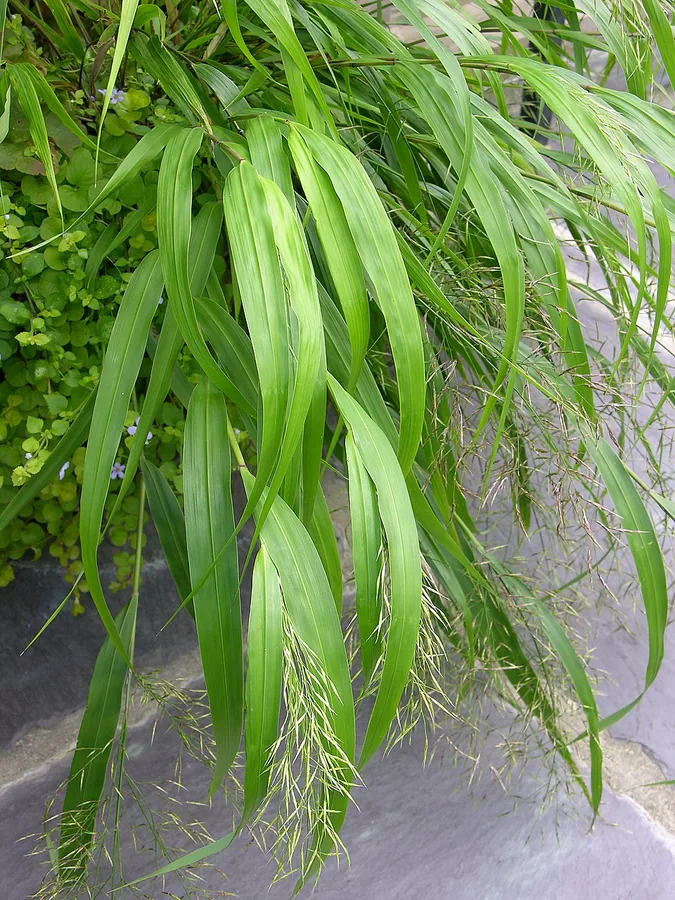
Here's a grass that flips the usual script, because Japanese forest grass wants shade, not sun. It comes from the wooded mountains of Japan, where it grows on damp, rocky slopes, and it brings that same soft, cascading mound to a shady corner of the yard. All the blades lean the same way, so a stretch of it looks just like green water pouring downhill.
It grows slowly and stays nice and low, only about 12 to 18 inches (30 to 46 cm) tall, which makes it easy to tuck along a path or at the front of a shade bed. The gold and variegated types, like the popular Aureola, brighten up those gloomy spots where a lot of plants just won't grow. And the green ones? They turn fiery red and orange before they fade off for winter.
Once the spot's right, this one's genuinely easy. Keep the soil rich and evenly moist, keep it out of that harsh afternoon sun, and it pretty much takes care of itself. The one thing that'll test you is its pace, since a young clump takes a few years to really settle in and spread.
Care
The short version: partial to dappled shade, soil kept rich and evenly moist, and one cut back in late winter. Give it slightly acidic ground, keep it out of hot afternoon sun, and be patient while a slow clump fills in.
Light
This one likes partial to dappled shade, which is what sets it apart from most ornamental grasses. It'll handle full shade and a little morning sun just fine, but hot afternoon light scorches the blades. The gold and variegated forms hold their best color in bright shade, not deep gloom.
Water
Keep the soil consistently moist, because this is a moisture lover that scorches the second the ground dries out. Heat and sun just make it thirstier. So water deeply through dry spells and lay down mulch to keep that moisture around the roots.
Soil
Go with humus-rich, well-drained ground that's a little on the acidic side, somewhere around a pH of 5.5 to 6.5. Work in plenty of compost and it'll feed the slow roots while helping the soil stay evenly damp without getting soggy.
Temperature
It's really tough in the cold, hardy down to about -20°F (-29°C), and it takes summer heat up to around 84°F (29°C) just fine. Heat on its own isn't the issue; it's heat plus dry soil or strong sun that burns the leaves.
Humidity
Regular garden humidity works, so there's no number to hit. What matters way more is steady soil moisture, and that's what keeps the leaf tips from going crispy.
Feeding
Feed it once in spring with a balanced fertilizer, or just top-dress the crown with compost or organic matter. That one seasonal feed is all it takes to keep a clump healthy and growing.
Pruning
Cut the old foliage right down to the ground in late winter or early spring, before the new shoots poke up. It dies back all the way and gives you nothing over winter, so that single clean cut a year is really the only pruning you'll do.
Repotting
Lift and divide a clump every 2 to 3 years, or whenever the center gets congested and starts dying out. If you also see reduced vigor or roots heaving the crown, that's your cue to split it and replant.
Size & spacing
Plants get to 12 to 18 inches (30 to 46 cm) tall and spread 18 to 24 inches (46 to 61 cm) wide. Give each clump that much elbow room and just let the slow grower fill the gap on its own over a few seasons.
When to plant
There's no harvest to chase with this grass, just an easy rhythm to follow. Plant it out in spring, cut the old foliage right to the ground in late winter before the new shoots come up, and keep an eye out for its quiet yellow-green flower spikes in late summer.
Northern hemisphere
Southern hemisphere
Typical months for a temperate climate: start earlier in warm zones, later where spring frosts linger.
- Plant: spring
- Harvest: late summer (July to August), inconspicuous yellow-green flower spikes
Hardiness
USDA hardiness zones: 5–9
Temperature: down to -29°C
Troubleshooting
Almost every problem with Japanese forest grass boils down to the wrong amount of light or soil that's gotten too dry, and the leaves will tell you which. So read them, find the match below, and tweak the spot or the watering before the clump starts looking rough.
A clump that hardly grows from year to year
Wondering why it's barely spreading? It's just slow growth, which is totally normal for this grass, since it settles in over a few seasons instead of taking off right away. Dry or thin soil slows it down even more. So hang in there, keep the ground rich and evenly moist, top-dress with compost each spring, and mulch the crowns over winter so frost doesn't push them up.
Fix:
- Be patient; it is a slow grower that establishes over several years
- Maintain rich, evenly moist soil and a spring top-dress of compost
- Mulch crowns over winter to prevent frost heaving
Crispy brown leaf tips and washed-out blades
Seeing crispy tips and bleached edges? That's sun scorch, and it happens when the grass gets too much hot, direct sun or the soil dries out in the heat. The gold and variegated types take it the hardest, especially in blazing afternoon light. Just move the clump into part or dappled shade, keep the soil steadily moist, and toss down some mulch to hold that moisture in.
Fix:
- Move or site in partial to dappled shade, giving only morning sun in hot climates
- Keep soil consistently moist and mulch to conserve moisture
- Water deeply during heat and drought
Gold that's faded to a flat lime green
If the gold and variegated forms have gone dull and started flopping open instead of mounding up, they're sitting in too much shade. And here's the surprise: the answer is more light, not less. Move the colored ones into bright dappled shade or a spot with morning sun, and the gold perks back up while the clump firms into a tidy mound. Save the really deep shade for the green forms, since they don't need bright leaves anyway.
Fix:
- Move gold and variegated forms to brighter dappled shade or morning sun for best color
- Accept that color is most vivid in part shade, not deep shade
Ragged holes chewed right through the leaves
Ragged holes in the blades usually mean slugs, which love the damp, shady spots this grass calls home. You'll spot irregular holes and slime trails, and it gets worse after a rainy stretch. Pick the slugs off by hand or put out some controls, clear away the debris they hide under, and open up the clumps so air can move through. Other than the occasional slug, this grass really doesn't get any serious pests.
Fix:
- Hand-pick slugs or use slug controls
- Reduce excess debris and improve air circulation around clumps
Toxicity
Good news if you've got pets or kids around. Japanese forest grass is not toxic and doesn't show up on the ASPCA's poison lists, so a nibble of the blades won't hurt anyone. The worst you might see is a bit of mild vomiting, same as with any grass, or some sneezing from grass pollen if someone's already prone to allergies.
Safe for
People · Cats · Dogs · Horses · Rabbits · Livestock · Birds
Cats None
No need to fuss over the cat. If it chews a blade or two it might bring a little back up, like grass tends to do, but there's nothing poisonous in it.
Dogs None
A nosy dog is totally fine here, since there's nothing toxic to worry about. Worst case, a mouthful of leaves gives it a little mild vomiting, which is just the usual grass thing.
Horses None
Horses can graze near it no problem, because it's just an ordinary, non-toxic grass.
Rabbits None
Rabbits are welcome to hang around it, since there's nothing harmful in the foliage if they nibble.
Livestock None
Cattle, goats, and sheep are all fine around it, since the grass doesn't carry any toxic compounds.
Birds None
It's harmless to birds, whether they nest in the blades or peck at the seed heads.
People None
Kids and adults are safe around it. The only thing to keep in mind is grass pollen, which can set off allergies in folks who are already sensitive to it.
Not poisonous, but pets that nibble grass foliage may occasionally vomit, and grass pollen can trigger allergies in sensitive individuals.
Varieties
There's a handful of cultivars out there, and they mostly split by leaf color and how brightly they glow in the shade. Here are the ones worth knowing about.
Aureola
This 2009 Perennial Plant of the Year has gold leaves striped with narrow green, and it keeps its best color when you give it part shade.
All Gold
All Gold goes with solid bright golden-yellow blades that stand up more upright and spiky than the arching Aureola.
Beni Kaze
Its name means red wind, and those green blades turn red and gold as soon as fall shows up.
Nicolas
Nicolas is a compact green pick that flares into fiery orange and red once autumn rolls in.
How to propagate
To get more Japanese forest grass, you split an established clump. It's slow but dependable, and spring is the time to do it.
DivisionEasy
Spring, just as new foliage emerges · Slow; clumps need 2 to 3 years between divisions and are slow to fill in
Want more of this grass? Dividing a clump is the easy way to do it, and it's also the only sure way to keep a cultivar's color true. Split the clumps in spring as the new foliage pushes up. Don't rush, since these grasses need 2 to 3 years to fill back in between divisions. You can grow it from seed too, but those seedlings won't hold onto the parent's coloring.
Myths
All ornamental grasses need full sun.
Not this one, though. Japanese forest grass is one of the few grasses that actually likes shade, and it's a real winner in a shady bed where other things sulk. Hot, full sun scorches it, but give it partial to dappled shade and you'll get its best color and that lovely cascading shape.