Ornamental · Ranunculaceae
Meadow Rue
Thalictrum rochebruneanum
Tall, slender stems, airy clouds of flower, and soft height and motion for the shady end of a border, that's meadow rue.
Partial shade
Every 5–10 days
USDA 4–7
4–6 ft · 1.2–1.8 m
Overview
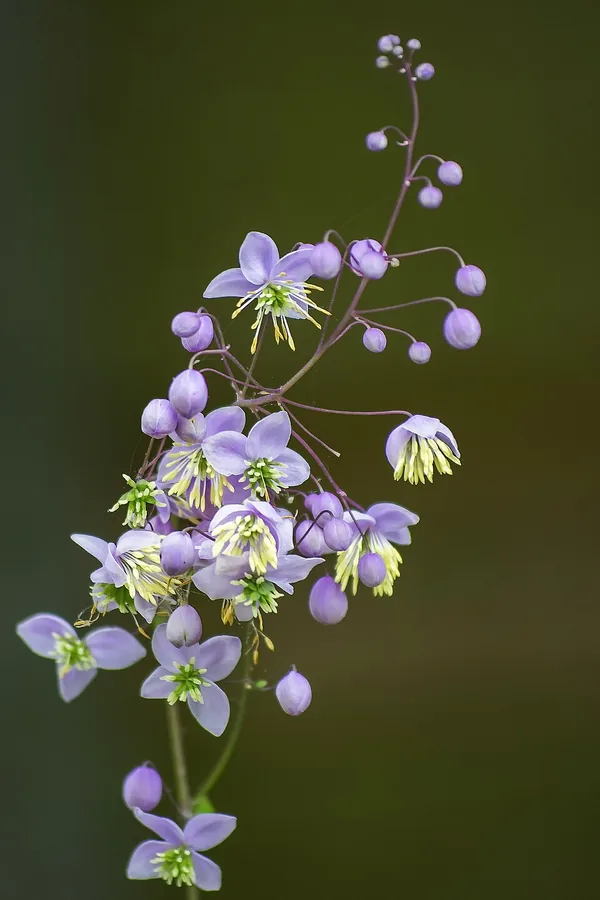
So what's the appeal of meadow rue? It's that mist of tiny flowers it lifts way up over lacy, columbine-like foliage. It's a clump-forming perennial in the buttercup family, and while the stems shoot up over head height on some types, the whole thing still looks light and see-through. Pop it at the back of a border and you can look right through it to whatever's growing behind.
The nice part is that it's an easy plant once you've found the right spot for it. Give it part shade and steady moisture and it's happy, but leave it in dry, baking sun and it'll sulk. It does great in the cooler, damper corners of a garden across zones 4 through 7, and after that it barely asks for a thing.
One heads-up before it goes in the ground, though. Meadow rue is in the same family as the buttercups, so its sap is an irritant, and no part of it is food, no matter what that common name might suggest. Think of it as something to look at rather than handle bare-handed, and you're all set.
Care
The short version: part shade, rich soil that stays reliably moist, and some afternoon shade if your summers get hot. Stake the tall types early, cut it right down in late fall, and only divide the clump once it starts crowding itself.
Light
Meadow rue is happiest in part shade, and it'll only take full sun where the soil stays moist and the summers stay mild. In hot spots, give it afternoon shade, because that harsh midday sun really does scorch the leaves.
Water
Keep the soil consistently moist but never soggy, watering about every 5 to 10 days, and a bit more when it's dry. Plants in full sun drink more than the shaded ones, and a thirsty plant in the heat? That's the one that scorches first.
Soil
Give it rich, humusy, well-drained loam that holds moisture without turning into a swamp. It's not picky about pH at all, growing just as happily in acid, neutral, or alkaline ground, so the texture matters way more than the chemistry.
Temperature
Meadow rue is tough as nails in the cold, shrugging off winter down to about -29°F (-34°C) and handling summer warmth up to around 86°F (30°C). Where it struggles isn't the cold at all, it's hot, humid weather, and that's exactly when afternoon shade earns its keep.
Humidity
Regular outdoor humidity is plenty, so there's no number to chase here. What actually matters is air movement, since still, muggy air around crowded leaves is what invites powdery mildew and rust.
Feeding
Work a bit of compost or a balanced feed into the soil as growth kicks off in spring, and that's usually it for the whole year. Rich, humusy ground handles most of the feeding, so heavy fertilizer is honestly just wasted on this one.
Pruning
Cut the spent flower stems back after bloom to keep it tidy, then cut the whole plant to the ground in late fall or early spring. The tall species often want a stake, while the sturdy-stemmed types stand up just fine on their own.
Repotting
Meadow rue would rather stay put, and it really doesn't like being disturbed. Divide the clump only every 3 to 4 years, in spring while it's dormant, and only when crowded, declining growth or smaller leaves are telling you it needs a refresh.
Size & spacing
In flower, these plants hit 4 to 6 feet (122 to 183 cm) tall, with slim stems rising up from a much lower mound of leaves. Give each clump about 2 to 3 feet (61 to 91 cm) of room so the air can move and the foliage stays dry.
When to plant
Meadow rue runs on the rhythm of a cold-winter garden. Sow fresh seed in fall or start it indoors in late winter, set the young plants out after the spring frost's gone, and the airy flowers open up from midsummer into early autumn.
Northern hemisphere
Southern hemisphere
Typical months for a temperate climate: start earlier in warm zones, later where spring frosts linger.
- Sow: Late winter to early spring; fresh seed germinates best, so fall sowing of fresh seed is also effective.
- Plant: Spring after frost, or fall.
- Harvest: July to September
Hardiness
USDA hardiness zones: 4–7
Temperature: down to -34°C
Troubleshooting
Good news: meadow rue is a healthy plant, and most of its troubles come down to stale air or summer heat, nothing scary. Catch the early signs on the leaves and stems and you can step in well before a fungus or a hot spell really takes hold.
Crispy, drooping leaves when summer turns hot
Here's the thing: meadow rue really doesn't enjoy hot, humid weather, and it'll burn in full afternoon sun, especially once the soil dries out. So give it some afternoon shade if your summers get brutal, and keep the ground evenly moist. A little mulch does double duty here, holding the moisture in and keeping the roots cool.
Fix:
- Provide afternoon shade in hot climates
- Keep soil evenly moist
- Mulch to conserve moisture
A white powdery film showing up on the leaves
What you're looking at is powdery mildew, a fungus that moves in when the air around the plant goes still and damp. The trick is to thin and space things out so a breeze can get through, and to keep the water off the leaves while you're at it. Pull off the worst leaves and bin them, because the compost heap just keeps them around.
Fix:
- Improve air circulation by thinning and spacing plants
- Avoid overhead watering
- Remove and discard affected foliage
Little orange-brown bumps under the leaves
Those raised spots are rust, and like most fungi it loves leaves that stay wet and crowded. Just pick off the spotted ones and get rid of them, then loosen the clump so the rest can dry out faster after it rains. And when you water? Aim low, right at the base, never over the top.
Fix:
- Remove and destroy infected leaves
- Improve air circulation
- Avoid overhead irrigation
Tall stems leaning over once the flowers open
This is just top-heavy growth, and it tends to hit older plants harder, or ones grown in too much shade or wind. Your best move is to slip a support in early, before they start to lean, since a flopped stem hardly ever stands back up. Give them a bit more light and the stems come in sturdier, and honestly the toughest types don't need any help at all.
Fix:
- Stake or provide support for tall stems
- Site in adequate light to promote sturdier stems
Toxicity
Just handle meadow rue with a little care and you're fine. Like the rest of the buttercup family, its sap holds protoanemonin, an irritant that can redden skin and upset the stomach if any part gets chewed. Nothing on it is edible, so keep the leaves and cut stems away from pets, livestock, and kids, and slip on gloves when you prune.
Toxic to
Cats · Dogs · Horses · Rabbits · Livestock · Birds · People
Cats Mild
If a cat chews a leaf, you might catch it drooling and pawing at its mouth, maybe with a bit of vomiting or a loose stool. Good news though: that bitter, peppery sap usually puts them off before they get very far.
Dogs Mild
A dog that bites into a stem might drool, get a sore mouth, and have a quick bout of vomiting or diarrhea. The taste is harsh enough that most dogs quit after that first nibble anyway.
Horses Mild
That irritant sap can leave a horse with a raw mouth and a touch of mild colic if it grazes some, but the flavor is so sharp that horses rarely take more than a taste.
Rabbits Mild
A curious rabbit that nibbles the foliage might wind up with an irritated mouth and slightly soft stool. Most of them leave it alone pretty quick once they hit that acrid sap.
Livestock Mild
Cattle, goats, and sheep can end up with a sore mouth and an upset gut from the protoanemonin in the leaves, though the bitterness keeps them from grazing much at all.
Birds Caution
There isn't a lot of solid info on birds, so it's safest to call it a caution and just keep cut stems and trimmings somewhere they can't get to.
People Caution
None of meadow rue is food, plain and simple. The fresh sap can redden or irritate skin and sting the mouth, so pop on gloves when you cut stems and keep it away from little kids.
Wear gloves when cutting or handling cut stems to avoid sap contact with skin; wash hands after handling and keep cut foliage away from pets and small children.
Helpline numbers

United States
ASPCA Animal Poison Control: (888) 426-4435 (fee applies)
Poison Control: (800) 222-1222



Canada
Poison Centres: 1-844-764-7669
Varieties
A few different meadow rues show up in gardens, from sturdy giants to soft, fluffy-flowered types. Here are the ones worth knowing by name.
Thalictrum rochebruneanum Lavender Mist
This one floats a haze of lavender-purple flowers and yellow stamens up on tall, sturdy stems that hold themselves up just fine without any staking.
Thalictrum aquilegiifolium
Folks call this columbine meadowrue, and it stays shorter at 2 to 3 feet (60 to 90 cm) with fluffy powder-puff heads of pink, purple, or white over columbine-like leaves.
Thalictrum delavayi Hewitt's Double
It carries fully double lavender flowers that keep their color way longer than usual, and that's because they've got no stamens to shed.
How to propagate
Want more meadow rue? You can split an established clump or grow it from seed. Neither one is quick, but both pay off if you're the patient type.
DivisionModerate
Spring while dormant, roughly every 3-4 years. · Divisions may be slow to establish, often a season or more.
Lift the clump in spring while it's still dormant and split the crown, but only bother every 3 to 4 years, once the plant starts crowding itself. Keep the new divisions evenly moist and don't rush them, because they'll often take a season or more to settle in before they look properly established.
SeedModerate
Sow fresh seed in fall, or start indoors in late winter to early spring. · One to several years to reach flowering size from seed.
Sow fresh seed in fall, or start it indoors in late winter to early spring, since fresh seed germinates way better than seed that's been sitting around. Tuck the seedlings into rich, moist, humusy soil and settle in for the wait, because a plant from seed can take anywhere from one to several years to reach flowering size.
Myths
Meadow rue is a true rue and works the same way in herbal recipes.
Easy to see where the mix-up comes from, but the name's misleading. Meadow rue is a Thalictrum in the buttercup family, while true rue is Ruta graveolens, a citrus-family herb they aren't even related to. Meadow rue isn't a cooking or medicinal herb, and its sap is an irritant, so don't go treating the two like they swap out for each other.
Buttercup-family ornamentals like meadow rue are completely harmless to handle.
Not quite. Plants in this family carry ranunculin, and it turns into the irritant protoanemonin the second the tissue gets crushed or chewed. Fresh sap can redden your skin and upset your stomach if you swallow it, so just glove up whenever you're cutting the stems.