Ornamental · Ranunculaceae
Monkshood
Aconitum napellus
Tall blue hooded spikes that earned the name queen of poisons, gorgeous in the border but not one to grab bare-handed.
Full sun
Every 3–7 days
USDA 3–7
3–4 ft · 0.9–1.2 m
Overview
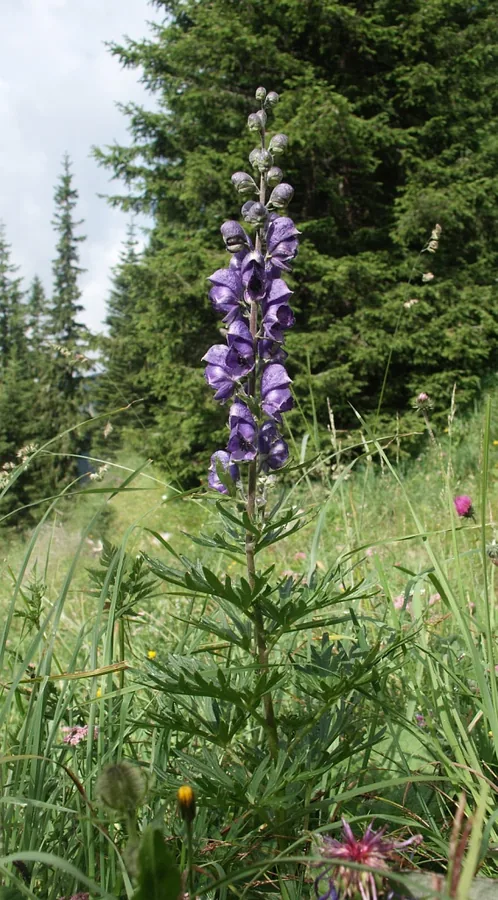
Monkshood really turns heads late in summer, when those tall stems hold up hooded flowers in a deep purplish-blue. Each bloom looks a bit like a cowl pulled over someone's face, and that's exactly where the name came from. It's part of the buttercup family, and it's happiest in cool, moist gardens up in the colder USDA zones.
But here's the thing behind all that beauty: it's one of the most poisonous plants you can grow. Every part holds aconitine, a fast-acting toxin that earned it old names like wolfsbane and queen of poisons. That danger is no joke, so think it over before you plant it anywhere kids, pets, or grazing animals wander.
The upside? It's a slow, long-lived perennial that hates being moved and barely asks for anything once it's settled in. Give it rich, damp, well-drained soil and a little shelter for those tall stems, and wear gloves any time you touch it. Treat it right and a clump will keep coming back for years.
Care
The short version: full sun to part shade in cool climates, soil kept evenly moist but never soggy, rich ground with compost dug in, and gloves on every single time you touch the plant.
Light
Monkshood does best in full sun in cool climates, though it's happy to take some afternoon shade where summers get hot. Too much shade and the stems go weak and floppy, so give it good light plus a bit of shelter.
Water
Keep the soil evenly moist and don't let it dry out, which means watering roughly every 3 to 7 days when things get dry. It hates sitting in water just as much, so drainage matters. And in a hot summer? Steady moisture plus a little afternoon shade keeps it happy.
Soil
Plant it in rich, moist, well-drained ground loaded with organic matter. It's pretty easygoing about pH across a wide band from 5.5 to 7.5, so most garden soil works fine once you've dug in some compost.
Temperature
This one's built for cold places, hardy down to around -35°F (-37°C) and topping out near 84°F (29°C). Real heat is its weak spot, which is exactly why a little afternoon shade helps where summers bake.
Humidity
Ordinary outdoor air is fine, so there's no number to chase here. What matters way more is good air movement, since still, muggy air is what invites powdery mildew onto the leaves.
Feeding
Feed it in spring as growth kicks off, working in a balanced fertilizer or a layer of compost. Just one seasonal feed is plenty for a plant that takes its time like this.
Pruning
Cut the spent flower stalks once they fade to tidy things up and maybe get a second flush, then cut the foliage back after it dies down in fall. Always wear gloves and keep those cut stems and sap off your skin.
Repotting
A settled clump would rather be left alone, so only divide it every 4 to 5 years, and only if it's gotten crowded. Fewer flowers, smaller crowded leaves, or a dead patch in the middle are how it tells you it's finally time.
Size & spacing
Plants get 3 to 4 feet (91 to 122 cm) tall on narrow clumps that spread just 12 to 18 inches (30 to 46 cm) wide. Give each one some room so air can move freely and mildew stays away.
When to plant
Monkshood runs on a cool-season clock, so timing is easy to follow. Sow the cold-treated seed in late winter, or split settled clumps in early spring or fall, and then watch for those tall blue hoods to open in the heat of July and August.
Northern hemisphere
Southern hemisphere
Typical months for a temperate climate: start earlier in warm zones, later where spring frosts linger.
- Sow: Late winter; seed needs cold stratification and germination is slow and erratic
- Plant: Spring after frost, or divide established clumps in early spring or fall
- Harvest: July to August
Hardiness
USDA hardiness zones: 3–7
Temperature: down to -40°C
Troubleshooting
Most monkshood trouble kicks off down at the roots in wet soil, or when the stems are jammed too close together. Catch the early signs, though, and you can step in before you lose a clump. Match up what you're seeing below, and grab gloves before you touch a sick plant.
Crown gone brown and squishy, sinking down near the ground
What's going on here is crown rot, and it shows up when soil stays wet for ages or the clump gets so packed it can't breathe. Slip on gloves, lift out the sorry-looking plants, and toss them, then sort the drainage before anything else goes in. Once that's done, healthy divisions can head back into looser, richer soil.
Fix:
- Remove and discard affected plants (wear gloves)
- Improve drainage and avoid overhead watering
- Replant healthy divisions in better-drained, amended soil
Wilted leaves that just won't bounce back, even after a good drink
If the leaves keep wilting no matter how much you water, it's probably verticillium wilt, a fungus in the soil that clogs the stem from the inside out. Here's the hard part: there's no cure once it's in. Dig out the sick plants and destroy them, and don't put anything vulnerable back in that same spot.
Fix:
- Remove and destroy affected plants
- Avoid replanting susceptible plants in the same soil
- Maintain plant vigor with proper moisture and nutrition
Dusty white film coating the leaves
That chalky coating? It's powdery mildew, a fungus that turns up late in the season once the air gets humid and stops moving. Open the plants up so a breeze can get through, pull off the worst leaves, and try to keep water off the foliage. It looks rough, sure, but it hardly ever does any real damage.
Fix:
- Improve air circulation by thinning or spacing plants
- Remove and discard badly affected foliage
- Avoid wetting foliage when watering
Those tall flower stalks tipping right over after a storm or breeze
Those tall stems get top-heavy, so all it takes is a downpour or a strong gust to tip them over, and a shady or overfed spot just makes them floppier. The trick? Stake them early, before they start sprawling everywhere. Tuck the plant somewhere with a bit of shelter and it'll mostly stand up on its own.
Fix:
- Stake or support taller stems
- Site in a spot with some shelter from strong wind
Toxicity
Treat this plant as dangerous, because honestly, it is. All parts hold aconitine, a poison that can kill cats, dogs, horses, livestock, and people, sometimes within hours of swallowing just a little. The sap even goes through skin, so wear gloves whenever you handle it and keep it well away from animals and kids.
Toxic to
Cats · Dogs · Horses · Rabbits · Livestock · Birds · People
Cats Severe
For a cat, just a few mouthfuls can be deadly. You'll see heavy drooling, vomiting, a wobbly weakness, and hard breathing, and the heart can race or stutter right into a sudden collapse. Any contact at all is an emergency, so don't wait.
Dogs Severe
A dog that chews on any part will drool, bloat, and vomit pretty fast, then go weak and start struggling for air. The real problem is the heart, where the toxin scrambles the rhythm and can bring it to a stop.
Horses Severe
A horse grazing on this ends up salivating, colicky, and shaking with trembling muscles before long. Breathing gets tough and the heartbeat falls out of time, and sadly that can lead to fatal cardiopulmonary failure.
Rabbits Severe
The same aconitine that takes down big animals is every bit as deadly in a little body like a rabbit's. Even one nibble can bring drooling, weakness, and a failing heartbeat, so keep them well away from every part.
Livestock Severe
Cattle, sheep, and goats all get poisoned by the leaves and roots, and there are plenty of documented losses in grazing herds. Expect staggering, a slow heartbeat, and breathing trouble, and too often it ends in death before help shows up.
Birds Severe
Aconitine is a whole-body poison with no safe dose, and birds aren't spared either. Any pecking at leaves, seeds, or roots risks quick weakness and a fatal upset of the heart.
People Caution
No part of this plant is food, full stop. Swallow even a little and you're looking at tingling, numbness, vomiting, and dangerous heart rhythms, and the sap can pass through skin too, so wear gloves and never handle it bare-handed.
Wear gloves whenever handling this plant, avoid skin or oral contact with plant juices and cut stems, cover any open cuts or abrasions, and wash hands thoroughly afterward. Keep away from pets, livestock, and children.
Helpline numbers

United States
ASPCA Animal Poison Control: (888) 426-4435 (fee applies)
Poison Control: (800) 222-1222



Canada
Poison Centres: 1-844-764-7669
Varieties
Most of the monkshood you'll find for sale is the wild blue species, but a handful of named forms change up the color. These are the ones you're most likely to run into.
Album
This one swaps the usual deep purplish-blue for clean white spikes.
Carneum
It gives you pale pink to pinkish flowers, which is a softer look than the wild species.
Bicolor
Its blooms show blue and white together, and you'll often find it sold as Aconitum x cammarum.
How to propagate
Want more monkshood? You've got two options, splitting a clump or sowing seed, and both just need some patience and a pair of gloves from start to finish.
DivisionModerate
Early spring or fall · Often slow to establish; may take a year or more to settle and bloom well
You can split an established clump in early spring or fall, but keep those gloves on the whole time, because the sap's dangerous on bare skin. These plants really don't like being moved, so they'll probably sulk and take a year or more to settle in and bloom well again.
SeedDemanding
Sow in late winter; seed benefits from cold stratification · Slow and erratic germination over many weeks
Sow the seed in late winter after a cold spell to wake it up, and even then it'll come up slowly and unevenly over many weeks. Handle the seed and the little seedlings with gloves, since every part already carries the toxin right from the start.
Myths
Monkshood's only a problem if it's swallowed, so touching it without gloves is totally fine.
Here's the catch: the aconitine in the sap can go straight through your skin, so touching cut stems or juices is a real risk all on its own. Garden and poison folks are clear about it, so wear gloves and avoid all contact, and be extra careful if you've got any open cut.
It's just roots and seeds that carry toxin, so the foliage and blooms won't hurt you.
Nope: every part of the plant is toxic, from the bark and leaves to the flowers, fruit, seeds, roots, and stems. The roots, seeds, and young shoots just happen to hold the most poison, but that doesn't make anything else safe to touch or taste.