Herb · Lamiaceae
Mint
Mentha spicata
Give it steady moisture and a pot of its own, and mint keeps handing you fresh leaves from spring to frost.
Partial shade
Every 2–4 days
59–77°F · 15–25°C
80–90 days
Overview
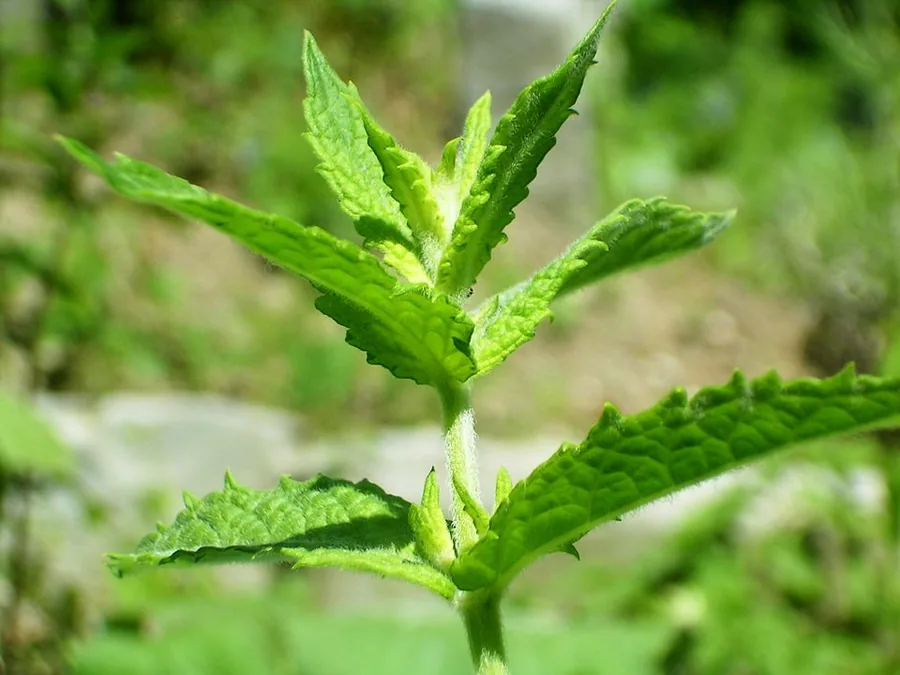
Mint might be the easiest herb you'll ever grow, and that's both the good news and the catch. It's part of the Lamiaceae family, the same square-stemmed crew as basil and sage, and the kind you'll usually run into is spearmint. Crush a leaf and that cool, sweet scent tells you right away what you've got.
So what makes mint stand out? It's a real wanderer. It sends out runners above and below the soil, and each one roots and starts a brand new plant, so a single sprig can fill a bed in a season. All that energy makes it nearly impossible to kill, and that's exactly why most folks grow it in a pot or a sunken, bottomless container instead of letting it loose.
There's more to it than the kitchen, too. It's a hardy perennial, so it comes back year after year in cool and mild spots, it puts up with plenty of neglect, and a few leaves brighten up your tea, salads, and summer drinks. Give it damp soil and a bit of shade and it barely asks for anything else.
Care
The short version: mint likes part shade and rich, evenly moist soil, a pinch back through the season to stay bushy, and a container or edged bed so the runners don't take over.
Light
Mint's happiest in partial shade, especially if your summers get hot, but it'll handle full sun as long as you keep the soil moist. A spot with morning light and a bit of afternoon cover gives you the tenderest, best-tasting leaves.
Water
Keep the soil consistently moist and don't ever let the root zone dry out, because mint wilts fast when it's thirsty. In warm weather or a pot, that means watering every 2 to 4 days, and a little more often if the leaves start to droop.
Soil
Go with rich, moist, well-draining loam and mix in plenty of organic matter. A pH from 6.0 to 7.0 suits it nicely, and that covers most ordinary garden soil anyway.
Temperature
Mint grows best between 59°F and 77°F (15°C to 25°C), which is the cool-to-mild range it came from. It'll take heat if you water it well, but it slows down and toughens its leaves when things get too hot.
Humidity
Average humidity around 40% to 70% keeps mint happy, and outdoor air usually sits right in that range. Dry indoor air, though, invites spider mites, so a potted plant appreciates a little extra moisture nearby.
Feeding
Mint hardly needs feeding at all. A balanced all-purpose fertilizer or a light layer of compost in spring is plenty for the whole season, and overdoing it just waters down the flavor.
Pruning
Pinch the growing tips often to keep it bushy and to grab leaves as you go. Snip off any flower spikes as soon as they show so the leaves keep their best taste, and cut the whole plant back hard after it flowers to bring on fresh tender growth.
Repotting
A potted mint fills up with roots and runners fast, so divide and repot it once a year or whenever the pot's packed. Toss the woody center, keep the strong outer pieces, and start them off in fresh soil.
Size & spacing
Mint gets about 12 to 35 inches (30 to 90 cm) tall and spreads 2 to 4 feet (60 to 120 cm) wide, often wider if nothing stops the runners. So give it plenty of room, or better yet a container, so it doesn't crowd its neighbors.
When to plant
Mint doesn't mind the cold once it's up and going, but young plants like a settled spring first. Start seed indoors 6 to 8 weeks before the last frost, set plants out once the hard frosts are done, and then pick leaves right through the growing season.
Northern hemisphere
Southern hemisphere
Typical months for a temperate climate: start earlier in warm zones, later where spring frosts linger.
- Sow: 6-8 weeks before last spring frost
- Plant: Spring, after danger of hard frost has passed
- Harvest: Harvest leaves throughout the growing season; pinch off flower spikes for the best leaf flavor
Hardiness
USDA hardiness zones: 3–8
Temperature: down to -40°C
Troubleshooting
Mint's a tough plant, so most of its problems come down to wet, crowded leaves, a hot dry spell, or the plant just outgrowing its spot. Find the one that matches what you're seeing and jump on it early, while an easy fix still does the trick.
Orange-brown spots hiding under the leaves
Those little orange spots are mint rust, a fungus that shows up when the leaves stay damp and the air can't move. So what do you do? Pick off the affected leaves and bin them instead of composting, open up the plant so it dries out quicker, and aim your water at the soil rather than the foliage. If it's really bad, just cut the whole thing to the ground and clear away the mess.
Fix:
- Remove and destroy infected foliage (do not compost)
- Improve air circulation by thinning growth
- Avoid overhead watering and keep foliage dry
- Cut affected plants to the ground and dispose of debris in severe cases
Mint wandering off and taking over the bed
Honestly, this is just mint being mint. It creeps outward on underground and surface runners, and if you let it go it'll take over a whole bed in a season. The fix is simple enough: follow the stray shoots back to the runner and dig them out, then keep the plant in a sunken bottomless pot or a deeply edged bed so those runners hit a wall.
Fix:
- Dig out and sever stray runners
- Grow mint in a sunken bottomless pot or contained bed to restrict spread
- Edge the planting deeply to block runner travel
Potted mint running out of steam
A pot of mint fills up with roots and runners faster than just about any herb, and once it's rootbound the soil dries in hours and the leaves shrink. Slide it out of the pot and you'll probably find a thick mat circling around. No big deal, though: split the clump, chuck the woody bit in the middle, and replant the healthy outer pieces in fresh soil.
Fix:
- Divide the clump and replant divisions
- Repot into fresh soil in a larger container
- Discard the woody center and keep vigorous outer growth
Speckled, dusty leaves with a bit of webbing
When it's hot and dry, spider mites love to move in, and they'll suck the leaves until they look pale and dusty. Want to know for sure? Tap a leaf over a piece of white paper and you'll see the tiny specks start to crawl. A good hard blast of water knocks them off, and if you keep the soil damp and the air a little humid they usually don't come back; insecticidal soap is there for the ones that won't quit.
Fix:
- Spray foliage with a strong jet of water to dislodge mites
- Increase humidity and keep soil evenly moist
- Apply insecticidal soap if infestation persists
Toxicity
Mint's a kitchen herb people eat all the time, and it's barely a risk to animals. The essential oils can give a pet a mild stomach upset if it grazes a big amount, so it's worth keeping that in check. The one real warning is pennyroyal, a poisonous relative you never want to mix up with garden mint or grow around animals.
Toxic to
Cats · Dogs · Horses · Rabbits · Livestock · Birds
Safe for
People
Cats Mild
A quick nibble is nothing to worry about, but a cat that really goes to town on the leaves might drool and throw up. It's the essential oils doing it, so the upset stays mild and clears up once the plant's out of reach.
Dogs Mild
Most dogs give it a sniff and move on, so you're usually fine. If yours chews through a whole patch, though, it might get a bit of an upset stomach with vomiting or loose stools, and that normally sorts itself out.
Horses Mild
A horse would have to eat a proper mouthful before it noticed anything. When that happens, the oils bring on some mild colic and loose droppings, but nothing you'd call serious.
Rabbits Mild
A leaf or two is totally fine, but those strong oils can leave a rabbit gassy and loose if it works through a big pile. So keep mint to the odd little treat and you're good.
Livestock Mild
Goats, sheep, and cattle usually give mint a miss because of that sharp smell. But if one does graze a stand, it might get some digestive upset, though it stays pretty minor.
Birds Caution
There isn't much solid info on birds and mint, so it's better to be careful. Just offer a small leaf now and then, and skip the concentrated mint oil altogether.
People Safe
Mint's a kitchen herb, so people eat it fresh, dried, and brewed into tea with zero trouble. The only thing to watch is its lookalike pennyroyal, which really is poisonous, so don't get the two mixed up.
Common garden mint (Mentha spicata) causes only mild GI signs, but its dangerous relative pennyroyal (Mentha pulegium) contains high levels of pulegone and is seriously toxic, capable of causing liver damage in pets and people; do not confuse or substitute the two.
Helpline numbers

United States
ASPCA Animal Poison Control: (888) 426-4435 (fee applies)

United Kingdom
Animal PoisonLine: 01202 509000 (fee applies)

Australia
Animal Poisons Helpline: 1300 869 738
Varieties
There are dozens of mints out there, but only a handful do most of the heavy lifting in the kitchen and garden. These are the ones worth knowing by name.
Spearmint (Mentha spicata)
This is your go-to everyday cooking mint, with bright green pointed leaves and a sweet, mild flavor that's just as good in the kitchen as it is in a cold drink.
Peppermint (Mentha × piperita)
Peppermint's a natural cross between spearmint and water mint, and because it packs way more menthol, it tastes noticeably sharper and cooler.
'Kentucky Colonel' Spearmint
It's a big-leaved spearmint that bartenders grab first whenever they're muddling up a round of mint juleps.
How to propagate
Mint pretty much multiplies itself, so one plant gives you all the copies you'll ever need. Take cuttings or split a clump instead of sowing seed, since seed-grown mint hardly ever tastes like its parent.
DivisionEasy
Spring or early fall · 2 to 4 weeks
Division is the surest way to keep a named mint tasting exactly like its parent. In spring or early fall, just lift a settled clump and pull or cut it into pieces that each have some roots and runners, then pop them back in the ground. Give them a good water and they'll take hold in 2 to 4 weeks and start putting out new growth.
Stem cuttingsEasy
Spring through summer · 1 to 2 weeks to root
Cuttings are about as easy as it gets from spring through summer. Snip off 10 to 15 cm (4 to 6 inch) stem tips, stand them in water or push them into damp soil, and you'll see roots in 1 to 2 weeks. Why skip seed? Because it comes up uneven and you can't count on the flavor coming true.
Myths
Every kind of mint is dangerously poisonous to pets and should never grow near animals.
You can relax here. Garden mint only gets a mild rating from the ASPCA, and the worst a grazing pet gets is a passing stomach upset. The one that's actually dangerous is its relative pennyroyal, whose pulegone can hurt the liver. So grow regular spearmint without stressing, but keep pennyroyal well away from animals.
Mint is a tidy, well-behaved herb you can drop in anywhere in the garden.
If only, right? Mint travels on runners above and below the soil, and it'll swamp a bed in a single season. Pop it in a buried bottomless pot or a sharply edged bed and it behaves, but turn it loose in open ground and you'll be pulling it out for years.