Tree · Rutaceae
Orange
Citrus × sinensis
Give it full sun, warmth, and well-drained soil, and a sweet orange tree will pay you back with fruit for decades.
Full sun
Every 7–14 days
55–100°F · 13–38°C
USDA 9–11
Overview
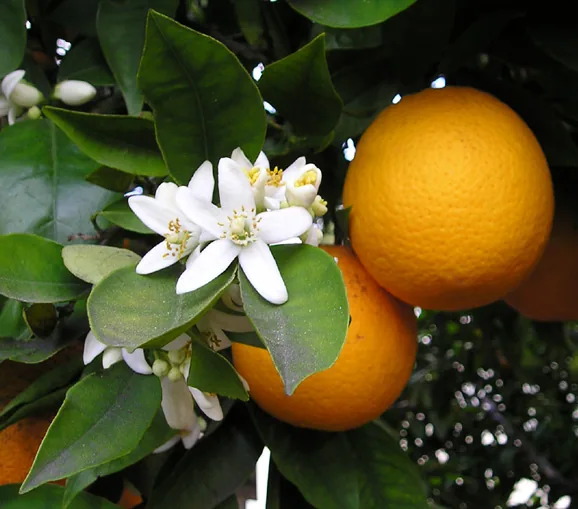
The sweet orange is the most widely grown citrus anywhere, and it's an easy tree to love: evergreen, with glossy leaves, sweet-smelling white blossom, and fruit that colors up through the cooler months. It's in the same family as lemons and limes, the rue family, and it's happiest where winters stay mild, so think USDA zones 9 to 11. Worried about frost where you live? No problem, just grow it in a big pot you can bring inside for winter.
An orange tree is in it for the long haul. It grows at a moderate pace and can hit 20 to 30 feet (6 to 9 m) in the ground, then keep living and fruiting for decades once it's settled in. It blooms in spring and ripens its fruit slowly through fall and winter, so you'll often catch blossom and ripening oranges hanging on the very same branch.
Almost every orange you buy started out as a graft, with a chosen variety joined onto a tough rootstock that shrugs off cold and disease. So that's why a seed from your breakfast won't give you the same fruit, in case you were wondering. Just pick a variety that suits your climate, give it sun and steady water, and the tree pretty much takes it from there.
Care
The short version: full sun, warmth, and well-drained soil, watered deeply but not too often, plus a balanced citrus feed while it's growing, and you're set.
Light
Oranges really want full sun, ideally 8 or more hours a day, and that's what makes the fruit sweet. They'll put up with a bit of afternoon shade, but honestly? The more sun they get, the bigger and sweeter your crop.
Water
Water deeply but not too often, letting the top half of the soil dry out between drinks, which usually works out to every 7 to 14 days. Young trees and ones in pots drink more, while a tree that's settled in the ground can shrug off a dry spell. The one thing an orange won't forgive is soggy, waterlogged soil.
Soil
Go with well-drained sandy loam so water never sits around the roots. A pH between 6.0 and 7.5 works nicely, and really, good drainage matters way more than nailing the exact soil type.
Temperature
Oranges do well from about 55°F to 100°F (13°C to 38°C), and they want a spot that stays frost-free. A hard freeze can hurt the wood and fruit, so if your tree's near the edge of its range, a pot you can wheel indoors for the cold is a smart bet.
Humidity
Average humidity of 50% to 70% keeps an orange happy, and that's the kind of air most warm regions have anyway. If you bring a tree in for winter, it'll appreciate a little extra moisture in those dry, heated rooms.
Feeding
Feed it a balanced citrus fertilizer that's got micronutrients like iron, zinc, and manganese. Put it down through the growing season, from spring into late summer, then ease off as things cool down.
Pruning
Good news, oranges barely need any pruning. Just take out dead, damaged, or crossing wood and snap off any suckers popping up below the graft, and do it in late winter or early spring before the new flush.
Repotting
A tree in a pot likes a fresh, bigger home every 2 to 3 years. If you spot roots circling the pot, water running straight through, or growth slowing down with yellow leaves, that's your cue to size up.
Size & spacing
A standard orange tree gets to 20 to 30 feet (6 to 9 m) tall and spreads 12 to 20 feet (3.6 to 6 m) across, so give it plenty of open room away from buildings and other trees.
When to plant
An orange tree loves warmth and just can't handle a hard frost, so let the seasons guide you. Plant a new one in spring once the last freeze is behind you, and it'll bloom the next spring, with fruit ripening from fall through winter and into spring, depending on which variety you've got.
Northern hemisphere
Southern hemisphere
Typical months for a temperate climate: start earlier in warm zones, later where spring frosts linger.
- Plant: Spring after all danger of frost has passed
- Harvest: Blooms in spring; fruit ripens fall through winter and into spring depending on cultivar
Hardiness
USDA hardiness zones: 9–11
Temperature: down to -7°C
Troubleshooting
Most orange tree trouble shows up first on the new leaves and the fruit, which is actually handy, since you get an early warning. A couple of these are just insects you can deal with, but two are serious diseases you'll want to catch early. Find what matches below, then step in before it spreads to the rest of the tree.
Blotchy yellow leaves and small, lopsided fruit
Here's the tough one: patchy yellow leaves plus small, lopsided, bitter fruit usually mean citrus greening, also called huanglongbing, and it's the worst thing a citrus tree can pick up. A tiny bug called the Asian citrus psyllid ferries the bacterium from tree to tree, and once your tree's got it, there's no fixing it. The kindest move for the trees nearby is to pull yours and destroy it, then give your local agricultural office a heads up.
Fix:
- There is no cure; remove and destroy infected trees to reduce spread
- Control Asian citrus psyllid populations
- Report suspected cases to local agricultural authorities
Corky tan spots with yellow rings on fruit and leaves
Raised, scabby spots with a yellow ring around them are a sign of citrus canker, a bacterial disease that hitches a ride on wind-blown rain and wet hands. You'll want to cut off and destroy the affected wood and fruit, and a copper spray helps where it's allowed. Just know that lots of areas treat canker as reportable, so check your local quarantine rules before you move anything, okay?
Fix:
- Remove and destroy affected plant material
- Apply copper-based sprays where permitted
- Follow local quarantine and reporting requirements
Sticky leaves, black mold, and little bumps on stems
Those little bumps that won't budge when you rub them? They're scale insects, and the sticky film and black soot below is just the honeydew they leave behind. You can smother them with horticultural oil and snip off any twig that's really crusted over. And keep an eye out for ants, because they'll farm the scale and chase away the good bugs that would've kept things in check.
Fix:
- Apply horticultural oil to smother scale
- Prune heavily infested twigs
- Conserve natural predators and parasites
Silvery squiggly trails on curled new leaves
See those silvery squiggles winding across the new leaves? That's the citrus leafminer, and its larvae are tunneling around inside the soft young growth. On a grown tree it's really no big deal, since the tree just powers past it, so you can leave it be. On a young tree, though, it helps to hold off on the tender new growth that lures the moth in, and you can reach for horticultural oil if the mining gets bad.
Fix:
- Tolerate light damage on mature trees, which usually outgrow it
- Avoid excess nitrogen and pruning that stimulate frequent tender flush
- Use horticultural oil on young trees if needed
Toxicity
For people, an orange is a safe, healthy food, but it's a different story for animals. The peel, leaves, and seeds hold essential oils and psoralens that upset a pet's stomach and can make its skin touchy in the sun. So keep peels and prunings away from cats, dogs, horses, and the rest, and only offer a little flesh as a rare treat.
Toxic to
Cats · Dogs · Horses · Rabbits · Livestock · Birds
Safe for
People
Cats Mild
Those oils in the peel and leaves will usually leave a cat drooling, throwing up, and dealing with some diarrhea. If it's had a lot, it might go quiet and mopey, and the psoralens can make its skin extra sensitive out in the sun.
Dogs Mild
A dog that's been chewing on the peel or leaves will probably get a queasy stomach with vomiting and runny stools. A bigger mouthful can really zap its energy, so it's better to point it toward its own treats.
Horses Mild
The oils and psoralens in the leaves and rind can upset a horse's gut and leave it a little down. So keep prunings and peels out of the paddock, since a nosy horse will nibble whatever's around.
Rabbits Mild
Citrus leaves and peel are just too oily for a rabbit's touchy tummy, and they can put it off its food with soft stools. The most a rabbit should ever get is a tiny scrap of flesh once in a blue moon.
Livestock Mild
Goats, sheep, and cattle might nibble at fallen leaves or peel, and that can give them a mild upset stomach. It's worth clearing citrus trimmings out of grazing spots so they don't fill up on the stuff.
Birds Caution
It's best to keep the oily peel and leaves away from pet birds, though a little taste of the flesh is generally okay. Just offer a bit of seedless flesh and skip the rind entirely.
People Flesh safe
For people, the juicy flesh is a healthy everyday food, no worries there at all. Just leave the peel, leaves, and seeds out of the bowl, since their oils can sting your mouth and stomach.
Keep peels, leaves, and seeds away from pets; the fruit flesh in small amounts is likely to cause at most minor stomach upset.
Helpline numbers

United States
ASPCA Animal Poison Control: (888) 426-4435 (fee applies)
Poison Control: (800) 222-1222



Canada
Poison Centres: 1-844-764-7669
Varieties
There are hundreds of orange varieties out there, split mostly between the ones you eat fresh and the ones you juice. These few are the ones you're most likely to grow yourself or recognize.
Valencia
It's a late-season juicing orange you pick from spring into summer, and it's loved for its nearly seedless fruit and great juice.
Washington Navel
It's the seedless eating orange you can spot by that little second fruit, the navel, tucked into its blossom end.
Hamlin
It's an early, cold-hardy juice orange that's grown all over Florida's groves.
Blood orange (Moro)
Its flesh goes a deep red once cool nights bring out the anthocyanin pigment.
How to propagate
Oranges are nearly always grafted so you get the right fruit and a sturdy root, but sure, you can grow one from seed too, as long as you've got a few years to spare.
GraftingModerate
During active growth in spring to early summer when bark slips easily · Several months to form a union; 3 to 5 years to begin fruiting
Grafting is the go-to way to grow an orange, and it's what commercial groves and home gardeners both rely on. Do it in spring or early summer while the bark peels back easily, and the union knits together in just a few months. The nice part? You get fruit that matches the parent plus the cold and disease tolerance of the rootstock, though the young tree still needs 3 to 5 years before it'll actually start fruiting.
SeedEasy
Sow fresh seed in spring · Germinates in a few weeks but can take many years to fruit
Growing an orange from seed is dead easy, but you'll need patience for it. Pop a fresh seed in the soil in spring and it'll sprout within a few weeks, but here's the catch: the tree can take many years to fruit, and it often won't come true to the parent. That's why seed is mostly a way to raise rootstock or just to mess around and see what happens.
Myths
Oranges are completely safe for cats and dogs because the fruit is edible for people.
Easy to assume, right? But the ASPCA actually lists orange as toxic to cats and dogs, because the peel, leaves, and seeds carry essential oils and psoralens that upset the stomach. The juicy flesh is a lot gentler, sure, but even that should just be a small, once-in-a-while treat for a pet.
A seed from a store-bought orange grows a tree just like its parent that fruits in a year or two.
It'd be nice, but sweet oranges are almost always grafted onto a rootstock rather than grown from seed. A seedling can take many years to fruit and often won't match the parent, which is exactly why folks mostly use seed-grown trees for rootstock or just for fun.